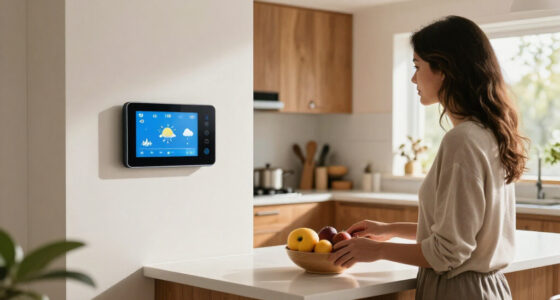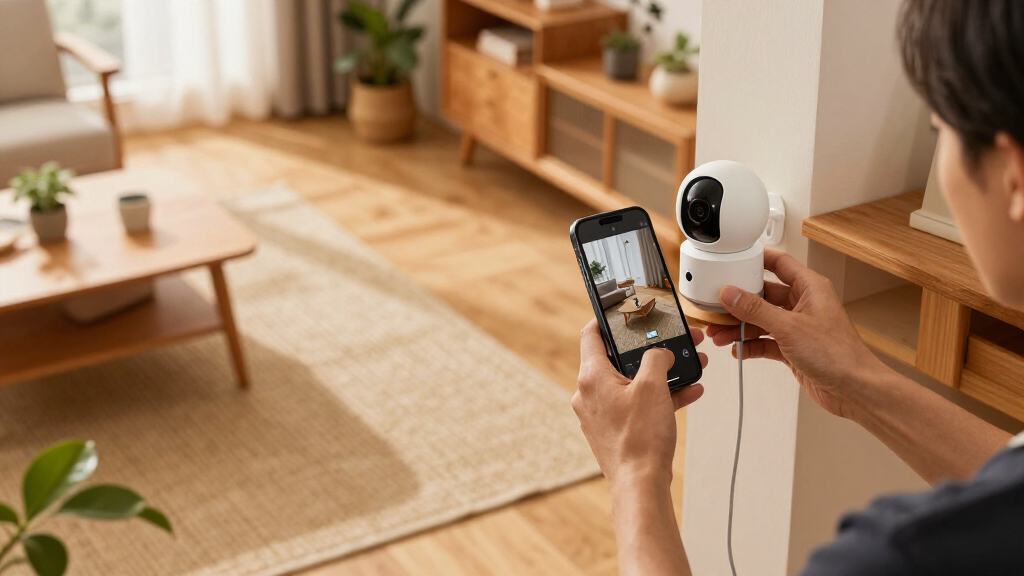
Choosing a smart security camera is less about picking the longest feature list and more about deciding where it can go and how consistently it needs to record. Wired cameras connect to a power source, and some also use a wired network or local recorder; battery-powered models run without a permanent power cable and commonly connect over Wi-Fi. Those differences affect installation, uptime, recording, and ongoing effort.

Get home appliances delivered free with Prime
- Fast, free delivery on millions of items
- Prime Video, Amazon Music and more included
- Member-only deals all year

Blink Outdoor 4 5-Camera System and Wired Doorbell 2K+ with Sync Module Core
- ✔ Outdoor cameras included: 5 Blink Outdoor 4 cameras
- ✔ Doorbell included: Wired Doorbell 2K+
- ✔ Outdoor camera resolution: 1080p HD
Blink Outdoor 4 Camera and Wired Doorbell 2K+ Bundle, 3 Cameras, Sync Module Core, Black
- ✔ Outdoor cameras included: 3 Blink Outdoor 4 cameras
- ✔ Doorbell included: Wired Doorbell 2K+
- ✔ Outdoor camera resolution: 1080p HD
Blink Outdoor 4 & Wired Doorbell 2K+ Kit with Sync Module Core – 2 Cameras + Doorbell (Black)
- ✔ Outdoor cameras included: 2 Blink Outdoor 4 cameras
- ✔ Doorbell included: Wired Doorbell 2K+
- ✔ Outdoor camera resolution: 1080p HD
Wired cameras usually make more sense for a fixed entrance, driveway, or other high-priority area where dependable power and continuous recording matter. Battery cameras suit renters, detached spaces, and locations where a cable would be difficult or unattractive to run. This comparison focuses on those two camera types rather than particular brands: the right choice depends on whether you value reliable, low-maintenance coverage more than easy placement and installation.
At a Glance
| Criteria | Wired smart security cameras | Battery-powered smart security cameras | Winner |
|---|---|---|---|
| Installation and placement | Requires a nearby outlet or power cable; some systems need professional installation. | Simple to mount in more locations without routing a power cable. | B |
| Power and uptime | Continuous power supports round-the-clock operation, subject to network and system availability. | Runs on a rechargeable battery; runtime varies with activity, settings, and weather. | A |
| Recording and event capture | Often supports continuous recording; features depend on the model and storage plan. | Often records motion-triggered clips rather than continuous footage; check model limits. | A |
| Maintenance | Little routine charging, though cables and equipment need occasional checks. | Needs periodic recharging or battery replacement; solar accessories may reduce visits. | A |
| Network and system options | May offer Wi-Fi, wired networking, local recorders, or expanded camera systems. | Typically depends on Wi-Fi and model-specific app, storage, and smart-home support. | A |
| Privacy and resilience | A cable can be cut or power lost; local recording may reduce reliance on cloud storage. | No visible power cable, but wireless connectivity and cloud settings require attention. | Depends |
| Overall value | Better value for fixed locations needing dependable recording over time. | Worth paying for when flexible placement avoids installation work or is the only practical option. | Depends |
Blink Outdoor 4 5-Camera System and Wired Doorbell 2K+ with Sync Module Core
This is the strongest fit in the group for households trying to watch several sides of a property with one coordinated kit. Five Outdoor 4 cameras make it easier to cover separate approaches, a driveway, and other exterior zones while the wired 2K doorbell keeps the front entrance in view. Compared with the three-camera bundle, the extra cameras provide more placement options; compared with the two-camera kit, this system is less likely to leave a larger property with obvious blind spots.The coverage advantage comes with an important resolution distinction: the outdoor cameras record in 1080p HD, while the doorbell records in 2K. Outdoor cameras have a 143-degree diagonal field of view, and the doorbell’s stated view is 140 degrees horizontally and vertically. Two-way audio and app alerts help users respond to visitors or activity, while Alexa compatibility offers a familiar voice-assistant connection. The cameras are weather-resistant and rated for operation from -4°F to 113°F, giving them flexibility across many outdoor settings.Battery power reduces the need to run wires to each camera, and Blink lists up to two years of battery life under default settings. That figure is conditional, not a guarantee for every installation: usage and settings matter, and the cameras use non-rechargeable AA lithium batteries. The wired doorbell also means the bundle is not fully wire-free. As with the other two options, person and vehicle detection require a separately sold Blink plan. We would choose this kit for coverage breadth, but skip it if five camera positions would be excessive or if subscription-free smart detection is essential.
Pros:
- Five Outdoor 4 cameras provide the broadest exterior coverage in this comparison.
- Includes a wired 2K doorbell and Sync Module Core alongside the cameras.
- Outdoor cameras offer up to two years of battery life under default settings.
- Two-way audio, app alerts, weather resistance, and Alexa compatibility support connected home use.
Cons:
- Outdoor cameras record at 1080p, below the doorbell’s 2K resolution.
- The cameras use non-rechargeable AA lithium batteries.
- Person and vehicle detection require a separately sold Blink plan.
Best for: Households that want to cover multiple exterior approaches and a front door with one bundle, especially where camera placement can use battery power.
Not ideal for: Buyers with a small space who do not need five outdoor cameras, or anyone who wants rechargeable outdoor camera batteries or included person and vehicle detection.
Bottom line: We recommend this bundle when the priority is covering the most outdoor zones, provided the household is comfortable with AA battery upkeep and plan-dependent smart detection.
“We recommend this bundle when the priority is covering the most outdoor zones, provided the household is comfortable with AA battery upkeep and plan-dependent smart detection.”
Blink Outdoor 4 Camera and Wired Doorbell 2K+ Bundle, 3 Cameras, Sync Module Core, Black
For many homes, three outdoor cameras are a more practical starting point than either extreme in this lineup. This bundle can cover a front or side approach, a garage or driveway, and another vulnerable exterior zone, while the 2K wired doorbell handles the main entrance. It includes the same Sync Module Core and core camera-doorbell mix as the five-camera option, but asks the buyer to plan for fewer camera locations. That makes it our balanced pick for useful coverage without building the largest system.The shared specifications are reassuringly familiar: outdoor cameras record at 1080p HD with a 143-degree diagonal field of view, while the doorbell records at 2K and supports two-way audio. Live view and alerts are available through the Blink app, and the outdoor cameras are weather-resistant. Compared with the two-camera kit, the extra camera gives more flexibility for a second approach or detached structure; compared with the five-camera bundle, the smaller count may be easier to place and maintain if a full perimeter is not the goal.There are limits to that middle-ground appeal. The doorbell needs a compatible wired power setup, and the outdoor cameras rely on non-rechargeable AA lithium batteries. Blink states up to two years of camera battery life based on default settings, but real replacement timing depends on use and configuration. Also, smart detection features require a separately sold Blink plan, so basic app-connected monitoring and advanced identification are not the same thing. Choose this bundle when three camera viewpoints match your home; if you already know you need five, buying a smaller kit may leave coverage gaps, while a compact entry-focused setup may need only two.
Pros:
- Three outdoor cameras offer a useful middle ground between the two- and five-camera bundles.
- Includes a 2K wired doorbell and Sync Module Core.
- Outdoor cameras support 1080p video, live view, night vision, and two-way audio through the app.
- Weather-resistant cameras use included lithium batteries and support flexible placement.
Cons:
- Outdoor camera batteries are non-rechargeable AA lithium cells.
- Smart detection features require a separately sold Blink plan.
- The wired doorbell requires compatible existing wiring.
Best for: Households that need a front door view plus several outdoor angles, but do not need the five-camera system’s broader coverage.
Not ideal for: Buyers who need to watch many separate sides of a large property, prefer rechargeable batteries, or expect included person and vehicle detection.
Bottom line: We see this as the most balanced choice when three outdoor viewpoints cover the home’s real needs without the extra reach of the five-camera system.
“We see this as the most balanced choice when three outdoor viewpoints cover the home’s real needs without the extra reach of the five-camera system.”
Blink Outdoor 4 & Wired Doorbell 2K+ Kit with Sync Module Core – 2 Cameras + Doorbell (Black)
This two-camera kit makes the most sense when a buyer can name the specific areas that need watching rather than trying to blanket a large property. One outdoor camera can monitor a secondary approach while the other covers a garage, patio, or side entrance; the wired 2K doorbell adds a view of the front door. Compared with the three-camera bundle, it gives up one exterior viewpoint, so it is better for a compact layout or a focused security plan than a broad perimeter.It retains the lineup’s central mix of features: 1080p Outdoor 4 cameras with a 143-degree diagonal field of view, a 2K doorbell, a Sync Module Core, two-way audio, and Alexa compatibility. The outdoor cameras use two AA lithium batteries apiece and are described as offering up to two years of battery life. The doorbell is wired for 12–24V AC or 24V DC, so buyers should check their existing chime wiring before choosing it. Weather-resistant construction and a stated operating range from -4°F to 113°F support outdoor placement in a range of climates.The compact bundle is not a different camera platform; its advantage is simply that it limits the number of devices to install and maintain. That can be a sensible trade if two outdoor viewpoints genuinely cover the important approaches. If a driveway, side gate, rear patio, and front entry all need separate views, the three-camera kit is a better fit, and the five-camera system offers still more flexibility. As with both larger bundles, person and vehicle detection require a separately sold plan, and the outdoor batteries are not rechargeable. We would skip this kit for buyers who want comprehensive multi-angle coverage from the start.
Pros:
- A smaller system keeps the installation focused while still including a 2K doorbell.
- Outdoor cameras record in 1080p and have a 143-degree diagonal field of view.
- Battery-powered cameras support flexible placement and offer up to two years under stated default use.
- Alexa compatibility, app live view, and two-way audio connect the cameras to everyday home monitoring.
Cons:
- Only two outdoor cameras are included, limiting coverage compared with the three- and five-camera bundles.
- Outdoor cameras use non-rechargeable AA lithium batteries.
- Person and vehicle detection require a separately sold Blink subscription plan.
Best for: Residents of smaller homes, apartments with exterior access, or buyers who want to monitor two outdoor zones plus a wired front door.
Not ideal for: Households needing a broad perimeter view, coverage for multiple detached structures, or smart person and vehicle detection without a separate plan.
Bottom line: We recommend this kit for targeted entry and exterior monitoring, but not for buyers who need to cover several approaches at once.
“We recommend this kit for targeted entry and exterior monitoring, but not for buyers who need to cover several approaches at once.”
As an Amazon Associate we earn from qualifying purchases.
Key Differences
The largest practical difference is what happens when nobody is interacting with the camera. A wired model can remain powered and, when supported, record continuously. A battery camera conserves energy, so it commonly wakes for detected motion and captures a clip. That can be entirely sufficient for a gate or occasional visitor, but it may miss the lead-up to an event or fail to capture activity that does not trigger its sensor.
Battery cameras win on placement: they can go where there is no convenient outlet, and mounting them is usually less involved. That freedom comes with recurring attention. Frequent activity, cold weather, recording settings, and signal conditions can all affect battery life, so a busy entrance may require more charging than a quiet yard. Wired cameras reverse the tradeoff: the cable constrains placement and installation, but removes routine charging as a source of downtime.
Neither type automatically provides a complete security system. Check whether recordings are stored locally or in the cloud, whether subscriptions are required for useful alerts or video history, and what happens during an internet or power outage. A wired camera may still rely on Wi-Fi and cloud services; a battery camera may keep operating on battery but lose remote access if the network is down. The better value is the model that reliably covers the specific location without hidden installation or service costs.
Detailed Comparison
Installation and placement (Battery-powered smart security cameras wins — moderate)
Battery cameras win by a moderate margin for convenience and flexibility. They can be mounted where a power cable would be awkward, which helps renters, sheds, gates, and temporary monitoring. Wired models are a stronger fit when there is already a suitable power source or the owner can route cable cleanly. If installation requires an electrician or extensive drilling, include that work in the real cost rather than comparing camera prices alone.
Power and uptime (Wired smart security cameras wins — major)
Wired cameras win by a major margin for locations that need consistent operation. A permanent power connection avoids battery depletion, though it does not protect against an outage unless the system has backup power. Battery models can continue operating without a power cable, but they need enough charge and may become unavailable when charging is overdue. For a main entrance with frequent activity, this difference can affect whether footage exists when needed.
Recording and event capture (Wired smart security cameras wins — moderate)
Wired cameras generally win by a moderate margin when continuous footage matters, because their power supply can support recording beyond short motion clips. This is useful for reviewing what happened before or between alerts. Battery models often prioritize motion-triggered recording to conserve energy; detection zones and sensitivity help, but do not make every model equivalent to continuous recording. Check the specific camera’s recording modes and storage rules before buying.
Maintenance (Wired smart security cameras wins — moderate)
Wired cameras win by a moderate margin once installed: owners do not need to recharge them on a schedule. Battery cameras are not necessarily high-maintenance, especially in quiet areas or with a compatible solar accessory, but they require charge checks and occasional removal or battery swaps. The practical burden depends on activity and access. A camera mounted high above a busy driveway is more inconvenient to recharge than one at an easy-to-reach garden gate.
Network and system options (Wired smart security cameras wins — moderate)
Wired cameras have a minor-to-moderate advantage as a category because some support Ethernet, local recording, and larger multi-camera setups. These capabilities are not guaranteed: many wired models use Wi-Fi, and some still depend on cloud subscriptions. Battery cameras are often designed for app-based Wi-Fi use and may offer fewer recording choices. Compare the exact network, recorder, and smart-home compatibility requirements for the system you plan to use.
Privacy and resilience (moderate difference)
There is no universal winner. Wired cameras can support local storage and avoid frequent battery handling, but a visible cable may be cut and loss of power can stop operation. Battery cameras do not need a nearby outlet and can stay powered through some household power disruptions, but wireless connectivity and cloud storage may still be points of failure. Choose based on the actual design: encryption, account security, local recording, backup power, and outage behavior matter more than the power category alone.
Overall value (major difference)
Value depends on the location, so neither type wins outright. Wired is usually the better long-term fit for a permanent, busy coverage point if installation is straightforward and continuous recording is useful. Battery is worth paying for when avoiding cable work is valuable or a wired installation is impractical. Compare total cost over time, including installation, batteries or solar accessories, storage subscriptions, and any recorder needed for the functions you want.
Wired smart security cameras: Pros and Cons
Pros:
- Continuous power supports dependable operation without routine recharging.
- Often offers continuous recording and broader local-storage or recorder options.
- A sensible choice for fixed, high-activity locations.
Cons:
- Needs a suitable power source and can require cable work or professional installation.
- Placement is limited by cable routing and access to power.
- Power loss can stop the camera unless backup power is available.
Battery-powered smart security cameras: Pros and Cons
Pros:
- Flexible mounting without a permanent power cable.
- Usually easier to install and more suitable for renters or outbuildings.
- Can keep operating on battery during some household power interruptions.
Cons:
- Needs charging or battery replacement, with runtime affected by use and conditions.
- Motion-triggered recording can provide less complete coverage than continuous footage.
- Wi-Fi, cloud features, or subscriptions may limit performance and access.
Who Should Choose What
Choose Wired smart security cameras if:
- You want continuous recording or dependable coverage at a busy entrance, driveway, or other fixed location.
- A power source is nearby, and you prefer avoiding regular battery charging.
- You are building a multi-camera system and want to investigate local recording or wired-network options.
Choose Battery-powered smart security cameras if:
- You rent, cannot route cable, or want to monitor a gate, shed, or other place without convenient power.
- Easy installation and flexible placement matter more than continuous footage.
- The location has modest activity, or you can reach the camera easily for charging.
Skip both if: Neither type may suit a location without reliable Wi-Fi or another supported connection, or where cameras cannot be installed legally and safely. Consider a camera system with suitable connectivity, or another security measure such as a professionally installed alarm.
Value for Money
Paying more for a wired camera is justified when its power connection enables the recording and uptime you need, especially at a frequently used entrance. But a higher camera price does not automatically buy a better system: cable installation, a local recorder, and cloud fees can change the total cost. If wiring is already available, wired often offers stronger long-term value because charging is not part of the routine.
A battery model earns its cost when flexibility saves real installation effort or makes monitoring possible at all. It is less compelling if you will frequently climb to recharge it or if motion-only clips cannot answer the questions you care about. Before choosing, check the storage plan, battery-replacement cost, and any solar accessory requirements. Pay for the setup that covers your location reliably, not for features you will not use.
Final Verdict
For most permanent, high-priority monitoring points, choose a wired smart security camera if you can install it without unreasonable cost. Continuous power and the possibility of continuous recording make it the safer default for busy entrances and driveways, while reducing routine upkeep. Choose a battery-powered camera when cable-free placement is the deciding benefit—particularly for rentals, gates, and outbuildings—and when motion-triggered footage is enough.
The biggest deciding factor is not the camera’s headline resolution or app features; it is whether the installation can keep recording in the way you need. Do not pay extra for wired power if cable work makes the setup disproportionately expensive, and do not assume a battery camera will provide uninterrupted video. Check recording modes, storage, connectivity, and outage behavior for the exact model before committing.
Frequently Asked Questions
Do wired smart cameras record continuously?
Some do, but wired power alone does not guarantee continuous recording. Confirm that the specific model supports it and check whether continuous footage requires a local recorder, a subscription, or a particular storage plan.
How often does a battery security camera need charging?
There is no fixed interval across models. Runtime depends on motion frequency, recording length, settings, temperature, and signal conditions. Check the manufacturer’s estimate and expect a busy location to use more power than a quiet one.
Will a wired camera work during a power or internet outage?
Not automatically. A power outage can stop a camera unless backup power is available. An internet outage may prevent remote access or cloud recording even if the camera remains powered; local recording behavior varies by system.
Is a battery camera good enough for a front door?
It can be, particularly if installation without a cable is the priority and motion-triggered clips meet your needs. For a busy front door where you want footage between alerts or less charging, a wired model is usually the stronger fit.
Halloween Picks
halloween
As an affiliate, we earn on qualifying purchases.