
TL;DR

Get home appliances delivered free with Prime
- Fast, free delivery on millions of items
- Prime Video, Amazon Music and more included
- Member-only deals all year
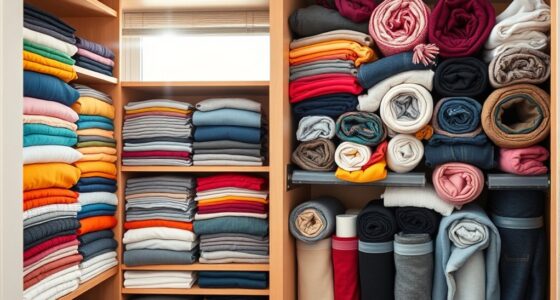
A House Beautiful report, citing professional organizers, questions two familiar decluttering rules: remove an item with every new purchase, and discard clothes not worn in a year. The organizers say ongoing clear-outs, available storage space, and whether an item suits someone’s life are more useful guides.
A House Beautiful report says professional organizers are pushing back on two common decluttering rules: “one in, one out” and throwing away clothing not worn in the past year. The experts quoted say these tests can be too rigid, and recommend instead making regular decisions based on storage space, actual use and personal circumstances.
The “one in, one out” rule treats each new purchase as a reason to remove an existing possession. Organizer Kenika Williams told House Beautiful that while the approach may work for some people, not every purchase needs to trigger a purge. Jayna Lattimore, founder of Ordered Professional Organizing, likewise recommends treating decluttering as a recurring household routine rather than a reaction to buying something.
Lattimore said regular sweeps through the home can help people remove items they no longer use or need. Williams said people should make sure new purchases have a functional place to go, while Lattimore argued that an organized home should leave some room for future additions instead of filling every drawer, shelf or closet to capacity.
The second rule uses one year without wearing an item as a reason to discard it. Millie Naor, founder of Bella Organizers, said some less frequently worn pieces may still be worth keeping if they are special, provided their number is limited. Beth Ruck of Conquering Clutter said a calendar cutoff is not the best way to decide: she recommends considering whether a garment works with other clothes and fits the owner’s current lifestyle.
A More Flexible Test for Clutter
The advice matters to people who find strict rules difficult to maintain or who risk discarding useful possessions simply because they fail a fixed test. The organizers’ comments point toward decisions based on function and circumstances, rather than an automatic purge after a purchase or a set period without wearing something.
That does not mean keeping every item. Williams’s guidance still centers on whether belongings have a place, while Naor emphasizes limiting the number of seldom-worn clothes. The practical takeaway is to make space and use part of the decision, rather than treating either rule as a universal requirement.
modular storage bins for closet organization
As an affiliate, we earn on qualifying purchases.
As an affiliate, we earn on qualifying purchases.
The Two Rules Under Review
Both rules offer simple tests for managing belongings. Under “one in, one out,” a new item prompts the removal of an existing one. The clothing rule sets a time limit: if a garment has not been worn in a year, it should leave the closet.
The House Beautiful report presents organizers’ objections to applying those tests in every case. Their alternatives are periodic clear-outs and more specific questions about an item’s use, place in the home, and relevance to the owner’s life. The report does not provide survey data or evidence that either rule is ineffective for everyone.
“I don’t think every purchase needs to trigger a purge.”
— Kenika Williams, founder of Tidied by K.
multi-purpose clothing storage boxes
As an affiliate, we earn on qualifying purchases.
As an affiliate, we earn on qualifying purchases.
Advice, Not a Universal Standard
The report summarizes the views of several professional organizers; it does not establish that the two rules are outdated or unsuitable for everyone. Williams explicitly says people may continue using the purchase-triggered rule if it works for them. The source also offers no comparative research on how the different approaches affect clutter, spending or the ease of maintaining an organized home.
There is no single storage threshold or time interval in the report for deciding when a household should clear items. The recommendations depend on individual needs, available space and whether possessions remain useful or meaningful.
As an affiliate, we earn on qualifying purchases.
How Readers Can Apply the Advice
The organizers’ suggestions are to schedule regular sweeps, give new purchases a practical home and leave some capacity in storage systems. For clothes under consideration, Ruck’s questions offer a starting point: does the item make outfits with other clothing, and does it suit the wearer’s life now?
Readers can still use either rule if it helps them make decisions. The report’s central qualification is that neither needs to operate as an automatic command: the decision can reflect a person’s space, routine and reasons for keeping an item.
flexible decluttering storage solutions
As an affiliate, we earn on qualifying purchases.
As an affiliate, we earn on qualifying purchases.
Key Questions
Which two decluttering rules does the report question?
It questions “one in, one out,” which pairs each purchase with removing an item, and the rule to discard clothes not worn in a year.
Do organizers say people should never use “one in, one out”?
No. Williams says the method can work for people who find it useful, but she does not think every purchase needs to prompt a purge.
What should someone consider before discarding unworn clothes?
The organizers suggest considering whether the garment is special, works with other clothes and suits the person’s current lifestyle. Naor also advises limiting how many seldom-worn pieces are kept.
What does the report recommend instead of strict rules?
It describes regular household clear-outs, keeping new items in functional storage and making decisions based on whether belongings are useful and fit the owner’s circumstances.
Source: rss
NFL season / tailgating Picks
team gear
As an affiliate, we earn on qualifying purchases.