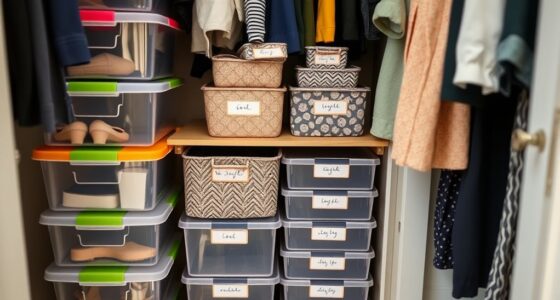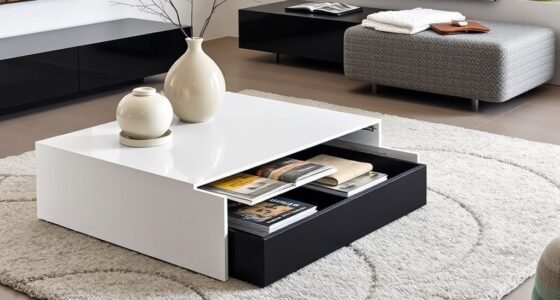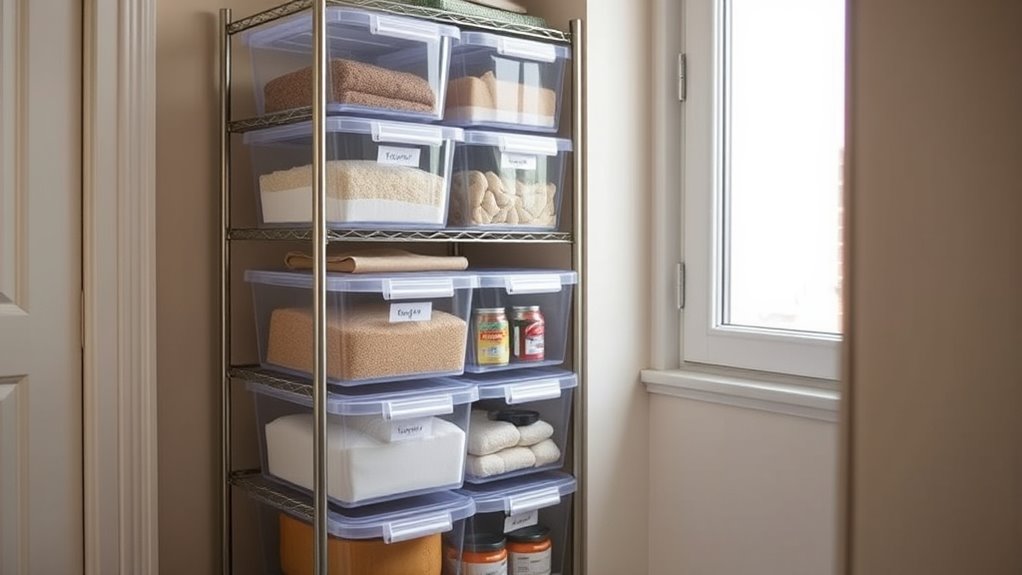

Storing bulk purchases in a small apartment is possible with smart organization. Designate specific shelves for bulk items and use clear, stackable containers to maximize space and boost visibility. Label everything with contents and expiration dates, so you stay on top of inventory. Keep frequently used items at eye level and store less-used ones higher up. Regularly review and adjust your setup to avoid clutter buildup. If you keep these tips in mind, you’ll discover even more ways to optimize your space.
Key Takeaways
- Use clear, stackable containers to maximize vertical space and keep bulk items organized.
- Designate specific shelves for bulk products to prevent clutter and improve accessibility.
- Label containers with contents and expiration dates for easy tracking and efficient inventory management.
- Store less-used bulk items higher or towards the back, keeping frequently used items at eye level.
- Regularly review and reorganize your storage to prevent overflow and maintain an efficient system.
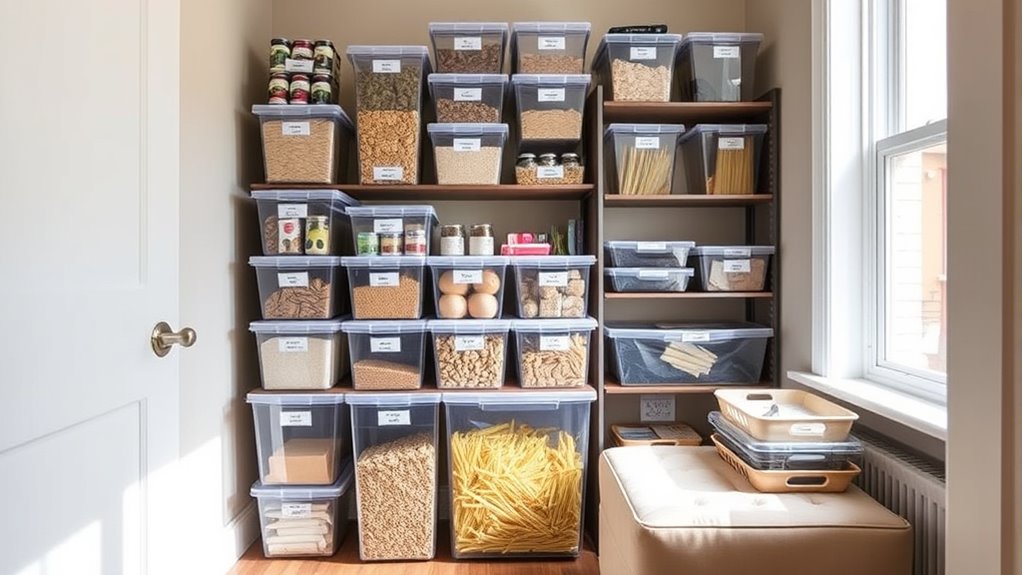
Storing bulk purchases properly can save you time, money, and space. When you buy in bulk, it’s tempting to just toss everything into your pantry or closet, but without a good system, clutter quickly takes over. To keep things manageable, focus on effective shelf organization. Start by designating specific shelves for bulk items. Use clear containers or bins to group similar products, like grains, snacks, or baking ingredients. This not only keeps your pantry tidy but also makes it easy to see what you have at a glance. When shelf organization is logical and consistent, you spend less time rummaging through clutter and more time enjoying your groceries.
Organize bulk items with clear containers and designated shelves for a tidy, accessible pantry.
Pantry labeling becomes your best friend in a small apartment. Once you’ve sorted items into containers or grouped them on shelves, label everything clearly. Use a label maker or simple masking tape and a marker to identify contents and dates. Proper labeling helps you track expiration dates and prevents duplicates, which is especially important when space is limited. When you know exactly what’s in each container, you avoid buying duplicates and can plan meals more efficiently. Also, labels make it easier for others sharing your space to find what they need without disturbing your carefully organized system.
In addition to shelf organization and labeling, consider vertical stacking and utilizing door space. Stackable containers maximize shelf height, giving you more room for bulk items without cluttering your small apartment. Over-the-door racks or hooks can hold smaller items or accessories, freeing up shelf space for larger bulk purchases. Keep frequently used items at eye level for quick access, and store less-used products higher up or towards the back. This way, you keep your space open and accessible without sacrificing storage capacity.
Another tip is to regularly review your stock. Every few weeks, check expiration dates and reorganize as needed. Disposal of expired items keeps your pantry fresh and prevents waste. Reassess your storage layout if you notice clutter creeping back or if certain shelves become overcrowded. Small-space storage requires ongoing adjustment, but with good shelf organization and clear pantry labeling, you’ll maintain control over your bulk purchases. Additionally, considering natural materials for storage containers can enhance durability and eco-friendliness.
Finally, resist the urge to overbuy just because items are cheaper in larger quantities. Think carefully about your consumption rate and storage capacity. Buying only what you’ll realistically use before it expires saves you space and money in the long run. Properly storing bulk purchases is about balance—organize smartly, label clearly, and review regularly, and you’ll turn your small apartment into a well-organized, efficient space for all your bulk shopping needs.
Frequently Asked Questions
How Can I Prevent Pests With Bulk Storage?
To prevent pests with bulk storage, you should focus on pest prevention by using airtight containers that seal tightly. This keeps pests out and preserves freshness. Regularly check containers for signs of pests or damage, and keep storage areas clean and dry. Avoid leaving food open or exposed, and consider adding natural pest repellents nearby. Proper sealing and maintenance are key to safeguarding your bulk purchases from unwanted critters.
What Are Space-Saving Storage Containers?
You probably think space is endless, but smart storage isn’t. Opt for space-saving storage containers with stacking techniques to maximize your limited area. These containers, with airtight solutions, keep your bulk purchases fresh and organized. By stacking efficiently, you create more room and reduce clutter. So, while it seems your space is small, clever containers transform it into a surprisingly functional storage haven—proof that size isn’t everything.
How Often Should I Rotate Bulk Supplies?
You should rotate your bulk supplies every 3 to 6 months to maintain freshness and avoid waste. Keep your inventory organized by regularly checking expiration dates and using shelf labeling to clearly identify older items. This way, you can easily spot what needs to be used first, ensuring efficient storage and minimizing clutter in your small apartment. Consistent rotation helps you stay on top of your supplies and reduces unnecessary purchases.
Is It Cost-Effective to Buy in Bulk for Small Apartments?
Buying in bulk can be cost-effective if you have the space and good shopping habits. You’ll save money on per-unit prices and reduce trips to the store. However, if storage is tight, you might end up wasting food or supplies, which cancels out the savings. Consider your storage options and how often you shop to decide if bulk buying makes sense for your small apartment.
Can I Store Bulk Items in Shared Living Spaces?
Think of shared living spaces as a delicate dance floor—you need balance and coordination. Yes, you can store bulk items there, but avoid common storage mistakes like overcrowding or neglecting shared fridge organization. Keep everything tidy and clearly labeled to respect your roommates and prevent chaos. Use stackable bins or under-bed storage to maximize space without clutter. With mindful planning, your bulk stash can coexist peacefully in your shared home.
Conclusion
Storing bulk purchases in a small apartment might seem challenging, but with smart organization, it’s totally doable. Just remember, about 60% of city dwellers who buy in bulk report improved savings and reduced trips to the store. So, it’s worth the effort. Keep your space tidy, use vertical storage, and prioritize essentials. With these tips, you’ll maximize your limited space and enjoy the benefits of bulk shopping without feeling cramped.