
Clutter in small spaces can profoundly impact your mindset by overwhelming your senses, reducing mental clarity, and raising stress levels. When your environment is crowded, each item demands a mental decision, leaving you exhausted and more likely to avoid organizing. This build-up of clutter can make you feel helpless, anxious, and less confident. Over time, it blocks positive energy and hampers focus, fueling a negative cycle. Exploring this connection reveals how your space influences your emotional well-being and motivation.

Get home appliances delivered free with Prime
- Fast, free delivery on millions of items
- Prime Video, Amazon Music and more included
- Member-only deals all year
Key Takeaways
- Clutter in small spaces heightens stress, anxiety, and feelings of overwhelm, negatively impacting mental well-being.
- Limited room amplifies visual noise, reducing focus and mental clarity, which hampers decision-making.
- Disorganized environments drain mental energy through decision fatigue, leading to avoidance and procrastination.
- Clutter diminishes self-esteem and motivation, reinforcing feelings of helplessness and low confidence.
- A cluttered space creates a negative feedback loop that worsens emotional health and hampers emotional resilience.
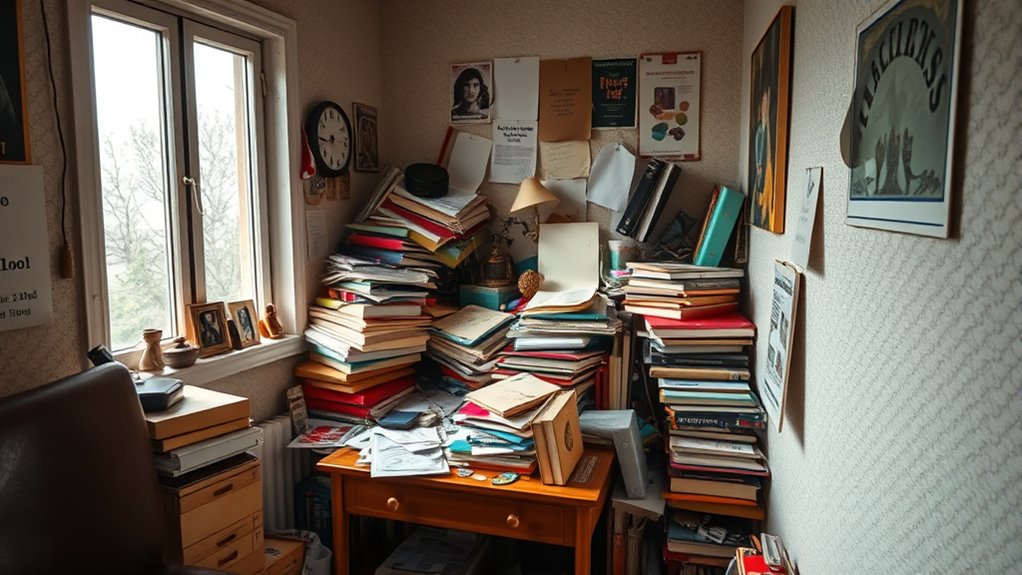
Clutter isn’t just a mess of misplaced items; it reflects deeper psychological patterns that influence how you perceive and experience your environment. When your space becomes overwhelmed with belongings, it can subtly affect your emotional well-being and mental clarity. You might notice feelings of frustration, stress, or even helplessness simply by walking into a cluttered room. This emotional impact isn’t accidental; it’s rooted in how our surroundings shape our mood and thoughts. A disorganized space can make you feel anxious or overwhelmed, reinforcing a cycle where avoidance leads to more clutter, which in turn worsens your emotional state.
Clutter impacts your mood and mental clarity, reinforcing a cycle of stress and emotional overwhelm.
One significant way clutter affects you is through decision fatigue. Every item you see demands a mental decision—whether to keep, toss, organize, or ignore it. When your environment is cluttered, these seemingly small choices accumulate, draining your mental energy and making decision-making more exhausting. Over time, decision fatigue can lead you to avoid any further choices, resulting in procrastination or avoidance behaviors. Instead of tackling clutter, you might find yourself retreating into habits that perpetuate the chaos, like mindless screen time or emotional eating, as a way to cope with the mental drain.
In small spaces, this effect is magnified. Limited room means every item takes up valuable mental and physical space, making it harder to find peace or clarity. You may notice that your small environment feels suffocating or chaotic because the clutter blocks the flow of positive energy and mental focus. This constant visual noise can heighten your stress levels, making it difficult to concentrate or relax. Over time, these feelings seep into your overall mindset, fostering a sense of helplessness or impatience because the space feels unmanageable and cluttered.
Furthermore, the emotional impact of clutter isn’t just about immediate discomfort; it can influence your self-esteem and motivation. When your environment feels out of control, you might subconsciously internalize this chaos, believing you’re incapable of creating order. This negative cycle diminishes your confidence and makes it even more challenging to start decluttering or organizing. Small spaces amplify these effects because the clutter is unavoidable and always in your line of sight, constantly reminding you of unfinished tasks and unresolved messes.
Additionally, research indicates that high contrast ratios are essential for detailed image rendering, which underscores the importance of clarity both visually and mentally. Recognizing this connection can help you see how visual clutter affects your mental clarity, making it harder to focus and process information effectively.
Ultimately, understanding the psychological impact of clutter helps you see it as more than just a physical problem. It’s a mental and emotional challenge that influences how you feel, think, and behave. Recognizing the role of decision fatigue and emotional impact in clutter management empowers you to take intentional steps toward creating a more organized, calming environment—one small space at a time.
Frequently Asked Questions
Can Decluttering Improve Mental Health in Small Spaces?
Yes, decluttering can substantially improve your mental health in small spaces. When you clear out unnecessary items, you gain mental clarity, making it easier to focus and relax. Decluttering also reduces visual stress, boosting your emotional well-being. By creating a more organized environment, you feel calmer and more in control, which positively impacts your overall mood and mental health in tight spaces.
How Does Clutter Influence Decision-Making Under Pressure?
Clutter is like a fog that clouds your mental landscape, making decision-making under pressure harder. It hampers your visual perception, causing you to focus on chaos instead of clarity. When overwhelmed by clutter, cognitive overload kicks in, slowing your reactions and impairing judgment. To stay sharp, clear your space. A tidy environment helps your mind process information quickly, enabling better decisions even when stakes are high.
Is There a Link Between Clutter and Sleep Quality?
Clutter can negatively impact your sleep quality by causing sleep disruption and increasing stress levels. When your environment is chaotic, your mind struggles to relax, making it harder to fall asleep and stay asleep. By decluttering your space, you reduce stress and create a calming atmosphere, which promotes better sleep. A tidy bedroom helps signal to your brain that it’s time to rest, improving overall sleep quality.
Do Cultural Differences Affect Perceptions of Clutter?
Yes, cultural differences influence how you perceive clutter. Cultural norms shape your views on tidiness and organization, affecting what you see as clutter or acceptable mess. Your personal perceptions are molded by these norms, so what feels cluttered to you might seem normal or even cozy to someone from a different background. Understanding these cultural influences helps you be more empathetic and adaptable when evaluating your space or others’.
Can Organizational Tools Reduce Stress Caused by Clutter?
A tidy space is a tidy mind, and organizational tools can definitely help reduce stress caused by clutter. By implementing storage solutions that promote minimalist design, you create a sense of calm and control. Clear, designated areas for belongings make it easier to find what you need and keep your space uncluttered. This not only eases anxiety but also fosters a more focused, peaceful environment.
Conclusion
So, next time your small space feels overwhelming, remember—it’s not just clutter, it’s your mind’s mirror. Ironically, the chaos you see might be a sign to declutter your surroundings and your thoughts. Clearing your space could be the simplest way to clear your mind. After all, sometimes the tiniest areas hide the biggest mental clutter. Embrace the mess, and you might just find clarity hiding right behind it.
NFL season / tailgating Picks
team gear
As an affiliate, we earn on qualifying purchases.