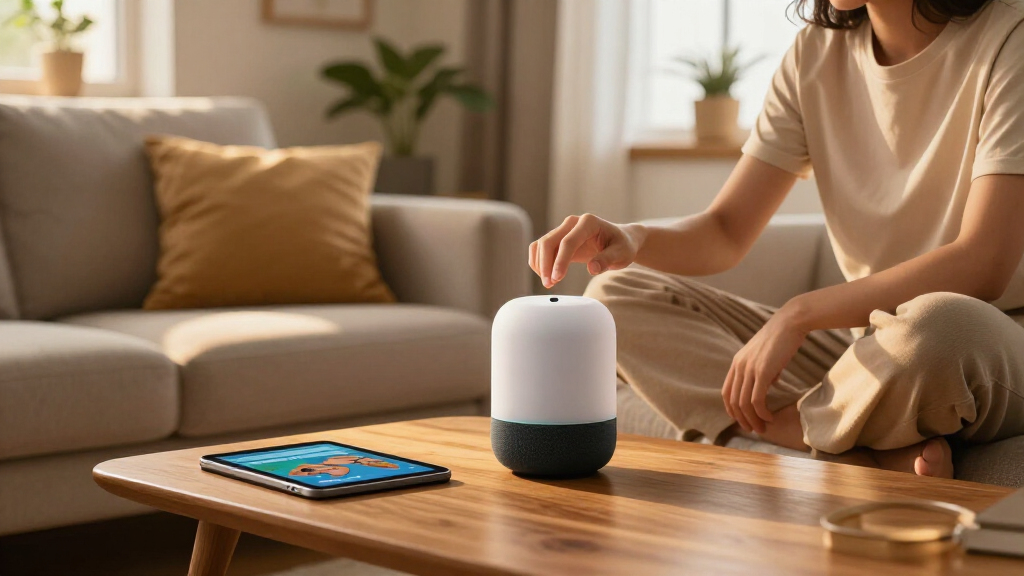

Smart home learning devices fall into two camps: thermostats that study your schedule and temperature habits to heat and cool your home automatically, and voice assistants that adapt to your routines and commands. After comparing this year’s leading options, the Google Nest Learning Thermostat (4th Gen) with Nest Temperature Sensor stands out as the best overall pick, thanks to its genuine self-programming ability, remote sensor support, and polished design. The Amazon Smart Thermostat is the smarter buy if you want learning-style automation on a budget, while the Echo Dot Max covers the voice-assistant side with room-filling sound and nearly triple the bass of earlier Dots. The main tradeoff in this category is price versus autonomy: true learning models cost more up front but eliminate manual scheduling entirely. Keep reading for the full breakdown of all seven devices and which one fits your home.

Get home appliances delivered free with Prime
- Fast, free delivery on millions of items
- Prime Video, Amazon Music and more included
- Member-only deals all year
Complete the kit



Key Takeaways
- Only the Nest Learning Thermostat models actually ‘learn’ your habits; the amazon.com/dp/B01HHQZHRK?tag=flatmad-20&ascsubtag=dc-637431″ target=”_blank” rel=”nofollow sponsored noopener”>Google Nest Thermostat and Amazon Smart Thermostat rely on manual schedules and app guidance instead.
- The Nest Temperature Sensor (2nd Gen) is what separates the true learning setups from basic smart thermostats, because it lets the system prioritize the room you actually occupy.
- Color variants (Polished Gold, Obsidian, Silver) are identical in function, so the choice between them is purely aesthetic — don’t pay a premium expecting performance differences.
- The Echo Dot Max and MASDROW AIPI Lite serve a completely different purpose from the thermostats in this lineup; mixing them means deciding whether you want climate automation or conversational AI first.
- Budget buyers get the most learning-adjacent value from the Amazon Smart Thermostat, but sacrifice the remote sensors, radar-based presence detection, and self-programming of the Nest models.
| Echo Dot Max (newest model) – Alexa speaker with room‑filling sound and nearly 3× bass, Graphite |  | Best Smart Home Hub | Dimensions: 4.27″ x 4.27″ x 3.9″ | Weight: 17.82 oz (505.3 g) | Audio: 1 x 0.8″ tweeter, 1 x 2.5″ woofer; 53 Hz – 16 kHz | VIEW LATEST PRICE | See Our Full Breakdown |
| Google Nest Learning Thermostat (4th Gen, 2024) with Nest Temperature Sensor, Polished Gold |  | Best Premium Learning Thermostat | Generation: 4th Gen (2024) | Color: Polished Gold | Included sensor: Nest Temperature Sensor (2nd Gen) | VIEW LATEST PRICE | See Our Full Breakdown |
| Google Nest Thermostat – Smart Wi‑Fi Thermostat (Snow) |  | Best Value Smart Thermostat | Compatibility: Amazon Alexa, Android, Google Assistant, iOS, Nest | Temperature control: Heating and cooling, including heat pumps | Connectivity: Wi-Fi | VIEW LATEST PRICE | See Our Full Breakdown |
| Google Nest Learning Thermostat (4th Gen) with Nest Temperature Sensor (2nd Gen), Obsidian |  | Best for Multi-Room Comfort | Color: Polished Obsidian | Display: Touchscreen with adjustable brightness | Included sensor: Nest Temperature Sensor (2nd Gen) | VIEW LATEST PRICE | See Our Full Breakdown |
| Amazon Smart Thermostat – Works with Alexa and Ring |  | Best Budget Entry Point | Size: 3.56 x 3.56 x 0.84 in | Weight: 3.86 oz (109.5 g) | Compatibility: Most 24V HVAC systems; C wire or power adapter required | VIEW LATEST PRICE | See Our Full Breakdown |
| MASDROW AIPI Lite AI Voice Companion Device |  | Best for Makers and AI Tinkerers | Display: 128×128 pixels | Processor: 240MHz dual-core ESP32-S3 | Memory: 8MB PSRAM | VIEW LATEST PRICE | See Our Full Breakdown |
| Google Nest Learning Thermostat (4th gen) + Nest Temperature Sensor (2nd gen) – Silver |  | Best Premium Climate Control | Model: 4th generation | Included: Nest Temperature Sensor (2nd gen) | Color: Silver | VIEW LATEST PRICE | See Our Full Breakdown |
| smart home learning device | Display | Connectivity | Compatibility |
|---|---|---|---|
| Echo Dot Max | — | — | — |
| Google Nest Learning Thermosta | Graphical LCD, IPS | Matter, Alexa, Siri, Google Assistant, Google Home app | — |
| Google Nest Thermostat | LCD, 1.07 inches | Wi-Fi | Amazon Alexa, Android, Google Assistant, iOS, Nest |
| Google Nest Learning Thermosta | Touchscreen with adjustable brightness | Wi-Fi, Matter-compatible | Alexa, Android, Apple HomeKit, Google Assistant, iOS |
| Amazon Smart Thermostat | — | — | Most 24V HVAC systems; C wire or power adapter required |
| MASDROW AIPI Lite AI Voice Com | 128×128 pixels | — | — |
| Google Nest Learning Thermosta | 60% larger than previous generation | Wi-Fi; Google Assistant, Alexa, Siri, and Matter compatible | Most 24V systems; no C wire required in most homes |
More Details on Our Top Picks
Echo Dot Max (newest model) – Alexa speaker with room‑filling sound and nearly 3× bass, Graphite
This option stands out as the command center of a learning smart home rather than a single-purpose gadget. Unlike the thermostats in this lineup, which learn one system’s behavior, the Echo Dot Max learns presence, ambient light, and temperature through its Omnisense sensors, then adapts routines across your whole setup. The built-in Zigbee, Matter, and Thread hub replaces the need for separate dongles, and the eero mesh extension covers up to 1,000 sq ft. Compared with the Amazon Smart Thermostat, which leans entirely on Alexa devices for intelligence, this speaker is the piece that supplies the intelligence. Tradeoffs are real, though: Bluetooth lacks hands-free on macOS, and full eero benefits demand a compatible router and account setup.
Pros:- Room-filling audio with deep bass that adapts to your space automatically
- Built-in hub covers Zigbee, Matter, and Thread without extra hardware
- Doubles as an eero Wi-Fi extender for up to 1,000 sq ft
- Physical mic-off button gives a clear privacy control
Cons:- Bluetooth is limited — no hands-free for macOS and no PIN-code speaker support
- eero extension features require a compatible eero router and account setup
Best for: Alexa households building a whole-home smart system who want one device that hears, senses, and routes everything
Not ideal for: Apple-centric or Google-first homes, since its sensors and routines live inside the Alexa ecosystem
- Dimensions:4.27″ x 4.27″ x 3.9″
- Weight:17.82 oz (505.3 g)
- Audio:1 x 0.8″ tweeter, 1 x 2.5″ woofer; 53 Hz – 16 kHz
- Smart home hub:Zigbee + Matter + Thread border router
- Wi-Fi:Wi-Fi 6E (802.11ax)
- eero built-in:Mesh extender up to 1,000 sq ft, up to 100 Mbps
- Sensors:Ambient temperature, ambient light, presence detection
- Bluetooth:BLE 5.3, A2DP, AVRCP
Our verdict“Buy this if you want a single device that acts as speaker, sensor array, and smart home hub — skip it if your ecosystem isn’t Alexa.”
Google Nest Learning Thermostat (4th Gen, 2024) with Nest Temperature Sensor, Polished Gold
The Nest Learning Thermostat (4th Gen) is the most self-sufficient climate brain in this roundup. It builds its own schedule by observing when you come and go and what temperatures you prefer, then refines itself over weeks — no manual programming required. Compared with the Google Nest Thermostat (Snow), it adds a bundled Nest Temperature Sensor (2nd Gen) that fixes hot and cold spots, plus broader ecosystem reach through Matter, Alexa, Siri, and Google Assistant. The polished gold aluminum finish also makes it a design statement rather than wall clutter. The tradeoff is ecosystem lock-in: several features route through the Google Home app, and homes with unusual HVAC wiring should verify compatibility, since a C wire is still needed in some installations.
Pros:- Learns your temperature preferences and adapts schedules automatically
- Included remote sensor balances hot and cold rooms
- Works with Matter, Alexa, Siri, and Google Assistant
- Aluminum build and polished gold finish read as decor, not hardware
Cons:- A C wire may still be required in some homes despite most installs skipping it
- Core setup and features depend on the Google Home app and compatible devices
Best for: Homeowners who want a set-and-forget thermostat that builds its own energy-saving schedule and matches a premium interior
Not ideal for: Renters or households with proprietary or high-voltage HVAC systems that fall outside the 24V compatibility range
- Generation:4th Gen (2024)
- Color:Polished Gold
- Included sensor:Nest Temperature Sensor (2nd Gen)
- System compatibility:Most 24V systems — gas, electric, oil, forced air, heat pump, radiant
- C wire:Not required in most homes
- Connectivity:Matter, Alexa, Siri, Google Assistant, Google Home app
- Display:Graphical LCD, IPS
- Battery:1 CR2 (included)
Our verdict“This pick makes the most sense for buyers who want maximum automation and cross-platform support and are willing to pay for the finish and sensor bundle.”
Google Nest Thermostat – Smart Wi‑Fi Thermostat (Snow)
For shoppers who want smart climate control without the learning-thermostat price, the Google Nest Thermostat covers the fundamentals well. It doesn’t build its own schedule the way the Nest Learning Thermostat (4th Gen) does — instead, its Savings Finder suggests schedules you approve, which keeps you in control but demands a little more input upfront. Installation is friendly: it runs without a C wire in most homes, and the mirror-style LCD looks clean on the wall. HVAC monitoring alerts add a maintenance layer the Amazon Smart Thermostat doesn’t match. The compromises are ecosystem-shaped — voice control only works through Google Assistant or Alexa devices, and Wi-Fi plus a compatible phone are required for anything beyond basic manual adjustment.
Pros:- ENERGY STAR certified with Savings Finder tips that trim energy bills
- Works without a C wire in most installations
- HVAC monitoring sends alerts before small issues become repairs
- Remote control via the Google Home app and voice assistants
Cons:- Full functionality requires Wi-Fi and a compatible smart device
- Some system types still need a C wire or power accessory
- Voice control limited to Google Assistant and Alexa ecosystems
Best for: Budget-conscious homeowners who want remote control, energy suggestions, and easy installation without paying for self-learning features
Not ideal for: Buyers who want a thermostat that programs itself — this model suggests schedules rather than learning them autonomously
- Compatibility:Amazon Alexa, Android, Google Assistant, iOS, Nest
- Temperature control:Heating and cooling, including heat pumps
- Connectivity:Wi-Fi
- Power source:Battery powered, 24 volts
- Display:LCD, 1.07 inches
- Control methods:Buttons and voice
- Certification:ENERGY STAR
Our verdict“A sensible middle ground: smarter than a basic programmable unit, cheaper than the Learning model, as long as you’re comfortable approving schedules yourself.”
Google Nest Learning Thermostat (4th Gen) with Nest Temperature Sensor (2nd Gen), Obsidian
Functionally, this Obsidian edition shares the same self-learning engine as the Polished Gold 4th Gen model — the difference is fit and finish for darker, modern interiors, plus a large touchscreen display with adjustable brightness that reads well from across a room. Where it separates itself from the standard Google Nest Thermostat (Snow) is multi-room intelligence: the bundled Nest Temperature Sensor (2nd Gen) lets the system prioritize a nursery or home office instead of averaging the whole house. Matter support and Apple HomeKit compatibility also give it the widest assistant reach in this roundup. It inherits the same caveats as its gold sibling — compatibility checks matter for older HVAC systems, and the deeper features are tethered to the Google Home app.
Pros:- Self-learning schedules that adapt to routine changes without reprogramming
- Remote sensor enables true room-by-room temperature priority
- Broad compatibility across Matter, Apple HomeKit, Alexa, and Google Assistant
- Large, bright touchscreen that’s readable from a distance
Cons:- HVAC compatibility must be verified before purchase for older or unusual systems
- Advanced features depend on the Google Home app and compatible devices
Best for: Households with noticeable room-to-room temperature differences who want the system to prioritize specific rooms automatically
Not ideal for: Homes without a stable Wi-Fi network or a 24V-compatible system, since both are prerequisites for the learning features to function
- Color:Polished Obsidian
- Display:Touchscreen with adjustable brightness
- Included sensor:Nest Temperature Sensor (2nd Gen)
- Compatibility:Alexa, Android, Apple HomeKit, Google Assistant, iOS
- Connectivity:Wi-Fi, Matter-compatible
- System compatibility:Most 24V systems; C wire not required in most homes
- Material:Aluminum
- Battery:1 CR2 (included)
Our verdict“Choose this over the Gold model purely for aesthetics and over the standard Nest for its sensor-driven multi-room comfort — it’s the pick when room-level precision matters.”
Amazon Smart Thermostat – Works with Alexa and Ring
The Amazon Smart Thermostat is the easiest way into smart climate control in this lineup, especially for Alexa households. Guided installation through the Alexa app — built on proven Honeywell Home technology — means most buyers finish setup in under an hour without an electrician. Compared with the Google Nest Thermostat (Snow), it trades ecosystem breadth for deeper Alexa and Ring integration, creating comfort zones that respond to temperature and presence detected by other Amazon devices. The hardware compromises are where the low cost shows: 2.4 GHz Wi-Fi only, no built-in microphone (so voice control requires a separate Echo), and a C wire or power adapter is needed in homes without one. It also doesn’t learn autonomously like the Nest Learning Thermostat — it follows the routines you set.
Pros:- Step-by-step Alexa app installation most homeowners can do themselves
- Integrates with both Alexa and Ring for voice and presence-based routines
- ENERGY STAR certified for meaningful yearly energy savings
- Honeywell Home internals provide reliable, proven thermostat hardware
Cons:- Requires a C wire or a separate power adapter kit in many homes
- 2.4 GHz Wi-Fi only — no 5 GHz support
- No built-in microphone, so a separate Alexa device is required for voice control
Best for: Alexa and Ring users on a budget who want guided DIY installation and simple voice control of heating and cooling
Not ideal for: Google- or Apple-first households, or buyers wanting self-learning schedules and multi-room sensors
- Size:3.56 x 3.56 x 0.84 in
- Weight:3.86 oz (109.5 g)
- Compatibility:Most 24V HVAC systems; C wire or power adapter required
- Wi-Fi:2.4 GHz only (802.11 b/g/n)
- Voice control:No built-in mic; requires Alexa device
- Controls:3 touch buttons (Temp Up, Temp Down, Select/Mode)
- Certifications:ENERGY STAR, ECOLOGO Gold
Our verdict“The cheapest credible path to smart climate control if you already own an Echo; anyone outside the Alexa ecosystem should look at the Nest options instead.”
MASDROW AIPI Lite AI Voice Companion Device
AIPI Lite is the most unusual entry in this lineup — less a smart home appliance and more a hobbyist AI companion you can rebuild yourself. Where the Echo Dot Max is built around closed, voice-assistant convenience, this palm-sized device with a 128×128 display invites you into the guts of the experience: open firmware, editable agents, and your own knowledge files. The free tier is genuinely generous, with unlimited conversations and 20 official AI agents spanning multiple models like GPT-4.1 and Gemini, plus 80 voice options for customizing characters.
The tradeoff is polish. Compared with a mainstream smart speaker, this is a kit-like product with beta-stage features — the Knowledge Base is explicitly labeled beta — and some of the more advanced AI and voice capabilities sit behind optional plans. It’s a sandbox, not a finished ecosystem.
Pros:- Free tier includes unlimited conversations, editable agents, and memory
- Open firmware and accessible interfaces support custom maker projects
- 20 official AI agents plus customizable characters with 80 voice options
- Works with multiple AI models including GPT-4.1, Gemini, and Amazon Bedrock
Cons:- Some expanded AI and voice features require optional paid plans
- Knowledge Base feature is still in beta
- 128×128 display and small speaker make it less practical for media or serious home control
Best for: Makers, programmers, and AI hobbyists who want a hackable voice companion they can customize with their own agents and knowledge bases
Not ideal for: Buyers who just want a plug-and-play smart speaker — this is a tinkering device, and its appeal depends on willingness to experiment with firmware and agent configuration
- Display:128×128 pixels
- Processor:240MHz dual-core ESP32-S3
- Memory:8MB PSRAM
- AI models:Xorigin, GPT-4.1, Gemini, Azure, Amazon Bedrock
- Voice options:80
- Official AI agents:20
- Firmware:Open firmware
- Recommended age:18 years and up
Our verdict“If you want to build and experiment with AI companions rather than just talk to one, AIPI Lite is the pick — everyone else should stick with a mainstream smart speaker.”
Google Nest Learning Thermostat (4th gen) + Nest Temperature Sensor (2nd gen) – Silver
The Nest Learning Thermostat (4th gen) in Silver, bundled with the 2nd-gen Nest Temperature Sensor, represents the top of Google’s climate lineup. Its defining feature is right in the name: it learns your schedule and adjusts heating and cooling automatically, which the simpler Google Nest Thermostat (Snow) doesn’t do. The included sensor solves a real problem — rooms that run hot or cold — by letting the thermostat prioritize the temperature where you actually spend time.
Compared with the budget-friendly Amazon Smart Thermostat, this model justifies its premium positioning with a 60% larger display, dynamic Farsight, broader ecosystem support (Google Assistant, Alexa, Siri, and Matter), and no C wire requirement in most homes. The payoff is real: up to 31% savings on energy bills. The tradeoffs are equally real — it needs Wi-Fi for full functionality, and setup on complex HVAC systems can be involved.
Pros:- Learns your schedule automatically and can cut energy bills by up to 31%
- Included temperature sensor enables better zone-based comfort management
- Works with Google Assistant, Alexa, Siri, and Matter for broad ecosystem flexibility
- No C wire required in most homes, easing installation on older systems
Cons:- Premium price point well above basic smart thermostats
- Full functionality depends on a reliable Wi-Fi connection
- Setup can be complex, particularly with non-standard HVAC configurations
Best for: Homeowners with multi-room temperature imbalances who want set-and-forget learning automation and deep smart-home ecosystem integration
Not ideal for: Renters or budget-focused buyers — the Amazon Smart Thermostat covers basic scheduling needs at a fraction of the cost, and Wi-Fi dependence is a dealbreaker for unreliable networks
- Model:4th generation
- Included:Nest Temperature Sensor (2nd gen)
- Color:Silver
- Display:60% larger than previous generation
- Compatibility:Most 24V systems; no C wire required in most homes
- Connectivity:Wi-Fi; Google Assistant, Alexa, Siri, and Matter compatible
Our verdict“This bundle makes the most sense for homeowners who want genuine learning automation and whole-home comfort — everyone else can save money with the standard Nest Thermostat or Amazon’s alternative.”

How We Picked
I evaluated each device against four buyer-relevant criteria. Learning capability came first: does the device genuinely adapt to your behavior over time, or does it just follow a schedule you build yourself? Ecosystem compatibility came second, because a learning device is only useful if it talks to your existing voice assistant, app, and HVAC system. Setup and usability mattered too — I favored devices a renter or first-time buyer could install and configure without an electrician. Finally, I weighed long-term value, meaning energy savings potential, build quality, and whether included accessories like remote sensors justify the price gap.
The ranking logic follows from those weights. The Nest Learning Thermostat (4th Gen) models take the top spots because true self-programming plus remote sensing delivers the deepest automation. The Amazon Smart Thermostat earns the value slot by covering the basics competently at a lower cost. The Google Nest Thermostat sits between them as a mid-range compromise, while the Echo Dot Max and MASDROW AIPI Lite rank lower for climate-focused buyers because they serve the voice-and-routines side of the category rather than heating and cooling itself.
| smart home learning device | Connectivity | Compatibility |
|---|---|---|
| Echo Dot Max | — | — |
| Google Nest Learning Thermosta | Matter, Alexa, Siri, Google Assistant, Google Home app | — |
| Google Nest Thermostat | Wi-Fi | Amazon Alexa, Android, Google Assistant, iOS, Nest |
| Google Nest Learning Thermosta | Wi-Fi, Matter-compatible | Alexa, Android, Apple HomeKit, Google Assistant, iOS |
| Amazon Smart Thermostat | — | Most 24V HVAC systems; C wire or power adapter required |
| MASDROW AIPI Lite AI Voice Com | — | — |
| Google Nest Learning Thermosta | Wi-Fi; Google Assistant, Alexa, Siri, and Matter compatible | Most 24V systems; no C wire required in most homes |
Factors to Consider When Choosing Smart Home Learning Devices
Before choosing a smart home learning device, it helps to understand the broader landscape — the mistakes buyers commonly make and the tradeoffs that don’t show up on a spec sheet.True Learning vs. Smart Scheduling
The biggest misconception in this category is that every “smart” thermostat learns. In reality, only the Nest Learning Thermostat line actively studies your temperature adjustments, occupancy patterns, and schedule to build its own program. Devices like the Google Nest Thermostat and Amazon Smart Thermostat are smart, but they expect you to set schedules manually and offer suggestions rather than autonomy. If you travel often or keep irregular hours, a true learning model will save more energy because it adapts without your input. If your routine is fixed, a cheaper scheduled thermostat captures most of the same savings. Decide honestly which type of user you are before spending premium money.
Wiring and HVAC Compatibility
Many buyers discover too late that their home lacks a C-wire, the common wire many smart thermostats require for continuous power. Before ordering anything, check your current thermostat’s wiring or use the manufacturer’s online compatibility checker. Homes with older two-wire setups may need an adapter or professional installation, which adds to the real cost of a “budget” thermostat. High-voltage baseboard systems are often incompatible with these devices altogether. This is the single most common return reason in the category, so verify compatibility before you buy rather than after the box arrives.
Remote Sensors and Zoned Comfort
A thermostat only knows the temperature at the wall where it’s mounted, which is rarely where you actually sit. Remote sensors — like the Nest Temperature Sensor (2nd Gen) bundled with the top picks — let the system prioritize a bedroom at night or a living room during the day. Without a sensor, a learning thermostat can be brilliantly automated and still keep the wrong room comfortable. Buyers in multi-story homes benefit most, since heat distribution varies dramatically between floors. If your thermostat sits in a hallway nobody occupies, budget for at least one sensor regardless of which model you choose.
Ecosystem Lock-In
Amazon and Google devices each work best inside their own ecosystems, and that shapes everything from voice control to energy dashboards. The Amazon Smart Thermostat integrates tightly with Alexa and Ring, while Nest thermostats pair naturally with Google Home and Android. Cross-compatibility exists, but features like presence detection, routines, and energy reports are always richer within the native ecosystem. If your household already runs Ring cameras or Google speakers, staying in that ecosystem will feel seamless; mixing brands works but usually means juggling multiple apps. Choose the ecosystem you’re committed to, not the one with the flashiest single product.
Voice Companions vs. Climate Devices
“Smart home learning” spans two very different products, and confusing them leads to disappointing purchases. A device like the Echo Dot Max learns your voice, routines, and preferences to act as a household hub — but it won’t lower your heating bill. A learning thermostat does the opposite: it optimizes energy use but won’t answer questions or play music. Some buyers genuinely need both, in which case pairing an Echo Dot Max with a budget thermostat can cost less than one premium learning model. Clarify which problem you’re solving — comfort automation or household intelligence — before comparing prices.
Energy Savings Reality Check
Manufacturers advertise attractive savings estimates, but real-world results depend on your starting habits. If you already program your thermostat diligently, a learning model may save little; if you leave the heat on all day, the savings can be substantial. Utility rebates can also offset the purchase price of ENERGY STAR certified models, so check your local provider before buying. The payback period for a premium learning thermostat often runs two to four years, while budget smart thermostats pay back faster but automate less. Factor in your climate too — homes in regions with extreme winters see the fastest returns on learning automation.
Frequently Asked Questions
Is the Nest Learning Thermostat worth the extra cost over the regular Google Nest Thermostat?
It depends entirely on how you use your home. The Learning model self-programs by observing your adjustments and includes radar-based presence detection and remote sensor support, so it keeps adapting even when your schedule changes. The standard Nest Thermostat expects you to build schedules yourself and offers eco suggestions instead of full autonomy. If your routine varies week to week, or you want the system to handle everything hands-off, the premium pays for itself in convenience and energy savings. If you work fixed hours and don’t mind setting a schedule once, the cheaper model achieves similar results with minimal effort.
Do the different Nest colors (Polished Gold, Obsidian, Silver) differ in performance?
No — the color variants of the Nest Learning Thermostat (4th Gen) are functionally identical. Same sensors, same learning software, same remote sensor bundle. The choice is purely about matching your wall and interior style: Polished Gold suits warmer palettes, Obsidian disappears against dark walls, and Silver is the safe neutral default. Availability sometimes varies by color, which can affect delivery times, but performance never does. My advice is to pick the finish that matches your space and otherwise ignore the variant question entirely.
Can I install a smart learning thermostat myself, or do I need an electrician?
Most homeowners with standard low-voltage wiring can install these thermostats in under an hour using the included backplate and app-guided instructions. The process involves turning off the breaker, photographing your existing wires, and matching them to labeled terminals. You’ll need a professional or a power adapter if your home lacks a C-wire, which is common in houses built before the 2000s. The Amazon Smart Thermostat is notably forgiving for DIY installation, while the Nest models occasionally need the Nest Power Connector in older homes. When in doubt, a photo of your current wiring posted to the manufacturer’s compatibility tool settles the question before you buy.
Does a device like the Echo Dot Max or MASDROW AIPI Lite actually ‘learn’ like a thermostat does?
They learn, but in a completely different way. Voice companions adapt by recognizing your speech patterns, remembering preferences, and improving how they execute routines over time — they get better at responding to you, not at managing your home’s systems. A learning thermostat, by contrast, changes its own behavior to optimize heating and cooling without your input. Neither substitutes for the other: an Echo Dot Max won’t reduce your energy bill, and a Nest thermostat won’t answer questions or control your music. If budget forces a choice, decide whether conversational intelligence or climate automation solves a bigger pain point in your household first.
How many Nest Temperature Sensors do I need?
The one sensor bundled with the 4th Gen Learning Thermostat is enough for most single-floor homes, prioritized to whichever room you designate in the app. Two-story homes genuinely benefit from a second sensor, typically one upstairs and one downstairs, so the system can balance comfort between floors. Beyond three or four sensors, most homes see diminishing returns unless specific rooms have extreme temperature swings, like a sunroom or drafty bedroom. Sensors are battery-powered and wall-mountable or shelf-placeable, so placement flexibility matters more than quantity. Start with the bundled unit, live with it for a month, and add more only where you notice real discomfort.