
To organize a tiny kitchen pantry, start by categorizing your items—baking supplies, canned goods, snacks, spices—and use uniform clear containers for easy viewing. Maximize space by stacking containers vertically and adjusting shelves or adding risers. Utilize door storage for small items like spices or gadgets, and keep heavier items on the bottom. Regularly tidy and regroup to maintain order. Keep exploring for more tips to make the most of your limited space effectively.

Get home appliances delivered free with Prime
- Fast, free delivery on millions of items
- Prime Video, Amazon Music and more included
- Member-only deals all year
Key Takeaways
- Categorize pantry items into groups like baking supplies, canned goods, and snacks for easy access.
- Use uniform clear containers with labels to keep items visible and organized.
- Maximize space by stacking containers vertically and utilizing shelf risers or adjustable shelves.
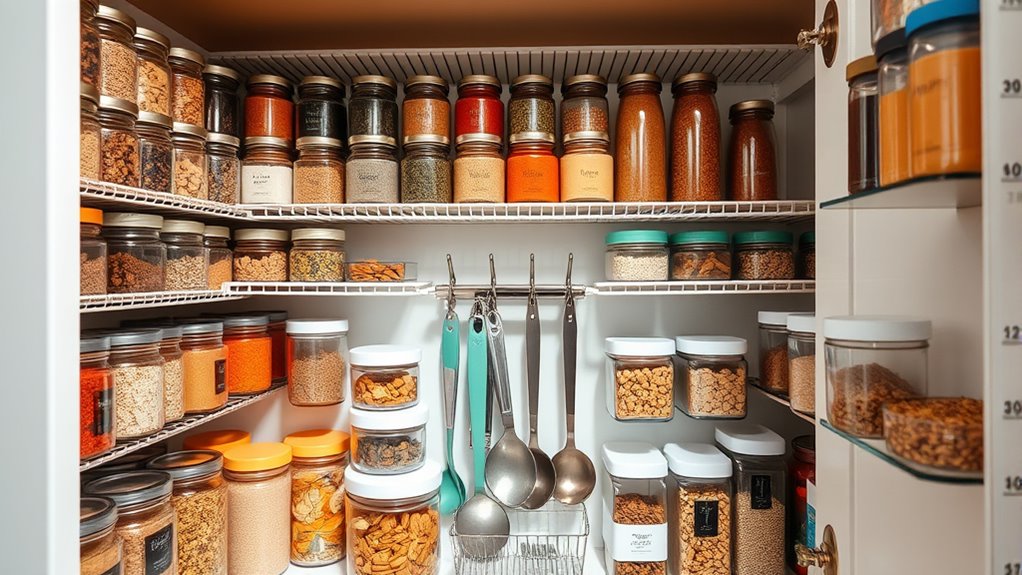
- Utilize door space with small racks for spices or small items to free up shelf area.
- Regularly declutter and maintain the system to prevent clutter and ensure ongoing organization.
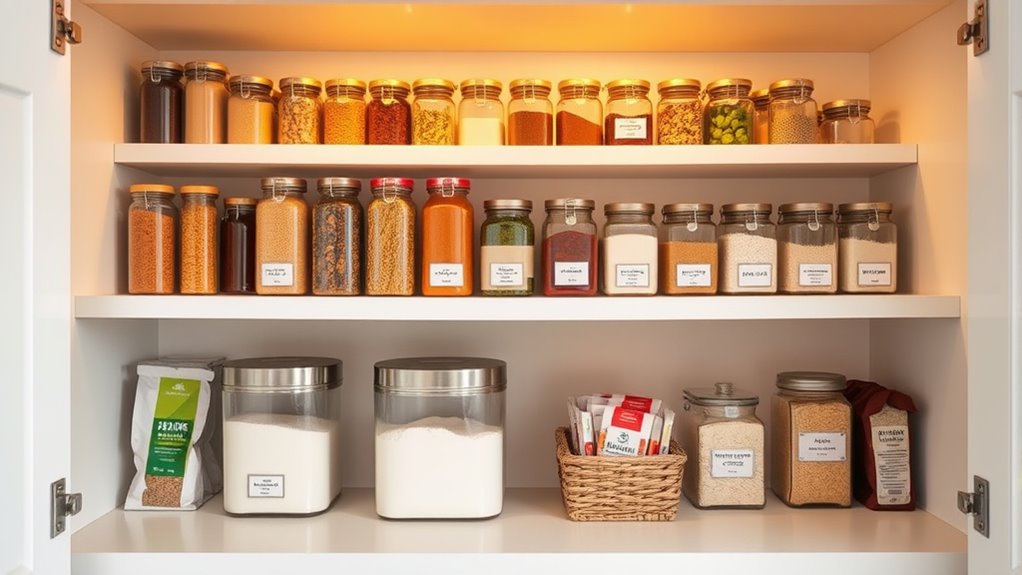
A tiny kitchen pantry can feel cluttered and overwhelming, but with the right strategies, you can maximize every inch of space. The key is to create a system that keeps items accessible and organized, preventing chaos from taking over. Start by sorting your pantry items into categories—baking supplies, canned goods, snacks, spices, and so on. This initial step helps you see what you have and identify what needs to be stored together.
Next, consider using container labels to keep everything clearly identified. When you label your containers, you eliminate confusion and make it easier to find what you need without rummaging through stacks of bags or boxes. Use uniform containers for dry goods like flour, sugar, pasta, and cereal. Clear containers work best because you can see the contents at a glance, but if you prefer, labels can be added for extra clarity. Apply container labels consistently so that every item has a designated spot, streamlining your entire process.
Vertical stacking becomes your best friend in a tiny pantry. Instead of spreading items out horizontally, stack containers vertically to utilize the full height of shelves or cabinets. This technique allows you to cram more into a small space without creating clutter. Think of it like building a mini tower—place heavier, less frequently used items at the bottom, and lighter or everyday essentials on top. You can also use stackable bins or baskets to group similar items together, which helps prevent things from toppling over and makes it easier to pull out what you need.
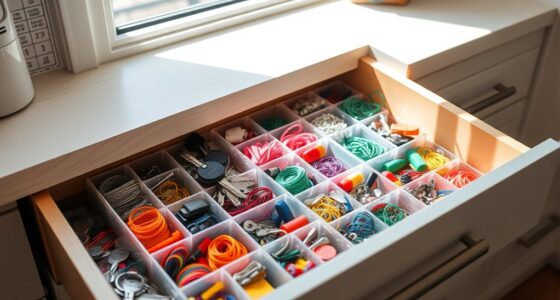
Maximize every inch by installing adjustable shelves or adding shelf risers. These additions create more levels within your existing space, giving you room for small jars, spice bottles, or snacks. If you have unused door space, hang small racks for spices or tiny gadgets. Drawer organizers can also help contain smaller items like tea bags, foil, or plastic wraps, keeping your space tidy and accessible. Incorporating essential oils for organization into your space can add a calming aroma, making your pantry a pleasant environment while staying organized.
Frequently Asked Questions
How Often Should I Declutter My Small Pantry?
You should declutter your small pantry at least once every three to six months to maintain it effectively. Incorporate a regular pantry maintenance routine and stick to a decluttering schedule to prevent overstocking and spoilage. Keep an eye on expiration dates and unused items, and make time for a quick tidy-up. Regularly decluttering guarantees your pantry stays organized, accessible, and free of unnecessary clutter.
What Are the Best Storage Containers for Tiny Spaces?
Stacking bins and clear jars are your best options for tiny spaces because they maximize vertical storage and keep things visible. You can stack bins to save shelf space, while clear jars let you quickly identify contents without rummaging. Use airtight lids for freshness, and choose sizes that fit your shelves. These containers make organizing easier and help you maintain a tidy, accessible pantry effortlessly.
How Can I Maximize Vertical Space Efficiently?
You can maximize vertical space by adjusting shelf heights to fit taller items and installing tiered racks to create multiple levels within the same area. This approach helps you utilize every inch efficiently, keeping items accessible and organized. By customizing shelf heights and adding tiered racks, you make the most of limited space, ensuring your pantry stays tidy and functional without clutter.
Are There Eco-Friendly Organizing Options for Small Pantries?
Imagine your pantry as a thriving garden, where eco-friendly choices bloom. You can use reusable containers for storing grains and snacks, reducing waste. Biodegradable options, like compostable bags or wraps, also help nurture the environment. These sustainable choices keep your pantry organized and green, letting you enjoy a clutter-free space that’s kind to the planet. Choose eco-friendly solutions to make your tiny pantry both functional and eco-conscious.
What DIY Solutions Work Best for Limited Budgets?
For budget-friendly storage, you can repurpose household items like jars, cans, and cardboard boxes for DIY organization tips. Use inexpensive materials such as plastic bins or baskets from dollar stores to keep items sorted. You might also create custom shelf dividers from cardboard or foam board, maximizing space without spending much. These DIY solutions are simple, effective, and perfect for keeping your tiny pantry neat on a limited budget.
Conclusion
Now that you’ve organized your tiny pantry, think of it as a well-tuned symphony, each item playing its part in harmony. Like a master chef, you’ve created order from chaos, turning clutter into clarity. Remember, a tidy space isn’t just about storage—it’s about making your kitchen sing. So keep it simple, stay consistent, and enjoy the rhythm of a beautifully organized pantry, where everything you need is always in tune and ready to serve.
Halloween Picks
halloween
As an affiliate, we earn on qualifying purchases.