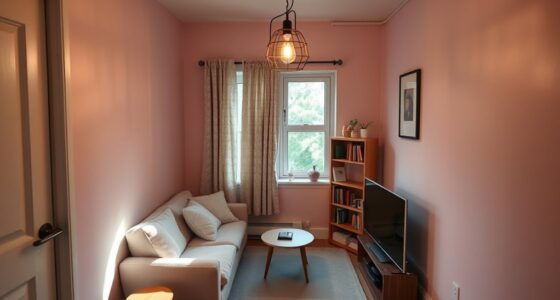
Using sound-absorbing decor like curtains and rugs can turn your small living space into a cozy, quiet retreat. Thick curtains soften hard walls and absorb sound, while layered or shaggy rugs cushion footsteps and reduce bouncing noise. These decor choices not only minimize echoes but also create a warm, inviting atmosphere. With some strategic placement, you’ll enjoy a more intimate and peaceful environment—keep exploring to discover even more ways to optimize your small space.

Get home appliances delivered free — and shop member deals
- Fast, free delivery on millions of items
- Access to Prime Big Deal Days deals on October 6–7
- Prime Video, Amazon Music and more included
Key Takeaways
- Choose thick, layered curtains to absorb sound and add warmth, enhancing coziness in small living spaces.
- Incorporate shaggy or plush rugs to cushion footsteps and reduce floor bounce, creating a quieter environment.
- Position rugs away from walls to minimize echo and improve overall acoustic comfort.
- Use fabric-draped wall decor alongside rugs and curtains for increased sound absorption and a cozy atmosphere.
- Combine soft textiles with furniture placement to contain sound, promote privacy, and make the space feel more intimate.

Ever notice how small living spaces can feel noisy and cluttered? It’s a common challenge, but one you can tackle with the right sound-absorbing decor. The goal is to create a cozy oasis where sound doesn’t bounce around, making the space feel even smaller and more chaotic than it actually is. One effective way to do this is by paying attention to wall treatments and furniture placement. These elements aren’t just about aesthetics; they play an essential role in managing acoustics.
Wall treatments, like textured wall panels, fabric-covered boards, or even large fabric art, can markedly dampen echoes and absorb sound waves. Instead of plain, hard walls that reflect noise, consider adding these treatments to create a softer surface that reduces reverberation. Hanging a thick tapestry or installing a fabric wall covering can make a noticeable difference. They not only improve acoustics but also add warmth and personality to your space. When placing furniture, think strategically about how it can help block sound. Large, plush sofas, armchairs, and bookshelves can act as barriers, preventing noise from bouncing off walls and spreading throughout the room. Positioning your furniture thoughtfully ensures that sound waves are absorbed or deflected rather than reflected, which helps keep the space quiet and intimate.
Another tip is to arrange furniture so that it doesn’t leave open pathways for sound to travel freely. Avoid placing large pieces directly against walls without some buffer, as this can create echoes. Instead, pull furniture away from walls slightly and use rugs to anchor the space. Rugs are excellent sound absorbers because they cushion footsteps and prevent sound from bouncing off hard floors. Layering rugs or opting for thicker, shaggy styles increases their effectiveness. Keep in mind that the placement of your furniture and decor should also promote a sense of privacy within your small space, making it feel more contained and cozy.
thick soundproof curtains for small rooms
As an affiliate, we earn on qualifying purchases.
As an affiliate, we earn on qualifying purchases.
Frequently Asked Questions
How Do Sound-Absorbing Decor Choices Affect Indoor Air Quality?
Sound-absorbing decor like thick curtains and rugs can improve indoor air quality by enhancing airflow circulation, which helps prevent stale air buildup. However, some materials may absorb odors or trap dust, requiring regular cleaning to avoid musty smells. Choose natural, breathable fabrics to reduce odor absorption and support fresh air. Proper maintenance guarantees your decor enhances both noise reduction and healthy indoor air, keeping your space cozy and inviting.
Can Sound-Absorbing Curtains Be Machine Washable?
Absolutely, machine washable curtains are a game-changer. They’re designed for easy cleaning without sacrificing fabric durability, making maintenance a breeze. Think of them as the superheroes of decor—combining sound absorption with practicality. You can toss them in the washing machine, keeping your small living space fresh and cozy. Just follow the care instructions, and your sound-absorbing curtains will stay effective and durable for years to come.
Are There Specific Materials Better for Sound Absorption?
Certain materials are more effective for sound absorption, so you should choose fabric options like heavy velvet or thick wool, which improve material effectiveness. These fabrics have dense fibers that trap sound waves better than lighter materials. When selecting decor, prioritize these options for maximum noise reduction. Remember, the denser and thicker the fabric, the more sound it can absorb, making your small space feel cozier and quieter.
How Do I Balance Aesthetics With Acoustic Functionality?
Balancing aesthetics with acoustic functionality is like walking a tightrope; you want both to shine. Choose decor style elements that blend seamlessly, like textured rugs and elegant curtains, which absorb sound without clashing visually. Prioritize visual harmony by selecting colors and patterns that complement your space. This way, your cozy small living space stays inviting and stylish while naturally reducing noise, making every detail work in harmony.
What Are Budget-Friendly Options for Sound-Absorbing Decor?
You can find budget-friendly sound-absorbing decor through DIY projects and vintage finds. Hang thick curtains or repurpose old blankets as window coverings, and layer rugs or thrifted textiles on the floor to dampen sound. Vintage shops often have soft, textured pieces that work well. These options are affordable, creative, and add character to your space, helping you achieve a cozy atmosphere without breaking the bank.
shaggy area rugs for sound absorption
As an affiliate, we earn on qualifying purchases.
As an affiliate, we earn on qualifying purchases.
Conclusion
Just like a warm embrace calms a restless mind, sound-absorbing decor transforms your small space into a peaceful retreat. Curtains and rugs act as gentle shields, muffling noise and creating a cozy haven where every whisper of sound feels softer. By choosing these simple additions, you craft a sanctuary reminiscent of a quiet forest glade—serene and inviting. Embrace these touches, and turn your tiny home into your personal oasis of calm amidst life’s chaos.
fabric wall panels for acoustic treatment
As an affiliate, we earn on qualifying purchases.
As an affiliate, we earn on qualifying purchases.
plush furniture for noise reduction
As an affiliate, we earn on qualifying purchases.
As an affiliate, we earn on qualifying purchases.
NFL season / tailgating Picks
team gear
As an affiliate, we earn on qualifying purchases.