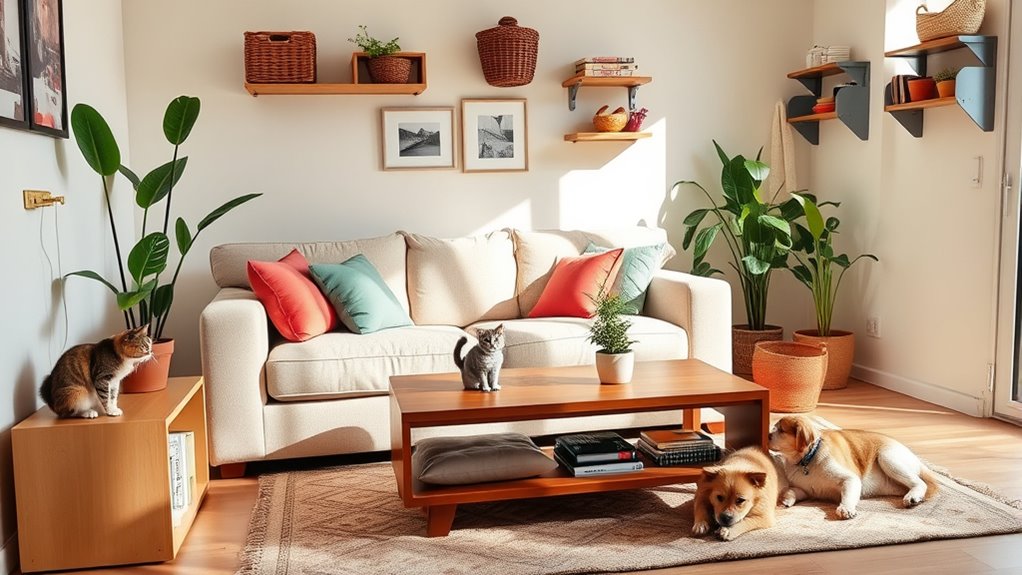

To create a pet-friendly living room in a small apartment, prioritize furniture placement by keeping large pieces against walls and ensuring clear pathways. Designate a cozy corner with a soft bed away from busy zones, and keep water bowls and toys nearby but unobtrusive. Use rounded-edged furniture, pet-safe materials, and secure windows with pet-proof screens. Good lighting, ventilation, and clutter management are key. Want more tips on making the space safe and comfy for your pet?
Key Takeaways
- Arrange furniture against walls with rounded edges to maximize space and prevent injuries.
- Designate a cozy, low-traffic corner with a soft bed for pet relaxation.
- Keep cords, small objects, and clutter out of pet reach to ensure safety.
- Incorporate pet-proof screens on windows and balconies for added security.
- Use vertical storage for pet supplies to maintain a tidy, spacious living area.

Living in a small apartment doesn’t mean you have to sacrifice your pet’s comfort or safety. In fact, with thoughtful planning, you can create a cozy, safe space that works for both of you. The key starts with pet safety and furniture arrangement. You want to guarantee your pet has enough room to move freely without risking injury or damaging your belongings. Start by evaluating your current furniture layout. Place larger pieces against the walls to maximize open space in the center of the room. This not only gives your pet room to play but also reduces the risk of accidents, like tripping over furniture or knocking things over. Opt for furniture with rounded edges or protected corners to prevent injuries, especially if your pet is young or energetic. Avoid cluttering the floor with unnecessary items, as this can become a hazard for your pet and make cleaning more difficult. Incorporate pet-safe materials into your furniture choices to ensure your pet’s safety and durability. Designate specific areas for your pet’s essentials. A cozy corner with a soft bed or mat can serve as a designated resting spot. Position this spot away from high-traffic zones, so your pet feels secure and isn’t constantly disturbed. Place water bowls and toys nearby but not in the way of your daily activities. Incorporate vertical storage, like wall-mounted shelves or hooks, to keep your pet’s supplies organized and off the floor. This helps maintain a tidy, safe environment and frees up space for both your and your pet’s comfort. Lighting and airflow are also crucial for pet safety and comfort. Make sure windows are secure with pet-proof screens or barriers, especially if you have tall windows or balconies. Proper ventilation ensures fresh air circulates, preventing stuffiness or odors that could bother your pet. Consider adding a few houseplants that are non-toxic to pets to bring some greenery into your living space—just double-check their safety beforehand. Finally, be mindful of your furniture arrangement to keep pathways clear. Avoid blocking exits or creating tight corners where your pet might get trapped. Keep cords, wires, and small objects out of reach to prevent choking hazards or electrical accidents. Regularly inspect your space to assure it remains safe as your pet’s needs change or as you rearrange your furniture. With these simple adjustments, you can craft a small apartment that’s both functional and safe, providing your pet with a comfortable space to relax, play, and thrive.
Top picks for "creat friendly space"
Open Amazon search results for this keyword.
As an affiliate, we earn on qualifying purchases.
Frequently Asked Questions
How Can I Prevent My Pet From Scratching Furniture?
To prevent your pet from scratching furniture, start by using furniture protection like slipcovers or double-sided tape. Introduce scratching deterrents such as scratching posts or pads nearby to redirect their behavior. Regularly trim your pet’s nails to reduce damage, and reward them when they use the designated spots. Consistent training and positive reinforcement will help your pet understand which areas are off-limits, keeping your furniture safe and your pet happy.
What Are Safe Plants for a Pet-Friendly Apartment?
You should choose safe plants for indoor gardening, such as spider plants, Boston ferns, and areca palms, which are all pet safe greenery. These plants add beauty and oxygen without risking your pet’s health. Always double-check plant labels and avoid toxic options like lilies or aloe vera. Incorporating these pet-friendly plants creates a lush, inviting environment while keeping your furry friend safe and happy.
How Do I Reduce Pet Odor in a Small Space?
To reduce pet odor in your small space, you should consider air purifier options that target pet smells and improve air quality. Use odor absorbing materials like baking soda, activated charcoal, or charcoal bags in your living area to naturally neutralize odors. Regularly clean your pet’s bedding, vacuum frequently, and wash textiles to keep odors at bay. Combining these methods helps maintain a fresh, inviting environment for both you and your pet.
What’s the Best Way to Organize Pet Supplies?
Think of your pet supplies as treasure waiting to be tamed. Use clever storage solutions like wall-mounted shelves or under-sofa drawers to keep clutter at bay. Decorative containers turn chaos into charm, making each item easily accessible yet stylish. Organize toys, grooming tools, and essentials in designated spots, so your space remains a peaceful haven. This way, your pet’s belongings blend seamlessly into your apartment’s aesthetic.
How Can I Keep My Pet Entertained in a Limited Area?
You can keep your pet entertained in a limited space by providing interactive toys that challenge their mind and keep them busy. Create small play areas with cozy mats or designated corners where they can relax and play. Rotate toys regularly to maintain their interest, and incorporate vertical spaces like shelves or wall-mounted perches to give your pet more room to explore and stay active within your compact living area.
Conclusion
Remember, a happy pet makes a happy home. By thoughtfully organizing your small apartment, you create a cozy haven that works for both of you. Keep furniture accessible, designate specific zones, and add some pet-friendly touches. As the saying goes, “A place for everything, and everything in its place.” With a little effort, your space will be both functional and welcoming, ensuring your furry friend feels loved and comfortable every day.