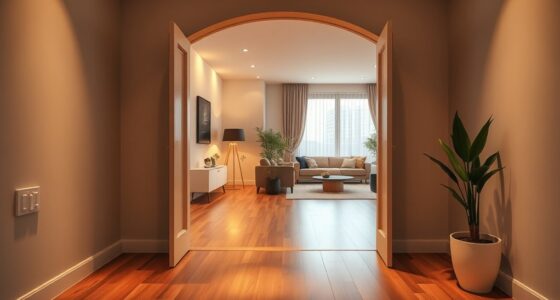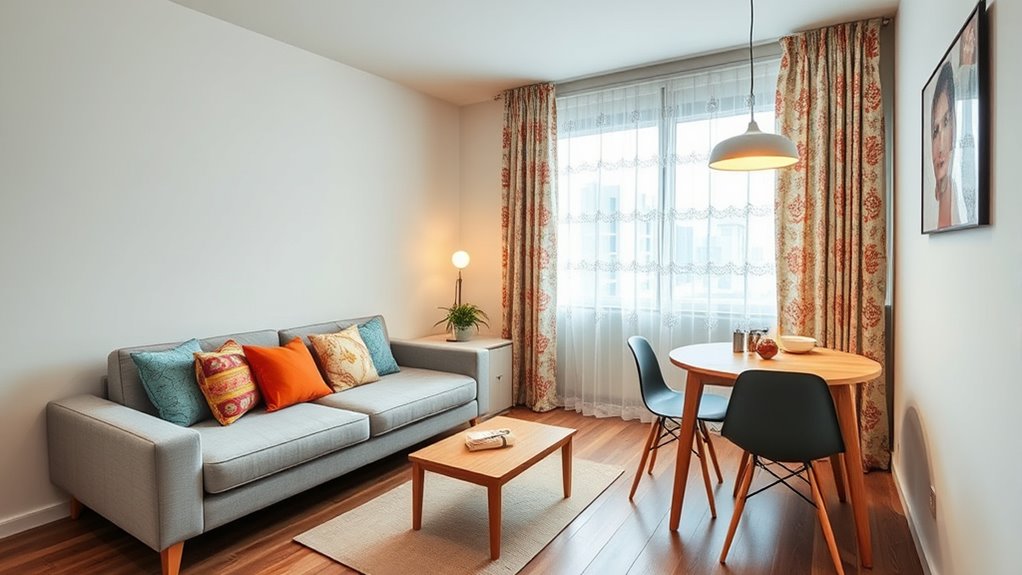

To arrange a combined living and dining area in a small apartment, choose multifunctional furniture like sofa beds and fold-out tables that make the most of limited space. Use light, neutral colors to create an airy feel and keep the layout open by positioning larger pieces against the walls. Incorporate rugs to define zones and maintain a clutter-free environment with minimal accessories. To discover more tips for a stylish, functional setup, continue exploring strategies that balance comfort and design.

Get home appliances delivered free — and shop member deals
- Fast, free delivery on millions of items
- Access to Prime Big Deal Days deals on October 6–7
- Prime Video, Amazon Music and more included
Key Takeaways
- Position larger furniture along the walls to maximize central space and maintain an open flow.
- Use multifunctional furniture like sofa beds and fold-out tables for flexibility and space-saving.
- Define zones with rugs and lighting to visually separate living and dining areas without clutter.
- Keep decor minimal and coordinate colors to create a cohesive, airy, and spacious atmosphere.
- Ensure clear pathways and sufficient clearance for doors and movement to enhance functionality.

Are you struggling to create a functional and inviting combined living and dining space? It’s a common challenge in small apartments, but with the right approach, you can make every square foot work for you. The key is to focus on multifunctional furniture and smart color coordination. These strategies can help you maximize space without sacrificing style or comfort.
Start by choosing multifunctional furniture pieces that serve more than one purpose. Think of a sofa bed or a sectional with built-in storage—these allow you to relax during the day and accommodate guests at night, all while keeping clutter at bay. A fold-out dining table is another game-changer; it can be expanded when needed and tucked away when not in use, freeing up precious space. Ottomans with hidden compartments double as seating and storage, making your room more versatile without adding clutter. The goal is to select furniture that can adapt to different needs, so your living and dining areas flow seamlessly.
Choose versatile furniture like sofa beds, fold-out tables, and storage ottomans to maximize space and functionality.
Color coordination plays a vital role in making your combined space feel cohesive and less cramped. Light, neutral tones help open up the room, creating an airy and inviting atmosphere. When you stick to a consistent color palette, your furniture, walls, and accessories look unified, which prevents the space from feeling cluttered or chaotic. You can add pops of color through accent pillows, rugs, or artwork to create visual interest without overwhelming the room. Keep in mind that darker or overly busy patterns can make a small space feel even smaller, so opt for simple, coordinated hues that enhance the natural light and give your apartment a fresh, spacious vibe. Additionally, understanding space optimization techniques can further improve how your furniture and layout utilize available room dimensions.
Arranging your furniture thoughtfully is just as important as choosing the right pieces. Position larger items, like your sofa and dining table, along the walls to free up central space for movement. Use rugs to define each zone subtly, and ensure there’s enough clearance for doors and walkways. Avoid overcrowding by keeping accessories and decorative items minimal—clutter can make a small space feel cramped. Instead, select a few statement pieces that complement your color scheme and add personality.
With multifunctional furniture and a thoughtful approach to color coordination, you can transform your small apartment into a stylish, practical living and dining area. It’s about making intentional choices that prioritize flexibility and cohesion, allowing your space to adapt to your lifestyle while feeling welcoming and organized. When you focus on these elements, your combined living and dining area becomes more than just a room—it becomes a reflection of your smart, stylish living.
As an affiliate, we earn on qualifying purchases.
Frequently Asked Questions
How Can I Maximize Storage in a Small Combined Living/Dining Space?
You can maximize storage by using multi-functional furniture like ottomans with hidden compartments and wall-mounted shelves. Incorporate clever storage solutions such as under-seat storage or fold-away dining tables. Keep the space organized with decorative accents that double as storage, like stylish baskets or magazine racks. By blending practical storage solutions with decorative accents, you’ll keep your small space functional, clutter-free, and visually appealing.
What Are the Best Lighting Options for a Multi-Purpose Room?
Think of your room as a stage—lighting sets the scene. Use ambient lighting like ceiling fixtures or wall sconces to create a warm, inviting atmosphere. Add task lighting, such as stylish table lamps or adjustable floor lamps, for focused activities like reading or dining. Combining these options guarantees your multi-purpose space is versatile, functional, and cozy, no matter the activity, making every moment feel just right.
How Do I Create Separate Zones Without Walls?
You can create separate zones by using flooring shifts, like different rugs or mats, to distinguish areas. Use varied color schemes for furniture and decor to visually separate your living and dining spaces. Position furniture strategically, such as a sofa or a bookshelf, to act as a divider without walls. These techniques help define each zone clearly while maintaining an open, cohesive look in your small apartment.
What Furniture Styles Work Best for Small Combined Areas?
Imagine your small space as a canvas waiting for harmony. Opt for minimalist decor and sleek, multi-functional furniture—think fold-away tables, sofa beds, and nesting tables—that transform easily. These styles keep your area feeling open and breezy, like a breath of fresh air. With clean lines and versatile pieces, you create a seamless flow, making your combined living and dining zone both functional and inviting, no walls needed.
How Can I Incorporate Personal Décor Without Cluttering?
You can incorporate personal décor by choosing wall art that reflects your style without overwhelming the space. Use decorative accents like small vases, framed photos, or stylish books to add personality. Keep items minimal and strategically placed to avoid clutter. Opt for multifunctional pieces that serve a purpose while showcasing your taste. This approach keeps your area personalized, organized, and visually appealing without feeling crowded.
fold-out dining table space saver
As an affiliate, we earn on qualifying purchases.
As an affiliate, we earn on qualifying purchases.
Conclusion
Think of your small apartment as a cozy garden; with the right arrangement, each piece of furniture blooms in harmony. By carefully balancing your living and dining zones, you create a space that feels open yet intimate. Remember, every item should serve a purpose, like flowers in a well-tended bed. When you arrange thoughtfully, your combined living and dining area becomes a beautiful, functional oasis—proof that even small spaces can flourish with a little planning.
storage ottomans with hidden compartments
As an affiliate, we earn on qualifying purchases.
As an affiliate, we earn on qualifying purchases.
light neutral area rugs for small spaces
As an affiliate, we earn on qualifying purchases.
As an affiliate, we earn on qualifying purchases.
Fall yard work Picks
leaf blowers
As an affiliate, we earn on qualifying purchases.