
TL;DR
Portable space heaters warm a room or a specific area without heating an entire home. Choose convection, radiant, or fan heat based on how quickly and evenly you want warmth, and estimate electricity use with watts ÷ 1,000 × hours. Keep electric models at least 3 feet from flammable items, plug them directly into a wall outlet, and turn them off when you leave or go to sleep.
Use convection for gradual, more even room warmth; choose radiant or fan heat when you want faster warmth nearby.
A 1,500-watt heater running at full power for one hour uses 1.5 kWh; multiply by your electricity rate to estimate the charge.
A heater can lower heating costs only when it helps you reduce other heating enough to offset its electricity use.
Keep electric heaters at least 3 feet from combustible materials, place them on a stable surface, and plug them directly into a wall outlet.
Follow the manual and local guidance; fuel-burning models need appropriate ventilation and working carbon monoxide alarms.

Get home appliances delivered free with Prime
- Fast, free delivery on millions of items
- Prime Video, Amazon Music and more included
- Member-only deals all year
How portable space heaters warm the spot you’re using
Portable space heaters are movable devices that add heat to a room or a specific area without heating an entire home. Electric models turn electricity into heat where they sit, while fuel-burning models create heat by burning fuel and need careful attention to ventilation and carbon monoxide safety. The key difference is where the warmth goes: into the air, or straight toward you and nearby objects.
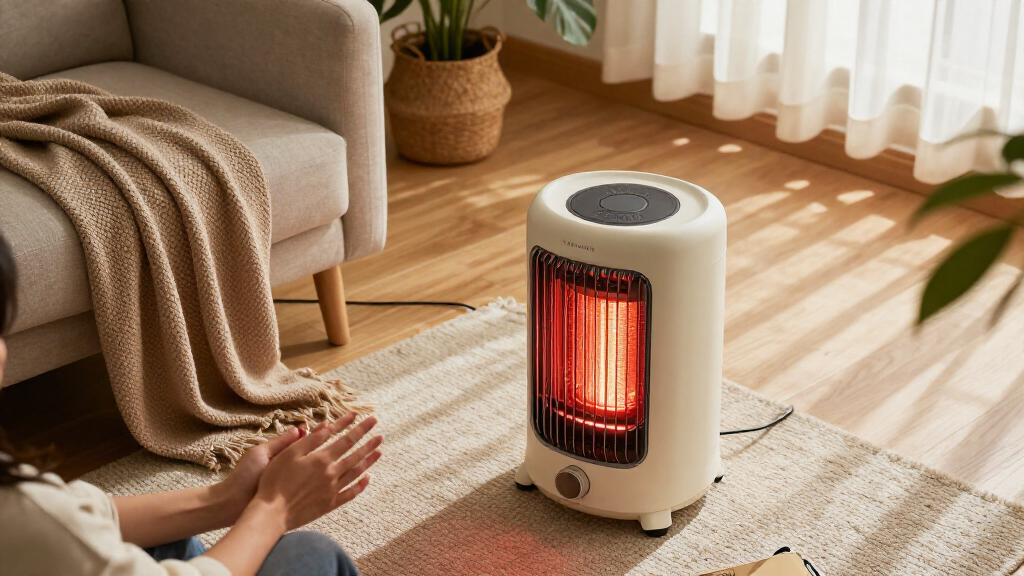
Think of a convection heater as a slow, steady blanket for the room. An oil-filled radiator warms the air gradually and can keep radiating heat for a while after its element cycles off. A ceramic heater usually blows warmed air into the room, while a fan heater moves heat quickly but adds a soft mechanical whir. Radiant or infrared heaters work more like sunshine through a window: you feel the warmth on your skin when you sit in their path, even if the far side of the room stays cool.
For example, if you work at a desk in a chilly corner for two hours, a radiant model aimed toward your legs may feel comfortable sooner than a radiator warming the whole room. If you want the air around a small bedroom to feel more evenly warm, convection may suit you better. Each type has a comfort zone, and your routine matters as much as the label on the box.
Fuel-burning heaters need extra care. Some are designed for indoor use, but only when used exactly as the manual directs, with required ventilation and working carbon monoxide alarms. A heater marked for outdoor use must stay outdoors. Never bring a patio heater into a home, garage, or enclosed workshop.
Products Worth Considering

Bose SoundLink Max Portable Bluetooth Speaker, IP67 Waterproof, Black

Ring Battery Doorbell and Chime (3rd Gen), Venetian Bronze

Ring Battery Doorbell Plus (2nd Gen) and Chime Plus Bundle, Nickel Silver and White
As an affiliate, we earn on qualifying purchases.
Choose the heater that matches how you want to feel warm
For fast, directional warmth, consider radiant or fan-driven heat; for steadier warmth across the room, look at convection designs. No heater type wins in every room, because drafts, insulation, noise, and how close you sit all change the experience. A manufacturer’s room-size estimate helps you compare models, but it cannot account perfectly for a high ceiling or a window that leaks cold air.
| Type | How it feels | Good fit | Tradeoff |
|---|---|---|---|
| Oil-filled radiator | Gradual, steady heat | A room where you want quiet, even warmth | Takes time to warm up and can be bulky |
| Ceramic or fan heater | Quick stream of warm air | A nearby desk or small area that needs heat fast | Fan noise and moving air may bother you |
| Radiant or infrared | Direct warmth on people and objects | A seated spot or workbench | Heat can feel uneven outside its path |
| Fuel-burning model | Heat from combustion | Only a suitable, approved location and model | Ventilation and carbon monoxide risks need attention |
Imagine a basement craft table with a cold concrete floor. A radiant heater may make your hands comfortable while you work, but it won’t necessarily warm the whole basement. In a drafty nursery, by contrast, you may want more even heat—and you should keep any heater well away from the crib, curtains, and toys.
Check for a thermostat, timer, multiple heat settings, tip-over shutoff, and overheat protection. These controls can help you manage comfort and reduce risk, though no feature makes a heater risk-free. Compact designs, app controls, and occupancy sensing have appeared in newer models; don’t treat a marketing claim about “energy saving” as a promise of lower bills. The controls help only when they fit how you use the room.
Estimate the electricity cost before the heater runs all evening
A resistance space heater uses electricity according to its wattage and how long it runs; a higher wattage can produce more heat but also draws power faster. The simple calculation is watts ÷ 1,000 × hours = kilowatt-hours (kWh). For example, a 1,500-watt heater running continuously for one hour uses 1.5 kWh; multiply that figure by your electricity rate to estimate the energy charge.
Say your rate is 30 cents per kWh. One full-power hour at 1,500 watts would use about 45 cents of electricity, and four such hours would use about $1.80. Your bill may be lower if a thermostat cycles the heater off as the room warms, or higher if you leave it running for longer than you expected. A power setting below full output also changes the calculation.
Will a heater cut your heating bill? Possibly, if it lets you turn down central heating while you warm an occupied room. If you leave the whole house at the same setting and simply add a heater, you’ve added electricity use without reducing another source of heat. Picture working alone in a small office: lowering the thermostat a little and heating that room may make sense. Heating a large, poorly insulated room for eight hours may tell a different story.
Your existing system also matters. An electric heat pump can deliver more heat per unit of electricity than a resistance heater, so replacing heat-pump heat with a portable resistance model may use more energy. Portable heat can be convenient, but “small appliance” doesn’t automatically mean “small running cost.” Compare the actual rate, operating time, and heating you can turn down.
Use these steps to set up a heater more safely
To use an electric portable heater more safely, put it on a stable, level surface, keep at least 3 feet (about 1 metre) between it and combustible items, and plug it directly into a wall outlet. Follow the manual if it calls for a greater clearance. Keep children and pets away, and switch the heater off when you leave the room or go to sleep unless its instructions and local safety guidance explicitly support that use.
- Pick a clear location. Choose a flat spot where the heater cannot tip, block a doorway, or become a trip hazard. Keep it away from bedding, curtains, furniture, clothing, and paper.
- Check the power connection. Plug an electric model straight into a wall outlet. Avoid extension cords and power strips, which can overheat under a heater’s load.
- Check the room and the label. Keep the heater away from water and damp areas unless it is rated for that location. Use a model with recognized safety certification and follow the instructions.
- Stay in control of its use. Keep the unit clear and switch it off when leaving or sleeping, following local guidance and the manufacturer’s directions.
For instance, setting a heater beside a desk may seem convenient until a curtain drifts over its warm grille or a pet knocks it sideways. A tip-over shutoff helps, but clear space and a stable position remain your first safeguards. Heated surfaces can burn even when automatic shutoffs work.
Fuel-burning heaters call for a different safety routine: follow the manufacturer’s ventilation instructions and use working carbon monoxide alarms. Carbon monoxide has no smell, so you can’t rely on your nose to detect it. If a model says outdoor use only, keep it outside. For a garage or workshop, check the heater’s rating and instructions, and keep it away from flammable vapors and combustible materials.
Match the heater to the room, not just the box claim
The right heater size depends on the room, insulation, ceiling height, outdoor temperature, and how quickly you want warmth—not just the square footage printed on a product page. Treat the manufacturer’s room-size guidance as a starting point. A drafty corner room with tall ceilings can need more heat than a snug, well-insulated room of the same floor area.
Start by describing what you want to warm: the whole room, a seat, or a work surface. If you sit at a home office desk each morning, a quiet heater with a thermostat and timer may suit you better than a loud fan that blasts warm air at your hands. If the room is used only briefly, a model that provides quick directional warmth may be more comfortable than waiting for the whole air volume to heat up.
Picture two rooms on a winter morning. In a small, insulated study with a closed door, a modest heater may make the space pleasant while you read. In a large garage with a leaky door, that same unit may struggle and run for long stretches. More wattage can provide more heat, but it also uses electricity faster at full power, so a bigger number isn’t automatically the better buy.
Consider noise, portability, controls, and placement alongside wattage. A fan may stir dust or interrupt a video call; an oil-filled model may be heavier to roll between rooms. If you plan to move a unit, make sure its handle and cord arrangement suit that routine. When a product claims to heat a large area, compare the claim with your room’s real drafts and insulation.
Know when portable heat helps—and when it adds risk
A portable heater is most useful when you need warmth for a limited space and can manage it safely. It can take the edge off a chilly home office, a rarely used guest room, or a drafty reading nook. It may not be a good fit when you need unattended heat, want to warm a large uninsulated area, or cannot keep the required clear space around the unit.
Consider a guest room that stays cool because the central thermostat sits in a sunny hallway. A heater may help when someone occupies that room, but the host still needs to place it on a stable surface away from bedding and switch it off when the guest leaves. In a bathroom, dampness adds risk: only use a model rated for that location and follow its manual. A standard heater next to a sink or wet floor is a poor shortcut.
Electric heaters do not burn fuel and do not produce carbon monoxide during normal use. Warming air can make relative humidity feel lower, though, so the room may seem drier. Fuel-burning heaters can produce carbon monoxide if combustion or ventilation is inadequate; alarms and proper ventilation matter. Keep these differences clear when choosing a model for a room.
Product features and local rules vary by country, and safety advice can change. Read the heater label and manual, check current local guidance, and use a model approved for its location. If you need heat in a place with flammable vapors, water exposure, or other unusual hazards, don’t assume a household heater is suitable. The room’s conditions should shape the choice.
Frequently Asked Questions
Are portable space heaters safe to leave on overnight?
Many safety authorities advise turning portable heaters off when you go to sleep or leave a room. Follow local guidance and the manufacturer’s instructions; automatic shutoffs do not remove every risk. Keep bedding and other combustible materials at least 3 feet away.
Can a space heater reduce my heating bill?
It can if you use it to warm an occupied room while turning down central heating. Adding a heater without reducing other heat adds electricity use, and long hours in a large, drafty room may cost more than you expect. Compare your electricity rate and the heat you can turn down.
How much electricity does a space heater use?
Use watts ÷ 1,000 × hours = kWh. A 1,500-watt heater running at full power for one hour uses 1.5 kWh; multiply that by your electricity rate to estimate the energy charge. Thermostat cycling can reduce actual use.
Can I plug a heater into an extension cord or power strip?
Electric heater safety guidance generally recommends plugging the heater directly into a wall outlet. Extension cords and power strips can overheat under the load. Follow the product manual and keep the cord positioned so it won’t be tripped over or covered.
Do electric space heaters produce carbon monoxide or dry out a room?
Electric heaters do not burn fuel and do not produce carbon monoxide during normal use. Warming the air can make relative humidity feel lower, so a room may seem drier. Fuel-burning models can produce carbon monoxide if combustion or ventilation is inadequate; use working alarms and follow ventilation instructions.
Are ceramic, infrared, or oil-filled heaters better?
It depends on where you want to feel warmth. Ceramic or fan heaters can warm a nearby area quickly, infrared models heat people and objects directly, and oil-filled radiators provide more gradual, steady warmth. Noise, room insulation, and how evenly you want heat all affect the choice.