
TL;DR

Get home appliances delivered free with Prime
- Fast, free delivery on millions of items
- Prime Video, Amazon Music and more included
- Member-only deals all year
A recent experiment shows that placing gravel at the bottom of pots does not improve drainage. The common practice is ineffective, and proper pot drainage depends on other factors. This challenges longstanding houseplant advice.
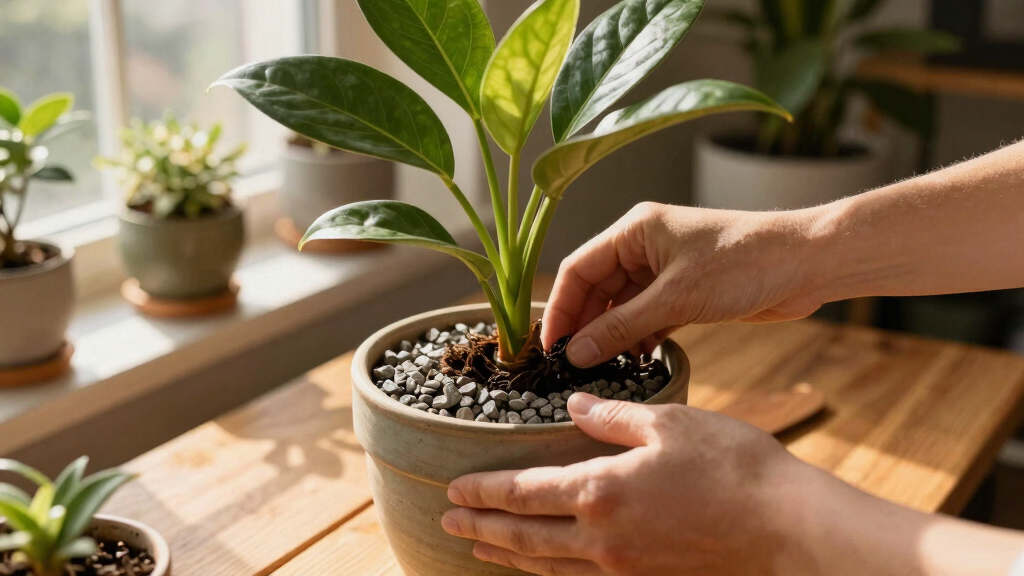
Recent testing confirms that placing gravel at the bottom of plant pots does not improve drainage. The experiment, conducted by a researcher, found that gravel layers do not prevent waterlogging and may actually reduce available root space. This challenges a common gardening practice that has persisted for decades.
The researcher set up two identical pots, one with a gravel layer and one without, and watered both thoroughly. The pot with gravel showed wetter soil just above the gravel layer than the one without, indicating that gravel does not facilitate better drainage. The concept behind the hack is based on the perched-water-table effect, where water remains trapped above the gravel until the soil becomes saturated. Experts emphasize that effective drainage depends primarily on proper drainage holes and soil composition rather than gravel layers.
Gardening guides have long recommended adding gravel or stones at the bottom of containers as a simple way to prevent root rot by improving water flow. However, recent tests suggest that this practice is ineffective and may even reduce the available space for roots, counteracting its intended benefit. Proper drainage is better achieved by using pots with adequate holes and well-draining soil mixes, according to the research.
Why the Gravel Layer Practice Is Being Questioned
This finding matters because many houseplant enthusiasts and professionals have followed the advice to add gravel at the bottom of pots for years. The new evidence suggests that this common hack does not improve drainage and might hinder root growth by reducing soil volume. Understanding the correct methods for watering and pot selection can help prevent root rot and improve plant health.
houseplant drainage pots with drainage holes
As an affiliate, we earn on qualifying purchases.
As an affiliate, we earn on qualifying purchases.
Historical Gardening Advice on Gravel Layers
The practice of adding gravel or stones to the bottom of pots has been a staple of houseplant care guides for decades. It was believed to create a drainage layer that would prevent water from accumulating around roots. However, recent scientific explanations, such as the perched-water-table effect, clarify that water tends to stay above the gravel until the soil is saturated, making the layer ineffective. Experts have increasingly questioned the validity of this method in recent years, but it remains widespread among casual gardeners.
“Adding gravel at the bottom of pots does not improve drainage and can reduce root space.”
— an anonymous researcher
well-draining potting soil for houseplants
As an affiliate, we earn on qualifying purchases.
As an affiliate, we earn on qualifying purchases.
Unconfirmed Aspects of Gravel Layer Effectiveness
While the recent experiment indicates that gravel layers do not improve drainage, it is not yet clear whether different types or sizes of gravel might have varying effects. Additionally, some gardeners believe gravel may have other benefits, such as preventing soil erosion or aiding in watering, which remain untested or unconfirmed scientifically.
As an affiliate, we earn on qualifying purchases.
Future Research and Practical Gardening Advice
Further studies are expected to examine different gravel types and alternative drainage methods. Gardeners are advised to focus on using pots with adequate drainage holes and suitable soil mixes. Industry experts suggest updating gardening guidelines to reflect current scientific understanding and dispel outdated practices.
succulent and cactus pots with drainage
As an affiliate, we earn on qualifying purchases.
As an affiliate, we earn on qualifying purchases.
Key Questions
Does adding gravel at the bottom of my plant pots help with drainage?
No, recent experiments show that gravel layers do not improve drainage. Proper drainage depends mainly on pot holes and soil type.
Can gravel layers harm my houseplants?
They can reduce the available soil volume for roots and are unlikely to provide any drainage benefit, potentially harming plant health.
What is the best way to ensure my plant drains well?
Use pots with adequate drainage holes and a well-draining soil mix suited to your plant’s needs.
Are there any benefits to adding gravel at the bottom of a pot?
Currently, scientific evidence does not support benefits for drainage, though some believe it may prevent soil erosion or aid watering—these claims are unconfirmed.
Will this change how I care for my houseplants?
Yes, focus on proper pot selection and soil quality rather than adding gravel layers for better drainage.
Source: Guardian Life
NFL season / tailgating Picks
team gear
As an affiliate, we earn on qualifying purchases.