
TL;DR

Get home appliances delivered free — and shop member deals
- Fast, free delivery on millions of items
- Access to Prime Big Deal Days deals on October 6–7
- Prime Video, Amazon Music and more included
A dehumidifier size calculator estimates the capacity needed based on room size, dampness level, and conditions. Using it helps you pick a unit that’s not too big or small — saving energy and solving humidity issues faster.
Ever bought a dehumidifier only to find it runs constantly without fixing your damp basement? Or, spent money on a monster that’s way too loud and powerful for your small guest room? Picking the right size isn’t guessing — it’s science. A good dehumidifier size calculator takes the guesswork out and helps you match capacity to your space’s real moisture load.
In this guide, you’ll learn how to use a dehumidifier size calculator, what factors influence your choice, and how to interpret the results. Get it right, and your home stays dry, comfy, and mold-free — without wasting energy or breaking the bank.
Always measure your room’s volume and dampness for accurate sizing.
Use the calculator’s recommended capacity range as a flexible guide, not a strict rule.
Oversizing can cause noise and energy waste, while undersizing fails to fix humidity issues.
Consider environmental factors like temperature and moisture sources when selecting a model.
Proper drainage options extend dehumidifier lifespan and effectiveness.
What exactly does a dehumidifier size calculator do for you?
A dehumidifier size calculator estimates the moisture-removal capacity your space needs. It considers your room’s size, dampness level, temperature, and how wet the air feels. Think of it as a personalized map that shows the right pint capacity to keep your space dry without overkill.
For example, if you have a 1,200 sq ft basement with a lot of condensation and musty odors, the calculator suggests a 40–50 pint model. Without it, you might pick a 30-pint unit that runs constantly or a 70-pint that’s unnecessary and costly. The calculator helps you find that sweet spot—avoiding the pitfalls of both under- and over-capacity units, which can lead to inefficiency, higher energy bills, or inadequate moisture removal. It’s a tool that guides your decision, ensuring you get a unit that’s powerful enough to handle your space’s specific moisture load without wasting resources or risking damage from excessive dryness.
As an affiliate, we earn on qualifying purchases.
How to input your room details for accurate results
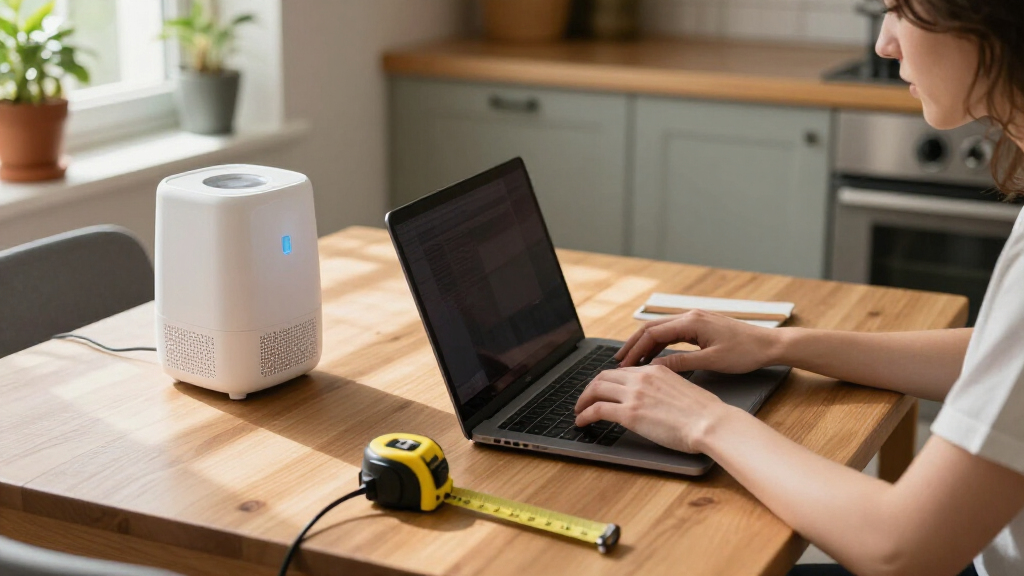
- Measure your room’s length, width, and ceiling height. For example, a 20 ft x 30 ft room with an 8 ft ceiling equals 4,800 cubic feet. Accurate measurements are crucial because the calculator uses volume to estimate moisture load; underestimating can lead to choosing a too-small unit, while overestimating might suggest an unnecessarily large, more expensive model.
- Note your current humidity level and how damp the space feels. Is there visible condensation, persistent mustiness, or signs of mold? These clues help determine the severity of moisture problems, influencing the capacity needed. Ignoring these signs might result in choosing a unit that’s too weak to handle peak moisture or one that’s overly powerful for mild conditions, leading to unnecessary costs and energy waste.
- Identify special conditions: Is it a basement? Do you have frequent water intrusion or high moisture sources like laundry or showers? These factors can significantly increase the moisture load, requiring a higher capacity unit or additional dehumidification strategies. Recognizing these conditions ensures your calculations reflect real-world challenges, leading to more reliable performance and longer equipment lifespan.
- Set your target humidity, usually 40–50% for comfort and mold prevention. This target influences how much moisture the dehumidifier needs to remove, affecting the capacity recommendation. Setting it too low may lead to over-drying, which can cause discomfort and potential damage; too high, and humidity issues persist.
- Input these details into the calculator. It then suggests a capacity range, typically in pints per 24 hours. Understanding how your inputs influence the output helps you interpret the results better and ensures the selected unit will meet your specific needs effectively.
For example, if your basement is damp, with humidity around 70%, and the room volume is 4,800 cubic feet, the calculator might recommend a 50-pint unit with continuous drainage. Recognizing how input accuracy impacts the recommendation helps you avoid mismatched choices and ensures your dehumidifier performs optimally in your environment.
small room dehumidifier with drainage
As an affiliate, we earn on qualifying purchases.
As an affiliate, we earn on qualifying purchases.
Interpreting the results: What do the numbers really mean?
When your calculator shows a range — say, 40–50 pints — it’s giving you a flexible window. Choosing a unit near the top of that range is generally advisable if your space exhibits higher dampness, poor ventilation, or has specific moisture challenges like groundwater seepage. This helps ensure the dehumidifier can handle peak moisture loads, especially during humid weather or in spaces with ongoing moisture sources, without constantly running at maximum capacity. Operating at or near capacity consistently can cause increased wear, reduce the lifespan of the compressor, and lead to inefficient energy use. Conversely, selecting a unit at the lower end of the range might be suitable for spaces with milder dampness or better ventilation, helping you avoid unnecessary energy consumption. But be cautious: under-capacity units may run continuously without effectively reducing humidity, which can promote mold growth and damage. The key is understanding that capacity isn’t just about removing moisture—it’s about matching the machine’s ability to the environment’s moisture load. Proper interpretation of these numbers allows you to select a dehumidifier that not only fits your space but also operates efficiently over time, saving you money and reducing maintenance needs. Environmental factors, such as low temperatures, further influence this choice. Cooler environments reduce compressor efficiency, so selecting models rated for low temperatures or desiccant technology becomes critical for consistent performance. Ultimately, understanding these implications helps you make a smart, long-term investment in your home’s comfort and health.
energy-efficient dehumidifier for damp room
As an affiliate, we earn on qualifying purchases.
As an affiliate, we earn on qualifying purchases.
Why bigger isn’t always better — or worse
Over-sizing a dehumidifier can lead to unnecessary noise, higher upfront costs, and short cycling — where the unit turns on and off too often. This frequent cycling causes increased wear on the compressor, potentially shortening its lifespan, and can lead to inconsistent humidity control. Additionally, a larger capacity unit may remove moisture so quickly that it over-dries the air, making your space uncomfortably dry, which can cause issues like wood shrinkage, static electricity, or respiratory discomfort. On the other hand, under-sizing means the dehumidifier struggles to keep humidity levels in check, often running nonstop without achieving desired results. This continuous operation wastes energy, increases utility bills, and leaves moisture problems unresolved, promoting mold growth, wood warping, and other damage. Both scenarios highlight the importance of precise capacity matching. Using the calculator’s recommended range helps you avoid these pitfalls, ensuring your dehumidifier operates efficiently, quietly, and reliably. Proper sizing optimizes energy use, extends equipment lifespan, and maintains a comfortable, healthy environment. It’s a balance—bigger isn’t necessarily better if it causes inefficiency, and smaller isn’t always worse if it’s well-matched to the actual moisture load. The goal is to find that optimal capacity that handles peak conditions without excessive cycling or over-drying, ensuring long-term performance and cost savings.
mold and moisture control dehumidifier
As an affiliate, we earn on qualifying purchases.
As an affiliate, we earn on qualifying purchases.
How to handle tricky spaces: basements, high moisture, and cold rooms
Basements and crawl spaces are often colder, which reduces a dehumidifier’s efficiency because colder air holds less moisture and can cause frost buildup on the coils. For these environments, a 50-pint unit rated for low temperatures and equipped with automatic defrost features is usually best. If your basement frequently dips below 50°F, look for models with frost control or low-temperature operation to maintain consistent drying without damage. Cold temperatures also slow down the dehumidification process, so selecting a unit designed for such conditions ensures it can operate effectively without freezing up. High moisture sources, such as laundry rooms, bathrooms, or areas with groundwater seepage, require larger capacity units or multiple dehumidifiers to handle the increased moisture load effectively. Cold rooms, especially during winter, may necessitate desiccant dehumidifiers or units specifically rated for low-temperature operation, as compressor-based units may struggle in these conditions. Recognizing these special conditions and choosing the right equipment prevents inefficiencies, maintains consistent dryness, and prolongs the lifespan of your dehumidifier. Properly matching your equipment to these environments ensures reliable performance, avoids unnecessary repair costs, and maintains a healthy indoor climate despite challenging conditions.
Making your choice: from calculator to purchase
Once you have your recommended capacity, check the model’s specifications carefully. Ensure it’s rated for your room’s temperature range and has the drainage options you prefer. Consider environmental factors; for instance, if your space is prone to high humidity or fluctuates in moisture levels, opting for a slightly higher capacity model provides a buffer, ensuring consistent performance even during moisture spikes. This extra margin helps prevent underperformance during peak conditions, reducing the risk of humidity rebounds that can lead to mold or mildew. Choosing a model that aligns with your calculated needs and environmental considerations ensures efficient operation and longevity. For example, if the calculator suggests 40–50 pints, selecting a 50-pint unit with continuous drainage not only meets your current needs but also accommodates future changes in humidity or space usage. Additionally, look for features like low-temperature operation if your space experiences cold conditions or automatic defrost for colder environments. These features enhance reliability and reduce maintenance costs. Ultimately, matching capacity with the environment and selecting features like drainage options and low-temperature operation will help you get the most value and reliability from your dehumidifier.
Frequently Asked Questions
How do I know if my space is damp enough to need a large dehumidifier?
If your walls feel damp, mold grows easily, or you smell mustiness, your space is likely very damp. Use these clues along with your calculator to choose a capacity near the top of the suggested range.
Can I use a smaller dehumidifier for a large space if I run it longer?
Running a small unit longer isn’t always effective. It might struggle to keep humidity down, especially during peak moisture loads. It’s better to match the capacity to your space’s needs for consistent, efficient drying.
What if my room has high ceilings or unusual shapes?
Calculate the room volume (length × width × height). Higher ceilings increase total space, so you may need a larger capacity. The calculator can help adjust recommendations based on total volume, not just square footage.
Are energy-efficient models worth the extra cost?
Yes, especially if you run the unit daily. Models with ENERGY STAR ratings consume less power, saving money over time and reducing your carbon footprint, making them a smart investment for ongoing operation.
Conclusion
Choosing the right dehumidifier isn’t about the biggest or most expensive model — it’s about matching capacity to your space’s real needs. Use a size calculator as your personal moisture map, guiding you toward a unit that works efficiently and quietly. With the right match, your home stays dry, comfortable, and mold-free — no guesswork required.
Remember, a well-sized dehumidifier is like a good pair of shoes: snug enough to do the job, but not so tight it causes discomfort. Think of your space as a climate, and pick the right size to balance the moisture load and your comfort.
Dehumidifier Size Calculator
Estimate daily pint capacity from room size and how damp the space feels.
Your room likely starts in the 20 to 30 pint range. Compare compact dehumidifiers for smaller spaces.
See compact dehumidifier matchesYour room points to a 35 to 40 pint unit. Compare mid-size dehumidifiers and check drainage options.
See mid-size dehumidifier matchesYour conditions call for a 50 pint or larger unit. Compare larger dehumidifiers and confirm room moisture sources.
See larger dehumidifier matchesEstimate only. Check product specs, local rates, and site conditions before buying or planning around these numbers.
Fall Picks
fall essentials
As an affiliate, we earn on qualifying purchases.