
TL;DR

Get home appliances delivered free with Prime
- Fast, free delivery on millions of items
- Prime Video, Amazon Music and more included
- Member-only deals all year
Interior designers interviewed by Livingetc say home gyms remain in demand in luxury residential projects, even as group workouts and wellness activities become more social. They describe a shift from equipment-focused rooms toward integrated spaces designed for exercise, recovery and everyday use. The report offers expert observations, not market-wide sales data or a forecast backed by quantitative research.
Home gyms remain part of the brief for many luxury residential projects, but designers interviewed by Livingetc say the rooms are changing from equipment-only spaces into more integrated wellness environments. The report comes as group exercise and social wellness activities gain visibility, raising questions about how private workout spaces fit into changing routines.
Interior designer Nina Maya told Livingetc that home gyms remain an important consideration in modern homes and that demand for wider wellness spaces has grown. She said clients increasingly think about how their homes can support movement, recovery and time alone, with gyms considered earlier in the design process, including their location, outlook and connection to other rooms.
Designer Rebecca Hughes also reported continued demand, while describing a shift in priorities. Rooms that were once treated as primarily functional are now being considered part of a home’s overall design and lifestyle offering. Examples in the report include a gym designed around a historic property’s timber beams and a project where the workout space looks toward a pool and garden.
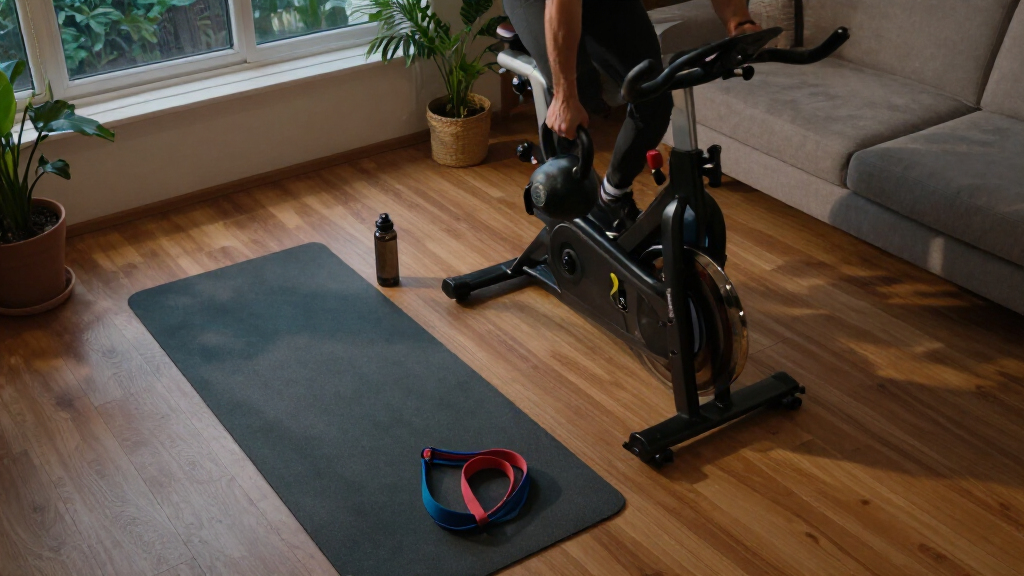
Gabriele Zanni, co-founder of Alama Studio, said clients want fitness areas to feel like part of the home rather than a separate room filled with machines. Designers described greater interest in natural light, garden views, warm materials, integrated storage and equipment with timber or leather finishes. Some projects combine exercise areas with saunas, steam rooms or cold plunges, though the report does not quantify how common those additions are.
Why Private Workout Spaces Are Changing
The shift matters to homeowners and designers because it changes how a gym is planned: not just where equipment fits, but how the room connects to the rest of the house and supports different activities. A space designed for exercise, stretching and recovery may require different layouts, lighting and storage from a room set aside for a treadmill and weights.
The trend also puts home fitness alongside the social appeal of run clubs, Pilates classes and group sauna visits described in the report. Those activities can offer community and variety that a private room cannot. The designers’ comments suggest that the two options are not necessarily in competition: a home gym can serve people who value privacy, convenience or a place to exercise between social sessions. But the report does not establish how many people are choosing one over the other.
Products Worth Considering

Ring Alarm Pro 14-Piece Home Security Kit with Built-In eero Wi-Fi 6 Router

Bose SoundLink Max Bluetooth Speaker

Philips Hue White and Color Ambiance Smart Light Starter Kit, 2 A19 Bulbs with Hub
As an affiliate, we earn on qualifying purchases.
From Equipment Room to Home Wellness
The Livingetc report frames the design shift against the growing visibility of social fitness and wellness, including group runs, Pilates gatherings and communal sauna sessions. It asks whether people still want to set aside space at home for workouts as more activities become opportunities to meet friends.
Its evidence is based on interviews with designers and examples from residential projects, rather than consumer polling, construction data or gym-equipment sales. Maya, Hughes and Zanni describe what they are seeing in their work, particularly in higher-end homes. Their accounts provide insight into design choices, but should not be read as a measure of demand across all households or housing markets.
“What was once often a purely functional space is now being considered an integral part of the home’s overall design and lifestyle offering.”
— Rebecca Hughes, interior designer
How Broad Is the Demand?
The report does not provide market-wide figures for home-gym construction, equipment purchases or consumer preferences. It is based on accounts from design professionals, with much of the discussion focused on luxury residential work, so it cannot show whether the same changes are occurring in smaller homes or across other price ranges.
It also does not establish whether social workouts are causing people to build fewer home gyms, or whether homeowners commonly use both options. The mention of 2027 is a design outlook, not a documented prediction with a stated research method. How many homes will add recovery features such as saunas or cold plunges remains unclear.
What Designers Will Watch
The report points to continued attention to how exercise areas are incorporated into residential plans, including their connection to outdoor views, storage and recovery spaces. Designers’ accounts suggest that future projects may place more emphasis on a room’s atmosphere and flexibility, rather than treating gym equipment as the main design decision.
Whether that approach becomes common beyond high-end homes will depend on factors the report does not assess, including available space, budgets and homeowners’ routines. For now, the clearest finding is narrower: the designers interviewed say demand persists in their work, while the expected role of the home gym is broadening.
Key Questions
Are home gyms still in demand?
Designers interviewed by Livingetc say yes, particularly in luxury residential projects. The report does not provide figures showing demand across the wider housing market.
How are home gyms changing?
The designers describe a move from rooms focused mainly on equipment toward spaces integrated with a home’s style and daily routines, sometimes with areas for stretching or recovery.
Are social workouts replacing home gyms?
The report describes social fitness as increasingly visible but does not show that it is replacing private gyms. It provides no data comparing participation in group workouts with home-gym ownership.
What features are designers highlighting?
Examples include natural light, garden views, warm materials and integrated storage. Some projects also pair exercise spaces with saunas, steam rooms or cold plunges.
Source: livingetc.com