
Proper placement on a Pilates reformer is trickier than you think because it requires precise body alignment and subtle adjustments. You need to carefully position yourself in relation to the carriage, springs, and footbar to engage the correct muscles and stay safe. Small shifts in posture can impact your workout’s effectiveness and safety. Developing awareness and mastering these placements takes practice, but if you keep exploring, you’ll discover how to optimize your positioning for better results.

Get home appliances delivered free with Prime
- Fast, free delivery on millions of items
- Prime Video, Amazon Music and more included
- Member-only deals all year
Key Takeaways
- Subtle adjustments in body position relative to equipment components require precise awareness to avoid misalignment.
- The complexity of equipment interaction makes proper placement less intuitive, especially during dynamic movements.
- Achieving consistent placement demands developing body awareness and fine motor control over small positional changes.
- Equipment design and sliding carriage can inadvertently shift weight, complicating correct positioning.
- Maintaining correct alignment throughout exercises is challenging, requiring ongoing conscious adjustments and focus.
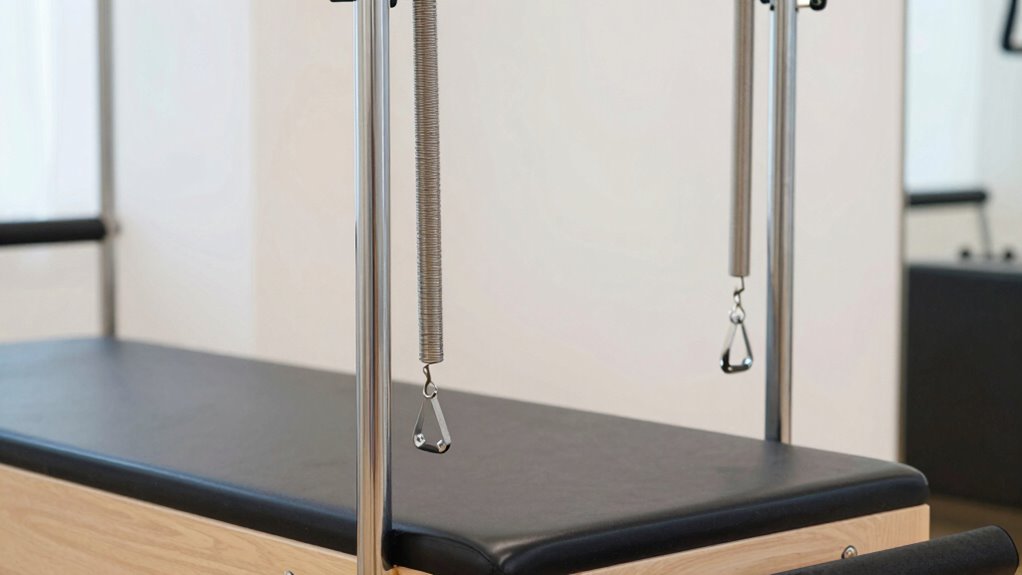
Proper placement on the Pilates Reformer is essential for maximizing your workout and preventing injury. When you step onto the reformer machine, your goal should be to achieve proper alignment, which guarantees that every movement is efficient and safe. However, placing yourself correctly on the reformer can be trickier than it looks, especially if you’re new to the equipment or haven’t paid close attention to detail. The challenge comes from understanding how different exercises require different positions, and even small misalignments can affect your form and results.
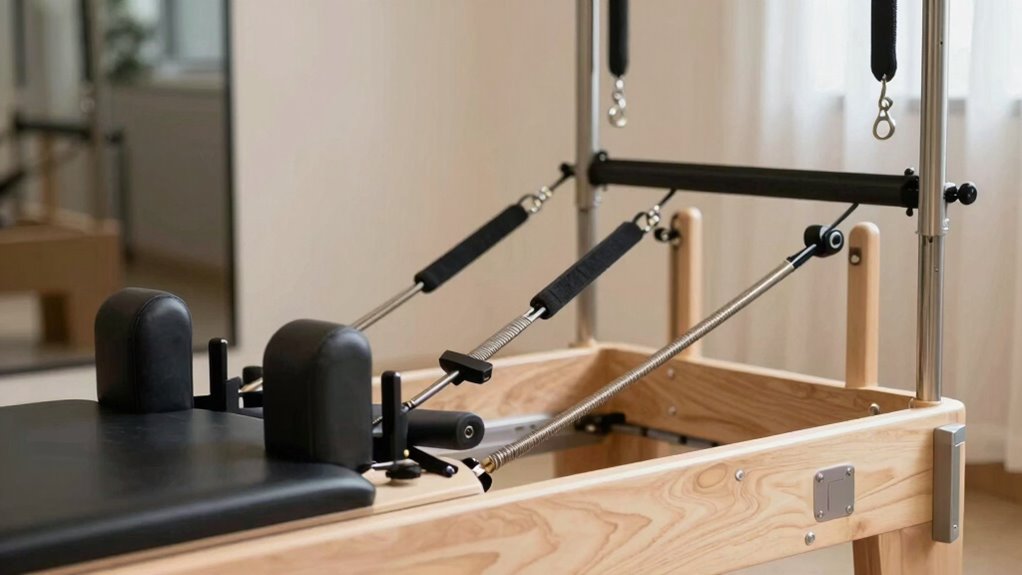
One reason a Pilates Reformer can be harder to place than you expect is that the machine isn’t just about standing or sitting in one spot. It involves subtle adjustments of your body’s position relative to the carriage, springs, and footbar. If you don’t position yourself correctly, you risk not engaging the right muscles or putting undue strain on joints. For example, in some exercises, your hips need to be perfectly aligned with your shoulders, with your core active and your spine in a neutral position. Achieving this takes awareness and attention to detail, especially because the reformer’s sliding carriage can make it tempting to lean or shift your weight unintentionally.
Getting proper alignment on the reformer means you have to be mindful of your foot placement, hand positioning, and how your body lines up in relation to the equipment. It’s not just about standing in the right spot; it’s about understanding how your body interacts with the reformer machine during each movement. For instance, when doing footwork, your feet should be evenly spaced and aligned with your hips to distribute pressure equally. If your feet are off-center, it can lead to imbalanced muscle engagement, which diminishes the effectiveness of the exercise and increases injury risk. Additionally, understanding how body positioning influences muscle activation can help optimize your workout and safety. Recognizing proper alignment is also crucial because even slight deviations can compromise your form and reduce the benefits of the exercise.
The challenge is also compounded by the fact that each exercise demands a different stance. Some require you to lie flat, while others have you kneeling or sitting. You need to adjust your position accordingly, making sure your body remains in proper alignment throughout the movement. Small adjustments, like repositioning your hands or shifting your hips slightly, can make a big difference. It’s a skill that develops over time, and even seasoned practitioners sometimes find themselves readjusting to optimize their placement. Incorporating body awareness techniques can greatly improve your ability to maintain correct positioning during complex movements. Developing this mind-body connection can make the process more intuitive and effective.
In essence, placing yourself correctly on the reformer machine isn’t just about getting on and starting. It’s about actively engaging with your body’s alignment and making precise, conscious adjustments. This awareness not only enhances your workout but also helps prevent injuries caused by misalignment or improper positioning. The more you practice proper placement, the more intuitive it becomes, transforming the reformer from a challenging piece of equipment into an effective tool for strength, flexibility, and alignment.
Pilates reformer footbar alignment accessories
As an affiliate, we earn on qualifying purchases.
As an affiliate, we earn on qualifying purchases.
Frequently Asked Questions
How Do I Know if My Pilates Reformer Is Properly Aligned?
You’ll know your Pilates reformer is properly aligned when the Reformer height feels even, and your foot placement is secure and comfortable. Check that the carriage moves smoothly without sticking or wobbling. Your feet should be aligned with the foot bar, and the height should match your height for proper support. If everything feels balanced and the equipment glides effortlessly, your reformer is correctly aligned and ready for safe, effective workouts.
Can Incorrect Placement Damage the Machine or Cause Injury?
Incorrect placement can indeed damage the machine or cause injury if you’re not careful. To guarantee equipment safety and injury prevention, always double-check your setup before use. Misaligned parts or improper positioning put unnecessary strain on the reformer and increase risk. Taking time to properly align and secure the machine minimizes these hazards, helping you work out safely and prolonging the lifespan of your equipment.
What Are Common Signs of Improper Reformer Setup?
You’ll notice signs of improper reformer setup through discomfort or pain during exercises, which can indicate misaligned equipment. You might also see uneven movement or unusual noises, signaling equipment maintenance issues. Always check that the carriage moves smoothly and that the footbar and springs are correctly positioned. Ensuring proper setup enhances client comfort and prevents damage, making your workouts safer and more effective.
Does Reformer Placement Vary Between Different Brands?
Yes, reformer placement can vary between different brands due to differences in design and construction, which can lead to placement challenges. You might find that some brands prioritize brand consistency in their setup instructions, making it easier to position the reformer correctly. However, others may have unique features requiring you to adapt your approach. Always follow the specific brand’s guidelines to guarantee proper placement and safety during your workout.
How Often Should I Check and Adjust Reformer Placement?
You should check and adjust your reformer placement regularly, ideally before each session, to guarantee equipment stability. Consistent equipment maintenance is crucial for user safety, preventing accidents caused by misaligned parts or loosened components. By staying vigilant and making minor adjustments as needed, you reduce the risk of injury, prolong the reformer’s lifespan, and maintain a safe, effective workout environment. Always prioritize your safety and proper equipment upkeep.
Pilates reformer spring tension gauge
As an affiliate, we earn on qualifying purchases.
As an affiliate, we earn on qualifying purchases.
Conclusion
Finding the perfect spot for your Pilates reformer is like fitting a puzzle piece into a busy mosaic—you need just the right space to let it shine without crowding the scene. When you get the placement right, your workouts flow like a gentle river, smooth and effortless. But misjudging the space can turn your studio into a tangled web. So, take your time, visualize where everything fits, and watch your practice blossom into a seamless, balanced dance.
Pilates reformer body positioning mirror
As an affiliate, we earn on qualifying purchases.
As an affiliate, we earn on qualifying purchases.
Pilates reformer exercise alignment straps
As an affiliate, we earn on qualifying purchases.
As an affiliate, we earn on qualifying purchases.
Cold & flu season Picks
humidifiers
As an affiliate, we earn on qualifying purchases.