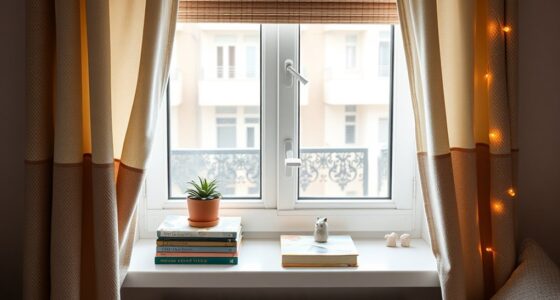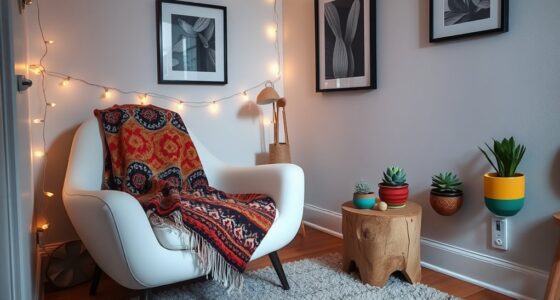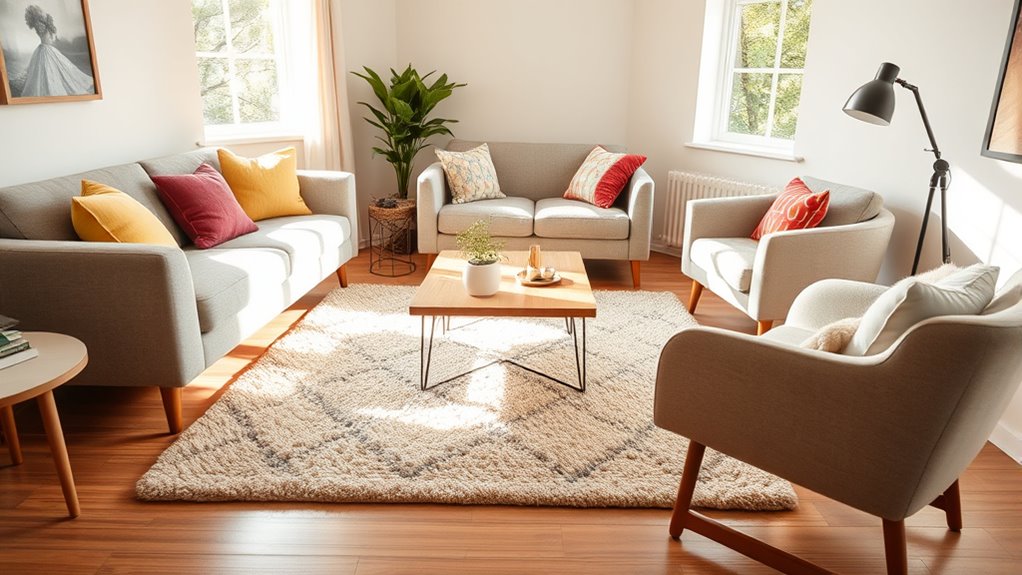

To choose the right rug size for a small living area, measure your space carefully, including furniture placement, to guarantee proper fit. Leave 12 to 18 inches of bare floor around the rug for an open feel, and select a size that ties your furniture together without overwhelming the room. Consider the room’s style and proportion, and visualize different options before buying. Keep exploring ways to create a balanced, inviting space that suits your decor perfectly.
Key Takeaways
- Measure the entire room and furniture placement to select an appropriately sized rug.
- Leave 12 to 18 inches of bare floor around the rug for a spacious feel.
- Ensure key furniture pieces sit partially or fully on the rug for cohesion.
- Match rug size to your room’s style and create visual balance with furniture.
- Visualize different sizes to determine what best complements your space’s proportions.
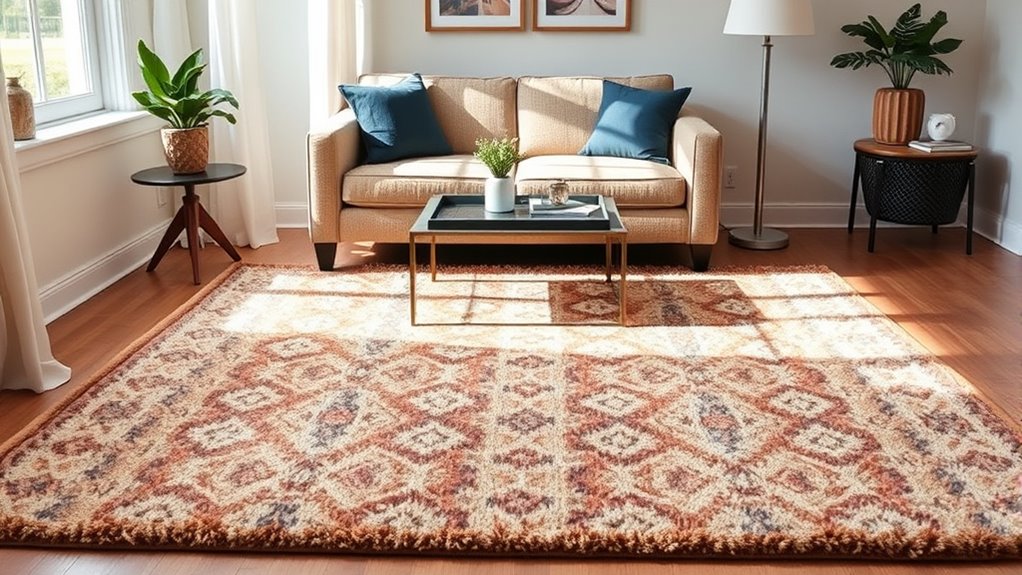
Selecting the right rug size can dramatically enhance the look and feel of your space, but it’s often overlooked during decorating. When dealing with a small living area, choosing the wrong size can make the room feel cramped or disconnected. To avoid this, start by measuring your space carefully. Use an accurate area measurement of your room, including the placement of furniture, to determine how much of the floor you want the rug to cover. Remember, a rug that’s too small can look out of place, while one that’s too large might overpower the room.
Measuring your space carefully ensures your rug complements your small living room perfectly.
In a small living area, it’s generally best to aim for a rug that creates a sense of cohesion without overwhelming the space. Think about style coordination—your rug should complement your furniture and overall decor. If your furniture is modern and sleek, opt for a rug with clean lines and subtle patterns. For a cozy, eclectic vibe, choose a rug with bold colors or textured designs. The key is to guarantee the rug ties the room together while maintaining a balanced look. Keep in mind that a rug should anchor your seating area, so consider the dimensions of your sofa and chairs when selecting size.
The goal is to have your furniture sit partially or fully on the rug, depending on your preferred style. For small spaces, a rug that fits under the front legs of your sofa and chairs works well, creating a unified look without dominating the room. Alternatively, you might opt for a rug that just covers the coffee table area, leaving some floor visible around the edges. This approach can make the room appear more open and less cluttered. Measure your furniture and choose a rug size that allows for at least 12 to 18 inches of bare floor around the edges if you want a more spacious feel, or go for a slightly larger rug that fits under all your key furniture pieces for a more integrated look.
Ultimately, selecting the right rug size boils down to balancing area measurement and style coordination. Take your time to measure your space accurately, visualize how different sizes will fit with your furniture, and choose a rug that enhances your room’s proportions. Proper rug placement also plays a crucial role in defining the space and creating a welcoming atmosphere. With careful planning, your small living area will feel more inviting, stylish, and well-designed.

Black Modern Farmhouse 5×8 Area Rug for Living Room, Boho Large Entryway Rug, Dark Floor Carpet for Kitchen Under Small Dining Table, Bedroom – Washable Low Pile Waterproof Non Slip & Stain Resistance
Machine Washable: Keep your rug fresh with ease! Simply vacuum regularly, or for a deeper clean, toss it…
As an affiliate, we earn on qualifying purchases.
As an affiliate, we earn on qualifying purchases.
Frequently Asked Questions
What Rug Shapes Work Best in Small Rooms?
In small rooms, rectangular or oval area rug patterns work best, as they elongate the space and create a sense of flow. You can enhance this effect using rug layering techniques, placing smaller rugs over larger ones or combining different patterns for visual interest. These shapes help define your seating area without overwhelming it, making your space feel cozy yet open. Keep proportions in mind for a balanced look.
How Do I Measure My Living Area Accurately?
Imagine your living space as a canvas waiting for the perfect rug. To measure accurately, grab a tape measure and note the length and width of the area, including furniture placement. Keep in mind that a rug should complement your room’s color coordination without overwhelming it. Measure from wall to wall, accounting for furniture edges, so your rug fits snugly like a tailored outfit for your space.
Can a Rug Make a Small Space Look Larger?
Yes, a rug can make a small space look larger by creating a visual illusion of expanded space. Opt for a rug with light colors and subtle patterns to brighten the room and enhance the sense of openness. Use contrasting colors to define areas and draw the eye outward, making the space feel more expansive. Proper placement and size are key to maximizing this effect and making your small living area feel bigger.
Are There Specific Rug Materials Suitable for Small Areas?
Yes, for small areas, opt for rug fiber options like wool or synthetic fibers, which are durable and easy to clean. Stain-resistant materials such as nylon or polypropylene work well, especially if you have kids or pets. These materials help maintain your rug’s appearance over time and make cleaning simpler, ensuring your small space stays stylish and fresh without much effort.
How Often Should I Clean or Replace My Small Rug?
Cleaning frequency depends on your home’s hustle, but aim to vacuum your small rug weekly to keep dirt at bay. Replace it when it shows signs of stains, fraying, or fading, usually every 1-3 years. Regular care prevents problems and prolongs its life. Stay attentive to wear and tear, and you’ll keep your small space stylish, spotless, and seamlessly inviting for years to come.

5×7 Sage Green Modern Abstract Area Rugs for Living Room, Washable Rugs for Nursery Bedroom, Non-Slip Minimalist Neutral Wave Striped Rugs for Playroom Boys, Throw Accent Rug Carpet for Dining Room
【Tips】Our rug features a printed design with a pattern, incorporating textured effects through additional colors. Due to the…
As an affiliate, we earn on qualifying purchases.
As an affiliate, we earn on qualifying purchases.
Conclusion
Now that you know how to size up your space, it’s time to take action. Picking the perfect rug isn’t just about placement; it’s about creating a cozy, cohesive corner. With a little planning and a keen eye, you can craft a charming, comfortable living area that’s just right. Remember, the right rug size transforms your tiny territory into a tailored, trendy haven—so step forward confidently and make your small space spectacular!

SHACOS Soft Cozy Fluffy Arch Pattern High-Low Pile Textured Area Rug 5'3"x7'3" Non Slip Washable Modern Geometric Rug Stain Resistant Contemporary Carpet for Living Room Bedroom Dining Room, Beige
Rainbow Arch Textured Rug with High Low Tuft Piles: This scandinavian rug is not printed, it is woven…
As an affiliate, we earn on qualifying purchases.
As an affiliate, we earn on qualifying purchases.

Wiojtry Recliner Chair Mat, Recliner Pads for Hardwood Floors, Non Skid Rubber Furniture Gripper Pads for Recliners, 31.5inch Diameter Low Pile Heavy Duty Non Slip Multi-Purpose Desk Chair Mat Rug
Nonskid Round Rubber Furniture Gripper Pad: Furniture non-slip pads for hardwood floors stability and non-slip properties, recliner protector…
As an affiliate, we earn on qualifying purchases.
As an affiliate, we earn on qualifying purchases.