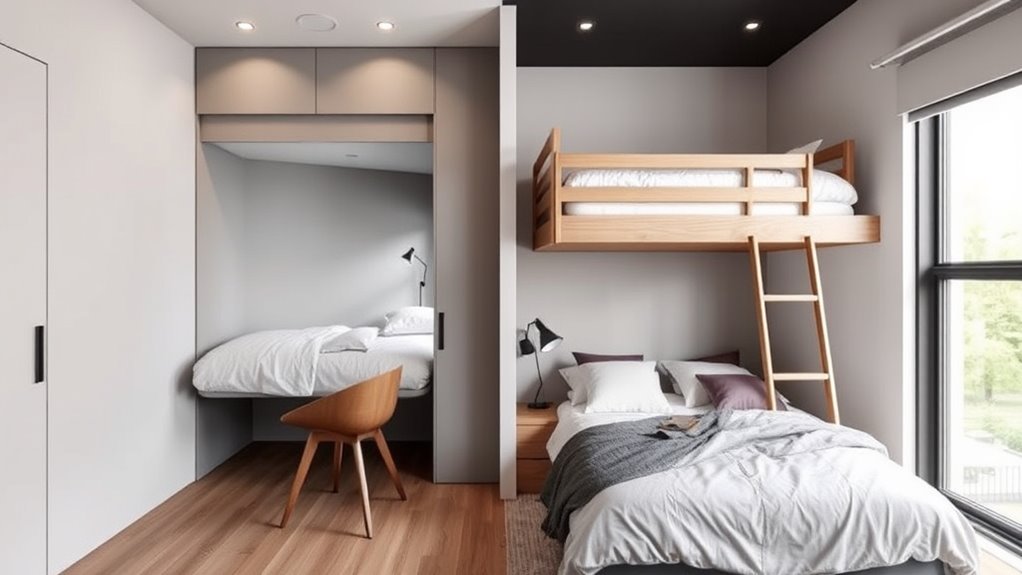

If you want to maximize space in your small room, a Murphy bed offers sleek folding convenience and built-in storage, perfect for flexible layouts. A loft bed elevates the sleeping area, creating extra room underneath for work or relaxing. Both choices improve functionality, but consider your budget, comfort needs, and style preferences. Want to find out which option suits your space best? Keep exploring to discover more helpful details.
Key Takeaways
- Murphy beds maximize floor space by folding into the wall, ideal for multi-purpose small rooms.
- Loft beds utilize vertical space, creating additional room underneath for work or storage.
- Murphy beds offer more flexibility for room layout changes and guest accommodations.
- Loft beds are generally more affordable and easier to install for tight budgets.
- Consider comfort, safety, and durability when choosing, as high-quality materials extend furniture lifespan.

LIVAUVEAD Twin Murphy Bed with Built-in Charging Station, Space-Saving Murphy Bed Chest Twin with Drawer, Foldable, for Home Office Guest Room Bedroom White
【Compact rollaway Bed solution】LIVAUVEAD Twin-size rollaway beds are ideal for multi-purpose rooms with small Spaces. When not in…
As an affiliate, we earn on qualifying purchases.
As an affiliate, we earn on qualifying purchases.
Space-Saving Design and Functionality

When you’re working with limited space, choosing the right bed can make a big difference. Murphy beds and loft beds are both excellent space-saving options, but they offer different benefits. Murphy beds fold into the wall, freeing up floor space during the day, and often come in a variety of color options to match your decor. Material choices vary from sturdy wood to sleek metal, providing durability and style. Loft beds elevate your sleeping area, creating additional usable space underneath for a desk or seating. Their design maximizes vertical space, making small rooms feel more open. Both options are highly functional, but your choice depends on your layout preferences, aesthetic, and how you plan to use the space. Incorporating elements like rustic decor can help your small room feel cozy and inviting, especially when paired with space-efficient furniture to maximize every inch.

ADORNEVE Loft Bed Full Size with U-Shaped Desk, 6 Storage Drawers, Power Outlet, LED Metal Loft Bed with 2 Storage Shelves, Bed with Safety Guardrail & Ladders,Space-Saving,White
【Multifunction Loft Bed】 Multi-functional loft bed comes with 6 large fabric drawers, U-shaped desk, 2 open shelves,long pegboard…
As an affiliate, we earn on qualifying purchases.
As an affiliate, we earn on qualifying purchases.
Installation and Setup Considerations
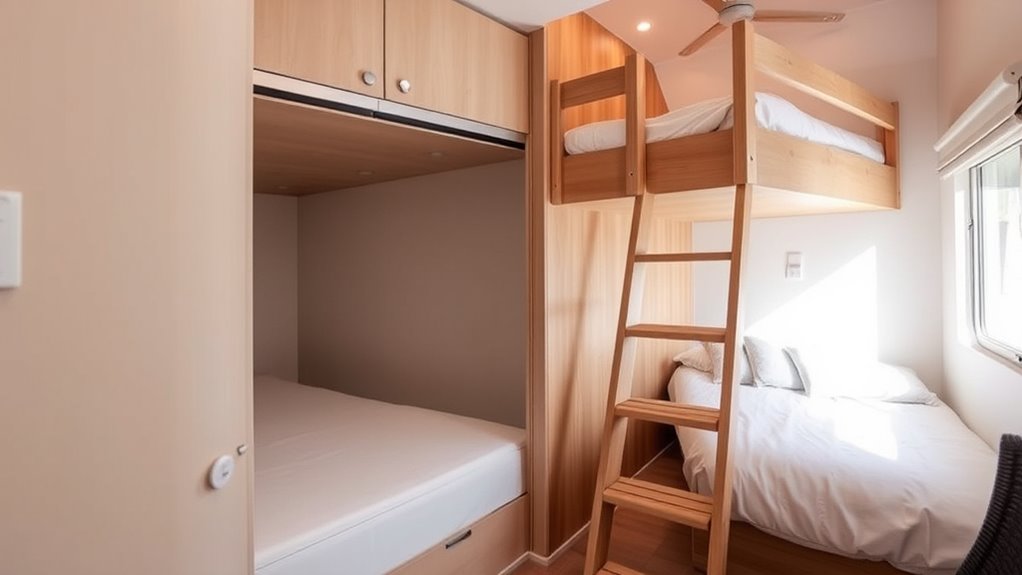
Installing a Murphy bed or loft bed requires careful planning to guarantee safety and proper fit. You need to take into account hardware compatibility, ensuring the bed frame and wall mount work together seamlessly. Installing the correct hardware compatibility is essential to support the weight and prevent accidents. Installation complexity varies; some models require minimal tools, while others demand more advanced skills. To help you compare, here’s a quick overview:
| Aspect | Details |
|---|---|
| Hardware Compatibility | Ensure the mounting hardware matches your wall type. |
| Installation Complexity | Some beds are straightforward; others need professional help. |
| Wall Type | Check if your wall can support the weight safely. |
| Space Requirements | Measure your room to confirm the bed fits comfortably. |
Proper planning ensures a secure setup, avoiding safety hazards down the line. Additionally, verifying installation safety measures can prevent accidents and ensure your bed remains securely mounted over time. Considering AI safety principles can also help in selecting the most reliable installation methods and materials. Ensuring structural integrity during installation is fundamental to the longevity and safety of your bed setup. Moreover, consulting professional guidance can provide peace of mind during complex installations.

AMERLIFE Full Size Murphy Bed with LED Light, Farmhouse Foldable Wall Bed with Charging Station & Gas Struts, Space-Saving Hidden Bedframe for Guest Room, Bedroom & Home Office, White
Space-Saving: Perfect for compact living, this murphy wall bed is folding from wardrobe to bed in seconds. Fold…
As an affiliate, we earn on qualifying purchases.
As an affiliate, we earn on qualifying purchases.
Comfort and Usability for Daily Use
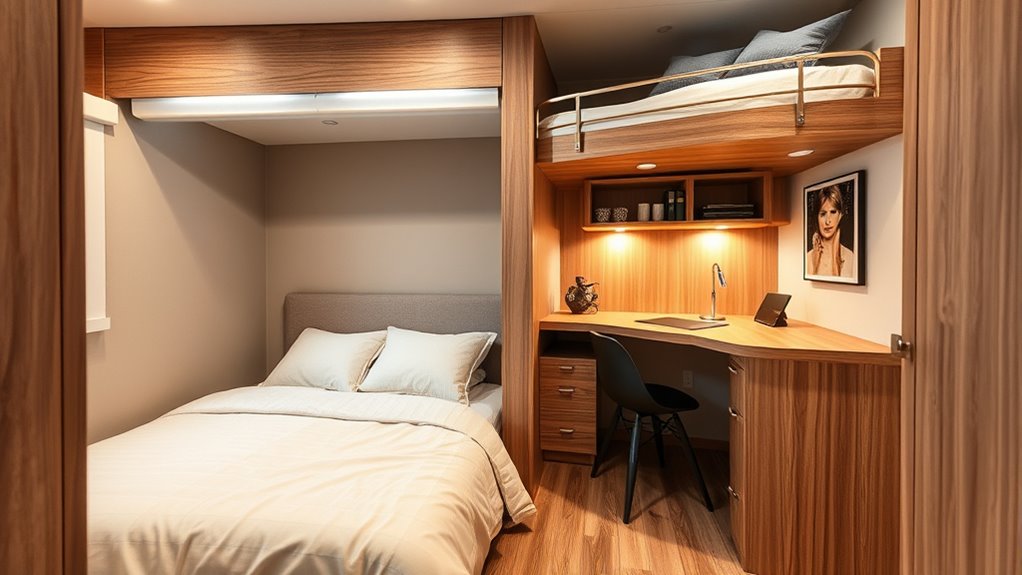
Choosing between a Murphy bed and a loft bed considerably impacts your daily comfort and usability. With a Murphy bed, you get excellent sleep comfort, as it often includes a high-quality mattress that supports restful sleep. Its ergonomic support helps reduce back pain and promotes proper spinal alignment. On the other hand, a loft bed frees up floor space, but you might sacrifice comfort if the mattress is thinner or less supportive. Climbing into and out of a loft bed can also affect usability, especially if you have mobility issues. Both options can be comfortable if equipped with the right mattress and designed for easy access. Proper bed ergonomics ensure better sleep posture and overall comfort, regardless of the type chosen. Additionally, incorporating leadership skills such as problem-solving and adaptability can assist in selecting the most suitable sleeping arrangement for your unique space and needs. To maximize comfort and usability, it’s important to consider mattress quality and accessibility features during your decision-making process. Furthermore, assessing space optimization strategies can help you make the most of limited room dimensions. Understanding personal preferences and individual needs can also guide you toward the best choice for your lifestyle.
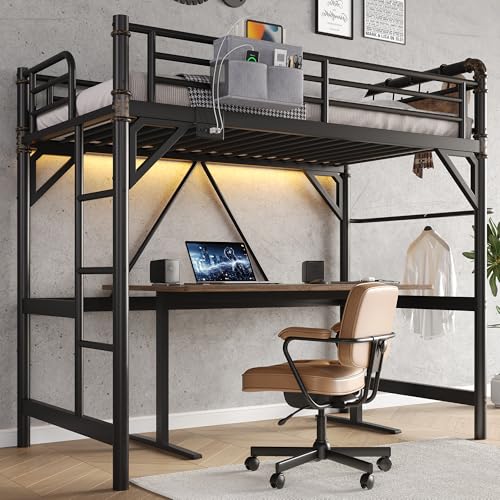
Twin Size Loft Bed with LED Lights and Charging Station, Industrial Heavy Duty Metal Loft Bed Frame with Ladder and Guardrail for Kids Adults, Small Space Saving Design for Bedroom Dorm, Vintage Brown
SMART RGB LIGHTS WITH MUSIC SYNC: This twin loft frame with built-in RGB LED light transforms your bedroom…
As an affiliate, we earn on qualifying purchases.
As an affiliate, we earn on qualifying purchases.
Aesthetic Appeal and Style Options
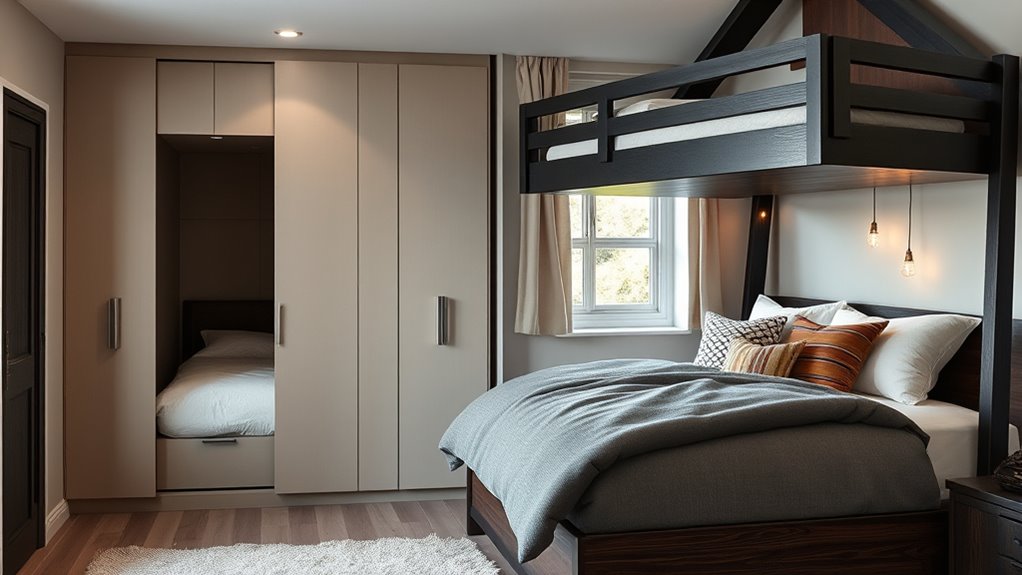
Ever wondered how the style of your bedroom furniture can transform your space? Both Murphy beds and loft beds offer versatile design options that can enhance your room’s aesthetic. With Murphy beds, you can choose sleek, minimalist finishes or bold colors that match your decor, creating a seamless look. Decorative accents like custom headboards or wall panels add personality and charm. Loft beds, on the other hand, often feature industrial or modern styles, with options for colorful frames or wood finishes that blend well with your color coordination goals. By carefully selecting furniture styles and matching decorative accents, you can craft a space that feels both functional and visually appealing. Incorporating aesthetic appeal can also contribute to emotional well-being by creating a welcoming environment. Additionally, choosing furniture with versatile style options enables you to easily update your room’s look over time without significant remodeling. Exploring design flexibility can further help you tailor your room to changing tastes and needs, especially considering the various materials used in different furniture styles. For example, understanding the luxurious fabrics and intricate details in haute couture can inspire you to select textures and finishes that elevate your furniture’s appearance.
Cost and Budget Implications
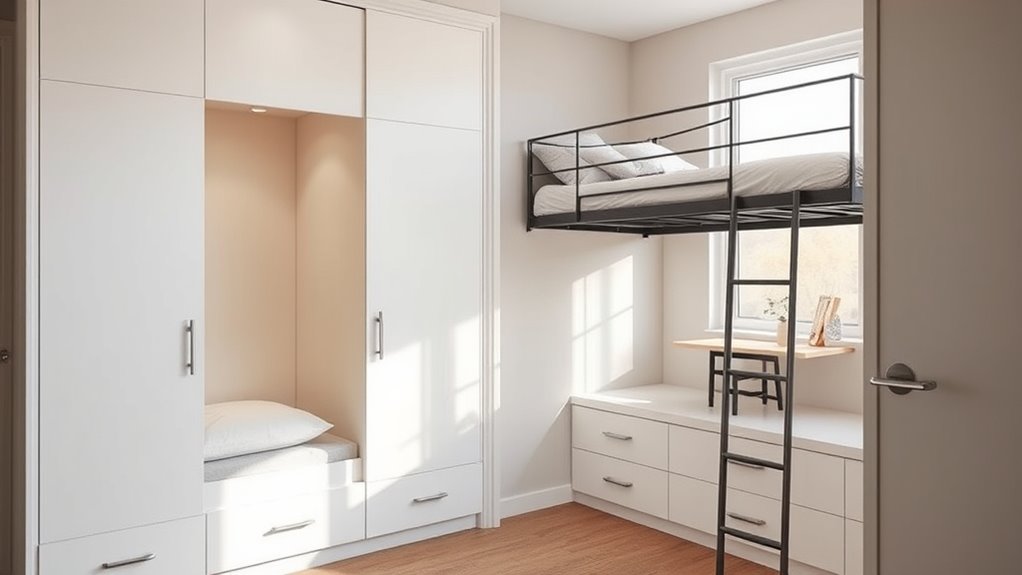
When considering the cost and budget implications of Murphy beds versus loft beds, it’s important to recognize that Murphy beds generally have a higher upfront price due to their complex mechanism and cabinetry. However, they can save money over time by freeing up space and reducing the need for additional furniture. Additionally, the installation complexity of Murphy beds can influence the overall cost, especially if professional help is required for setup. Here’s a quick comparison:
| Feature | Murphy Bed | Loft Bed |
|---|---|---|
| Pricing Differences | Higher initial cost | Lower initial cost |
| Budget Constraints | May require more upfront investment | More affordable upfront |
| Long-term Savings | Space-saving benefits | Less flexible use |
| Installation Costs | Usually more complex | Simpler, less costly |
Budget constraints often influence your choice, making loft beds appealing for tighter budgets, while Murphy beds suit those willing to invest more upfront for versatility. Additionally, understanding the space-saving benefits can help determine which option best maximizes small room layouts.
Flexibility and Multi-Use Capabilities

Murphy beds excel in offering versatile space solutions, transforming a single room into multiple functional areas with ease. Their convertible options allow you to quickly switch between sleeping and living spaces, maximizing small rooms’ potential. When folded up, the bed creates open space for workstations, seating, or entertainment areas. Additionally, Murphy beds often include integrated storage solutions, such as cabinets or shelving, helping you keep your room organized and clutter-free. This multi-use capability means you can adapt your space for different activities throughout the day, making your room more functional and efficient. Incorporating space-saving furniture solutions like Murphy beds can further enhance your sleeping experience in small rooms. Using multi-functional furniture can optimize limited spaces and increase overall room utility. Implementing innovative storage options can significantly boost room organization and accessibility. Whether you’re hosting guests or creating a cozy home office, Murphy beds provide the flexibility you need to get the most out of limited space. Optimizing your room layout can also contribute to a more organized and spacious feel.
Maintenance and Durability Factors
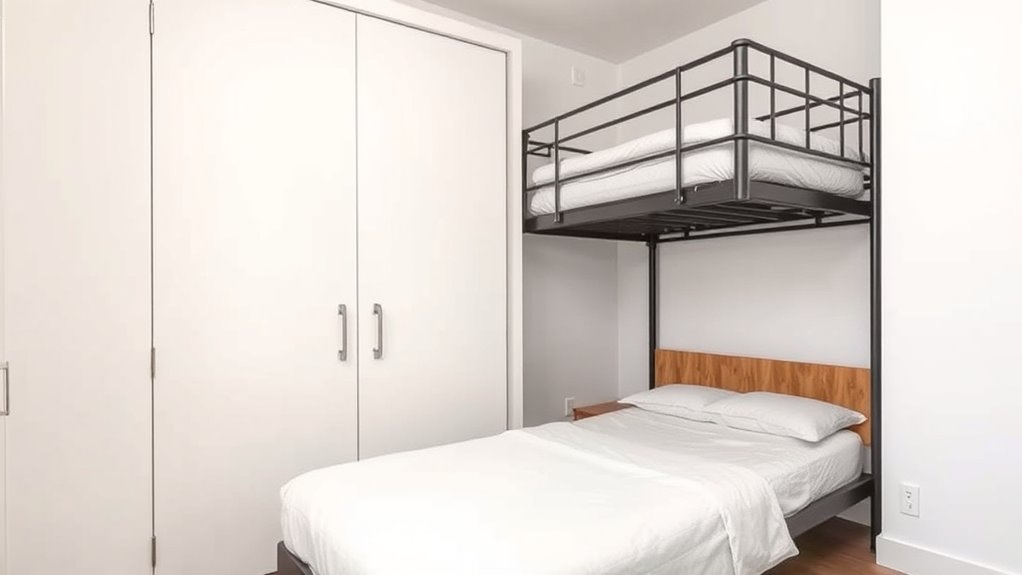
When choosing between a Murphy bed and a loft bed, you should consider the material quality and strength, as these impact how well the furniture holds up over time. You’ll want to think about how resistant each design is to wear and tear, especially if it’ll see frequent use. Paying attention to these durability factors helps guarantee your investment lasts longer with minimal maintenance. Additionally, selecting high-quality materials can enhance the overall lifespan and safety of the furniture. For example, the durability of preppy dog names can be a metaphorical inspiration, emphasizing the importance of using materials that maintain their appearance and function over time.
Material Quality and Strength
Material quality and strength play a crucial role in determining how well a bed holds up over time, especially when it comes to maintenance and durability. High-quality materials ensure your bed remains sturdy and safe for years to come. When evaluating options, focus on the following:
- Material durability: Check if the materials used are resistant to warping, cracking, or splitting.
- Manufacturing standards: Ensure the bed is built according to strict quality guidelines, which can prevent defects.
- Frame strength: Look for solid wood or metal frames, as these materials offer superior support and longevity.
Wear and Tear Resistance
Because wear and tear are inevitable with regular use, choosing a bed that resists damage is vital for long-term durability. Fabric options play a key role; opt for durable, stain-resistant fabrics that can withstand frequent handling and cleaning. If you prefer upholstered beds, look for tight weaves or synthetic blends for added resilience. Paint finishes also matter—high-quality, scratch-resistant paints help prevent chips and scuffs over time. Smooth, matte finishes hide minor scratches better than gloss or shiny coatings. Regular maintenance, like cleaning and avoiding harsh chemicals, extends the life of paint finishes. Overall, selecting a bed with sturdy fabric options and resilient paint finishes guarantees your furniture remains attractive and functional despite daily wear.
Frequently Asked Questions
How Do Murphy Beds Compare in Safety Features?
Murphy beds prioritize safety with features like safety mechanisms and wall anchoring to prevent accidental falls or collapse. You should guarantee the bed has sturdy wall anchoring and a reliable locking system for the bed when folded up. Regularly check these safety features to keep your space secure. When installed properly, Murphy beds offer a safe, space-efficient solution for small rooms, giving you peace of mind.
Are Loft Beds Suitable for Taller Individuals?
Loft beds can be suitable for taller individuals if you choose one with a higher clearance, providing ample space for comfortable sitting or sleeping. They’re great space-saving solutions that maximize room height and add aesthetic appeal. Just make certain the loft bed’s height and weight capacity meet your needs. With the right size and sturdy build, you’ll enjoy both functionality and style while making the most of your small room.
Can Both Beds Accommodate Additional Storage Options?
Think of your room as a treasure chest where every inch counts. Both beds act as master keys, opening space-saving furniture options. Loft beds often incorporate built-in storage or desks, making them highly multifunctional designs. Murphy beds can include fold-out shelves or cabinets, providing additional storage without sacrificing space. So, yes, both options can accommodate storage, helping you maximize your small room’s potential efficiently.
What Are the Best Materials for Long-Lasting Durability?
For long-lasting durability, choose bed frame materials like solid hardwood or high-quality metal, which resist wear and tear over time. Look for beds with wear-resistant surfaces, such as laminated finishes or powder-coated metal, to prevent scratches and damage. These materials make sure your bed remains sturdy and attractive, even with daily use. Investing in durable materials means you’ll enjoy your bed longer without frequent repairs or replacements.
How Do Installation Requirements Differ Between the Two?
Ever wonder how installation requirements differ? You’ll find Murphy beds need more complex installation because of their space-saving design and the need to anchor securely to the wall. Loft beds are simpler, often requiring just basic assembly. Do you have the tools and skills for wall-mounting, or would a straightforward setup suit you better? Consider your space and comfort with installation complexity to choose the right option.
Conclusion
Ultimately, choosing between a Murphy bed and a loft bed is like selecting the perfect key to open your small room’s potential. Both pieces are your secret weapons for transforming cramped spaces into cozy, functional retreats. Think of it as customizing your personal castle—each option offers unique flair and practicality. Whichever you choose, you’re crafting a clever haven where space and style dance in harmony, turning your room into a sanctuary that truly feels like home.