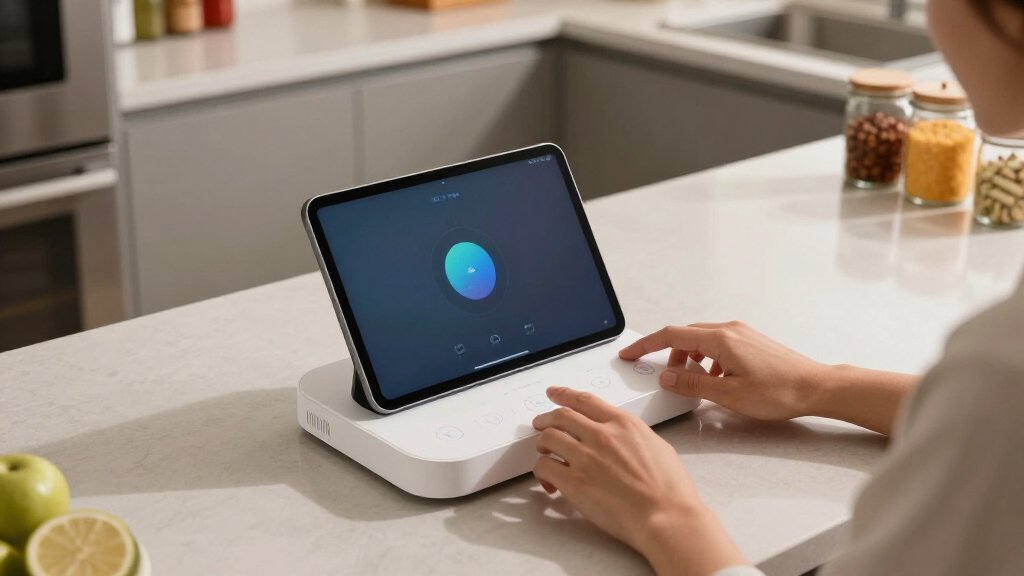

Smart home learning devices adapt to routines or help you control connected home features, but this lineup spans thermostats, speakers, a bedside clock, and a starter kit. My best overall pick is the Google Nest Learning Thermostat (4th Gen) with Nest Temperature Sensor, which pairs automatic temperature learning with room-level sensing. The Echo Dot Max stands out for Alexa-based voice control and fuller sound, while the Amazon Smart Home Starter Kit offers a more hands-on entry point to connected lighting and plugs. The main tradeoff is whether you want a device that learns a specific routine, a hub for everyday control, or a convenient way to begin building a smart home. Read on for the full breakdown and guidance on which type fits your home.

Get home appliances delivered free with Prime
- Fast, free delivery on millions of items
- Prime Video, Amazon Music and more included
- Member-only deals all year
Complete the kit



Key Takeaways
- The Nest Learning Thermostat with a sensor leads for buyers who want temperature automation and help addressing room-to-room comfort differences.
- The Echo Dot Max and Echo Dot Max in Graphite are the same speaker option in different finishes; choose by color and placement, not by expecting different smart-home capabilities.
- The amazon.com/dp/B0D6SX8VLQ?tag=flatmad-20&ascsubtag=dc-670508″ target=”_blank” rel=”nofollow sponsored noopener”>amazon.com/dp/B0C2RXLM89?tag=flatmad-20&ascsubtag=dc-670508″ target=”_blank” rel=”nofollow sponsored noopener”>amazon.com/dp/B08J4C8871?tag=flatmad-20&ascsubtag=dc-670508″ target=”_blank” rel=”nofollow sponsored noopener”>amazon.com/dp/B0D6V1H9PM?tag=flatmad-20&ascsubtag=dc-670508″ target=”_blank” rel=”nofollow sponsored noopener”>Amazon Smart Thermostat is the simpler Alexa-centered heating and cooling pick, while the Nest models bring learning and sensor-based room considerations into the decision.
- The Echo Hub starter kit is the most direct way to begin with several device types, since it bundles a control hub, plug, and bulbs rather than focusing on one room function.
- The Echo Spot is a bedside convenience device, not a whole-home learning system; its appeal is a compact smart alarm clock with Alexa.
| Amazon Echo Dot Max (newest model), Alexa speaker with room-filling sound and nearly 3x bass, Amethyst |  | Best Overall Smart Home Learning Hub | Color: Amethyst | Bass: Nearly 3x compared with Echo Dot (2022) | Built-in smart home hub: Yes | VIEW LATEST PRICE | See Our Full Breakdown |
| Amazon Smart Thermostat with Alexa and Ring Compatibility |  | Best Value Learning Thermostat | Dimensions: 3.56 × 3.56 × 0.84 in | Weight: 3.86 oz | Model number: S6ED3R | VIEW LATEST PRICE | See Our Full Breakdown |
| Amazon Echo Spot Smart Alarm Clock, Black (Like-New) |  | Best for Visual Learning and Bedside Routines | Dimensions: 4.5 × 4.1 × 4.4 in | Weight: 14.3 oz | Display: 2.83-inch touchscreen, 240 × 320 px | VIEW LATEST PRICE | See Our Full Breakdown |
| Google Nest Learning Thermostat (4th Gen, 2024) with Nest Temperature Sensor, Polished Gold |  | Best Premium Learning Thermostat | Generation: 4th Gen (2024) | Color: Polished Gold | System compatibility: Most 24V heating and cooling systems | VIEW LATEST PRICE | See Our Full Breakdown |
| Amazon Echo Dot Max smart speaker with Alexa, Graphite |  | Best for Matter and Thread Expansion | Dimensions: 4.27 × 4.27 × 3.9 in | Weight: 17.82 oz | Audio drivers: 1 × 0.8 in tweeter and 1 × 2.5 in woofer | VIEW LATEST PRICE | See Our Full Breakdown |
| Google Nest Learning Thermostat (4th gen) + Nest Temperature Sensor (2nd gen) – Silver |  | Best for Automatic Climate Learning | Model: 4th generation | Included sensor: Nest Temperature Sensor (2nd generation) | Color: Silver | VIEW LATEST PRICE | See Our Full Breakdown |
| Amazon Smart Home Starter Kit with Echo Hub, Smart Plug, and 4 Smart Bulbs |  | Best for Building a First Alexa Smart Home | Included devices: Echo Hub, Amazon Smart Plug, and four Amazon Basics smart bulbs | Display: 8-inch touchscreen, 1280 x 800 resolution | Connectivity: Dual-band Wi-Fi, Bluetooth, Zigbee, Thread, and Matter controller | VIEW LATEST PRICE | See Our Full Breakdown |
| smart home learning device | Dimensions | Weight | Display |
|---|---|---|---|
| Amazon Echo Dot Max | — | — | — |
| Amazon Smart Thermostat with A | 3.56 × 3.56 × 0.84 in | 3.86 oz | — |
| Amazon Echo Spot Smart Alarm C | 4.5 × 4.1 × 4.4 in | 14.3 oz | 2.83-inch touchscreen, 240 × 320 px |
| Google Nest Learning Thermosta | — | — | Graphical LCD, IPS |
| Amazon Echo Dot Max smart spea | 4.27 × 4.27 × 3.9 in | 17.82 oz | — |
| Google Nest Learning Thermosta | — | — | 60% larger display with dynamic Farsight |
| Amazon Smart Home Starter Kit | 7.9 x 5.4 x 0.6 inches (202 x 137 x 15 mm) | 12.9 ounces (365 grams) | 8-inch touchscreen, 1280 x 800 resolution |
More Details on Our Top Picks
Amazon Echo Dot Max (newest model), Alexa speaker with room-filling sound and nearly 3x bass, Amethyst
For a buyer who wants a smart home device that can also teach routines through everyday use, the Echo Dot Max is the strongest all-rounder here. Its built-in hub and Omnisense technology give Alexa more ways to respond to the room and connected devices, while room-filling audio makes spoken answers, reminders, and music easier to hear across a living space. It also works as a mesh Wi-Fi extender, though that benefit depends on compatible equipment. Compared with the Echo Spot, this model puts more emphasis on fuller sound and hub functions than on a glanceable touchscreen. The tradeoff is that its smart-home features are most useful with compatible devices, and buyers seeking a simple clock or a thermostat-focused learning tool may prefer the Spot or Google Nest Learning Thermostat.
Pros:- Built-in smart home hub supports a more capable connected-device setup
- Omnisense technology supports personalized experiences
- Room-filling sound and nearly three times the bass of the 2022 Echo Dot
- Can extend compatible mesh Wi-Fi coverage
Cons:- Full smart home value depends on having compatible devices
- Mesh extension requires compatible network equipment
- Offers no touchscreen for visual reminders or clock information
Best for: Alexa households that want one speaker for voice learning, connected-device control, and room-filling audio
Not ideal for: Buyers who mainly want a visible clock display or a thermostat that learns heating and cooling routines
- Color:Amethyst
- Bass:Nearly 3x compared with Echo Dot (2022)
- Built-in smart home hub:Yes
- Omnisense technology:Yes
- Wi-Fi coverage:Up to 1,000 sq. ft.
- Privacy control:Microphone enable/disable button
Our verdict“Choose the Echo Dot Max if you want an Alexa speaker that combines stronger audio with smart-home hub features and room-aware personalization.”
Amazon Smart Thermostat with Alexa and Ring Compatibility
The Amazon Smart Thermostat suits buyers who want to learn how schedules and sensor-based adjustments can manage home comfort without adding a display-heavy control system. It supports heating and cooling schedules, vacation mode, and automatic adjustments based on temperature or presence readings, with control through the Alexa or Ring app. Compared with the Google Nest Learning Thermostat, this model is more centered on app-led scheduling than on learning temperature preferences over time, and it lacks an included room sensor. Guided installation in the Alexa app can make setup more approachable, but the hardware requirements matter: it works with most 24V systems, needs a C-wire or separately sold adapter, and connects only to 2.4 GHz Wi-Fi. Voice commands also require a separate Alexa-enabled device.
Pros:- Schedules, vacation mode, and automatic adjustments support hands-off temperature management
- Alexa and Ring app control give households multiple ways to manage settings
- Guided installation is available in the Alexa app
- ENERGY STAR and ECOLOGO Gold certifications
Cons:- Requires a C-wire or separately sold power adapter kit
- Does not support 5 GHz Wi-Fi
- Voice control requires a separate Alexa-enabled device
Best for: Alexa or Ring households with a compatible 24V HVAC system and a C-wire that want app-based schedules and automation
Not ideal for: Homes with electric baseboard heating, no suitable C-wire or adapter, or a Wi-Fi setup that relies on 5 GHz
- Dimensions:3.56 × 3.56 × 0.84 in
- Weight:3.86 oz
- Model number:S6ED3R
- HVAC compatibility:Most 24V systems; not 110–240V systems such as electric baseboard heat
- Power requirement:C-wire or separately sold power adapter kit
- Wi-Fi:2.4 GHz, 802.11 b/g/n; no 5 GHz support
- Controls:Alexa app, Ring app, compatible Alexa voice control, and three touch buttons
- Certifications:ENERGY STAR, ECOLOGO Gold
Our verdict“Pick this thermostat for straightforward Alexa- and Ring-connected scheduling, provided your HVAC system and wiring meet its requirements.”
Amazon Echo Spot Smart Alarm Clock, Black (Like-New)
The Echo Spot is the most glanceable learning device in this group: its compact touchscreen can show the time, weather, reminders, and song titles, giving Alexa interactions a visual anchor rather than relying on voice alone. That makes it a natural fit for bedside routines or a desk where quick information matters. It also controls compatible smart home devices and plays music, podcasts, and audiobooks through its built-in speaker. Compared with the Echo Dot Max, it trades room-filling sound and a stronger hub emphasis for a display and smaller footprint. This is a like-new refurbished unit, described as tested and certified to look and work like new with the same limited warranty as a new device. It has no camera, and its eero extension feature only applies to compatible eero networks.
Pros:- Touchscreen shows time, weather, reminders, and song titles at a glance
- Alexa routines and voice controls connect it to compatible smart home devices
- Built-in speaker supports music, podcasts, and audiobooks
- Dual-band Wi-Fi supports 2.4 GHz and 5 GHz networks
Cons:- No camera is included
- eero Built-in requires a compatible eero router and linked accounts
- Smaller speaker is less suited to filling a room with sound than the Echo Dot Max
Best for: Alexa users who want a bedside clock with visible reminders, weather, and basic smart-home controls
Not ideal for: Buyers who need a camera, stronger room-filling audio, or eero extension without a compatible eero network
- Dimensions:4.5 × 4.1 × 4.4 in
- Weight:14.3 oz
- Display:2.83-inch touchscreen, 240 × 320 px
- Camera:None
- Wi-Fi:Dual-band 802.11a/b/g/n/ac, 2.4 and 5 GHz
- Audio:1.73-inch full-range built-in speaker
- Bluetooth:A2DP and AVRCP support
- eero Built-in:Up to 1,000 sq. ft. additional coverage on compatible eero networks
Our verdict“Choose the Echo Spot if you want a compact Alexa clock that makes reminders and daily information visible, rather than prioritizing powerful audio.”
Google Nest Learning Thermostat (4th Gen, 2024) with Nest Temperature Sensor, Polished Gold
For buyers who want a thermostat that adapts to household habits, the Google Nest Learning Thermostat brings a different kind of learning to this roundup than the Alexa speakers: it learns temperature preferences and routines, then uses them to manage heating and cooling. The included Nest Temperature Sensor helps address room-to-room differences, which a single wall thermostat may miss. Compared with the Amazon Smart Thermostat, this is the more focused choice for adaptive temperature management, while the Amazon model emphasizes app schedules and Alexa or Ring control. Nest supports Google Home plus Alexa, Apple HomeKit, and Matter, giving it broader stated smart-home compatibility. The tradeoff is that system compatibility still depends on your HVAC setup, and some smart features require the Google Home app. It is a thermostat, not a general-purpose voice assistant or learning speaker.
Pros:- Learns temperature preferences and household routines
- Included temperature sensor can help manage room-to-room differences
- Works with Google Home, Alexa, Apple HomeKit, and Matter
- Battery powered and described as needing no C-wire in most homes
Cons:- Compatibility depends on the home’s heating and cooling system
- Some smart features require the Google Home app
- More specialized for climate control than the Echo Dot Max or Echo Spot
Best for: Households seeking adaptive heating and cooling with room-to-room temperature sensing and support across major smart-home platforms
Not ideal for: Buyers seeking a general-purpose Alexa speaker, or homes whose HVAC system is not compatible with the thermostat
- Generation:4th Gen (2024)
- Color:Polished Gold
- System compatibility:Most 24V heating and cooling systems
- Power source:Battery powered
- Display:Graphical LCD, IPS
- Control methods:App, voice assistant, and buttons
- Included sensor:Nest Temperature Sensor (2nd gen)
- Smart home compatibility:Amazon Alexa, Apple HomeKit, Google Home, Matter
Our verdict“Choose the Nest Learning Thermostat if you want adaptive climate control and a sensor for room-to-room temperature differences.”
Amazon Echo Dot Max smart speaker with Alexa, Graphite
The Graphite Echo Dot Max is the more technically specified pick for households building around newer smart-home standards. Its hub supports Zigbee, Matter, and Thread, so it can serve as a central connection point for compatible devices, while temperature, light, and presence sensors can trigger routines based on conditions at home. Room-adaptive sound and nearly three times the bass of the 2022 Echo Dot also make Alexa responses and music more substantial than on a small clock speaker. Compared with the Amethyst Echo Dot Max, this listing spells out its Wi-Fi 6E, audio drivers, and sensor set; both share the broad combination of speaker and smart-home hub functions. The main limitation is that eero extension needs a compatible router and setup, and the extra connectivity matters less if your devices do not use these standards.
Pros:- Hub supports Zigbee, Matter, and Thread Border Router functions
- Temperature, ambient light, and presence sensors can inform routines
- Room-adaptive audio with nearly three times the bass of the 2022 Echo Dot
- Wi-Fi 6E and eero Built-in support compatible network setups
Cons:- eero extension requires a compatible eero router, linked accounts, and setup
- The smart-home hub’s value depends on owning compatible devices
- Two-way mono playback is less suited to buyers seeking stereo sound from one speaker
Best for: Smart-home builders who want Zigbee, Matter, and Thread support alongside room-aware Alexa routines and stronger speaker audio
Not ideal for: Buyers with few compatible smart devices, or anyone expecting eero extension without a compatible eero router
- Dimensions:4.27 × 4.27 × 3.9 in
- Weight:17.82 oz
- Audio drivers:1 × 0.8 in tweeter and 1 × 2.5 in woofer
- Audio bandwidth:53 Hz–16 kHz at volume 6
- Wi-Fi:Wi-Fi 6E (IEEE 802.11ax)
- Smart home hub:Zigbee, Matter, Thread Border Router
- Sensors:Ambient temperature, ambient light, presence detection
- eero Built-in:Up to 1,000 sq. ft. additional coverage; compatible eero router required
Our verdict“Choose this Echo Dot Max if your priority is expanding a Matter-, Thread-, or Zigbee-based smart home while keeping a capable Alexa speaker in the room.”
Google Nest Learning Thermostat (4th gen) + Nest Temperature Sensor (2nd gen) – Silver
This bundle is the strongest fit for households that want a thermostat to adapt to their routines, rather than manage every setting manually. Its learning schedule and adaptive Eco features can shape heating and cooling around daily patterns, while the included temperature sensor helps address rooms that feel different from the thermostat’s location. Compared with the Amazon Smart Thermostat with Alexa and Ring Compatibility, this Nest package puts more emphasis on learning and room-level sensing. It also supports Alexa, Siri, Google Assistant, and Matter, giving it broader smart-home flexibility than a device tied mainly to Alexa.
The tradeoff is a more involved setup: system compatibility and wiring may take extra checking, and full functionality depends on Wi-Fi. Its larger display is easier to read, but buyers who only need basic temperature scheduling may find the added learning features unnecessary.
Pros:- Learns household routines to adjust heating and cooling schedules
- Includes a second-generation temperature sensor for monitoring another room
- Supports Alexa, Siri, Google Assistant, and Matter
- Display is 60% larger than the previous generation and uses dynamic Farsight
Cons:- Installation can be complex depending on the existing HVAC wiring and system
- Wi-Fi is needed for full smart features and remote control
- Learning and sensor features may be unnecessary for buyers seeking simple scheduling
Best for: Households with compatible 24V heating or cooling systems that want automatic schedule adjustment and a sensor for a room with uneven temperatures
Not ideal for: Renters or DIY beginners who cannot verify wiring and system compatibility, and buyers who only need a basic programmable thermostat
- Model:4th generation
- Included sensor:Nest Temperature Sensor (2nd generation)
- Color:Silver
- Display:60% larger display with dynamic Farsight
- System compatibility:Most 24V systems, including gas, electric, oil, heat pump, and radiant
- Connectivity:Wi-Fi, Alexa, Siri, Google Assistant, and Matter
- Smart features:Learning schedule, adaptive Eco, notifications, and remote control
Our verdict“Choose this bundle if you want an adaptive thermostat with room sensing and broad assistant support, but skip it if basic scheduling is enough.”
Amazon Smart Home Starter Kit with Echo Hub, Smart Plug, and 4 Smart Bulbs
This kit gives Alexa newcomers a practical starting point: the Echo Hub provides a touchscreen control point, and the included plug and four bulbs let buyers try routines and device control without assembling every piece separately. Its support for Zigbee, Thread, and Matter, alongside Wi-Fi and Bluetooth, gives it room to connect with compatible devices beyond the items in the box. Compared with the Google Nest Learning Thermostat bundle, this is a broader home-control starter set rather than a focused climate-learning device; it can help users learn how lighting and plug routines work, but it does not learn household behavior in the same way.
The 8-inch screen makes controls more visible than a voice-only setup, though the kit depends on internet access and Alexa. The stand is sold separately, and the hub is designed for a fixed location, so it is less suited to buyers who want a portable controller.
Pros:- Combines an Echo Hub, smart plug, and four smart bulbs in one starter set
- 8-inch touchscreen provides a visible control surface for compatible devices
- Supports Wi-Fi, Bluetooth, Zigbee, Thread, and Matter
- Alexa routines can coordinate the included devices and compatible additions
Cons:- Internet access is required for setup
- The stand is sold separately
- Designed for stationary use rather than handheld control
Best for: Alexa beginners who want a touchscreen hub plus starter lighting and plug devices for creating simple home routines
Not ideal for: Households committed to another voice-assistant ecosystem, or buyers who need a portable controller or offline setup
- Included devices:Echo Hub, Amazon Smart Plug, and four Amazon Basics smart bulbs
- Display:8-inch touchscreen, 1280 x 800 resolution
- Connectivity:Dual-band Wi-Fi, Bluetooth, Zigbee, Thread, and Matter controller
- Dimensions:7.9 x 5.4 x 0.6 inches (202 x 137 x 15 mm)
- Weight:12.9 ounces (365 grams)
- Power:12.5 W power adapter included
- Setup requirement:Internet connection via Wi-Fi or Ethernet
- Warranty:1-year limited warranty
Our verdict“Pick this kit to learn Alexa-based lighting and plug automation with a dedicated touchscreen, but pass if you need portable or internet-independent control.”
How We Picked
I ranked these products by how clearly they help a household learn, automate, or manage everyday routines—not by treating every Alexa or Google device as interchangeable. My main criteria were the usefulness of the learning or automation features, ease of controlling compatible devices, room-level flexibility, and how much setup or ecosystem commitment each option may involve. I also weighed whether a product has a distinct role: a thermostat should improve climate control, a speaker should make voice interaction useful, and a starter kit should offer a practical foundation for connected devices.
The Nest Learning Thermostat with its included sensor ranks first because it combines climate learning with a way to account for different rooms. The Echo Dot Max models follow for broad voice-control potential, while the Amazon Smart Thermostat is a focused alternative for Alexa households that do not need Nest’s learning-and-sensor approach. The starter kit, Echo Spot, and second Nest bundle rank by fit rather than universal appeal: they make more sense for a first setup, a bedside routine, or a specific finish and sensor bundle than as a single best choice for every home. The two Echo Dot Max listings are treated as the same model, since their stated difference is color.
Factors to Consider When Choosing Smart Home Learning Devices
Before choosing among these smart home learning devices, decide what you want the system to learn or simplify. A thermostat, voice assistant, and lighting kit solve different problems, so starting with the desired routine can prevent buying overlapping gear or a device that cannot address your main frustration.
Choose the Routine You Want to Improve
Start with a recurring annoyance, such as uneven room temperatures, manually switching lights, or needing a bedside alarm and voice assistant. A learning thermostat is most relevant when climate scheduling is the target; a speaker or hub is more useful when voice control and connected-device management matter more. Avoid buying a general smart speaker expecting it to learn the same patterns as a thermostat. If several routines matter, pick the one that affects daily life most and add compatible devices later. This staged approach can reduce duplicate controls and make it easier to tell whether automation is helping.
Check Ecosystem Fit Before You Add Devices
Alexa and Google systems can both support connected-home routines, but device compatibility and control options vary by product. Before buying, check whether the lights, plugs, sensors, and other equipment you already own work with the assistant you plan to use. A mixed household may need to manage devices through more than one app or interface, which can make simple routines harder to maintain. Do not assume that products from the same broad category will share every feature or work together automatically. Choose the ecosystem that best matches your existing devices and the people who will use the controls.
Treat Thermostat Learning and Room Sensing as Separate Needs
Automatic schedule adjustments and room-level temperature feedback address related but different problems. Learning can reduce repeated manual scheduling, while a separate sensor can help a thermostat account for temperatures outside the room where it is installed. A common mistake is expecting one sensor to make every room equally comfortable at all times. Think about where people spend time and whether their schedules change before deciding if an added sensor matters. Also check thermostat compatibility with your heating and cooling setup before choosing a model; smart features cannot compensate for an incompatible system.
Decide Whether a Starter Kit Is the Right First Step
A kit with a hub, smart plug, and bulbs gives a beginner several kinds of connected control to explore without choosing each piece separately. That convenience only helps if the included devices suit your home: consider bulb fittings, lamp or appliance placement, and where the hub will sit. Buying a bundle can leave you with unused components if you only need one light or already own compatible accessories. Individual purchases provide more control over device choice, but can require more compatibility checks and setup. Match the bundle to a real first-room plan rather than treating every included component as automatically useful.
Separate Sound, Display, and Control Needs
Smart speakers and bedside devices can act as voice-control points, but their physical roles differ. A room-filling speaker is better suited to a shared space where sound matters alongside commands, while a compact alarm clock is designed around a nightstand routine. A hub-and-kit approach may be a better fit when controlling several smart-home components is the priority. Think about where you will speak to the assistant and whether you need music, a visible clock, or a central control point. Choosing by placement and daily use helps avoid paying for capabilities that will sit idle.
Plan for Setup, Privacy, and Long-Term Upkeep
Learning features depend on ongoing use and accurate household routines, so expect to review settings after schedules or living patterns change. Voice assistants may involve microphones and account-linked activity; check available privacy controls and decide where voice devices belong in your home. Thermostats also need correct installation and system compatibility, while bulbs and plugs may require occasional app or network troubleshooting. A device that is easy for everyone in the household to operate can be more useful than one with more automation options but confusing controls. Factor in who will maintain the setup, not only who will install it.
Frequently Asked Questions
Should I choose the Google Nest Learning Thermostat or the Amazon Smart Thermostat?
Choose based on the kind of climate control you want and the ecosystem already in your home. The Nest Learning Thermostat is the stronger fit if you want learning features paired with a room sensor, while the Amazon Smart Thermostat suits households that want Alexa compatibility in a more focused thermostat choice. Check compatibility with your heating and cooling system before either purchase. If room-to-room comfort is a central concern, weigh the sensor arrangement as carefully as the thermostat itself. If you mainly want a connected thermostat under Alexa control, the Amazon option may be the more direct match.
Are the two Echo Dot Max listings different devices?
The listed Echo Dot Max products share the same stated model and core description; one is Amethyst and the other Graphite. The information provided does not indicate a difference in sound, Alexa features, or smart-home control between them. Pick the finish that suits the room rather than paying attention to their order in this roundup as a performance distinction. If you need a bedside clock rather than a speaker-centered device, compare the Echo Spot instead. For a broader starting point with lights and a plug, the Echo Hub starter kit serves a different purpose.
Do I need a room sensor with a learning thermostat?
A sensor can be useful when the thermostat’s location does not reflect the temperature in rooms where people spend time. It is less compelling if one central area already represents the comfort needs of the household. Before adding one, identify the rooms that feel too warm or cool and when they are occupied. A sensor can inform control decisions, but it does not guarantee identical temperatures throughout a home. The Nest bundle with a sensor is the clearest choice in this lineup for buyers who want that room-level option included.
Is the Echo Hub starter kit a good choice if I have no smart-home devices yet?
It can be a useful starting point if you want to try a hub, smart plug, and connected bulbs together, rather than selecting each component separately. First confirm that the bulbs fit your fixtures and that the plug suits the device or lamp you intend to control. A kit is less useful if you only need a thermostat or already have compatible lighting and plugs. Think through one room’s setup before buying so the included devices have a clear job. If your first priority is hands-free climate control, compare thermostat options instead of starting with a general kit.
Can an Echo Spot replace a smart speaker or a home hub?
The Echo Spot is best viewed as a bedside smart alarm clock with Alexa, not as a replacement for every speaker or hub role. It can suit a nightstand routine, while the Echo Dot Max is the more relevant choice when fuller sound in a shared room is a priority. The Echo Hub starter kit is aimed at managing a group of connected devices and includes bulbs and a plug. Choose the Spot if its clock-and-bedside use is what you need; do not select it solely because you want a central smart-home control setup. Your existing compatible devices also affect how much control it can provide.
Conclusion
For the best overall balance of climate learning and room-level flexibility, I recommend the Google Nest Learning Thermostat (4th Gen) with Nest Temperature Sensor. The best value-oriented fit for an Alexa household focused on thermostat control is the Amazon Smart Thermostat, while the best premium-style speaker pick is the Echo Dot Max for buyers who want Alexa alongside fuller room sound. Beginners building a connected setup should look at the Amazon Smart Home Starter Kit; it bundles several device types, provided they suit the intended room. For a bedside routine, the Echo Spot is the specific-use choice. If you want a second Nest sensor bundle with a different listed finish, compare the Silver option against the Polished Gold listing and choose the package that matches your setup preferences.