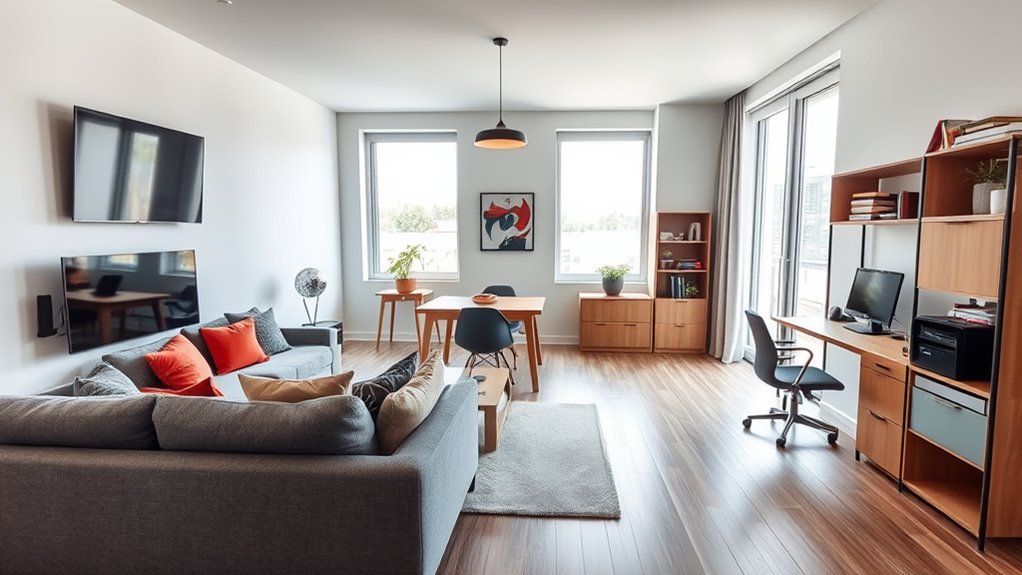

To arrange a combined living, dining, and office space in a studio, use multifunctional furniture like sofa beds and dining tables with storage, which save space and serve multiple purposes. Create visual zones with rugs, lighting, and furniture placement to define each area clearly. Utilize vertical storage and wall-mounted shelves to maximize space. Keep pathways open and organize regularly to maintain a sleek, functional environment. Explore more tips to make your studio both practical and cozy.
Key Takeaways
- Use multifunctional furniture like sofa beds and fold-away tables to maximize space and functionality.
- Define zones with rugs, lighting, and furniture placement to create clear living, dining, and work areas.
- Optimize vertical space with wall-mounted shelves and tall storage units to keep clutter hidden.
- Arrange furniture for easy access and flow, keeping frequently used items within reach.
- Incorporate lighting and visual cues to enhance zone separation and maintain an open, organized environment.

Maximizing a studio space for living, dining, and working can seem challenging, but with smart planning, you can create a functional and stylish environment. The key is to use multifunctional furniture that serves multiple purposes, helping you save space without sacrificing style. For example, a sofa bed allows you to relax during the day and provides a comfortable sleeping area at night. A dining table with built-in storage or fold-away leaves can function as both a workspace and a place to eat, depending on your needs. When choosing furniture, prioritize pieces that can easily transition between functions, so your space remains flexible and uncluttered.
Smart multifunctional furniture transforms small studios into versatile living, working, and dining spaces.
In addition to selecting the right furniture, zoning strategies play a vital role in organizing your studio. Visual cues like area rugs, lighting, and furniture placement help define distinct zones, making each area feel intentional and separate despite sharing the same footprint. For instance, placing a rug under your seating area clearly designates the living zone, while a different rug or a simple desk arrangement can mark your workspace. Use lighting to differentiate zones as well—a floor lamp or pendant light over your desk creates a designated work area, while softer lighting in the living space fosters a cozy ambiance. You can also employ open shelving or room dividers to subtly separate zones without blocking sightlines, maintaining an open feel while establishing boundaries.
To maximize functionality, think vertically. Wall-mounted shelves and tall storage units free up floor space and provide ample storage for books, office supplies, and personal items. Keep clutter out of sight by investing in storage ottomans or under-bed drawers that double as seating or storage, helping to maintain a clean look. When arranging your space, consider flow and accessibility—place frequently used items within easy reach, and keep pathways clear to avoid congestion. Additionally, projector technology can be incorporated into your home setup to create an entertainment area without sacrificing space or style. By combining multifunctional furniture with effective zoning strategies, you’ll create a space that’s both practical and inviting.
Finally, remember that organization is ongoing. Regularly reassess your layout and storage solutions to guarantee your studio adapts to your changing needs. With thoughtful furniture choices and clever zoning, you’ll turn your small space into a versatile haven for living, dining, and working, all while maintaining a sleek, uncluttered look.

Keurig K-Mini Single Serve K-Cup Pod Coffee Maker, 6 to 12oz Brew size, with Cord Storage, Perfect for Small Spaces, Black
FITS ANYWHERE: Less than 5 inches wide, perfect for small spaces.
As an affiliate, we earn on qualifying purchases.
Frequently Asked Questions
How Can I Create Privacy in a Shared Studio Space?
To create privacy in your shared studio, use privacy solutions like room dividers, curtains, or bookshelves to visually separate areas. Incorporate soundproofing techniques such as adding rugs, acoustic panels, or heavy curtains to reduce noise transfer. You can also position furniture strategically to block sightlines and create distinct zones. These steps help you enjoy your space privately while maintaining an open, functional layout.
What Are the Best Lighting Options for Multi-Purpose Areas?
You should use a combination of ambient lighting and task lighting to suit your multi-purpose space. Ambient lighting provides overall illumination, making the room feel open and inviting, while task lighting focuses on specific areas like your desk or reading nook. Consider adjustable fixtures, such as dimmable ceiling lights, floor lamps, or desk lamps, so you can easily switch between relaxing, working, or dining modes.
How Do I Choose Furniture That Suits All Functions?
Think of your space as a chameleon—adapting seamlessly to your needs. Choose multi-functional furniture like sofa beds and fold-away desks that serve dual purposes. Use flexible room dividers to create zones without sacrificing openness. Opt for neutral tones and sleek designs that blend well across functions. This approach guarantees your furniture is both practical and stylish, making your studio feel spacious, organized, and inviting for work and relaxation alike.
What Color Schemes Work Best for Combined Spaces?
You should opt for neutral tones like beige, gray, or soft whites to create a cohesive look through color coordination. Add personality with accent palettes, such as muted blues, warm terracottas, or subtle greens, to define different zones. Keep your color scheme simple and harmonious, ensuring it flows seamlessly across the space. This approach makes your studio feel open, inviting, and visually unified without overwhelming the senses.
How Can I Maximize Storage Without Cluttering?
Think of your space as a well-organized garden, where every tool has its place. To maximize storage without clutter, use multifunctional furniture like ottomans with hidden compartments or fold-out beds. Incorporate creative storage solutions such as wall-mounted shelves, under-bed storage, and vertical organizers. These smart choices keep your studio tidy and open, making your space feel larger and more inviting while ensuring everything has a dedicated spot.

Keurig K-Elite Single Serve K-Cup Pod Coffee Maker, with Strength and Temperature Control, Iced Coffee Capability, 8 to 12oz Brew Size, Programmable, Brushed Gold
WHAT'S IN THE BOX: One water filter handle, and one filter to help ensure your beverages taste their...
As an affiliate, we earn on qualifying purchases.
Conclusion
Remember, like a master painter blending colors on a canvas, you can seamlessly merge your living, dining, and work areas into one harmonious space. By carefully choosing furniture, clever zoning, and thoughtful decor, you’ll create a sanctuary that’s both functional and inviting. With a little creativity and planning, your studio can become a reflection of balance and purpose—proof that even in a small space, you can craft a life as vibrant and multifaceted as a well-composed symphony.

Keurig K-Elite Single Serve K-Cup Pod Coffee Maker, with Strength and Temperature Control, Iced Coffee Capability, 8 to 12oz Brew Size, Programmable, Brushed Silver
WHAT'S IN THE BOX: One water filter handle, and one filter to help ensure your beverages taste their...
As an affiliate, we earn on qualifying purchases.

DEVAISE 3 Drawer Mobile File Cabinet, Rolling Printer Stand with Open Storage Shelf, Fabric Lateral Filing Cabinet fits A4 or Letter Size for Home Office, Rustic Brown Wood Grain Print
Office Storage Solution: Featuring with 3 fabric drawers, this file cabinet with shelves are designed to keep stationery,...
As an affiliate, we earn on qualifying purchases.