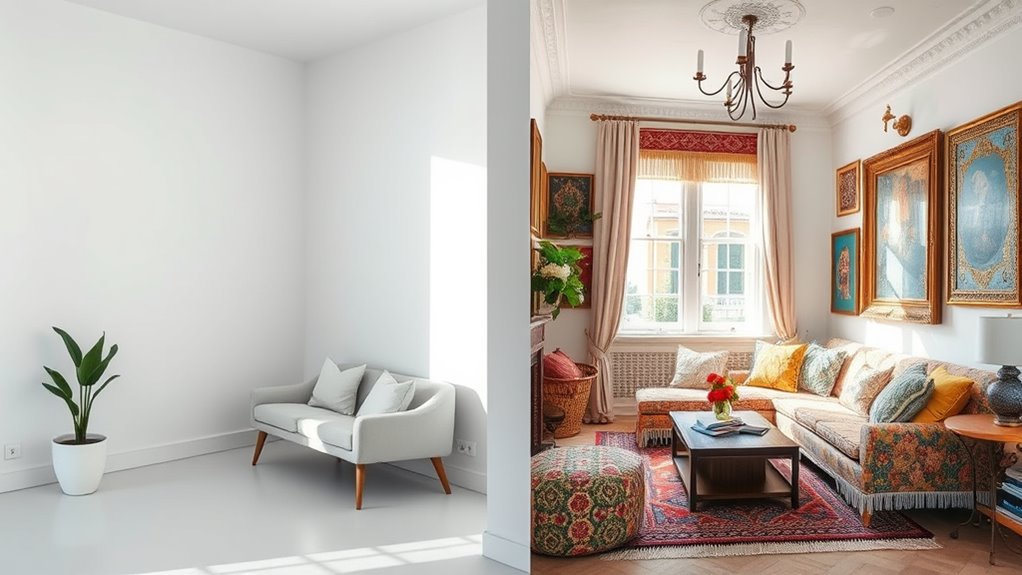

When decorating a small space, your approach varies greatly between minimalist and maximalist styles. With a minimalist look, you choose neutral colors, sleek furniture, and keep surfaces clutter-free for a calm, open feel. Maximalist style, on the other hand, one embraces bold colors, eclectic furniture, and layered decor to create personality and visual interest. Each style impacts the sense of space differently—whichever you prefer, discovering how to balance these elements can transform your space beautifully. If you continue, you’ll find ways to master both styles effortlessly.

Get home appliances delivered free — and shop member deals
- Fast, free delivery on millions of items
- Access to Prime Big Deal Days deals on October 6–7
- Prime Video, Amazon Music and more included
Key Takeaways
- Minimalist decor emphasizes neutral colors, sleek furniture, and clutter-free surfaces to create an open, calming environment in small spaces.
- Maximalist styling uses vibrant colors, layered patterns, and eclectic furniture to reflect personality and add visual interest within limited space.
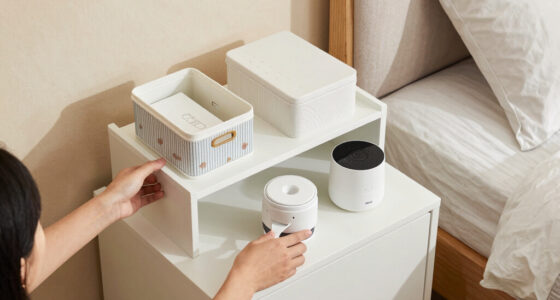
- Minimalist interiors focus on multi-use furniture and strategic storage to maximize functionality without overcrowding.
- Maximalist designs incorporate layered textiles, statement pieces, and bold accents, balancing vibrancy with organized clutter management.
- Lighting plays a key role: minimalist spaces use subtle lighting to enhance simplicity, while maximalist rooms utilize layered lighting to highlight diverse decor elements.
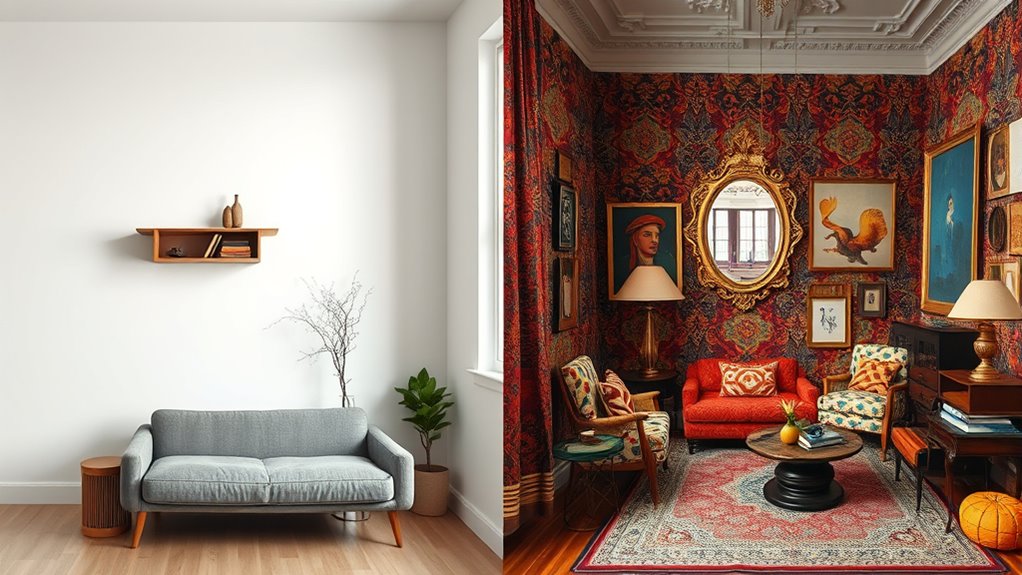
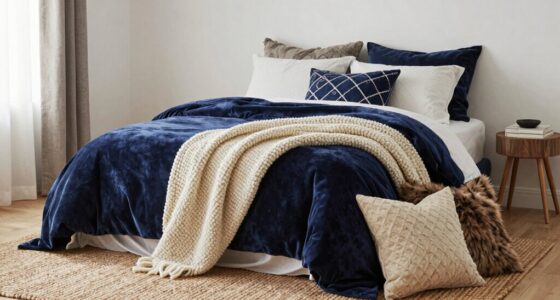
Decorating a small space can be a rewarding challenge, especially when you choose a style that reflects your personality. Whether you lean towards simplicity or love to showcase your personality with bold expressions, your approach to color schemes and furniture choices plays a vital role in how the space feels and functions. In a minimalist style, you’ll want to stick to a neutral or subdued color palette, such as whites, beiges, and grays, to create a calm, uncluttered environment. These color schemes help make the space feel larger and more open, which is essential when working with limited square footage. When selecting furniture, opt for sleek, functional pieces with clean lines that don’t overwhelm the room. Multi-use furniture, like a sofa bed or storage ottomans, maximizes space while maintaining a clutter-free look. Keep surfaces clear of unnecessary items, and choose a few statement pieces to add character without cluttering the visual field. The goal here is simplicity and order, so every piece should serve both a purpose and a design function. Incorporating appropriate lighting can also enhance the sense of spaciousness and highlight key features of your decor.
On the other hand, if you prefer a maximalist approach, your focus shifts to creating a lively, personalized space filled with color, texture, and eclectic furniture choices. You can experiment with vibrant color schemes—think jewel tones, contrasting patterns, or multiple shades that reflect your personality. In a small space, use these colors thoughtfully to avoid overwhelming the room; for example, incorporate bold hues through accent walls, cushions, or artwork, while keeping larger furniture in more neutral shades. When it comes to furniture choices, mix and match styles and eras to add depth and visual interest. Don’t shy away from decorative pieces like vintage chairs, patterned rugs, or layered textiles. In a maximalist setup, clutter can sometimes work, so embrace it strategically by creating zones or focal points that draw attention. Use clever storage solutions to tuck away excess items, allowing you to display your favorite accessories without making the room feel cramped.
minimalist multi-use furniture for small spaces
As an affiliate, we earn on qualifying purchases.
As an affiliate, we earn on qualifying purchases.
Frequently Asked Questions
How Can I Make a Small Space Feel Larger Without Overwhelming It?
You can make a small space feel larger by choosing a light color palette and keeping clutter minimal. Incorporate functional storage solutions to hide away essentials and free up space for artistic expression through carefully curated decor. Use mirrors to reflect light and create depth. Opt for furniture that’s proportionate, multi-functional, and streamlined. This approach keeps the room feeling open and inviting without overwhelming it, emphasizing both style and practicality.
What Are the Best Color Schemes for Small Minimalist and Maximalist Rooms?
Imagine sunlight spilling across walls—bright whites and soft neutrals work wonders for small minimalist rooms, enhancing space and light. For maximalist spaces, bold color combinations like deep jewel tones or vibrant patterns create a lively vibe. Wall treatments, such as subtle textures for minimalism or eclectic murals for maximalism, add depth. Choose colors and treatments that reflect your personality while keeping the space balanced and inviting.
Which Furniture Choices Maximize Space in Small Decorating Styles?
Choose multi-functional furniture like sofa beds, fold-away tables, and storage ottomans to maximize space. Opt for sleek designs that serve multiple purposes, reducing clutter. Incorporate smart storage solutions such as wall-mounted shelves, under-bed drawers, and hidden compartments to keep your small space organized. These choices help you make the most of limited room, whether you’re embracing minimalist simplicity or vibrant maximalist style.
How Do I Incorporate Personal Style Within Minimalist or Maximalist Decor?
You can infuse your space with personal expression by choosing pieces that reflect your unique taste, even within minimalist or maximalist styles. To maintain style consistency, select a cohesive color palette or theme that ties everything together. Mix meaningful items with your decor, balancing simplicity or boldness. This way, your space feels authentic yet harmonious, showcasing your personality while respecting the chosen decorating approach.
Are There Specific Lighting Tips for Small Spaces in Different Styles?
To brighten your small space, use ambient lighting like ceiling fixtures or wall sconces to create a warm, inviting glow. Add accent lighting, such as table lamps or LED strips, to highlight your decor and add depth. In minimalist styles, keep lighting simple and unobtrusive, while in maximalist spaces, opt for bold fixtures that add character. Proper lighting enhances your style and makes your small space feel more spacious.
As an affiliate, we earn on qualifying purchases.
Conclusion
No matter if you prefer the clean lines of minimalism or the bold expressions of maximalism, decorating a small space is all about making it your own. Did you know that a survey found 78% of people feel more relaxed in personalized environments? So, trust your style and embrace what makes you feel at home. With the right approach, your small space can be both functional and a true reflection of you.
As an affiliate, we earn on qualifying purchases.
As an affiliate, we earn on qualifying purchases.
Fall yard work Picks
leaf blowers
As an affiliate, we earn on qualifying purchases.