
TL;DR

Get home appliances delivered free with Prime
- Fast, free delivery on millions of items
- Prime Video, Amazon Music and more included
- Member-only deals all year
A Livingetc report highlights designers’ view that low-level lighting is often overlooked in layered home lighting schemes. Designers interviewed say light nearer the floor can add atmosphere, draw attention to materials and architectural details, and provide a softer alternative to relying heavily on overhead fixtures.
Livingetc’s report on low-level lighting says designers want homeowners to give more attention to fittings positioned in the lower half of a room, rather than focusing mainly on ceiling and wall lights. The designers interviewed say floor-level and other low-set lighting can add depth and atmosphere, highlight architectural details and make a lighting scheme more adaptable.
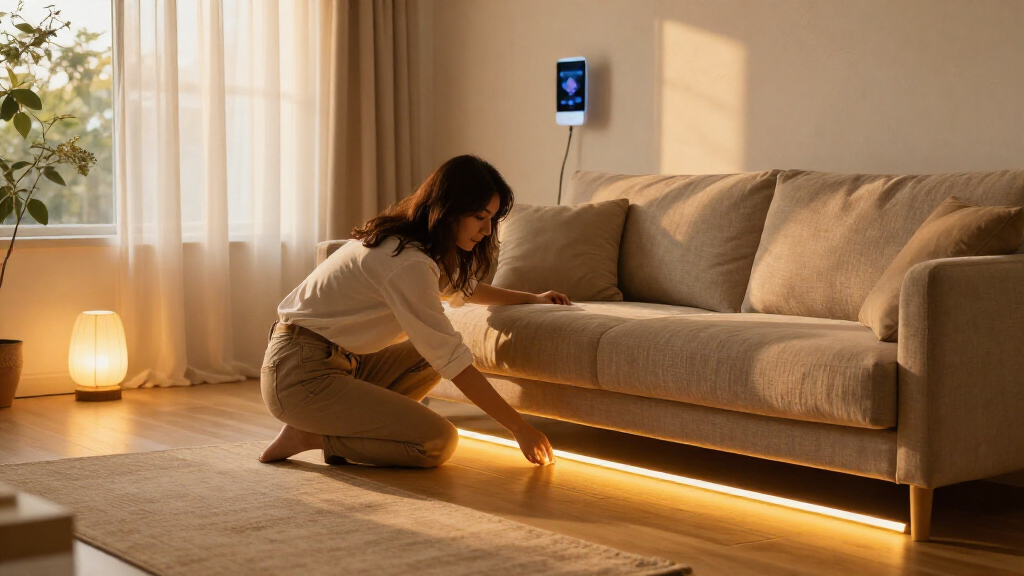
The report defines low-level lighting by where a fitting sits, not by how dim it is: it refers to light sources positioned toward the bottom half of a space. Examples discussed include small fittings set into floors, as well as lighting placed low enough to draw attention to walls, joinery, walkways and other features. Livingetc distinguishes this placement from background lighting, which makes a room generally usable, and task lighting, which focuses on a particular activity.
Julee Ireland, founder of Home Renovation School, said lighting plans often concentrate on decorative fixtures while overlooking light introduced from the ground up. She said lower sources can bring out materials, textures and architectural features and contribute warmth and atmosphere. Vanessa Macedo, an associate designer at John Cullen Lighting, said light closer to the floor can change how a space feels and direct attention to details that might otherwise go unnoticed.
Macedo said the approach can be useful in rooms with low ceilings, where relying heavily on downlights may make the ceiling feel cluttered or oppressive. Shifting some illumination lower, she said, can produce a softer, more balanced effect. Danielle Domingues, owner of Collins & Co. Interiors, also cautioned against treating low-level lighting only as a mood-setting feature: she said designers should consider how a family will use a home in practice. The supplied report ends before giving the rest of her explanation, so it does not specify her practical examples.
A Broader Role for Lower Lights
The report’s point is not that lower lights should replace general or task lighting. Rather, designers interviewed by Livingetc describe them as another layer that can help a room serve different purposes and feel less dependent on a single overhead source. For residents, the practical implication is to plan lighting around where light falls and what it reveals, as well as the appearance of a fixture.
That distinction matters especially in rooms where ceiling fittings dominate the visual scheme or where architectural details are easily missed. Carefully placed low-level sources can mark a route, bring out a wall finish or soften the effect of a low ceiling, according to the designers. These are professional assessments in the report, not measured claims about outcomes in every home; the effect will depend on the room, fixture placement and the rest of the lighting plan.
Products Worth Considering

Philips Hue Festavia 65-Foot Smart LED String Lights, 250 Color-Changing Mini LEDs

LG 75-Inch QNED73B Mini LED 4K Smart TV (2026)

Sonos Play Portable Wi-Fi and Bluetooth Speaker, White
As an affiliate, we earn on qualifying purchases.
From Ceiling Lights to Layers
The report places the advice within a wider discussion of layered lighting, an approach that combines different sources rather than asking one fitting to do every job. Livingetc says homeowners may already be familiar with the idea of combining general illumination, task lights and decorative fixtures, but that schemes still tend to emphasize ceiling and wall fittings, with table and floor lamps added less consistently.
Its discussion also contrasts low-level lighting with the large, sculptural and brightly colored fittings that the article says have featured in 2026 interiors. The article does not claim that one style is replacing another. Its narrower argument is that lower-positioned light can complement decorative fixtures while adding a different kind of visual and practical effect.
“Too often, designers focus on beautiful decorative fixtures but overlook the importance of layering light from the ground up, not just from the ceiling down.”
— Julee Ireland, founder of Home Renovation School
Limits of the Published Advice
The report offers designers’ guidance and opinions, not research comparing lighting schemes or evidence that low-level fittings work the same way in every home. It gives no cost estimates, installation standards, product recommendations or detailed guidance on brightness, spacing and controls. Its discussion of practical household use is also incomplete in the supplied text because Domingues’ remarks stop mid-sentence. Readers should not infer a specific installation plan from the article alone.
Planning a More Layered Scheme
For homeowners planning a renovation or a lighting update, the designers’ advice points toward reviewing the full room rather than choosing a statement fitting in isolation. Consider which areas need general light, which need task lighting and whether lower-positioned sources could make a route safer to see or reveal a feature. The report does not announce a product launch, new policy or scheduled follow-up; it is a design-advice article, and no further milestone is stated.
Any installation should suit the room and its intended use. For electrical work, consult a licensed electrician and follow applicable local codes and permit requirements; do not work on energized wiring. The source does not provide technical installation instructions, so choices about fittings, wiring and controls require project-specific advice.
Key Questions
What does low-level lighting mean in this report?
It means light fittings positioned toward the bottom half of a room. The term describes their placement, not necessarily their brightness.
What do the designers say it can do?
The designers interviewed by Livingetc say it can add depth and atmosphere, highlight architectural details and materials, and offer a softer balance to overhead lighting. Those are design assessments, and results depend on the room and the scheme.
Is low-level lighting meant to replace ceiling lights?
No. The report presents it as another layer in a scheme that can include general, task and decorative lighting, rather than as a replacement for all other sources.
Why mention rooms with low ceilings?
Vanessa Macedo says that relying heavily on downlights can make a low ceiling feel cluttered or oppressive. She argues that moving some light lower may create a softer, more balanced effect.
Does the report give installation instructions?
No. It provides design advice but no wiring, spacing or code guidance. For electrical installation, use a licensed electrician and follow local safety and permit requirements.
Source: livingetc.com