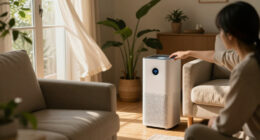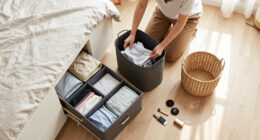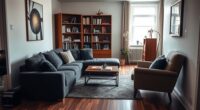
To arrange furniture in an awkwardly shaped small room, start by evaluating its unique layout and focusing on essential, multi-purpose pieces that maximize space. Use vertical storage, occupy corners creatively, and consider modular furniture to adapt as needed. Keep pathways clear, create visual flow with thoughtful placement, and use mirrors or lighting to enhance openness. When you finish, you’ll discover even more clever strategies to transform your space effectively.

Get home appliances delivered free — and shop member deals
- Fast, free delivery on millions of items
- Access to Prime Big Deal Days deals on October 6–7
- Prime Video, Amazon Music and more included
Key Takeaways
- Measure walls precisely to identify irregularities and plan furniture placement that maximizes space and flow.
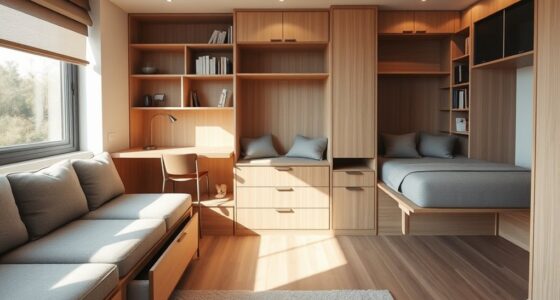
- Use multi-functional furniture with hidden storage to save space and reduce clutter.
- Arrange larger pieces against walls to open pathways and create a sense of openness.
- Incorporate vertical storage and wall-mounted shelves to utilize awkward nooks effectively.
- Utilize mirrors and strategic lighting to enhance space perception and create a cohesive visual flow.
multi-functional furniture for small rooms
As an affiliate, we earn on qualifying purchases.
As an affiliate, we earn on qualifying purchases.
Assessing the Unique Shape of Your Space
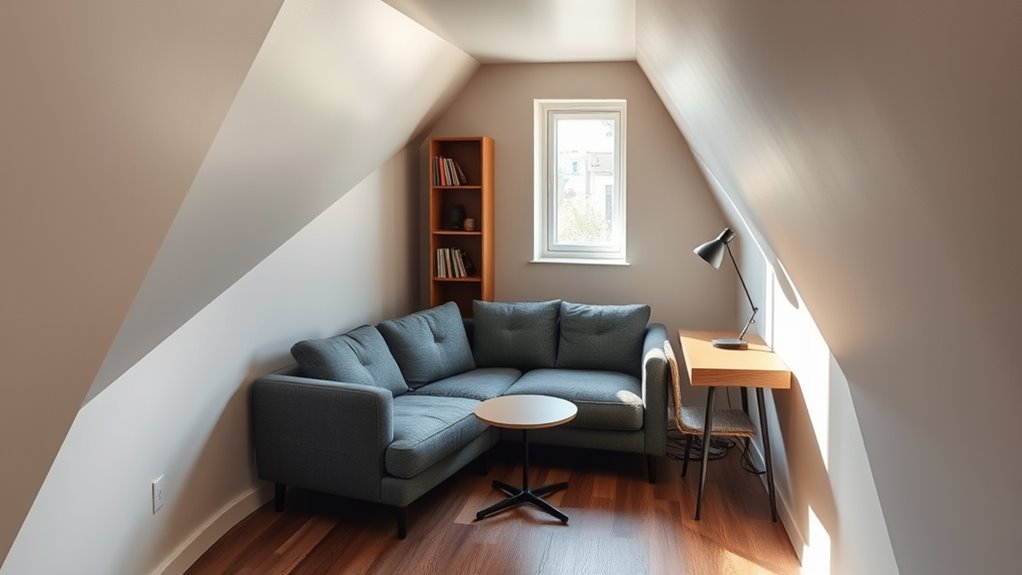
Have you ever considered how the shape of your room impacts your furniture arrangement? Recognizing your space’s corner configurations and irregular room layouts is essential. Unusual angles or alcoves can make planning tricky but also offer creative opportunities. Start by carefully measuring each wall, noting any awkward nooks or protrusions. This detailed space analysis helps you visualize how furniture will fit and whether certain pieces should be placed against specific walls. Additionally, understanding your room’s shape and layout allows you to select appropriate furniture sizes and styles that complement the space. Irregular room layouts often require flexible solutions, like custom arrangements or multi-functional furniture. Incorporating adaptive design principles can help optimize your space and create a more harmonious environment. Don’t rush to fill every corner; instead, identify the natural room flow of the space. By evaluating your room’s shape first, you can make smarter decisions that maximize functionality and comfort, turning even awkward layouts into inviting, well-organized spaces. Recognizing room irregularities is key to designing a cohesive and functional small room.
space-saving wall-mounted shelves
As an affiliate, we earn on qualifying purchases.
As an affiliate, we earn on qualifying purchases.
Prioritizing Essential Furniture Pieces
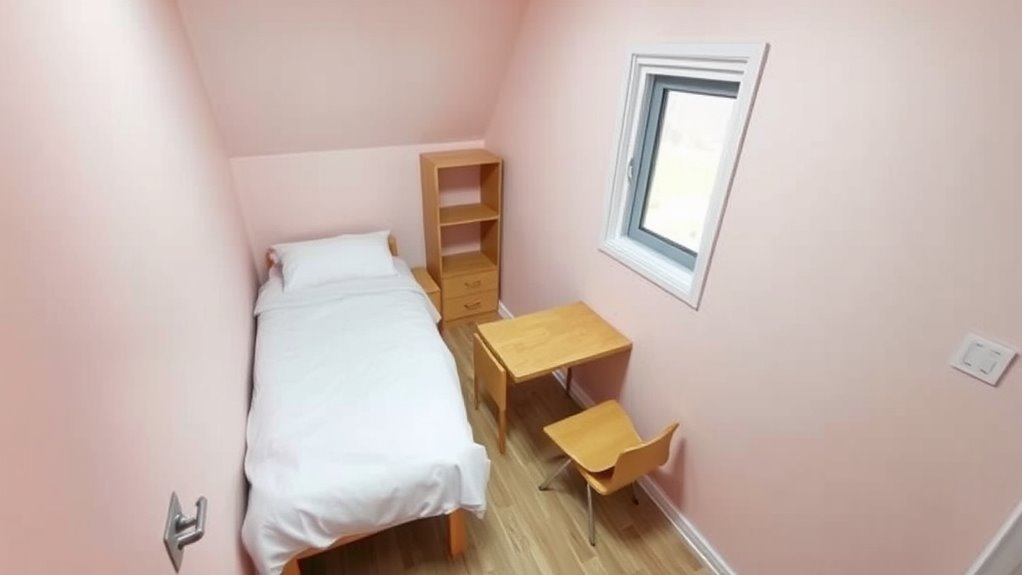
To make the most of your small space, focus on the furniture pieces you truly need. Prioritize items that maximize space efficiency and serve your daily needs. By doing so, you’ll create a functional and comfortable room without clutter. Consider incorporating multi-purpose furniture that can adapt to different uses and save space. Understanding space optimization techniques can further enhance how you arrange your furniture for maximum comfort and utility. Incorporating safety & setup principles, such as proper placement and secure installations, ensures your furniture arrangement promotes both safety and efficiency. Additionally, maintaining a positive mindset about your space can help you see creative solutions and appreciate your environment more fully. Practicing gear shifting in your furniture arrangement process can also help you adapt more easily to unexpected layout challenges.
Maximize Space Efficiency
Focusing on essential furniture pieces helps you make the most of limited space. To maximize efficiency, choose versatile items that serve multiple functions, like a sofa bed or storage ottoman. Keep color coordination simple; light, neutral shades can make the room feel more open. Incorporate lighting design that enhances the space, such as wall-mounted lights or compact lamps, to reduce clutter and brighten corners. Proper placement is key—position furniture against walls to free up central space and avoid blocking pathways. Use reflective surfaces or mirrors to create an illusion of depth, making the room appear larger. Additionally, selecting self watering plant pots can add greenery without the need for frequent watering, saving time and maintaining a tidy appearance. Incorporating appropriate lighting can further enhance the sense of openness and comfort within the room. Utilizing multifunctional furniture can be especially beneficial in small spaces, providing storage and seating without crowding the area. Choosing furniture with built-in storage helps keep clutter hidden and maximizes available space. Paying attention to rustic decor elements can also help create a cozy, farmhouse-inspired atmosphere that complements the overall design. By prioritizing essential pieces and paying attention to color coordination and lighting design, you optimize every inch of your small room without sacrificing comfort.
Focus on Must-Haves
When organizing a small room, identifying and prioritizing must-have furniture pieces is essential for creating a functional space. Focus on items that serve your daily needs and enhance comfort. Start with:
- A versatile sofa or chair to provide a cozy spot for relaxation.
- A compact table for dining or work, maximizing every inch.
- Storage solutions that keep clutter out of sight, like multi-purpose furniture.
- Thoughtful ambient lighting to set the mood and make the room feel larger. Incorporating AI-driven design insights can help you select the most effective furniture arrangements for small, awkward spaces.
To optimize the space further, consider space-saving furniture designs that help make the most of limited square footage. Additionally, selecting furniture with multi-functionality allows for better utilization of available space. Using efficient layout planning can significantly improve the flow and usability of your small room. Incorporating smart storage solutions can further reduce clutter and maximize your available space. Once these essentials are in place, add decorative accents that reflect your style without overcrowding. Use ambient lighting to highlight focal points and make small spaces feel inviting. Prioritizing these pieces ensures your room remains practical yet welcoming.
compact corner storage solutions
As an affiliate, we earn on qualifying purchases.
As an affiliate, we earn on qualifying purchases.
Choosing Multi-Functional and Space-Saving Furniture
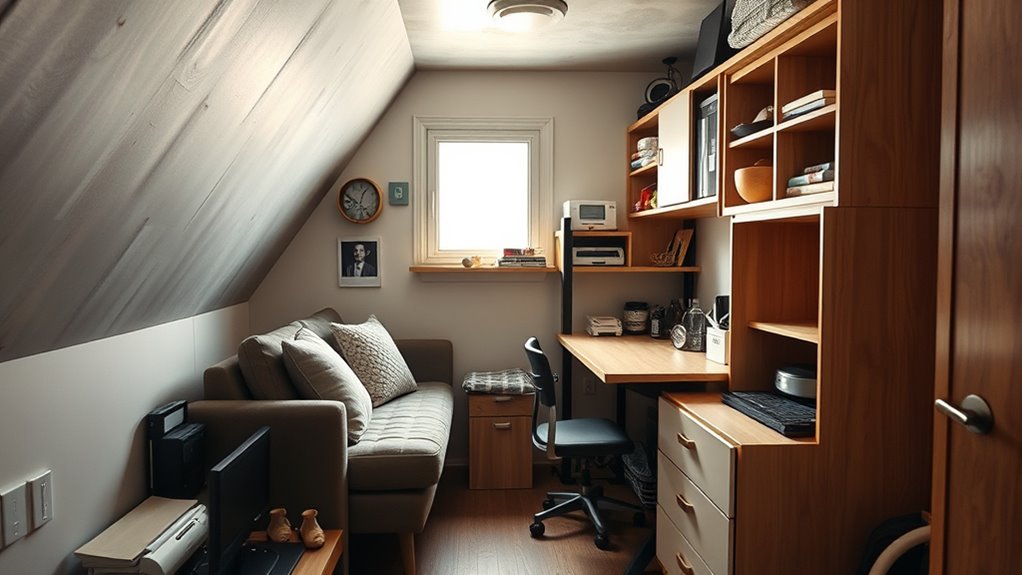
To maximize your small space, consider compact furniture solutions that fit comfortably without clutter. Dual-purpose items, like a sofa bed or storage ottoman, help you save room while serving multiple functions. Modular and foldable designs also offer flexibility, allowing you to easily adapt your furniture to different needs and occasions. Incorporating space-saving techniques can further enhance your room’s functionality and visual appeal. Using furniture with multi-functional features can optimize limited square footage and create a more organized environment. Additionally, choosing pieces with hidden storage compartments can help keep clutter out of sight and maintain a clean, open feel. Implementing vintage-inspired furniture can add character while maintaining a cohesive retro aesthetic. Being aware of Gold IRA options might seem unrelated, but understanding different investment strategies can inspire creative solutions for maximizing limited space in your home by choosing versatile furniture pieces.
Compact Furniture Solutions
Looking for ways to maximize your small room’s functionality? Compact furniture solutions are your best bet. Choose pieces that serve dual purposes, like sofa beds or storage ottomans, to save space without sacrificing style. Here are four game-changing tips:
- Opt for furniture that adapts to your decorating style, enhancing the room’s aesthetic.
- Select pieces with built-in storage to declutter and create a clean look.
- Prioritize lightweight, movable furniture to easily reconfigure your space.
- Use furniture with sleek lines to prevent visual clutter and make the room feel larger.
- Incorporate space‑saving techniques to further optimize your limited space and improve overall functionality.
Pair these choices with thoughtful lighting schemes to highlight your furniture’s versatility and create a cozy, functional atmosphere. Small rooms can feel spacious when you pick the right compact furniture solutions.
Dual-Purpose Items Use
Choosing multi-functional furniture allows you to maximize every inch of your small room. Opt for dining furniture that doubles as storage, like a table with built-in compartments or fold-away designs, so you save space during the day. A sofa bed provides seating and a sleeping area, reducing the need for separate pieces. Incorporate decorative accessories that serve dual purposes, such as storage ottomans or side tables with hidden compartments. These items keep your space tidy while adding style. Look for pieces that combine form and function without cluttering your room. Multi-purpose furniture not only optimizes limited space but also keeps your room feeling open and organized. By choosing versatile items, you create a functional, comfortable environment that adapts to your needs effortlessly.
Modular and Foldable Designs
Have you considered how modular and foldable furniture can transform your small room? These innovative pieces, like foldable furniture and portable designs, maximize every inch of space. Imagine:
- Saving space with furniture that folds away when not in use, freeing up the room for other activities.
- Creating a versatile environment by easily switching between a workspace and a lounging area.
- Simplifying your life with portable designs that move effortlessly, perfect for small, awkward spaces.
- Reducing clutter by choosing multi-functional pieces that serve multiple purposes without overwhelming your room.
With modular and foldable furniture, you can make your small room feel larger, more functional, and inviting. Embrace these space-saving solutions to turn chaos into comfort.
mirrors to enhance small room space
As an affiliate, we earn on qualifying purchases.
As an affiliate, we earn on qualifying purchases.
Creating Visual Flow With Strategic Placement

Strategic furniture placement is key to creating a smooth visual flow in a small room. Start by arranging pieces to guide the eye naturally through the space. Use color contrast to differentiate zones, making the room feel more organized and expansive. Incorporate texture variation—pair smooth surfaces with textured fabrics or rugs—to add depth and interest. Position larger furniture against the walls to open up pathways, avoiding cluttered corners. Keep pathways clear and avoid blocking windows or doorways to maintain flow. Group related items together to create visual coherence, and use rugs or artwork to define areas subtly. By thoughtfully combining color contrast and texture variation, you’ll enhance the room’s harmony, making it feel more open and inviting.
Utilizing Vertical Space and Nooks
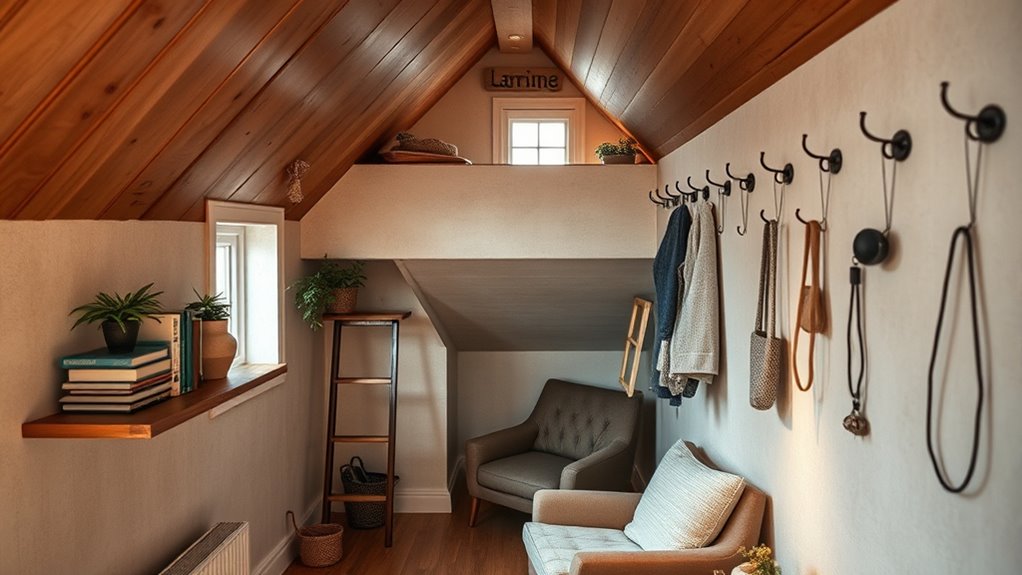
Since space is limited in small rooms, utilizing vertical space and nooks can substantially maximize your storage and functionality. By embracing vertical storage, you free up valuable floor space and add visual interest. Nook optimization allows you to turn awkward corners into cozy, organized spots. To make the most of these areas, consider:
- Installing wall-mounted shelves for books, decor, or essentials
- Using tall, slim cabinets to store items without crowding the room
- Creating built-in nooks with custom furniture to maximize every inch
- Adding hooks or pegboards for hanging accessories or tools
These strategies make your small room feel bigger and more functional, transforming awkward nooks into assets. Vertical storage and nook optimization aren’t just practical—they’re essential for making your space livable and inviting.
Employing Mirrors and Light to Enhance Perception of Space

Maximizing the sense of space in a small room often hinges on how well you use light and mirrors. Wall-mounted decor, like large mirrors, can create the illusion of more space by reflecting natural light and opening up the room. Position mirrors opposite windows to bounce sunlight around, making the room feel brighter and larger. Use light-colored or reflective wall decor to enhance this effect further. Natural light is your best asset—avoid heavy curtains; opt for sheer or minimal coverings to let sunlight flood in. By combining strategically placed mirrors with ample natural light, you’ll amplify the perception of openness and reduce the room’s awkward proportions. This simple approach makes your small room feel more inviting and less confined.
Implementing Color and Pattern to Define Areas
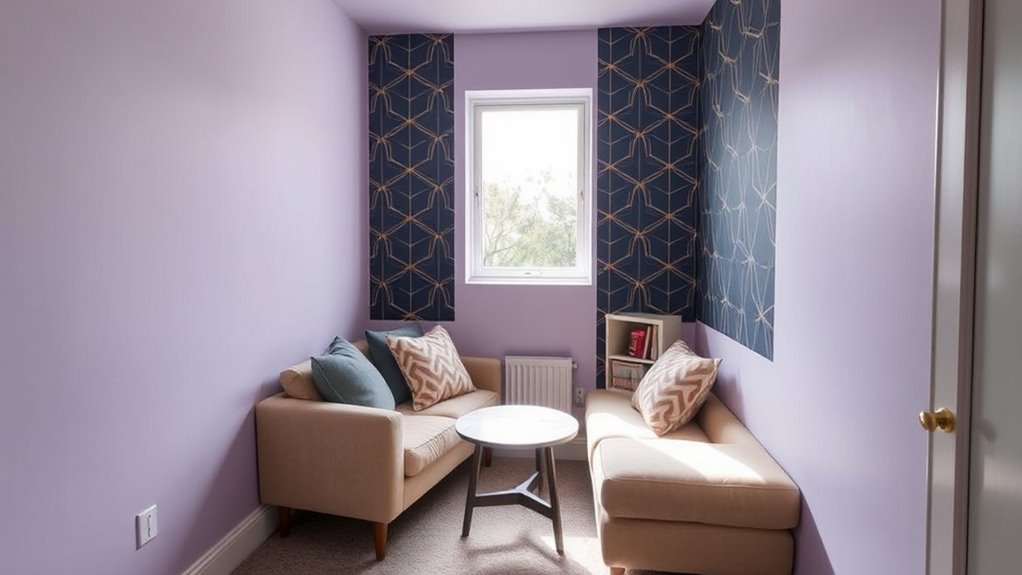
Using color and pattern is a powerful way to define different areas within a small room. You can create zones that feel intentional and cozy by choosing the right color schemes and pattern mixing.
Consider these ideas:
- Use bold, contrasting colors to highlight specific spaces, making each feel distinct.
- Mix patterns thoughtfully—pair florals with geometrics for visual interest without chaos.
- Apply lighter shades in smaller areas to open them up, while darker hues create intimacy.
- Incorporate accent walls or textiles to subtly delineate zones, guiding your eye naturally.
These techniques evoke emotion by fostering comfort and excitement, transforming an awkwardly shaped room into a harmonious, inviting space.
Incorporating Flexible and Modular Furniture Options

In small rooms, incorporating flexible and modular furniture can substantially enhance functionality and adaptability. These pieces allow you to easily implement rearrangement strategies, making it simple to reconfigure your space for different activities or needs. For example, fold-away beds, extendable tables, and multi-use storage units maximize limited space without sacrificing style. Modular furniture also offers opportunities to add decorative accents that reflect your personality, making the room feel more inviting. By choosing pieces that can be moved or adjusted, you create a dynamic environment that adapts to your lifestyle. This flexibility helps you optimize every inch, ensuring your small room remains practical and visually appealing. Overall, modular options empower you to craft a versatile, personalized space within challenging layouts.
Fine-Tuning Your Layout for Comfort and Functionality
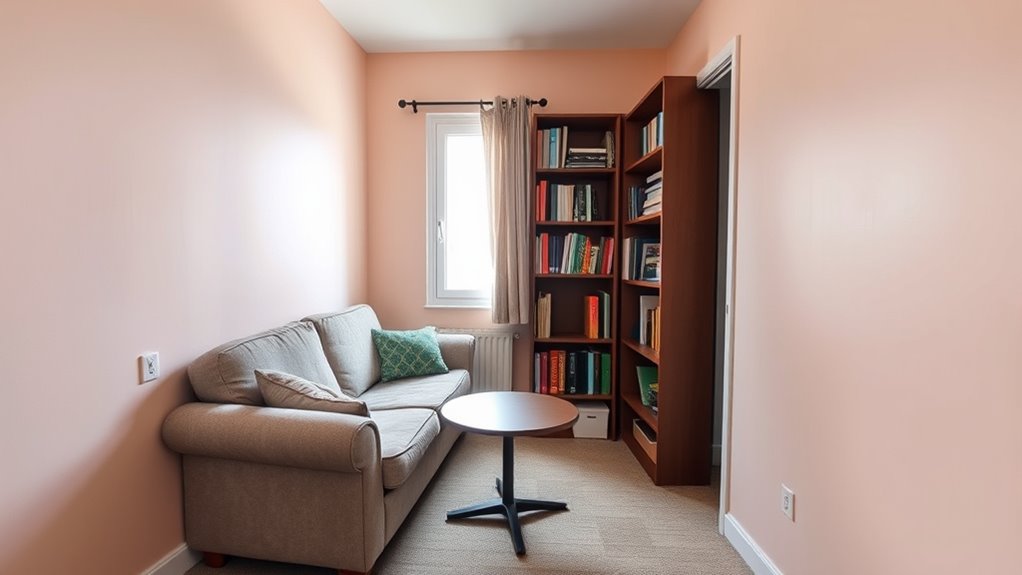
To create a comfortable and functional layout in your small room, focus on balancing practicality with your personal preferences. Start by carefully positioning furniture to maximize space without sacrificing comfort. Then, enhance the room’s ambiance with decorative accents that reflect your style, making the space feel inviting. Use ambient lighting strategically—layered lamps or soft LEDs—to create a warm atmosphere and improve usability. Consider these steps:
- Prioritize essential furniture, placing it where it feels natural and accessible.
- Add decorative accents that add personality without cluttering.
- Use ambient lighting to highlight key areas and create a cozy vibe.
- Regularly reassess your setup, adjusting for comfort and ease of movement.
This approach ensures your small room is both functional and emotionally welcoming.
Frequently Asked Questions
How Can I Make a Small Room Feel More Open Without Major Renovations?
To make your small room feel more open, choose light color schemes like whites, pastels, or soft neutrals that reflect natural light. Keep decorative accents minimal to avoid clutter and create a sense of space. Use multi-functional furniture to maximize floor area and avoid bulky pieces. Keep windows unobstructed, and add mirrors to reflect light and create depth, making the room appear larger and more inviting without major renovations.
What Are Quick Fixes to Improve Furniture Arrangement in Awkward Spaces?
Think of your room as a puzzle waiting to be solved. Use space-saving furniture that tucks into corners and under windows to free up flow. Place mirrors strategically to bounce light and create an illusion of space, making the room feel bigger and brighter. Shift furniture to maximize open pathways, and keep clutter at bay. These quick fixes turn awkward corners into smooth, inviting spaces where everything fits better.
How Do I Choose the Right Scale Furniture for a Tiny, Irregularly Shaped Room?
You should focus on scale selection to match your tiny, irregularly shaped room. Opt for furniture with proportionate size—think petite sofas and compact tables—that won’t overwhelm the space. Measure carefully before buying, ensuring each piece fits comfortably without crowding. By choosing appropriately scaled furniture, you create a balanced look that maximizes your room’s functionality and visual appeal, making it feel more open and inviting despite its awkward shape.
Can I Incorporate a Workspace or Storage Without Cluttering the Room?
Yes, you can incorporate a workspace or storage without cluttering your small, awkwardly shaped room. Use vertical storage solutions like wall-mounted shelves or tall cabinets to free up floor space. Opt for multi-functional furniture, such as a desk with built-in drawers or a bed with storage underneath. These choices maximize utility while keeping the room organized and open, making your space feel more spacious and functional.
What Are the Best Lighting Tips for Small, Oddly Shaped Rooms?
You should maximize natural light by keeping windows unobstructed and using light-colored window treatments. Layered lighting works best, combining ceiling fixtures, wall sconces, and table lamps to create flexibility. Use mirrors to reflect natural light and brighten corners. Opt for compact, multi-functional lighting options to avoid clutter. This approach makes your small, oddly shaped room feel more open and inviting, with well-balanced illumination throughout.
Conclusion
By carefully evaluating your space and choosing versatile furniture, you can transform even the most awkwardly shaped small room into a functional, stylish haven. Don’t let the room’s quirks hold you back—embrace creative solutions and strategic placement. With patience and a bit of experimentation, you’ll create a space that feels larger and more inviting. Are you ready to turn those challenges into opportunities and make your small room truly work for you?
Halloween Picks
halloween
As an affiliate, we earn on qualifying purchases.