Among these smart thermostats with energy savings, I rank the Google Nest Learning Thermostat (4th Gen) as the best overall for buyers who want automated schedule learning and a room sensor. The ecobee Smart Thermostat Enhanced stands out for flexible scheduling, while the Amazon Smart Thermostat is a simpler pick for Alexa households. The main tradeoff is how much you want to spend and manage: learning features and sensors can help target comfort, while simpler models may require more manual scheduling. HVAC compatibility, especially C-wire needs and support for heating or cooling stages, can narrow the field before features do. Read on for the full comparison and guidance on which model best matches your home.

Get home appliances delivered free with Prime
- Fast, free delivery on millions of items
- Prime Video, Amazon Music and more included
- Member-only deals all year
Complete the kit


Key Takeaways
- The Nest Learning Thermostat (4th Gen) leads this roundup for combining automatic schedule learning with a bundled temperature sensor; buyers who do not need learning can choose a simpler model.
- ecobee’s Premium and Enhanced models offer a stronger route for households that want room-level comfort and broad smart-home controls, but their extra capabilities may be unnecessary in a small, predictable home.
- Amazon Smart Thermostat is the straightforward value choice for Alexa and Ring users, while its reliance on compatible ecosystems and fewer advanced controls can limit its appeal elsewhere.
- Honeywell’s color touchscreen models put schedule changes and temperature settings directly on the wall, a useful contrast with the app- and automation-focused Nest options.
- Compatibility matters more than the feature list: the lineup includes C-wire adapters or accessories on some models, but buyers still need to check their HVAC wiring and system type before choosing.
| Honeywell Home RTH9585WF1004 Wi-Fi Smart Color Programmable Thermostat |  | Best for Energy Tracking | Model: RTH9585WF1004 | Connectivity: Wi-Fi | Display: Customizable color touchscreen | VIEW LATEST PRICE | See Our Full Breakdown |
| Google Nest Smart Wi-Fi Thermostat, Charcoal | 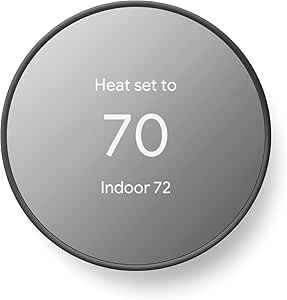 | Best for Simple Away-From-Home Savings | Color: Charcoal | Connectivity: Wi-Fi and Bluetooth Low Energy | Display: 2-inch LCD | VIEW LATEST PRICE | See Our Full Breakdown |
| Google Nest Smart Wi-Fi Thermostat with Matching Trim Kit, Snow |  | Best for a Neater DIY Installation | Thermostat model: GA01334-US | Trim kit model: GA01837-US | Color: Snow | VIEW LATEST PRICE | See Our Full Breakdown |
| Honeywell RTH9580WF1005/W1 Smart Wi-Fi Programmable Color Touchscreen Thermostat | 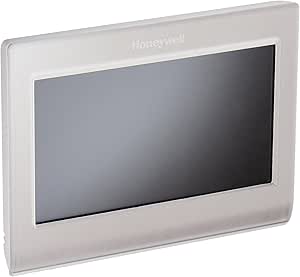 | Best for Seven-Day Scheduling | Model: RTH9580WF1005/W1 | Connectivity: Wi-Fi | Programming: 7-day programmable | VIEW LATEST PRICE | See Our Full Breakdown |
| ecobee Smart Thermostat Premium with Wi-Fi, Siri and Alexa, and SmartSensor |  | Best for Room-by-Room Comfort | Connectivity: Wi-Fi | Voice assistants: Siri and Alexa built in | Included sensor: SmartSensor | VIEW LATEST PRICE | See Our Full Breakdown |
| ecobee Smart Thermostat Essential Wi-Fi Thermostat |  | Best for Flexible Scheduling | Model: Smart Thermostat Essential | Connectivity: Wi-Fi | Display: 3.74-inch LCD touchscreen | VIEW LATEST PRICE | See Our Full Breakdown |
| Amazon Smart Thermostat, Like-New Refurbished, Wi-Fi, Works with Alexa and Ring |  | Best Alexa-Centered Value | Condition: Like-new refurbished, tested, and certified | Model number: S6ED3R | Dimensions: 3.56 × 3.56 × 0.84 inches | VIEW LATEST PRICE | See Our Full Breakdown |
| Levoit Aura 400S Smart Wi-Fi Thermostat with 4-Inch Touchscreen and C-Wire Adapter |  | Best for Multi-Room Sensing | Model: Aura 400S | Display: 4-inch IPS touchscreen LCD | Power supply: AC 24V, 60Hz | VIEW LATEST PRICE | See Our Full Breakdown |
| Sensi ST55 Wi-Fi Smart Thermostat |  | Best for Easier DIY Installation | Model: ST55 | Connectivity: Wi-Fi | Display: 5-inch LED screen | VIEW LATEST PRICE | See Our Full Breakdown |
| Google Nest Learning Thermostat Pro Edition (4th Gen, 2024) with Temperature Sensor, Polished Silver |  | Best Premium Learning Setup | Generation: 4th Gen (2024) | Model number: G5AJK GJQ8U | Color: Polished Silver | VIEW LATEST PRICE | See Our Full Breakdown |
| ecobee Smart Thermostat Enhanced with Wi-Fi |  | Best Overall for Flexible Energy Savings | Connectivity: Wi-Fi | Voltage: 24 V | Display: 4-inch LCD | VIEW LATEST PRICE | See Our Full Breakdown |
| Google Nest Learning Thermostat (4th Gen) with Nest Temperature Sensor (2nd Gen), Polished Silver (Renewed) |  | Best for Learning Schedules and Room Balancing | Model: Nest Learning Thermostat (4th Gen) | Condition: Renewed | Finish and material: Polished silver aluminum | VIEW LATEST PRICE | See Our Full Breakdown |
| Honeywell RTH9580WF Wi-Fi Smart Programmable Thermostat |  | Best for Hands-On Scheduling and Clear Readouts | Model: RTH9580WF | Connectivity: Wi-Fi | Display: 4.5-inch customizable full-color touchscreen | VIEW LATEST PRICE | See Our Full Breakdown |
| Google Nest Thermostat E with Nest Temperature Sensor Bundle, White |  | Best for Simple Automatic Scheduling | Connectivity: Wi-Fi | Power source: Battery-powered | Voltage: 24 volts | VIEW LATEST PRICE | See Our Full Breakdown |
| Amazon Smart Thermostat with Alexa and Ring Compatibility | | Best for Alexa-Centered Energy Controls | Model: S6ED3R | Dimensions: 3.56 x 3.56 x 0.84 inches | HVAC compatibility: Most 24V systems, including conventional forced-air, heat pump, and radiant boiler systems | VIEW LATEST PRICE | See Our Full Breakdown |
| smart thermostats with energy saving | Connectivity | Display | Model |
|---|---|---|---|
| Honeywell Home RTH9585WF1004 W | Wi-Fi | Customizable color touchscreen | RTH9585WF1004 |
| Google Nest Smart Wi-Fi Thermo | Wi-Fi and Bluetooth Low Energy | 2-inch LCD | — |
| Google Nest Smart Wi-Fi Thermo | Wi-Fi | — | — |
| Honeywell RTH9580WF1005/W1 Sma | Wi-Fi | 3.5-inch digital color touchscreen | RTH9580WF1005/W1 |
| ecobee Smart Thermostat Premiu | Wi-Fi | — | — |
| ecobee Smart Thermostat Essent | Wi-Fi | 3.74-inch LCD touchscreen | Smart Thermostat Essential |
| Amazon Smart Thermostat | — | — | — |
| Levoit Aura 400S Smart Wi-Fi T | 2.4 GHz Wi-Fi and Zigbee 3.0 for room sensors | 4-inch IPS touchscreen LCD | Aura 400S |
| Sensi ST55 Wi-Fi Smart Thermos | Wi-Fi | 5-inch LED screen | ST55 |
| Google Nest Learning Thermosta | Wi-Fi and Bluetooth | — | — |
| ecobee Smart Thermostat Enhanc | Wi-Fi | 4-inch LCD | — |
| Google Nest Learning Thermosta | Wi-Fi | 3.5-inch graphical LCD | Nest Learning Thermostat (4th Gen) |
| Honeywell RTH9580WF Wi-Fi Smar | Wi-Fi | 4.5-inch customizable full-color touchscreen | RTH9580WF |
| Google Nest Thermostat E with | Wi-Fi | LCD | — |
| Amazon Smart Thermostat with A | — | — | S6ED3R |
More Details on Our Top Picks
Honeywell Home RTH9585WF1004 Wi-Fi Smart Color Programmable Thermostat
Energy reports and personalized efficiency tips give this Honeywell a more hands-on approach to saving energy than the Google Nest Thermostat, which focuses on schedules and adjusting temperatures when you leave. Its flexible scheduling, vacation holds, and automatic heat-to-cool changeover can help match HVAC use to daily routines, while app control makes changes possible away from home. The customizable color touchscreen also keeps settings and equipment alerts easy to access at the wall. That feature set makes the RTH9585WF1004 a strong fit for buyers who want visibility into usage, not just remote control. The tradeoff is installation: it requires a C-wire and does not support electric baseboard heat, so checking system and wiring compatibility comes before choosing it.
Pros:- Energy reports and personalized efficiency tips help users identify opportunities to adjust HVAC use.
- Flexible schedules, vacation holds, and automatic heat-to-cool changeover support routine-based control.
- Remote app access and Alexa and Google Home compatibility allow temperature changes away from home.
- Customizable color touchscreen puts settings and equipment alerts on the thermostat.
Cons:- Requires a C-wire for installation.
- Does not support 120–240 V electric baseboard heating.
- Heating-only oil furnaces need a C-wire.
Best for: Homeowners with a compatible forced-air, hot-water, steam, or heat-pump system who want energy reports and schedule controls in one thermostat.
Not ideal for: Homes with electric baseboard heating or no available C-wire, and buyers who want a thermostat designed for simple DIY installation without wiring checks.
- Model:RTH9585WF1004
- Connectivity:Wi-Fi
- Display:Customizable color touchscreen
- Programming:Flexible scheduling
- Smart home compatibility:Amazon Alexa and Google Home
- Energy certification:ENERGY STAR
- Compatible systems:Forced-air gas, oil, or electric; hot water; steam; heat pumps with electric backup
- Wiring requirement:C-wire required
Our verdict“Choose this Honeywell if energy reports and detailed scheduling matter more to you than the simpler away-temperature approach of the Google Nest Thermostat.”
Google Nest Smart Wi-Fi Thermostat, Charcoal
The Google Nest Thermostat puts its energy-saving emphasis on a practical behavior: adjusting the temperature when you leave, then following a schedule you set in the Google Home app. That makes it less focused on usage reports than the Honeywell Home RTH9585WF1004, but easier to understand for buyers who mainly want to avoid heating or cooling an empty home. It is designed for DIY installation and supports remote and voice control, with alerts for potential problems on eligible HVAC systems. The smaller LCD and app-led setup keep the experience relatively straightforward; the tradeoff is that some systems need a C-wire or compatible power accessory. Remote features also depend on Wi-Fi, so this is a weaker fit where connectivity is unreliable or household members want detailed energy reporting on the thermostat itself.
Pros:- Adjusts temperature when residents leave to help limit HVAC use in an empty home.
- Schedules and remote changes are available through the Google Home app.
- Designed for DIY installation, typically in 30 minutes or less.
- Works with compatible voice assistants and can provide alerts about potential HVAC issues.
Cons:- Some HVAC configurations require a C-wire or compatible power accessory.
- Remote control, notifications, and voice control depend on working internet and Wi-Fi.
- The compact LCD and app-based controls offer less on-device detail than the Honeywell RTH9585WF1004 touchscreen.
Best for: Households with compatible HVAC systems that want app-based scheduling and temperature adjustments when the home is empty, without a feature-heavy interface.
Not ideal for: Buyers who want detailed energy reports, a large touchscreen, or dependable remote functions in a home with unreliable Wi-Fi.
- Color:Charcoal
- Connectivity:Wi-Fi and Bluetooth Low Energy
- Display:2-inch LCD
- Control:Remote and voice
- Power source:Battery powered; some systems may need a C-wire or compatible power accessory
- Voltage:24 volts
- Energy certification:ENERGY STAR
- Mounting:Wall mount
Our verdict“Pick the Google Nest Thermostat if you want a straightforward way to reduce heating and cooling in an empty home and your system supports its power requirements.”
Google Nest Smart Wi-Fi Thermostat with Matching Trim Kit, Snow
This Snow-finish Nest makes the strongest case for buyers replacing an older thermostat with a visible wall mark: the matching trim plate is included, so the installation can cover a larger area without sourcing a separate accessory. Its energy-saving basics mirror the Google Nest Thermostat in Charcoal: app-based scheduling, remote temperature control, and suggested schedule adjustments. HVAC monitoring can also flag potential issues, adding some useful system oversight beyond basic temperature changes. The trim kit improves the finished look, not the thermostat’s energy controls, so it is not a better savings tool than the standard Nest by itself. Compatibility is listed at about 85% of heating and cooling systems, which is broad but not universal, and key controls rely on the Google Home app. Buyers should verify system fit before choosing this for a quick DIY refresh.
Pros:- Matching steel trim plate and mounting hardware can cover marks around a previous thermostat.
- Google Home app supports remote temperature control and scheduling.
- Suggested schedule adjustments can help refine routine-based heating and cooling.
- HVAC monitoring can alert users to potential system issues and maintenance needs.
Cons:- Compatibility is listed at about 85% of heating and cooling systems, so some homes will not be supported.
- Scheduling and remote control rely on the Google Home app.
- The included trim plate improves installation appearance rather than adding energy-saving functionality over the standard Nest Thermostat.
Best for: DIY renovators replacing a wall thermostat who want app-based schedules and a matching trim plate to cover marks around the old unit.
Not ideal for: Buyers whose HVAC system has not been checked for compatibility or who want energy controls and schedules that work independently of the Google Home app.
- Thermostat model:GA01334-US
- Trim kit model:GA01837-US
- Color:Snow
- Connectivity:Wi-Fi
- Control methods:Google Home app, buttons, and voice control
- Compatible assistants:Google Assistant and Alexa
- System compatibility:About 85% of heating and cooling systems
- Included components:Thermostat, base, installation hardware, and steel trim plate
Our verdict“Choose this Snow Nest over the Charcoal model when the included matching trim plate solves a wall-finish problem and your HVAC system is compatible.”
Honeywell RTH9580WF1005/W1 Smart Wi-Fi Programmable Color Touchscreen Thermostat
For households that keep different routines across the week, the 7-day programmable schedule is the clearest reason to choose this Honeywell. It also learns heating and cooling cycle times, which can help schedule temperature changes around how the system responds. Compared with the Google Nest Thermostat, this model leans more on user-defined programming and a large wall display than on adjusting temperature when people leave. Its 3.5-inch color touchscreen, remote control through Total Connect Comfort, and filter-change and extreme-temperature alerts suit homes or small businesses where direct controls and reminders matter. The tradeoffs are a mandatory C-wire and the need for a separate Alexa device for voice control. It is a better match for buyers who want a scheduled, information-rich interface than for those seeking the simplest installation.
Pros:- Seven-day programming allows schedules to vary across the week.
- Learning-based cycle timing can help align scheduled changes with HVAC response.
- Large customizable color touchscreen provides direct access to controls.
- Remote control and filter-change and extreme-temperature alerts support ongoing system management.
Cons:- Requires a C-wire.
- Alexa voice control requires a separate Alexa device.
- Its programming-focused approach may suit routine-based households less well than the Google Nest Thermostat’s away-temperature adjustments.
Best for: Households or small businesses with predictable but different weekday and weekend routines, a compatible HVAC system, and a C-wire.
Not ideal for: Homes without a C-wire or buyers who prefer automatic away adjustments and a less schedule-centric setup like the Google Nest Thermostat.
- Model:RTH9580WF1005/W1
- Connectivity:Wi-Fi
- Programming:7-day programmable
- Display:3.5-inch digital color touchscreen
- Remote control:Total Connect Comfort on computer or mobile device
- Compatibility:Amazon Alexa, Android, iOS, and Vera
- Temperature control:Heating and cooling
- Installation requirement:C-wire
Our verdict“Choose this Honeywell if you want seven distinct days of scheduling and a large touchscreen, and your wiring supports installation.”
ecobee Smart Thermostat Premium with Wi-Fi, Siri and Alexa, and SmartSensor
The ecobee Smart Thermostat Premium stands apart from the Honeywell and Google models here because its included SmartSensor and occupancy sensing can respond to which rooms are in use, rather than relying only on a central thermostat reading. That can help reduce unnecessary heating or cooling while improving comfort in rooms used during different parts of the day. Its built-in air-quality monitor, filter reminders, and voice features add useful functions beyond scheduling, while the included Power Extender Kit helps households without a C-wire. Compared with the simpler Google Nest Thermostat, this is a more capable choice for varied room use, but it also brings more setup and feature dependencies. Siri requires an Apple home hub, and some security functions need a subscription, so buyers who only want basic schedules may be better served by a less elaborate model.
Pros:- Included SmartSensor and built-in occupancy sensing can tailor comfort to rooms that are in use.
- Built-in air-quality monitoring provides alerts and filter-change reminders.
- Power Extender Kit supports installation in homes without a C-wire.
- Built-in speaker supports Alexa or Siri voice features and audio streaming.
Cons:- Siri requires an Apple home hub.
- Some security features require an ecobee Smart Security subscription.
- The additional sensors and connected features may be unnecessary for buyers who only need the basic schedules offered by the Google Nest Thermostat.
Best for: Households with uneven room use or comfort differences between rooms that want occupancy-aware control, air-quality alerts, and a sensor included.
Not ideal for: Buyers seeking basic scheduling without extra connected features, or those unwilling to add an Apple home hub for Siri or a subscription for certain security functions.
- Connectivity:Wi-Fi
- Voice assistants:Siri and Alexa built in
- Included sensor:SmartSensor
- Occupancy sensing:Built-in radar sensor
- Air-quality monitoring:Built-in monitor with alerts and filter-change reminders
- HVAC compatibility:Compatible with 95% of HVAC systems
- Installation accessories:Power Extender Kit and trim kit
- Warranty:3 years
- Energy certification:ENERGY STAR certified
Our verdict“Choose the ecobee Premium if room occupancy and air-quality monitoring could help your household manage comfort and energy use beyond a single thermostat reading.”
ecobee Smart Thermostat Essential Wi-Fi Thermostat
The ecobee Smart Thermostat Essential is a strong fit for households that want energy savings from schedules and automatic away adjustments without needing a more elaborate learning system. Its app and color touchscreen offer two straightforward ways to change settings, while support for Apple HomeKit, Google Assistant, and Alexa suits homes with mixed smart-home platforms. Compared with the Amazon Smart Thermostat, it offers broader assistant compatibility and a touchscreen rather than relying on Alexa-centered control. Its stated savings potential is up to 23% compared with holding the temperature at 72°F, though actual results depend on household routines and HVAC use. The tradeoff is setup: homes without a C-wire may need a separately sold Power Extender Kit, and room sensors are not included.
Pros:- Scheduling and auto-away adjustments can reduce heating or cooling when routines change.
- Touchscreen and app controls make adjustments accessible both at home and remotely.
- Works with Apple HomeKit, Google Assistant, and Amazon Alexa.
- Supports many 24 VAC systems, including heat pumps, boilers, and dual-fuel setups.
Cons:- A separately sold Power Extender Kit may be needed in homes without a C-wire.
- SmartSensor and trim kit are sold separately.
- Its energy-savings claim is a potential result, not a guaranteed household outcome.
Best for: Households with compatible 24 VAC HVAC systems that want app scheduling, automatic away adjustments, and flexibility across several voice-assistant ecosystems.
Not ideal for: Buyers who need included room sensors or a complete no-extra-parts installation in a home without a C-wire.
- Model:Smart Thermostat Essential
- Connectivity:Wi-Fi
- Display:3.74-inch LCD touchscreen
- Power:Battery powered
- HVAC compatibility:Most 24 VAC systems, including gas, oil, electric, heat pumps, and boilers
- Smart-home compatibility:Apple HomeKit, Google Assistant, Amazon Alexa
- Energy features:Auto-away, auto-scheduling, fan control, and time-of-use features
- C-wire support:Power Extender Kit sold separately for homes without a C-wire
- Stated savings:Up to 23% compared with holding the temperature at 72°F/22°C
Our verdict“Choose the ecobee Essential if you want flexible scheduling and broad smart-home support, and your wiring is compatible or you are prepared to add a power kit.”
Amazon Smart Thermostat, Like-New Refurbished, Wi-Fi, Works with Alexa and Ring
The refurbished Amazon Smart Thermostat makes the most sense for Alexa households that want routine-based temperature changes without paying for a broad smart-home feature set. It can adjust temperatures around home, away, and sleep routines, and its schedule supports up to four periods a day. That gives it a practical energy-management role, though its controls and integrations are narrower than the ecobee Smart Thermostat Essential, which also supports Apple HomeKit and Google Assistant. This unit is certified refurbished and described as tested to work like new, with the same limited warranty as a new device. Buyers should check HVAC and network fit before choosing it: it needs a C-wire or separate power adapter, supports only 2.4 GHz Wi-Fi, and cannot control 110–240V systems such as electric baseboard heat.
Pros:- Home, away, and sleep routines can adjust temperatures around household occupancy.
- Supports app control and up to four scheduled periods per day.
- Includes wall plates and an installation tool, with guided setup in the Alexa app.
- ENERGY STAR certified and compatible with the Alexa and Ring apps.
Cons:- Requires a C-wire or a separately purchased power adapter kit.
- Works only on 2.4 GHz Wi-Fi and voice control needs a separate Alexa-enabled device.
- Refurbished condition may not suit buyers who want a new, non-refurbished unit.
Best for: Alexa users with compatible low-voltage HVAC who want scheduled and routine-based temperature control and are comfortable buying a refurbished thermostat.
Not ideal for: Homes with electric baseboard or other 110–240V heating, 5 GHz-only Wi-Fi, or no Alexa-enabled device for voice control.
- Condition:Like-new refurbished, tested, and certified
- Model number:S6ED3R
- Dimensions:3.56 × 3.56 × 0.84 inches
- Wi-Fi:2.4 GHz, 802.11 b/g/n; no 5 GHz support
- HVAC compatibility:Most 24V systems, including forced air, heat pumps, and radiant boilers
- Power requirement:C-wire or separately sold power adapter kit
- Scheduling:Up to four time periods per day
- App compatibility:Alexa app and Ring app
- Certification:ENERGY STAR and ECOLOGO Gold
Our verdict“Pick this model for Alexa-based routines on compatible 24V HVAC, but skip it if you need broader platform support or high-voltage heating compatibility.”
Levoit Aura 400S Smart Wi-Fi Thermostat with 4-Inch Touchscreen and C-Wire Adapter
The Levoit Aura 400S stands apart for households that want energy controls informed by temperatures in more than one room. It supports up to 16 compatible sensors, so buyers can build a room-by-room setup that goes beyond the single included thermostat location; the sensors are sold separately. Its 4-inch touchscreen displays temperature, humidity, and weather, while the VeSync app handles schedules and HVAC monitoring. Compared with the ecobee Smart Thermostat Essential, the Levoit includes a C-wire adapter and supports a larger stated sensor network, but the ecobee offers Apple HomeKit compatibility, which the Levoit does not list. System fit is the main limitation: it cannot control high-voltage HVAC, and heating-only installations need a C-wire.
Pros:- Supports up to 16 compatible room sensors for a wider view of household temperatures.
- C-wire adapter is included, which can simplify installation for compatible systems.
- Large touchscreen shows temperature, humidity, and weather.
- Custom schedules and energy-saving settings support routine-based HVAC control.
Cons:- Room sensors are sold separately, adding another purchase for multi-room sensing.
- Not compatible with high-voltage systems or heating-only systems without a C-wire.
- Wi-Fi is limited to 2.4 GHz.
Best for: Owners of compatible conventional or heat-pump systems who want to add room sensors over time and use Alexa or Google Assistant.
Not ideal for: Homes with 120–240V HVAC or heating-only systems without a C-wire, and buyers who want room sensors included.
- Model:Aura 400S
- Display:4-inch IPS touchscreen LCD
- Power supply:AC 24V, 60Hz
- Connectivity:2.4 GHz Wi-Fi and Zigbee 3.0 for room sensors
- Temperature setting range:32°F–99°F
- Compatible systems:Conventional heating and cooling, cooling-only, and heat pumps
- Sensor support:Up to 16 sensors, sold separately
- Voice assistants:Amazon Alexa and Google Assistant
- Included wiring accessory:C-wire adapter
Our verdict“Choose the Aura 400S if multi-room sensing is your priority and your HVAC system fits its low-voltage compatibility limits.”
Sensi ST55 Wi-Fi Smart Thermostat
The Sensi ST55 is a practical choice for buyers who want energy-management tools without making wiring changes the first hurdle. A C-wire is not required for most installations, and the built-in level plus app instructions help with a do-it-yourself setup. Once installed, schedules, usage reports, and maintenance alerts can support better temperature habits and flag upkeep needs such as filter replacement. Compared with the Levoit Aura 400S, Sensi has a smaller, simpler LED display and no stated multi-room sensor network, but it supports more smart-home platforms, including Apple HomeKit, SmartThings, and Vera. C-wire needs still vary by system, and compatibility depends on the home’s equipment, so buyers should check their wiring and HVAC type before ordering.
Pros:- C-wire is not required for most installations.
- Built-in level and step-by-step app instructions support DIY installation.
- Usage reports, schedules, and remote access help manage HVAC routines.
- Works with Alexa, Apple HomeKit, Google Assistant, SmartThings, and Vera.
Cons:- Some HVAC setups still require a C-wire, so wiring compatibility must be checked.
- The LED display is less information-rich than the Levoit Aura 400S touchscreen.
- System compatibility depends on the home’s specific HVAC equipment.
Best for: DIY-minded homeowners with compatible air conditioning, boiler, furnace, or heat-pump systems who want usage reports and broad smart-home platform support.
Not ideal for: Buyers who need a guaranteed C-wire-free installation, a large color touchscreen, or room-by-room sensor control.
- Model:ST55
- Connectivity:Wi-Fi
- Display:5-inch LED screen
- Compatible systems:Air conditioner, boiler, furnace, and heat pump
- Smart-home compatibility:Amazon Alexa, Apple HomeKit, Google Assistant, SmartThings, and Vera
- Control methods:App, touch, voice, and buttons
- C-wire requirement:Not required for most installations
- Energy certification:ENERGY STAR
- Power and batteries:24 V AC corded electric; two AA batteries included
Our verdict“Choose the Sensi ST55 if you value a simpler DIY installation and usage reports more than a large display or multi-room sensing.”
Google Nest Learning Thermostat Pro Edition (4th Gen, 2024) with Temperature Sensor, Polished Silver
The Google Nest Learning Thermostat Pro Edition is the premium pick here for buyers who want adaptive temperature control paired with a room sensor. Its learning and programmable controls can help tailor heating and cooling to household routines, while the included Nest Temperature Sensor gives the system another room’s temperature to work from. That sensor is a clear advantage over the Sensi ST55, which focuses more on schedules, usage reports, and maintenance alerts than room-based control. The Nest also lists compatibility with a broad range of 24V systems, including zoned HVAC and geothermal setups. The tradeoff is a more involved purchase and installation: professional installation and calibration are recommended, and the listed battery is nonstandard. Buyers seeking a straightforward DIY option may find Sensi the better fit.
Pros:- Included Nest Temperature Sensor supports temperature control based on another room.
- Learning, programmable, and remote controls can adapt HVAC operation to household routines.
- Supports many 24V systems, including dual-fuel, geothermal, radiant, and zoned HVAC.
- Wi-Fi and Bluetooth connectivity support app-based control.
Cons:- Professional installation and calibration are recommended.
- Requires a nonstandard battery.
- More involved features may be unnecessary for buyers who only need basic scheduling.
Best for: Homeowners with compatible 24V HVAC who want learning controls, broad system compatibility, and an included sensor for another room.
Not ideal for: DIY-first buyers who want a simple installation, or households that do not need learning features and room-based temperature control.
- Generation:4th Gen (2024)
- Model number:G5AJK GJQ8U
- Color:Polished Silver
- Connectivity:Wi-Fi and Bluetooth
- Temperature control:Programmable, learning, smart, and remote
- HVAC compatibility:Most 24V systems, including gas, electric, oil, heat pump, radiant, dual-fuel, geothermal, and zoned systems
- Included accessory:Nest Temperature Sensor
- Mounting:Wall mount
- Battery:One nonstandard battery required
Our verdict“Choose the Nest Learning Thermostat Pro Edition if you want an included room sensor and adaptive control, and are comfortable with professional setup.”
ecobee Smart Thermostat Enhanced with Wi-Fi
The ecobee Smart Thermostat Enhanced is my strongest all-round pick for households that want energy-saving automation without being tied to one voice assistant. Its occupancy-based adjustments and schedules can reduce heating or cooling when rooms are empty, while humidity adjustments help maintain comfort without relying on temperature alone. Compared with the Amazon Smart Thermostat, it works across more smart-home platforms and includes a Power Extender Kit for many homes without a C-wire. The tradeoff is that room-by-room control requires separately purchased SmartSensors, whereas the Google Nest Learning Thermostat (4th Gen) bundle includes a room sensor. Check HVAC compatibility before buying, but for broad integration and useful automation out of the box, this is the more adaptable choice.
Pros:- Occupancy and schedule adjustments can reduce conditioning in unused spaces or at unneeded times.
- Humidity adjustments help balance comfort alongside the temperature setting.
- Power Extender Kit supports installation in many homes without a C-wire.
- Works with several major smart-home platforms and supports app-based remote control.
Cons:- SmartSensors for room-by-room comfort are sold separately.
- HVAC compatibility needs checking before purchase.
Best for: Households with compatible HVAC that want occupancy-based savings and control through Alexa, Google Assistant, Apple HomeKit, or SmartThings.
Not ideal for: Buyers who want included room sensors or room-by-room temperature control without purchasing accessories separately.
- Connectivity:Wi-Fi
- Voltage:24 V
- Display:4-inch LCD
- Compatible systems:Air conditioner, boiler, furnace, heat pump, and humidifier
- Smart-home compatibility:Amazon Alexa, Google Assistant, Apple HomeKit, and SmartThings
- Included accessories:Power Extender Kit and trim kit
- Certification:ENERGY STAR
- Warranty:3 years
Our verdict“Choose the ecobee Enhanced if you want flexible energy-saving automation and broad platform support, and are willing to buy sensors separately for room-level control.”
Google Nest Learning Thermostat (4th Gen) with Nest Temperature Sensor (2nd Gen), Polished Silver (Renewed)
The Nest Learning Thermostat (4th Gen) suits buyers who want the thermostat to learn routines and help manage temperature differences between rooms. Its included Nest Temperature Sensor can guide heating or cooling toward a selected room, a practical advantage over the ecobee Enhanced, which requires separately purchased SmartSensors for that kind of room-level input. Adaptive Eco and natural heating and cooling features add energy-focused adjustments without requiring a fully manual schedule. The main compromise is the renewed condition and a 90-day limited warranty, which give less coverage than the ecobee’s three-year warranty. It supports most 24V systems and often does not require a C-wire, but requirements vary by home. I’d pick it for learning features and an included sensor, not for buyers who prioritize longer warranty coverage.
Pros:- Learns preferred temperatures and schedules, with energy-saving adjustments.
- Includes a second-generation Nest Temperature Sensor for room-to-room temperature differences.
- C-wire is not required in most homes, though installation needs can vary.
- Offers app, voice, and push-button control.
Cons:- Renewed condition and 90-day limited warranty provide less coverage than the ecobee Enhanced.
- Compatibility is limited to supported 24V systems, and wiring needs can vary by home.
Best for: Homeowners with supported 24V HVAC who want automatic schedule learning and a sensor to address hot or cold spots in a selected room.
Not ideal for: Buyers who want a new thermostat with a longer warranty, or households with HVAC outside the supported 24V systems.
- Model:Nest Learning Thermostat (4th Gen)
- Condition:Renewed
- Finish and material:Polished silver aluminum
- Display:3.5-inch graphical LCD
- Connectivity:Wi-Fi
- Compatible assistants:Amazon Alexa and Google Assistant
- Compatible systems:Most 24V systems, including gas, electric, oil, forced air, heat pump, and radiant
- Included sensor:Nest Temperature Sensor (2nd Gen)
- Warranty:90-day limited warranty
Our verdict“Choose this Nest bundle if you want learned schedules and an included room sensor, but skip it if renewed condition or limited warranty coverage is a concern.”
Honeywell RTH9580WF Wi-Fi Smart Programmable Thermostat
The Honeywell RTH9580WF is a better fit for buyers who want to set a deliberate schedule and see temperature and humidity readings on a large, customizable touchscreen. Its programmable operation and Wi-Fi remote control can support energy-conscious routines, but it does not offer the occupancy-based adjustments found on the ecobee Smart Thermostat Enhanced or the schedule-learning approach of the Nest Learning Thermostat (4th Gen). That makes this Honeywell more of a hands-on choice: savings depend on the schedule you create and maintain. Filter-change and extreme-temperature alerts add practical household monitoring, though the one-year limited warranty is shorter than ecobee’s. It also excludes millivolt and 120/240V systems, so the 24V compatibility limit should shape the buying decision.
Pros:- Programmable schedules and Wi-Fi control let users adjust heating and cooling remotely.
- Large full-color touchscreen displays settings and readings clearly.
- Built-in temperature and humidity sensors provide useful home-condition information.
- Filter-change and extreme-temperature alerts support routine system care.
Cons:- Savings depend on manually creating and maintaining schedules rather than occupancy learning.
- Not compatible with millivolt or 120/240V systems.
- One-year limited warranty is shorter than the ecobee Enhanced warranty.
Best for: People with compatible 24V heating or cooling who prefer building their own schedule and want humidity readings and on-screen alerts.
Not ideal for: Buyers seeking occupancy-based automation, learned schedules, or compatibility with millivolt and 120/240V systems.
- Model:RTH9580WF
- Connectivity:Wi-Fi
- Display:4.5-inch customizable full-color touchscreen
- Sensors:Temperature and humidity
- Compatibility:Most 24V heating and cooling systems
- Not compatible with:Millivolt or 120/240V systems
- Dimensions:3.5 x 4.5 x 0.8 inches
- Warranty:1-year limited warranty
Our verdict“Pick the Honeywell RTH9580WF if you prefer direct schedule control and a detailed touchscreen over the ecobee’s occupancy automation or Nest’s learning features.”
Google Nest Thermostat E with Nest Temperature Sensor Bundle, White
The Google Nest Thermostat E bundle is aimed at buyers who want learned schedules and an automatic Eco Temperature when they leave, with an included sensor to prioritize a chosen room. Those features can help reduce unnecessary heating or cooling while keeping a frequently used space comfortable. Compared with the Nest Learning Thermostat (4th Gen), this model offers a simpler button-control experience and less detailed listed hardware, while retaining the core appeal of automatic scheduling. It is also less flexible for households outside the Nest and compatible assistant ecosystem than the ecobee Enhanced, which supports more smart-home platforms. Remote app control and notifications rely on working Wi-Fi and internet, and system compatibility still needs checking. This makes sense for a Nest-oriented household that values automation over extensive controls.
Pros:- Learns preferred temperatures and supports automatic scheduling.
- Can switch to Eco Temperature when the household is away.
- Includes a temperature sensor to prioritize a selected room.
- Supports remote app and compatible voice control.
Cons:- Remote control and mobile notifications depend on working internet and Wi-Fi.
- Installation compatibility depends on the home’s heating and cooling system.
- Offers a narrower smart-home compatibility set than the ecobee Enhanced.
Best for: Nest and Alexa households with compatible heating and cooling who want auto-scheduling, away adjustments, and a sensor for one selected room.
Not ideal for: Buyers without reliable Wi-Fi, those seeking broad smart-home platform support, or households with unsupported HVAC wiring or system types.
- Connectivity:Wi-Fi
- Power source:Battery-powered
- Voltage:24 volts
- Display:LCD
- Control:Button, app, and compatible voice control
- Temperature sensor:Included; supports prioritizing a selected room
- Listed compatibility:Combi and heat-only boilers, heating-only heat pumps, zoned systems, and district heating with electrical control valves
- Color and finish:White, matte
Our verdict“Choose the Nest Thermostat E bundle for straightforward Nest-based scheduling and a room sensor, provided your Wi-Fi and HVAC setup are compatible.”
Amazon Smart Thermostat with Alexa and Ring Compatibility
The Amazon Smart Thermostat is the straightforward choice for an Alexa-centered home: schedules, presence-based adjustments, and readings from select Echo devices or an Amazon Smart Air Quality Monitor can help reduce conditioning when it is not needed. Its energy dashboard also gives users a place to track their settings. Compared with the ecobee Smart Thermostat Enhanced, it has a narrower smart-home ecosystem and needs a C-wire or separately sold power adapter kit; ecobee includes a Power Extender Kit for many homes without one. The Amazon model also only supports 2.4 GHz Wi-Fi, and voice control requires an Alexa-enabled device. Those limits are reasonable for a committed Alexa household, but make it a weaker choice for mixed-platform homes or anyone seeking flexible installation.
Pros:- Schedules and presence-based adjustments can help reduce heating or cooling when it is unnecessary.
- Compatible Echo devices can contribute temperature readings for automatic adjustments.
- Alexa app provides guided installation and an energy dashboard.
- Supports most 24V systems, including conventional forced-air, heat pump, and radiant boiler systems.
Cons:- Requires a C-wire or separately sold power adapter kit.
- Does not support 5 GHz Wi-Fi or electric baseboard systems.
- Voice control requires an Alexa-enabled device.
Best for: Alexa and Ring households with compatible 24V HVAC, a 2.4 GHz Wi-Fi network, and a C-wire or separate power adapter.
Not ideal for: Homes without Alexa devices that need voice control, 5 GHz-only networks, electric baseboard systems, or broad platform support.
- Model:S6ED3R
- Dimensions:3.56 x 3.56 x 0.84 inches
- HVAC compatibility:Most 24V systems, including conventional forced-air, heat pump, and radiant boiler systems
- Power requirement:C-wire or separately sold power adapter kit
- Wi-Fi:2.4 GHz, 802.11 b/g/n; no 5 GHz or ad-hoc networks
- Controls:Three touch buttons, Alexa app, voice control, and compatible Echo devices
- App features:Humidity sensing, schedules, emergency heat mode, vacation mode, energy dashboard, and automatic air filter ordering
- Certifications:ENERGY STAR and ECOLOGO Gold
Our verdict“Choose the Amazon Smart Thermostat if your home already runs on Alexa and meets its wiring and Wi-Fi requirements; otherwise, the ecobee Enhanced is more flexible.”

How We Picked
I ranked these thermostats by how well their features can support practical energy management, not by how many smart-home functions they advertise. I weighed schedule automation, learning behavior, room sensors, remote control, and the ease of making everyday adjustments. I also considered the likely fit for different households: a simple Alexa home has different needs from a multi-room household seeking more even comfort.
Compatibility, installation demands, and the usefulness of each model’s added features shaped the order. The Nest Learning Thermostat earns the lead because it pairs schedule learning with a temperature sensor; ecobee’s higher-end models follow for households that benefit from room-aware control and broader integrations. More basic options rank well for value and ease, but below models offering more ways to adapt heating and cooling to a changing routine. Product names and bundles can overlap, so I treat trim kits, renewed units, and included sensors as meaningful differences rather than assuming every version has the same package.
Factors to Consider When Choosing Smart Thermostats With Energy Savings
Choosing a thermostat for energy savings is less about buying the model with the longest feature list and more about matching automation to your home. I would start with system compatibility, then decide whether sensors, learning, and smart-home integrations solve a real problem for your household.
Check HVAC Compatibility Before Comparing Features
Thermostats can look interchangeable while supporting different heating and cooling setups. Before buying, identify your system type, the number of heating and cooling stages, and whether you have a heat pump, boiler, or auxiliary heat. Check the thermostat wiring at the wall and confirm compatibility with the manufacturer’s checker; a C-wire adapter in a box does not automatically mean every system is supported. If you rent or share control of a building system, ask who can authorize wiring changes. A model that cannot control your equipment correctly is a poor savings choice, no matter how smart its software looks.
Decide Whether Learning or a Manual Schedule Fits Better
Automatic learning can help when household routines shift often and occupants are comfortable with the thermostat adapting over time. A programmed schedule may be the better choice if your weekday routine is stable or you want explicit control over every temperature change. Learning systems still need sensible settings and may take time to reflect a new routine, so do not assume automation means no setup. If several people change the temperature, shared controls and clear schedules can prevent conflicting adjustments. Paying extra for learning is most defensible when it replaces repeated manual changes rather than adding another feature you rarely use.
Think About Where Temperature Sensors Would Help
A thermostat measures conditions near its wall location, which may not reflect the bedroom, upstairs room, or home office where comfort matters most. Remote sensors can help a system respond to a chosen room or time of day, but they do not fix poor insulation, blocked vents, or an unbalanced duct system. Decide whether your priority is keeping one room comfortable or averaging conditions across the home; those goals can lead to different control behavior. Check whether sensors are included with the exact bundle you are buying, since packages vary. If the main problem is airflow rather than temperature measurement, an HVAC adjustment may be more useful than another sensor.
Match Smart-Home Controls to the Household That Will Use Them
Voice assistants and app integrations are useful only if they fit the devices and habits already in your home. Alexa-focused households may prefer a simpler thermostat built around that ecosystem, while buyers using multiple platforms should verify current compatibility before ordering. A touchscreen can make local adjustments easier for guests or family members who do not want to open an app. Consider account access and privacy settings as well, particularly when several people can control schedules remotely. More integrations can add convenience, but they also create more setup and troubleshooting work.
Separate Energy Features From Energy Results
A thermostat can make scheduling and remote adjustments easier, but actual savings depend on the building, equipment, climate, and the settings occupants choose. Look for features that address a specific source of waste, such as heating or cooling an empty home or maintaining the same schedule on days with different routines. Avoid choosing a model based only on a savings claim; compare what it can automate and whether you will use that function. Comfort settings also matter: an overly aggressive schedule that leads people to override the thermostat may defeat the point. Treat energy reports as a way to understand behavior, not a promise of a fixed reduction in utility use.
Know When a Premium Model Is Worth the Extra Complexity
Premium models make the most sense when you will use their sensors, advanced scheduling, or broader controls across more than one room or household routine. In a compact home with a consistent schedule, a simpler thermostat may cover the same everyday needs with less setup. Renewed products and bundles deserve a careful package check: confirm which sensor, trim plate, or accessory is included and whether the seller’s condition terms work for you. Also account for installation effort, since an adapter or additional wiring work can change the total project. Choose the least complex model that addresses your real comfort and scheduling problems.
Frequently Asked Questions
Will a smart thermostat save energy if I already use a programmable schedule?
It can, but the benefit depends on what your current schedule misses. A smart model may make remote adjustments easier, respond to changing routines, or use learning and sensors to refine when the system runs. If you already keep an accurate schedule and rarely need changes, the improvement may be modest. Compare the automation you would actually use with what your current thermostat can do. Do not buy on the assumption that Wi-Fi alone lowers energy use.
How can I tell whether my home needs a C-wire or adapter?
Start by checking the wiring behind your existing thermostat and comparing it with the wiring requirements for the exact model you plan to buy. A C-wire supplies continuous power, but wire labels and system configurations can be confusing, especially with heat pumps or multi-stage equipment. Use the manufacturer’s compatibility tool and, if the setup remains unclear, ask a qualified HVAC professional to inspect it. Some products include or support an adapter, but that does not confirm compatibility with every system. Avoid relying on wire color alone to identify a connection.
Should I choose a learning thermostat or one with a room sensor?
They address different problems. Learning focuses on adapting schedules to patterns in household use, while a room sensor helps the thermostat account for temperatures away from its wall location. A household with changing arrival times may value learning; a home with a consistently hot bedroom may benefit more from room sensing. Some models combine both approaches, though that can mean extra setup and cost. If comfort varies because of duct or insulation problems, neither feature is a substitute for fixing the underlying issue.
Is a refurbished or renewed thermostat a sensible energy-saving purchase?
It may be a reasonable option if the unit is complete, compatible with your HVAC system, and covered by return and warranty terms you accept. Check whether essential accessories such as a sensor, trim kit, or mounting hardware are included; the product name alone may not describe the full package. Confirm that the model still receives the app and smart-home support you need. A lower-cost unit is not a good fit if missing parts or uncertain condition make installation difficult. Compare the exact bundle and seller terms before choosing it over a new model.
Which features should I prioritize if my household uses Alexa or Ring?
Start by checking whether the thermostat supports the specific Alexa or Ring functions you expect, rather than assuming that general compatibility includes every control. For straightforward voice temperature changes and app access, the Amazon Smart Thermostat is a focused option in this lineup. If you also want room sensing or more advanced scheduling, compare ecobee and Nest models while confirming the integrations that matter to your setup. Keep a wall control usable for family members who do not use voice commands. Choose ecosystem fit after checking HVAC compatibility, not instead of it.
Conclusion
My best overall pick is the Google Nest Learning Thermostat (4th Gen) for buyers who want schedule learning paired with a temperature sensor. For best value, I would start with the Amazon Smart Thermostat if Alexa and Ring already anchor the home. The ecobee Smart Thermostat Premium is my best premium choice for households that will use its sensor and wider smart-home features, while the Google Nest Thermostat suits beginners seeking a simpler connected option. For wall-based controls, compare Honeywell’s color touchscreen models; for room-by-room comfort, prioritize a bundle with a compatible temperature sensor. Before ordering, verify the exact package and your HVAC wiring—the right fit is the one whose energy features you can use and whose system compatibility is confirmed.