The best overall smart video doorbell in this roundup is the eufy Security Video Doorbell E340, whose dual cameras and local storage make it a strong fit for shoppers who want to see more of the doorstep without relying on a subscription. The Tapo D225 stands out for a feature-rich 2K setup with a chime, while the Ring Battery Doorbell 2K is a compelling option for shoppers who prioritize wide-angle video and zoom. The main tradeoffs are coverage versus installation flexibility, and local storage versus cloud-based features and service plans. Lower-resolution models with included monitors may suit households that value a simple indoor viewing setup over advanced app features. Read on for the full comparison, buying advice, and picks for different needs.

Get home appliances delivered free with Prime
- Fast, free delivery on millions of items
- Prime Video, Amazon Music and more included
- Member-only deals all year
Complete the kit


Key Takeaways
- Dual-camera coverage separates the Eufy E340 and Anona 3K Dual Cam from single-camera models, making them worth a closer look if the area directly below the camera matters.
- Resolution alone does not settle the choice: the 5MP Aosu, 3K Anona, and 2K options differ in camera layout, power, storage, and chime setup.
- Tapo appears in several distinct configurations: compare the standard 2K model, D225, and D205 by their included components and exact feature set rather than assuming the names indicate identical packages.
- Local-storage options can reduce dependence on cloud plans, but buyers should check storage capacity, event retention, and whether recordings remain accessible if the device or network is unavailable.
- Included monitor systems serve a different need from app-first doorbells: the 4.5-inch and 7-inch display options may suit households wanting an indoor screen, while their lower stated resolution can be a tradeoff.


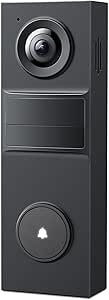

| smart video doorbell | Resolution | Night vision | Connectivity | Field of view |
|---|---|---|---|---|
| eufy Security Video Doorbell E | 2K | Color, up to 16 feet | — | — |
| Wireless Video Doorbell Camera | — | Infrared LEDs | — | — |
| Wireless Smart Video Doorbell | 1080p | — | 2.4GHz and 5GHz Wi-Fi | — |
| Orbitell 1080p Wireless Wi-Fi | 1080p | Yes | — | — |
| Tapo 2K Wireless Smart Video D | 2K | Full color with spotlight | 2.4GHz Wi-Fi | 160 degrees diagonal |
| Aosu 5MP Ultra HD Wireless & W | 5MP Ultra HD | — | — | 166° |
| Tapo D225 2K QHD Smart Video D | 2K QHD | Full color with spotlight | — | 180° |
| Arlo Video Doorbell 2K | 2K | — | — | 180° |
| Cookedixo 1080p Wireless Video | 1080p | Infrared | 2.4GHz Wi-Fi | — |
| Ring Battery Doorbell with Hea | — | — | Wi-Fi 802.11 b/g/n at 2.4GHz | 150° horizontal and 150° vertical |
| Anona 3K Dual Cam Video Doorbe | 5MP main camera and 2MP secondary sensor; 3K+2MP HD | Color | Wi-Fi 6, 2.4GHz | — |
| Chamberlain myQ Video Doorbell | 2K | Color | Wi-Fi and Bluetooth | 150° |
| BOIFUN Video Doorbell Camera W | 2K HD | HDR night vision with 940nm infrared fill light | 2.4GHz Wi-Fi | 166° |
| Tapo 2K Wireless Smart Video D | 2K (3MP) | Infrared | 2.4GHz Wi-Fi | 160° |
| Ring Battery Doorbell 2K | — | — | Wi-Fi 4, 2.4GHz | 140° horizontal and 140° vertical |
More Details on Our Top Picks
eufy Security Video Doorbell E340, Dual Cameras, 2K FHD, 8GB Local Storage
The E340 earns its place for shoppers who want to see both a visitor and the area near their delivery spot: its dual-camera design pairs with 2K video to provide more context than a single-view doorbell. Its 8GB local storage avoids a required cloud subscription, while color night vision helps distinguish activity after dark. Compared with the Tapo 2K Wireless Smart Video Doorbell, the E340 emphasizes two-camera coverage and swappable battery flexibility rather than a 160° single-camera view and spotlight. The tradeoff is a smaller stated storage capacity and support for 2.4GHz Wi-Fi only. It can be installed wired or wirelessly, but alerts require a compatible chime or smart-home device, so buyers should check their existing setup before choosing it.
Pros:- Dual cameras provide views of visitors and the area near packages.
- 2K video and color night vision offer detailed footage in daylight and low light.
- 8GB of local storage works without a required subscription.
- Supports wired installation or a rechargeable, swappable battery.
Cons:- Wi-Fi support is limited to 2.4GHz.
- Alerts require a compatible chime or smart-home device.
- The enclosure is plastic and carries an IP65 rating rather than being fully waterproof.
Best for: Homeowners who want local recording, package-area coverage, and the option to install a doorbell wired or on battery.
Not ideal for: Households using only 5GHz Wi-Fi or buyers who need alerts without a compatible chime or smart-home device.
- Camera setup:Dual cameras
- Resolution:2K
- Local storage:8GB eMMC
- Night vision:Color, up to 16 feet
- Viewing angle:160 degrees
- Wi-Fi:2.4GHz
- Power and installation:Rechargeable, swappable battery; wired or wireless
- Smart-home control:Smartphone, Alexa, and Google Assistant
Our verdict“Choose the E340 if package-aware dual-camera coverage and local recording matter more than broader Wi-Fi compatibility or a larger storage option.”
Wireless Video Doorbell Camera, 720P HD with 4.5-inch Monitor
This doorbell takes a different route from app-first models: its included 4.5-inch monitor lets a household check the door without relying on a smartphone, Wi-Fi, or an account. That makes it a practical fit for people who want a straightforward indoor screen and two-way audio, with a stated battery life of up to 50 days. Compared with the Orbitell 1080p Wireless Wi-Fi Video Doorbell, it gives up sharper video and cloud storage in exchange for operation that does not require internet access. The 720P resolution is a clear compromise, and recorded clips require a separately purchased TF card. Its wireless link range is listed broadly, but walls and interference can affect performance, so it suits a nearby monitor location better than a sprawling property.
Pros:- 4.5-inch monitor supports viewing and answering without a smartphone.
- Does not require Wi-Fi, an app, or a subscription for operation.
- Rechargeable battery is rated for up to 50 days of use.
- Supports local recording to a TF card up to 128GB.
Cons:- 720P video is less detailed than the 1080p Orbitell or 2K models in this roundup.
- TF card is required for recording and is not included.
- No cloud storage or remote app access is available.
Best for: Buyers who want a dedicated indoor monitor for answering the door without using a smartphone, app, or Wi-Fi service.
Not ideal for: Shoppers seeking high-resolution footage, remote app access, cloud backups, or easy sharing of clips.
- Video resolution:720P
- Monitor:4.5-inch IPS screen
- Viewing angle:120 degrees
- Battery capacity:1000mAh doorbell; 600mAh monitor
- Wireless range:16–262 feet
- Storage:TF card up to 128GB; card not included
- Night vision:Infrared LEDs
- Mounting:Self-adhesive or screw mount
Our verdict“Pick this system if a self-contained monitor matters more than sharper footage, internet-based alerts, or cloud recording.”
Wireless Smart Video Doorbell System – 7-inch Touchscreen Display, 1080p Video Doorbell Camera with Motion Detection, 2-Way Audio, Local Storage, No Subscription, Easy Install
The standout here is the 7-inch touchscreen: it gives households a larger, more accessible place to view visitors and answer calls than the 4.5-inch monitor bundled with the 720P Wireless Video Doorbell Camera. This system combines that display with 1080p video, two-way audio, a 160° lens, and local TF-card recording, so daily door checks do not have to depend on a phone. Its claimed compatibility with TuyaSmart and Apple HomeKit also offers a route to app-based control, unlike the simpler monitor-only option. The tradeoff is battery dependence: frequent motion events or screen use may mean more charging, and the supplied details do not state the TF card capacity. Buyers should also check their preferred app and HomeKit setup before relying on those integrations.
Pros:- Large 7-inch touchscreen makes live viewing and answering easier than a small monitor.
- 1080p video and a 160° lens provide a broader, clearer view than the 720P monitor system.
- Included TF-card local storage avoids a required subscription.
- Supports TuyaSmart and Apple HomeKit compatibility.
Cons:- Battery life may require frequent recharging depending on usage.
- The stated motion-detection range is limited to 5 meters.
- TF-card capacity is not specified in the supplied product details.
Best for: Households that want a large indoor touchscreen for answering the door, with local recording and optional smart-home app integration.
Not ideal for: Buyers who prefer a wired power source, need a clearly specified long battery runtime, or want a compact and low-cost indoor receiver.
- Indoor display:7-inch touchscreen
- Resolution:1080p
- Lens angle:160 degrees
- Motion detection range:5 meters
- Night vision range:10 meters
- Connectivity:2.4GHz and 5GHz Wi-Fi
- Battery:5000mAh rechargeable
- App compatibility:TuyaSmart and Apple HomeKit
Our verdict“Choose this system if a large touchscreen and subscription-free local recording are more useful than minimizing battery upkeep.”
Orbitell 1080p Wireless Wi-Fi Video Doorbell Camera with Two-Way Audio, Night Vision, Cloud Storage, Smart AI Motion Detection, Support 2.4GHz Wi-Fi
The Orbitell is a straightforward Wi-Fi doorbell for buyers who want 1080p video, two-way audio, and AI motion detection without stepping up to the more elaborate dual-camera Eufy E340 or touchscreen-based systems. AI motion detection is its defining distinction: it is intended to reduce unwanted alerts, which can make phone notifications more useful when activity near the entrance is frequent. It also supports cloud storage and carries an IP65 weather-resistance rating for outdoor placement. The compromises are clear: it works only on 2.4GHz Wi-Fi, and the supplied information does not specify local storage, battery capacity, or a bundled chime. Compared with the 2K Tapo D210, it offers lower resolution and less detail on storage options, so it is better suited to basic alerts than recording flexibility.
Pros:- AI-powered motion detection is designed to reduce unnecessary alerts.
- 1080p video and night vision cover common day-and-night monitoring needs.
- Two-way audio allows remote conversations with visitors.
- IP65 rating supports outdoor installation.
Cons:- Supports 2.4GHz Wi-Fi only.
- Resolution is lower than the 2K Eufy E340 and Tapo D210.
- The supplied specifications do not state local storage, battery capacity, or included chime details.
Best for: Buyers who want a simple 1080p app-connected doorbell with AI motion detection and cloud recording support.
Not ideal for: Households with only 5GHz Wi-Fi or shoppers who prioritize 2K footage, documented local storage, or a clearly specified chime.
- Resolution:1080p
- Night vision:Yes
- Audio:Two-way
- Motion detection:AI-powered
- Wi-Fi:2.4GHz only
- Weather resistance:IP65
- Installation:Wireless
- Dimensions:1.77 x 1.34 x 5.4 inches
Our verdict“Pick the Orbitell if AI motion alerts and basic cloud-connected monitoring matter more than 2K detail or clearly documented storage choices.”
Tapo 2K Wireless Smart Video Doorbell with Chime, 160° Wide View
The Tapo D210 makes a strong case for buyers who want 2K footage and a 160° view in a familiar smart-home setup. Its wide field of view can show more of an entrance in one frame, while the spotlight with full-color night vision helps preserve useful detail after dark. Recording is flexible: buyers can use a microSD card for local clips or choose Tapo Care cloud storage. Compared with the Eufy E340, the Tapo pairs local and cloud options with Alexa and Google Assistant compatibility, while the Eufy adds dual cameras and included 8GB eMMC storage. The Tapo’s card is not included, cloud service is separate, and battery life varies with use. Its chime is for indoor use, and 2.4GHz-only Wi-Fi may not suit every network setup.
Pros:- 2K resolution and 160° diagonal view capture detailed footage across a broad entrance area.
- Spotlight-assisted full-color night vision supports color footage in low light.
- Supports microSD recording up to 512GB or Tapo Care cloud storage.
- Works with Alexa and Google Assistant and includes a 15° angled wedge.
Cons:- MicroSD card is not included, and cloud storage requires a separate service.
- Battery life varies with usage and environmental conditions.
- The included chime is intended for indoor use, and Wi-Fi support is limited to 2.4GHz.
Best for: Smart-home households that want 2K video, a wide view, color night vision, and a choice between local microSD and cloud recording.
Not ideal for: Buyers who want included local storage, dual-camera package coverage, 5GHz Wi-Fi, or a chime for outdoor use.
- Resolution:2K
- Field of view:160 degrees diagonal
- Battery:6400mAh rechargeable
- Local storage:MicroSD up to 512GB; card not included
- Cloud storage:Tapo Care
- Night vision:Full color with spotlight
- Connectivity:2.4GHz Wi-Fi
- Smart-home compatibility:Alexa and Google Assistant
Our verdict“Choose the Tapo D210 if you want a wide 2K view and storage flexibility, and are comfortable supplying a card or choosing cloud service separately.”
Aosu 5MP Ultra HD Wireless & Wired Video Doorbell Camera
The Aosu is a strong fit for buyers who want high-resolution footage without relying on a cloud plan. Its 5MP camera and 166° view capture more detail and a wider approach than the Ring Battery Doorbell, while 8GB of local storage supports loop recording for up to 60 days. Triple-sensor detection combines radar, infrared, and AI human recognition, which can help distinguish people from routine movement before sending an alert. Battery or wired installation also gives it more placement flexibility than a wired-only model.
The tradeoff is a comparatively heavy 930 g unit and a stated battery life of up to 90 days, which can vary with activity and conditions. It depends on stable Wi-Fi, and cloud storage options are limited. Choose Aosu over Arlo if local footage matters more than a broad smart-home platform lineup; skip it if you want lighter hardware or richer cloud options.
Pros:- 5MP resolution and a 166° field of view provide detailed coverage of visitors and packages.
- 8GB local storage supports up to 60 days of loop recording without a required subscription.
- Battery and wired power options suit more entryway setups.
- Radar, PIR, and AI human recognition work together to filter motion alerts.
Cons:- The 930 g listed weight may make installation less convenient than lighter alternatives.
- Battery life can vary with usage and environmental conditions.
- Cloud storage options are limited, and performance relies on stable Wi-Fi.
Best for: Homeowners who want detailed, wide-angle footage and local loop recording without a required cloud subscription.
Not ideal for: Buyers who need extensive cloud storage, have unreliable Wi-Fi, or want a lightweight doorbell with a long stated battery interval.
- Resolution:5MP Ultra HD
- Field of view:166°
- Storage:8GB local storage; up to 60-day loop recording
- Detection:Radar, PIR infrared, and AI human recognition
- Power:Battery or wired
- Wi-Fi:2.4 GHz and 5 GHz
- Weather resistance:IP66
- Night vision range:23 feet
Our verdict“Choose Aosu if you want high-resolution, wide-view monitoring with local recording rather than subscription-dependent video history.”
Tapo D225 2K QHD Smart Video Doorbell with Chime
The Tapo D225 stands out for combining battery convenience with a wired 24/7 recording option. Its 2K QHD camera covers a broad 180° view, while detection for people, packages, and vehicles gives alerts more context than a basic motion-only doorbell. A microSD card can hold local footage up to 512GB, so buyers can avoid a required cloud plan; the card is not included. Compared with the Aosu 5MP, Tapo offers a wider stated view and a longer quoted battery interval, while Aosu supplies higher resolution and built-in local storage.
Full-color night vision with a spotlight can make after-dark clips easier to interpret, but the 2.4GHz-only Wi-Fi may not suit every network setup. Battery operation is rated for up to eight months, though wired power is the better fit for continuous recording. Pick the D225 for choice of power and storage methods; skip it if your network relies on 5GHz Wi-Fi.
Pros:- 180° field of view and 2K QHD resolution cover a broad entry area.
- Battery or 8–24V wired power lets owners choose convenience or 24/7 recording.
- Supports local microSD storage up to 512GB without requiring a cloud subscription.
- Detects people, packages, and vehicles, with full-color night vision.
Cons:- Supports 2.4GHz Wi-Fi only.
- MicroSD card is sold separately.
- The up-to-eight-month battery figure may not apply with every usage pattern.
Best for: Households that want a wide-view doorbell with the choice of battery use, wired 24/7 recording, and local microSD storage.
Not ideal for: Buyers whose router or network setup requires 5GHz Wi-Fi, or anyone expecting a microSD card to come in the box.
- Resolution:2K QHD
- Field of view:180°
- Power:8–24V wired or built-in 10,000mAh battery
- Battery life:Up to 8 months
- Wi-Fi:2.4GHz; does not support 5GHz
- Storage:MicroSD up to 512GB or optional cloud storage
- Night vision:Full color with spotlight
- Detection:Person, package, and vehicle
Our verdict“Pick the Tapo D225 if you want flexible power and local storage, provided your Wi-Fi supports 2.4GHz.”
Arlo Video Doorbell 2K (2nd Gen), Wireless or Wired, 1 Camera
Arlo is the lineup’s strongest match for buyers who want a doorbell to work across several smart-home ecosystems. It supports Alexa, Apple Home, Google Home, Samsung SmartThings, and IFTTT, a wider platform list than the Alexa and Google Assistant support specified for the Aosu and Tapo D225. Its 2K camera, 180° view, night vision, and two-way audio cover the everyday essentials, while battery or wired installation offers setup flexibility.
The main compromise is video access over time: the one-month trial includes advanced detection and 60-day history, but those features require a paid Arlo Secure plan afterward. That makes it less appealing than Aosu or Tapo if subscription-free recording is the priority. It also uses 2.4GHz Wi-Fi only. Choose Arlo for its broad integrations and customizable activity and privacy zones; skip it if ongoing cloud-plan costs or local storage are deal-breakers.
Pros:- Works with Alexa, Apple Home, Google Home, Samsung SmartThings, and IFTTT.
- 2K video and a 180° view capture a broad view of the entryway.
- Battery or wired installation accommodates different door setups.
- Customizable activity and privacy zones help tailor alerts and monitored areas.
Cons:- Advanced detection and 60-day video history require a paid plan after the trial.
- Supports 2.4GHz Wi-Fi only.
- The listed cloud history depends on an Arlo Secure plan rather than included local storage.
Best for: Smart-home households using multiple platforms who value broad device compatibility and customizable activity and privacy zones.
Not ideal for: Buyers who want ongoing 60-day video history or advanced detection without a paid plan, or who need 5GHz Wi-Fi support.
- Resolution:2K
- Field of view:180°
- Power:Rechargeable battery or wired trickle charging
- Weather resistance:IP65
- Wi-Fi:2.4GHz
- Audio:Two-way audio
- Smart-home compatibility:Alexa, Apple Home, Google Home, Samsung SmartThings, and IFTTT
- Cloud video history:60 days with Arlo Secure plan
Our verdict“Choose Arlo if broad smart-home compatibility matters more to you than subscription-free video history.”
Cookedixo 1080p Wireless Video Doorbell Camera with Infrared Night Vision
Cookedixo is the simplest fit here for buyers who mainly want two-way conversation and human-detection alerts. It adds infrared night vision and an indoor receiver, so a visitor can be announced inside without relying only on a phone notification. Compared with the 2K Tapo D225 or Arlo, its 1080p resolution offers less detail, and its feature set is more focused on basic monitoring than broad smart-home integration or flexible recording.
Its biggest limitation is how video is accessed: the supplied information says a subscription is required for live view and playback, despite encrypted cloud storage. That makes it a poor choice for anyone seeking subscription-free footage, especially beside the Aosu’s local loop recording or Tapo’s microSD option. The 2.4GHz-only connection also narrows network compatibility. Choose Cookedixo if the receiver and straightforward visitor alerts suit your needs; skip it if reviewing clips without a plan matters.
Pros:- AI human detection can reduce alerts from pets and vehicles.
- An indoor receiver provides an additional way to hear visitor alerts.
- Two-way audio lets occupants speak with visitors remotely.
- Infrared night vision supports monitoring after dark.
Cons:- A subscription is required for live view and video playback.
- 1080p resolution provides less detail than the 2K and 5MP options in this group.
- Supports 2.4GHz Wi-Fi only.
Best for: Renters or households seeking a basic battery-powered doorbell with an indoor chime-style receiver and human-detection alerts.
Not ideal for: Buyers who want subscription-free live view or playback, higher-resolution footage, or 5GHz Wi-Fi support.
- Model:N52
- Resolution:1080p
- Power:Battery powered
- Connectivity:2.4GHz Wi-Fi
- Audio:Two-way audio
- Night vision:Infrared
- Detection:AI human detection
- Storage:AES-128 encrypted cloud storage; subscription required for live view and playback
Our verdict“Choose Cookedixo for basic visitor alerts and an included indoor receiver, but avoid it if you need accessible video without a subscription.”
Ring Battery Doorbell with Head-to-Toe Video and Motion Detection – Satin Nickel
Ring makes sense for buyers who want a familiar, straightforward battery doorbell with head-to-toe video and Alexa integration. Its 1440 × 1440 HD image and 150° horizontal and vertical views are designed to show more of a visitor’s body and the doorstep than a narrower view might. The built-in rechargeable battery and optional hardwired connection give it setup flexibility, and the listed setup time is about five minutes. Compared with the Arlo 2K, Ring offers a simpler Alexa-focused fit, while Arlo supports more smart-home platforms and a wider 180° view.
Ring’s tradeoff is a narrower ecosystem and a 2.4GHz-only connection; advanced alerts and cloud storage require a subscription. The Tapo D225 gives buyers a wider view and local microSD storage, making it a better match for those avoiding cloud plans. Choose Ring for quick installation and Alexa-based notifications, but skip it if local footage, broader integrations, or subscription-free advanced features top your list.
Pros:- 1440 × 1440 HD video with 150° horizontal and vertical views covers the visitor and doorstep.
- Rechargeable battery and optional hardwiring suit different installation preferences.
- Designed for quick setup, with an approximate five-minute setup time listed.
- Integrates with Alexa-enabled devices for notifications and control.
Cons:- Advanced alerts and cloud storage require a subscription.
- Supports 2.4GHz Wi-Fi only.
- Smart-home compatibility is more limited than the Arlo’s listed platform support.
Best for: Alexa households that want a rechargeable doorbell with a quick setup and head-to-toe view of the entry.
Not ideal for: Buyers who want local video storage, broad smart-home platform support, or advanced alerts and cloud history without a subscription.
- Video resolution:1440 × 1440 HD
- Field of view:150° horizontal and 150° vertical
- Power:Built-in rechargeable battery; optional hardwired connection
- Connectivity:Wi-Fi 802.11 b/g/n at 2.4GHz
- Dimensions:4.98 × 2.44 × 0.91 inches
- Operating conditions:-4°F to 122°F
- Smart-home compatibility:Alexa-enabled devices
- Setup time:Approximately 5 minutes
Our verdict“Pick Ring for a quick-install, Alexa-friendly doorbell, but choose Tapo or Aosu if local recording matters more.”
Anona 3K Dual Cam Video Doorbell Camera Wireless No Subscription with Chime
The Anona 3K Dual Cam is the standout here for households that want to see both a visitor’s face and what’s been left below the camera. Its 5MP main camera and 2MP secondary sensor give it a more package-focused view than the single-camera Chamberlain myQ, while free detection for people, pets, and packages keeps those alerts from depending on a paid plan. It also offers 3K video, color night vision, and local recording, with a microSD card required for that storage option. The tradeoff is a relatively narrow connectivity choice: it works on 2.4GHz Wi-Fi only, which can be a limitation on busy networks. Choose it over the BOIFUN if the extra camera matters more than a simpler single-lens setup; skip it if you want a card included or 5GHz support.
Pros:- Dual cameras capture both eye-level visitors and the package area.
- Free AI detection covers people, pets, and packages.
- 3K main-camera video and color night vision offer detailed day-and-night viewing.
- Battery or hardwired power allows more installation flexibility.
Cons:- A microSD card for local recording is not included.
- Wi-Fi is limited to 2.4GHz.
- The dual-camera unit is larger than simpler single-camera doorbells.
Best for: Households that receive frequent deliveries and want separate views of visitors and packages without a subscription for AI detection.
Not ideal for: Homes with congested 2.4GHz networks or buyers who want local storage ready to use without purchasing a microSD card.
- Resolution:5MP main camera and 2MP secondary sensor; 3K+2MP HD
- Detection:AI detection for people, pets, and packages
- Night vision:Color
- Recording:24/7 recording; microSD up to 512GB or optional cloud storage
- Power:Rechargeable 5200mAh battery, up to 100 days, or hardwired
- Connectivity:Wi-Fi 6, 2.4GHz
- Smart home compatibility:Amazon Alexa and Google Assistant
Our verdict“Choose the Anona if package coverage and subscription-free detection matter more than dual-band Wi-Fi or included storage.”
Chamberlain myQ Video Doorbell | 2K Camera, Battery/Wired, Color Night Vision, Live with 2-Way Talk, Motion Detection & Real-Time Alerts, 150° Wide View, Black
The Chamberlain myQ earns its place for buyers who want a 150° view and a choice of battery or wired installation without moving up to a more elaborate dual-camera design. Its 2K video and color night vision give it a useful balance for everyday front-door monitoring, while two-way talk lets you respond to visitors remotely. Compared with the Anona, it has a simpler single-camera approach and does not list free AI detection; the supplied information says AI alerts require a Video Monitoring Plan. That makes the ongoing feature requirements a real part of the buying decision, especially for anyone trying to avoid paid services. The product data also does not specify local storage, so buyers seeking a self-contained recording setup may prefer the BOIFUN or Tapo D205.
Pros:- 150° field of view covers a broad area in front of the entrance.
- 2K video and color night vision support day-and-night monitoring.
- Battery or wired installation gives flexibility across different door setups.
- Two-way audio and real-time motion alerts support remote responses.
Cons:- AI alerts require a Video Monitoring Plan.
- Local recording options are not specified in the provided product details.
- Some features may require extra accessories or plans.
Best for: Homeowners who want a 2K doorbell with a wide view and the option to choose battery or wired installation.
Not ideal for: Subscription-averse buyers who want AI alerts or clearly specified local recording without a monitoring plan.
- Resolution:2K
- Field of view:150°
- Night vision:Color
- Installation:Battery or wired
- Connectivity:Wi-Fi and Bluetooth
- Audio:Two-way talk
- Weather resistance:Water resistant
- Mount type:Wall mount
Our verdict“Pick the Chamberlain myQ if installation flexibility and a wide view lead your priorities and a monitoring plan is acceptable.”
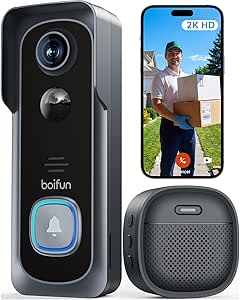
BOIFUN Video Doorbell Camera Wireless – 2K HD, No Subscription Required
The BOIFUN is a practical pick for buyers who want the basics of a subscription-free smart doorbell without giving up a broad view or local recording. Its 166° field of view is wider than the Chamberlain myQ’s 150°, helping cover more of a porch from one camera, and its microSD support up to 128GB gives owners a way to store footage locally. HDR night vision and human detection round out the core security features. Compared with the Anona, it uses a single camera and offers less maximum microSD capacity, but its role is straightforward: reliable everyday monitoring without a required subscription for essential features. The compromises are 2.4GHz-only Wi-Fi, a card that must be bought separately, and battery life that may shorten with frequent motion activity.
Pros:- 166° field of view captures a broad front-door area.
- Essential features do not require a subscription.
- Supports local microSD storage up to 128GB.
- HDR night vision, human detection, and an anti-theft alarm add useful monitoring tools.
Cons:- A microSD card is not included.
- Connectivity is limited to 2.4GHz Wi-Fi.
- Battery life can fall with heavy motion activity.
Best for: Renters or homeowners who want a wide-view wireless doorbell, local microSD recording, and essential features without a subscription.
Not ideal for: Buyers needing package-specific camera coverage, 5GHz Wi-Fi, or extended battery life under heavy activity.
- Resolution:2K HD
- Field of view:166°
- Night vision:HDR night vision with 940nm infrared fill light
- Detection:Human detection
- Storage:microSD up to 128GB
- Battery:5200mAh; up to 60 days under laboratory conditions
- Connectivity:2.4GHz Wi-Fi
- Weather resistance:IP65
- Audio:Two-way audio
Our verdict“Choose the BOIFUN for wide coverage and subscription-free local recording, provided its 2.4GHz connection and separate card purchase suit your setup.”
Tapo 2K Wireless Smart Video Doorbell D205 with 160° Wide View
The Tapo D205 is the better fit for buyers who value fewer charging interruptions over enhanced night color or dual-camera coverage. Its stated battery life of up to 180 days is the longest figure in this five-product group, and the 160° view offers broader coverage than the Ring Battery Doorbell 2K’s listed 140° horizontal and vertical view. AI person detection can help limit irrelevant alerts, while microSD support up to 512GB gives local storage a high ceiling if you supply the card. The tradeoff is infrared rather than color night vision, plus an IP54 rating that is below the IP65 ratings listed for the BOIFUN and Anona. It also relies on 2.4GHz Wi-Fi, so buyers with weak or crowded networks should look elsewhere.
Pros:- Battery life is rated for up to 180 days.
- 160° field of view covers a broad entrance area.
- AI person detection can reduce irrelevant motion alerts.
- Supports microSD cards up to 512GB as well as cloud storage.
Cons:- Uses infrared night vision rather than color night vision.
- IP54 weather resistance is lower than the IP65 ratings listed for Anona and BOIFUN.
- A microSD card is sold separately, and Wi-Fi is limited to 2.4GHz.
Best for: Busy households seeking a wide-view wireless doorbell that can go longer between charges and supports local storage.
Not ideal for: Buyers who need color night vision, stronger listed weather protection, or a connection beyond 2.4GHz Wi-Fi.
- Resolution:2K (3MP)
- Field of view:160°
- Battery:5200mAh; up to 180 days
- Night vision:Infrared
- Detection:AI person detection
- Storage:microSD up to 512GB or cloud storage
- Connectivity:2.4GHz Wi-Fi
- Weather resistance:IP54
- Smart home compatibility:Alexa and Google Assistant
Our verdict“Choose the Tapo D205 if long battery life and local-storage capacity matter more than color night vision or a higher weather rating.”
Ring Battery Doorbell 2K (Newest Model) with Wide-Angle Video, 6x Zoom, Two-Way Talk, and Built-In Battery
The Ring Battery Doorbell 2K suits buyers who want to inspect a visitor or delivery more closely from a single camera. Its up to 6x enhanced zoom is a distinctive advantage over the Tapo D205, whose supplied features focus on a wider 160° view and longer battery life rather than zoom. Ring also lists a broad 140° horizontal and vertical field of view, two-way talk, and a built-in rechargeable battery. The main tradeoff is recording access: cloud recordings require a Ring Protect subscription, making this less appealing than the BOIFUN for shoppers who prioritize subscription-free local storage. Its Wi-Fi 4, 2.4GHz connection may also be a concern in areas with weak or crowded wireless service, and battery life varies with activity.
Pros:- Up to 6x enhanced zoom helps inspect details in the camera view.
- Retinal 2K video provides high-resolution footage.
- 140° horizontal and vertical views cover a broad area.
- Built-in rechargeable battery and two-way talk support wireless use and remote communication.
Cons:- Ring Protect is required for cloud recordings.
- Wi-Fi 4 and 2.4GHz-only connectivity may limit performance in some areas.
- Battery life depends on motion activity and usage.
Best for: Alexa households that want zoomed-in detail for checking faces or deliveries and are comfortable with Ring’s cloud-recording plan requirement.
Not ideal for: Buyers seeking subscription-free cloud recordings, local storage, or a doorbell with a stated long battery-life estimate.
- Video resolution:Retinal 2K
- Zoom:Up to 6x enhanced zoom
- Field of view:140° horizontal and 140° vertical
- Audio:Two-way talk
- Battery:Built-in lithium-ion
- Connectivity:Wi-Fi 4, 2.4GHz
- Operating conditions:-4°F to 120°F (-20°C to 48.5°C)
- Weather resistance:Weather resistant
Our verdict“Pick the Ring Battery Doorbell 2K if zoom detail and Alexa compatibility matter more than avoiding a subscription for cloud recordings.”
How We Picked
I compared the 15 models on the factors that shape daily use: viewing coverage and stated resolution, wireless or wired installation, storage approach, chime or monitor inclusion, and the clarity of their alert and communication features. I gave more weight to practical fit than to a high resolution number alone; a dual-camera layout, useful included display, or clear storage arrangement can matter more than a small specification bump.
The ranking favors models with a persuasive balance of coverage, setup flexibility, and ownership clarity, then separates specialized picks from general-purpose options. Subscription requirements, storage limits, and installation constraints count as meaningful tradeoffs, not footnotes. Product names can describe different bundles, so I recommend checking the exact model and package details before purchase; features and included accessories can vary by version.
Factors to Consider When Choosing Smart Video Doorbells
Before choosing a smart doorbell, match the device to the way your entrance is built and the way your household will use alerts. Camera placement, power, storage, and who needs to see the feed can matter more than the headline resolution.
Choose Coverage for the Shape of Your Entrance
A wide horizontal view can show visitors approaching from either side, but it may not show parcels placed close to the threshold. A second downward-facing camera can address that blind spot, though it adds another feed to interpret and may affect how the doorbell is installed. Before buying, note the height and angle of your existing doorbell and whether a wall, porch column, or storm door blocks the view. Avoid assuming that a larger resolution automatically captures more of the scene; field of view and camera position determine what enters the frame. If package visibility is the priority, favor a view designed to include the doorstep rather than choosing by pixel count alone.
Check Power and Installation Before Comparing Features
Wireless models offer more freedom in placement but need charging or battery maintenance, and cold weather or frequent motion events can increase how often a battery needs attention. Wired models can draw power from existing doorbell wiring, but compatibility and available voltage matter, so check the manufacturer’s requirements before removing the old unit. A model described as both wired and wireless may not include every adapter or accessory needed for each setup. Renters should also weigh permission to drill, adhesive mounting options, and whether the device can be removed without leaving damage. Choosing a suitable power method early can prevent a feature-rich doorbell from becoming an awkward fit.
Understand Storage, Subscriptions, and Event History
Local storage and cloud recording solve different problems. Local recording can limit ongoing service dependence, but check the capacity, overwrite behavior, and whether footage is accessible if the doorbell is damaged or offline. Cloud plans can make it easier to review events remotely, yet may add recurring costs or gate features behind a subscription. A live view and motion alert do not necessarily mean the doorbell saves a usable recording of every event. Decide how long you need to retain footage and whether multiple household members need access before selecting a storage model. Read the current plan details for the exact device, since service terms can change.
Treat Resolution as One Part of Image Quality
Higher stated resolution can preserve more detail when zooming, but it cannot compensate for poor lighting, a narrow view, or a lens aimed at the wrong part of the entrance. Night-vision type, image processing, and the distance between the camera and a visitor all affect whether a face is recognizable. A wide-angle camera may show more of the porch while making distant details smaller. Think about what you need to identify: a person at the door, a parcel on the step, or activity along a walkway. Compare sample footage when available, especially in nighttime conditions, rather than relying only on the resolution label.
Decide Who Needs the Screen and How Alerts Should Work
An app-first doorbell suits households comfortable answering from a phone, while a dedicated indoor monitor can help people who do not want to rely on a smartphone for every visitor. A monitor may also be convenient in a shared home, but check whether it depends on the same Wi-Fi network and what happens when the connection drops. Motion sensitivity, detection zones, and alert schedules affect whether notifications help or become noise. If your entrance faces a busy sidewalk, adjustable zones can matter more than extra alert types. Consider how different household members will answer, hear, and review events before choosing the control style.
Verify Wi-Fi, Chime, and Smart-Home Compatibility
Some doorbells require a particular Wi-Fi band, and a weak signal at the front door can cause delayed alerts or unreliable live video. Check the network requirements and signal strength at the intended mounting spot before ordering; a router upgrade will not help if a thick exterior wall remains the main obstacle. Confirm whether an included chime is required, optional, or separate from the doorbell, and whether the device can work with an existing mechanical chime. Smart-home integrations may vary by platform and may not support every feature available in the doorbell’s own app. Matching the device to your home network and current chime can prevent avoidable setup surprises.
Frequently Asked Questions
Is local storage a better choice than a cloud plan?
Local storage can suit buyers who want to limit subscriptions and keep recordings on a device they control. Its tradeoffs include finite capacity and possible loss of access if the doorbell or storage hardware is damaged. Cloud recording can make remote playback and longer event history more convenient, but features may depend on an active plan. Compare retention periods, access from multiple phones, and what happens during an internet outage. Choose based on how you expect to retrieve footage, not just where it is stored.
Should I choose a battery doorbell or connect one to existing wiring?
A battery model is often easier to install when wiring is absent or unsuitable, and it gives more flexibility over placement. The tradeoff is charging and the possibility that heavy activity or weather will shorten time between charges. Wired power can reduce routine charging, but the existing transformer and wiring must meet the model’s requirements. Check whether a wired connection powers the device continuously or only supports certain functions. If you are unsure about your wiring, verify compatibility before purchase or ask a qualified installer.
Will a 2K or higher-resolution doorbell show more useful detail?
It can, particularly when you need to zoom in on a recorded event, but resolution is only one part of usable footage. Camera angle, lighting, motion blur, and distance from the visitor all affect clarity. A lower-resolution camera with a better view of the doorstep may capture more relevant information than a higher-resolution camera aimed too high. Consider nighttime footage and the width of the scene as well as the pixel specification. If possible, compare sample clips recorded in conditions like those at your entrance.
Do I need a separate chime or indoor monitor?
Not necessarily: some homes can rely on phone alerts, while others benefit from an audible chime or a dedicated screen. A separate monitor can help people who do not keep a phone nearby, but it adds another device to place and maintain. Check whether the doorbell works with your existing chime, whether the included chime is required for setup, and whether a monitor is sold in the package you intend to buy. Shared households should also think about who can answer from each device. The best arrangement is the one that reaches the people who actually need to respond.
What should I check before buying a doorbell for an apartment or rental?
Start with mounting rules: a landlord or building association may restrict drilling, exterior devices, or changes to shared entryways. Battery-powered models can avoid wiring changes, but mounting still needs approval and the camera must not intrude on neighbors’ privacy. Check whether the building’s Wi-Fi reaches the door and whether the doorbell can operate without a traditional chime. Review the device’s motion-zone and privacy controls so it can focus on your own entrance. If installation is not permitted, an indoor monitor or another approved camera position may be a better fit.
Conclusion
For most households, I recommend the eufy Security Video Doorbell E340 as the best overall pick because its dual-camera design and local storage address two common needs: seeing the doorstep and avoiding dependence on cloud recording. For best value, I would compare the Tapo 2K Wireless Smart Video Doorbell and D205 against the exact package and chime included, since their feature overlap makes bundle details important. The Arlo Video Doorbell 2K or Ring Battery Doorbell 2K are stronger premium-style choices for shoppers who prioritize flexible power or zoom and wide-angle viewing, while the Tapo D225 is a balanced feature-rich alternative. Beginners who want a dedicated screen should look at the 7-inch touchscreen system; those who need a simple 4.5-inch monitor option may prefer the 720P model, accepting its lower resolution. For a specific package-focused need, choose the Aosu if its wired-or-wireless flexibility suits your setup, or a dual-camera model if viewing parcels below the lens is the priority. Match the pick to your entrance, storage preference, and household habits before committing.
Fall yard work Picks
leaf blowers
As an affiliate, we earn on qualifying purchases.