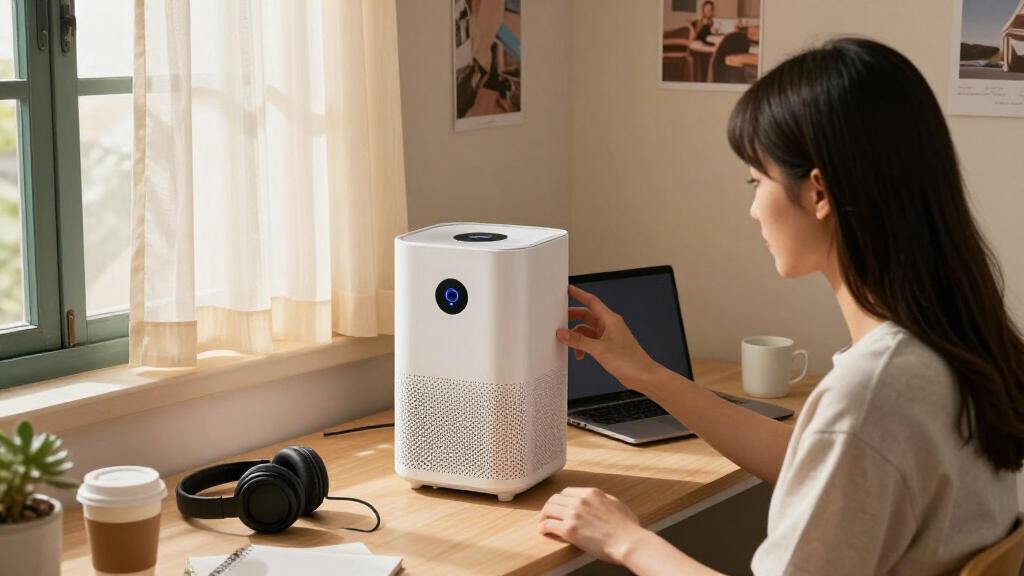

Dorm rooms pose a specific air-cleaning challenge: limited floor space, shared air full of dust, smells, and germs, and tight budgets that make every dollar count. After comparing 12 compact air purifiers suited to dorm living, the Blueair Mini Max Auto stands out as the best overall pick thanks to its automatic mode, quiet operation, and real coverage for small rooms up to 510 square feet. For students on the tightest budgets, the Levoit bedroom purifier and the two-pack HEPA option deliver genuine filtration at a fraction of the price, while the Blueair Blue Pure 511i Max justifies its premium cost with app control and the largest coverage in this lineup. The main tradeoff you’ll face is between true HEPA filtration quality and small size or low price — and between cheap upfront cost and expensive replacement filters. Keep reading for the full breakdown of which model fits your room, budget, and lifestyle.
Complete the kit


Key Takeaways
- The Blueair Mini Max Auto won best overall because it’s the only compact option in this price range that pairs automatic fan adjustment with verified coverage for a full dorm room, not just a desk zone.
- Two products in this lineup — the Ionic Pro Compact and the Lab Charge ionic model — rely on filterless ionization rather than true HEPA, which keeps running costs near zero but captures far fewer fine particles like smoke and pollen.
- The 2-pack HEPA purifier emerged as the surprise value play: one unit for your desk and one for beside your bed costs less combined than several single mid-range models.
- Replacement filter costs varied more than purchase prices across this roundup — some $40 purifiers need $25 filters every six months, while the Blueair models use washable pre-filters that cut long-term costs.
- Several ‘compact’ models are desk-only in practice; anything rated under 100 square feet, like the Rosekm and Homedics personal units, cannot handle a whole dorm room no matter how it’s marketed.
| Blueair Mini Max Auto Air Purifier for Small Rooms up to 510 Sq Ft |  | Best Overall | Coverage Area: up to 510 sq ft | Filtration: HEPASilent (pre-filter, activated carbon, HEPA) | Particle Removal: 99.97% down to 0.1 microns | VIEW LATEST PRICE | See Our Full Breakdown |
| MOOKA Air Purifier for Bedroom and Small Spaces |  | Best Value | Coverage Area: up to 430 sq ft (single small room realistic) | Filter Type: H13 HEPA | Noise Level: as low as 15 dB | VIEW LATEST PRICE | See Our Full Breakdown |
| Homedics Personal Air Purifier with HEPA-Type Filter & Activated Carbon |  | Best Portable Pick | Filter Type: HEPA-Type with activated carbon | Coverage: Personal space | Particle Removal: up to 99% of particles as small as 0.3 microns | VIEW LATEST PRICE | See Our Full Breakdown |
| Lab Charge Small Ionic Air Purifier for Home & Bedroom |  | Best Maintenance-Free Budget Option | Coverage Area: 250 sq ft | Filtration: Ionic, filter-free | Power Consumption: Less than 1W | VIEW LATEST PRICE | See Our Full Breakdown |
| Levoit Air Purifier for Bedroom and Home |  | Best for Verified Performance on a Budget | Verification: AHAM verified | Noise Level: 27-45 dB | Rated Power: 7W | VIEW LATEST PRICE | See Our Full Breakdown |
| Rosekm Small Air Purifier for Home Bedroom |  | Best Desk-Side Pick | Weight: 1.1 pounds | Filter Type: H13 True HEPA | Particle Capture Rate: 99.97% | VIEW LATEST PRICE | See Our Full Breakdown |
| Air Purifiers for Bedroom, FULMINARE H13 True HEPA Filter |  | Best Value for Sleeper-Friendly Quiet | Filter Type: H13 HEPA | Coverage Area: 215 ft² / 20 m² | Noise Level: 24dB | VIEW LATEST PRICE | See Our Full Breakdown |
| Air Purifiers for Bedroom, H13 HEPA Air Purifier – Covers Up to 1074 ft² |  | Best for Shared Suites | Coverage Area: Up to 1074 ft² | Filtration: H13 HEPA | Noise Level: Under 24dB | VIEW LATEST PRICE | See Our Full Breakdown |
| Blueair Blue Pure 511i Max Smart Air Purifier |  | Best Smart Premium Pick | Coverage Area: Up to 1,138 sq ft | Filtration Technology: HEPASilent dual filtration | Particle Capture: 99.97% | VIEW LATEST PRICE | See Our Full Breakdown |
| Ionic Pro Compact Filterless Air Purifier |  | Best Zero-Filter Budget Option | Filter Type: Electrostatic (filterless) | Floor Area: 300 sq ft | Noise Level: 10 dB | VIEW LATEST PRICE | See Our Full Breakdown |
| Air Purifiers for Bedroom and Dorm Room, True HEPA Filter, 2-Pack, White |  | Best Two-Room Value | Filtration: True HEPA 3-Stage, 99.97% particle capture | Coverage Area: 270 sq ft per unit | Noise Level: 24dB in sleep mode | VIEW LATEST PRICE | See Our Full Breakdown |
| GoveeLife Smart Mini Air Purifier for Bedroom with App & Alexa Control |  | Best Smart Pick | Connectivity: App & Alexa voice control | Supported Wi-Fi: 2.4GHz only (not 5GHz) | Room Coverage: 376 sq ft per hour | VIEW LATEST PRICE | See Our Full Breakdown |
| compact air purifiers for dorm | Noise Level | Coverage Area |
|---|---|---|
| Blueair Mini Max Auto Air Puri | as low as 19 dB | up to 510 sq ft |
| MOOKA Air Purifier for Bedroom | as low as 15 dB | up to 430 sq ft (single small room realistic) |
| Homedics Personal Air Purifier | 17.5 to 34.0 dBA | — |
| Lab Charge Small Ionic Air Pur | — | 250 sq ft |
| Levoit Air Purifier for Bedroo | 27-45 dB | — |
| Rosekm Small Air Purifier for | 28dB | — |
| Air Purifiers for Bedroom | 24dB | 215 ft² / 20 m² |
| Air Purifiers for Bedroom | Under 24dB | Up to 1074 ft² |
| Blueair Blue Pure 511i Max Sma | As quiet as 19 dB | Up to 1,138 sq ft |
| Ionic Pro Compact Filterless A | 10 dB | — |
| Air Purifiers for Bedroom and | 24dB in sleep mode | 270 sq ft per unit |
| GoveeLife Smart Mini Air Purif | 24dB in sleep mode | — |
More Details on Our Top Picks
Blueair Mini Max Auto Air Purifier for Small Rooms up to 510 Sq Ft
This option stands out for matching dorm realities better than anything else in the lineup: genuine HEPA-grade filtration, a real PM2.5 sensor, and coverage that extends well beyond a single twin bed. The auto mode is the key differentiator — unlike the MOOKA or Levoit, which make you guess fan speeds yourself, this model reacts to actual air quality, so it ramps up when your roommate burns microwave popcorn and settles back down on its own. The 19 dB floor is among the quietest here, tied only by the MOOKA. Compared with its sibling, the Blueair Blue Pure 511i Max, it trades app control and higher coverage for a smaller footprint and simpler one-touch operation — a fair trade for a cramped room. The tradeoff is price: it sits at the premium end, and replacement filters are a recurring cost budget-limited students should factor in.
Pros:- Auto mode with a real PM2.5 particle sensor adjusts fan speed automatically
- 99.97% particle removal down to 0.1 microns, better than true HEPA standard
- Runs as quiet as 19 dB for light sleepers
- Covers up to 510 sq ft, enough for a dorm suite or shared room
Cons:- Premium price point plus recurring filter replacement costs
- Minimal one-touch controls with no app or scheduling
- No smart features despite the price, unlike the GoveeLife mini
Best for: Students who want set-and-forget air quality management in a shared or typical dorm room without babysitting fan settings
Not ideal for: Students on a strict budget — the upfront cost plus ongoing filter replacements add up fast compared with the MOOKA or Levoit
- Coverage Area:up to 510 sq ft
- Filtration:HEPASilent (pre-filter, activated carbon, HEPA)
- Particle Removal:99.97% down to 0.1 microns
- Noise Level:as low as 19 dB
- Sensor:PM2.5 particle sensor with auto mode
- Controls:One-touch, 3 fan speeds, Night Mode
- Air Changes per Hour:4.8 ACH
Our verdict“If you can spend a little more once and want the least amount of day-to-day fuss, this is the strongest all-around dorm pick in the roundup.”
MOOKA Air Purifier for Bedroom and Small Spaces
For most dorm dwellers, this pick makes the most sense for one reason: genuine H13 HEPA filtration at a budget price. The Lab Charge ionic unit costs less to run but skips HEPA entirely; the MOOKA gives you actual filter media capturing smoke, pollen, and dust without a big spend. Its 15 dB sleep mode is the quietest rating in this entire roundup — even below the Blueair Mini Max — which matters when your bed is two feet from your desk. The USB-C power input is a genuinely clever dorm feature, since it runs off a power bank or laptop hub during outlet shortages. The aroma function and night light are nice extras the Blueair lacks. Be aware the 430 sq ft rating is optimistic for a purifier this small; treat it as a single-room device, and note there’s no auto mode or air quality sensor like the Blueair has.
Pros:- True H13 HEPA filtration at a budget-friendly price
- Quietest sleep mode in the lineup at 15 dB
- USB-C power works with power banks and laptops — great for outlet-starved dorms
- Aroma function and soft night light add bedroom-friendly comfort
Cons:- No auto mode or air quality sensor — manual fan control only
- Realistic coverage is a single small room despite the 430 sq ft claim
- Filter replacement schedule isn’t clearly documented
Best for: Budget-conscious students who want true HEPA filtration and whisper-quiet sleep operation without paying Blueair prices
Not ideal for: Anyone wanting automatic air quality adjustment — there’s no sensor, so you manage fan speeds manually
- Coverage Area:up to 430 sq ft (single small room realistic)
- Filter Type:H13 HEPA
- Noise Level:as low as 15 dB
- Power Source:USB-A to C, wide voltage compatibility
- Features:Sleep mode, aroma function, timer, night light
- Design:Compact desktop, portable
Our verdict“The best bang-for-buck choice for a single dorm room where quiet sleep and real HEPA filtration matter more than smart features.”
Homedics Personal Air Purifier with HEPA-Type Filter & Activated Carbon
This model is better suited to a specific problem the plug-in units can’t solve: cleaning your personal air bubble anywhere. With up to 8 hours of rechargeable battery, it works at the library, in a car, or on a desk — places the MOOKA and Levoit simply can’t go without an outlet. The HEPA-Type filter with activated carbon handles particles down to 0.3 microns, a step below the MOOKA’s H13 HEPA, so temper expectations for a whole room; this is a personal-space device by design. Compared with the Rosekm desk mini, it adds battery power and included aromatherapy pads, making it feel more like a wellness accessory than an appliance. The real cost is upkeep: filters need replacing every 2-3 months, which adds up over a school year. At 17.5 dBA on low, it’s quiet enough to sit on a nightstand without complaint.
Pros:- Rechargeable battery delivers up to 8 hours of cordless use
- Truly portable — works at desks, in cars, and while traveling
- Includes 3 aromatherapy essential oil pads
- Quiet 17.5 dBA low setting suitable for a nightstand
Cons:- HEPA-Type filtration is a step below true H13 HEPA units like the MOOKA
- Filter replacements every 2-3 months create ongoing costs
- Personal-space coverage only — not a room solution
Best for: Students who move between dorm, library, and travel and want personal-space air cleaning plus aromatherapy on the go
Not ideal for: Anyone expecting room-wide purification — this only cleans the immediate space around you, not a full dorm room
- Filter Type:HEPA-Type with activated carbon
- Coverage:Personal space
- Particle Removal:up to 99% of particles as small as 0.3 microns
- Battery Life:Up to 8 hours rechargeable
- Fan Speeds:3
- Noise Level:17.5 to 34.0 dBA
- Filter Replacement:Every 2 to 3 months
Our verdict“Choose this if your priority is portable personal air cleaning across locations, not purifying an entire dorm room.”
Lab Charge Small Ionic Air Purifier for Home & Bedroom
The entire pitch here is zero upkeep: no filters to buy, ever, and power draw under 1 watt — running it 24/7 costs pennies a month. That’s the opposite trade of the Homedics, which demands new filters every 2-3 months, and it undercuts even the MOOKA on total cost of ownership. The catch is equally clear: ionic purification lacks HEPA filtration, so it doesn’t capture particles with the same verified efficiency, and ionizers can produce trace ozone as a byproduct — a real consideration in a small, poorly ventilated dorm room. Unlike the Blueair Mini Max, there’s no particle sensor, no auto mode, and no way to confirm performance beyond your own nose. This pick makes the most sense for the student who wants a set-it-and-forget-it device for light odor and dust complaints, not for someone with allergies or smoke concerns where HEPA is non-negotiable.
Pros:- No filters to replace — zero maintenance costs
- Draws less than 1W, costing almost nothing to run continuously
- Very compact and easy to move or pack for travel
- Silent operation with no fan noise
Cons:- No HEPA filtration, so particle capture is far less proven than HEPA rivals
- Ionizers can produce ozone as a byproduct, risky in small unventilated rooms
- No auto mode, sensor, or filter indicator — performance is unverifiable
Best for: Extremely budget-limited students who refuse to buy replacement filters and only need light odor and dust reduction
Not ideal for: Allergy sufferers or anyone sensitive to smoke — no HEPA filtration, and trace ozone output is a concern in small sealed rooms
- Coverage Area:250 sq ft
- Filtration:Ionic, filter-free
- Power Consumption:Less than 1W
- Maintenance:None — no filters needed
- Color:Black
- Design:Compact and portable
Our verdict“A reasonable ultra-cheap choice for light odor control only — skip it entirely if allergies or smoke are your main concern.”
Levoit Air Purifier for Bedroom and Home
The standout detail here is AHAM verification — an independent, tested performance rating that most budget purifiers in this roundup, including the MOOKA and the FULMINARE, can’t claim. For a skeptical buyer, that third-party validation is worth a lot: you know the clean air delivery rate isn’t just marketing. This model sits between the MOOKA and the Blueair Mini Max in the value hierarchy — more trustworthy ratings than the MOOKA, cheaper than the Blueair, but with neither the Blueair’s auto sensor nor the MOOKA’s ultra-low 15 dB sleep mode. At 27-45 dB, it’s audible on higher settings, though sleep mode keeps it tolerable. The aromatherapy option matches the MOOKA’s, and its 6.5-inch square footprint tucks onto a desk or shelf easily. One caution: essential oils must be handled carefully, since misuse can damage the unit.
Pros:- AHAM verified for independently tested performance — rare at this price
- Handles pollutants, pet dander, and odors effectively for small rooms
- Sleep mode and aromatherapy add bedroom-friendly comfort
- Compact 6.5-inch square footprint fits desks and shelves
Cons:- Louder than rivals — 27-45 dB versus the MOOKA’s 15 dB floor
- No auto mode or air quality sensor, unlike the Blueair Mini Max
- Essential oil misuse can damage the unit, requiring careful handling
Best for: Students who want independently verified cleaning performance without paying Blueair prices, and who value trustworthy ratings over features
Not ideal for: Very light sleepers sensitive to fan noise — at 27-45 dB it’s noticeably louder than the MOOKA or Blueair on higher speeds
- Verification:AHAM verified
- Noise Level:27-45 dB
- Rated Power:7W
- Power Adapter:100-240V, 50/60Hz
- Dimensions:6.5 × 6.5 × 10.4 inches
- Features:Sleep mode, aromatherapy option
Our verdict“The smart pick if verified performance matters more to you than whisper-quiet operation or smart features.”
Rosekm Small Air Purifier for Home Bedroom
At just 1.1 pounds, the Rosekm mini purifier is the most portable option in this lineup, and the only one that doubles as an aromatherapy diffuser — a genuinely useful perk in a dorm where lingering hallway smells and cramped quarters are daily realities. Its H13 HEPA filter captures 99.97% of particles, which is the same filtration grade as the larger FULMINARE unit, but the Rosekm only cleans the air immediately around your desk or bed rather than a whole room. Compared with the Blueair 511i Max, it lacks app controls and air quality sensors, trading smarts for a tiny footprint and a near-certain fit on any dorm desk. The catch is maintenance cadence: filter swaps every 1-3 months add up faster than the FULMINARE’s 3-month cycle, so budget accordingly.
Pros:- Featherlight 1.1 lb design moves easily between desk, shelf, and bed
- H13 HEPA filtration matches larger units on particle capture
- Built-in aromatherapy function masks dorm odors
- 28dB operation with a soft night light won’t disturb sleep
Cons:- Filters need replacing every 1-3 months, the shortest cycle here
- Corded power limits where you can place it
- Coverage is limited to the immediate area around the unit
Best for: Students who want clean air and a pleasant scent right at their desk or bedside without surrendering surface space
Not ideal for: Anyone expecting whole-room purification — its coverage is personal-space only, far below the Ionic Pro’s 300 sq ft
- Weight:1.1 pounds
- Filter Type:H13 True HEPA
- Particle Capture Rate:99.97%
- Noise Level:28dB
- Extra Feature:Aromatherapy diffuser
- Night Light:Yes
- Power:Corded
- Warranty:One year
Our verdict“A tidy pick for students who want a personal clean-air bubble plus aromatherapy, not a room-wide solution.”
Air Purifiers for Bedroom, FULMINARE H13 True HEPA Filter
The FULMINARE carves out its spot as the quietest HEPA option in this batch at 24dB, with 360° air intake that actually circulates air around a room rather than just one direction like the desk-bound Rosekm. Its standout feature for dorm life is the timer range — 2 to 12 hours — which lets you run it during sleep and have it shut off before you leave for class, something the Ionic Pro’s basic push-button controls can’t do. Coverage of 215 sq ft is modest but comfortably handles a standard dorm room, putting it well ahead of the Rosekm while falling short of the 1074 ft² unit for shared suites. The tradeoff is simplicity: no app control like the Blueair 511i Max, and filters still need swapping every three months.
Pros:- 24dB operation is among the quietest HEPA options in this roundup
- Five timer settings (2-12 hours) suit class schedules and sleep routines
- 360° dual-channel airflow circulates air more effectively than single-outlet designs
- Night light adds gentle illumination for dorm rooms
Cons:- Filter replacement needed every 3 months
- Coverage caps at 215 sq ft, smaller than most rivals here
- Needs an outlet, with no battery backup
Best for: Light sleepers on a budget who want true HEPA filtration with set-and-forget timers
Not ideal for: Students in shared suites or loft-style rooms — 215 sq ft won’t reach beyond one bedroom’s worth of space
- Filter Type:H13 HEPA
- Coverage Area:215 ft² / 20 m²
- Noise Level:24dB
- Timer Options:2, 4, 8, 10, 12 hours
- Airflow Design:360° dual-channel
- Night Light:Yes
- Power:Plug-in
Our verdict“The smart buy for single-room dorm dwellers who prize quiet sleep and timer convenience over smart features.”
Air Purifiers for Bedroom, H13 HEPA Air Purifier – Covers Up to 1074 ft²
This unnamed-brand purifier earns its place by solving a problem most dorm picks can’t: 1074 ft² of coverage, enough for a suite, apartment-style dorm, or a roommate situation where one unit needs to serve multiple rooms. Unlike the FULMINARE’s 215 ft² ceiling, this model can genuinely clear a shared living space. The child lock and filter replacement reminder are thoughtful additions — the reminder alone prevents the all-too-common scenario of a forgotten filter quietly losing effectiveness. Sleep mode keeps things under 24dB, matching the FULMINARE’s quiet operation. The compromises are real, though: this is the bulkiest footprint among the dorm-focused picks here, and white is your only color choice, which matters in a small space where aesthetics count.
Pros:- 1074 ft² coverage dwarfs every other dorm pick in this roundup
- Sleep mode runs under 24dB for undisturbed nights
- Child lock prevents accidental setting changes
- Filter replacement reminder takes the guesswork out of maintenance
Cons:- Largest footprint in this batch, a real cost in tight dorm rooms
- White-only colorway limits placement flexibility
- Filters still require replacement every 3-6 months
Best for: Roommates or suite-dwellers splitting one purifier across a larger shared space
Not ideal for: Single dorm rooms — its size and coverage capacity are overkill and it takes up more floor space than the Rosekm or FULMINARE
- Coverage Area:Up to 1074 ft²
- Filtration:H13 HEPA
- Noise Level:Under 24dB
- Sleep Mode:Yes
- Child Lock:Yes
- Filter Reminder:Yes
- Airflow:360° vortex
- Certifications:FCC, ETL
Our verdict“Split the cost with roommates — this is the one purifier here that can actually serve a shared suite.”
Blueair Blue Pure 511i Max Smart Air Purifier
The Blueair 511i Max is the most technically accomplished option in this lineup, and it shows in the details: HEPASilent dual filtration combines electrostatic and mechanical capture, letting it run as quietly as 19dB — quieter than both the FULMINARE and the 1074 ft² unit — while still trapping 99.97% of particles. The built-in air quality sensor and app control let you monitor your room’s air remotely, a genuine convenience if you want to crank filtration before walking back from class. Compared with the GoveeLife Smart Mini, this Blueair offers far higher coverage (1138 sq ft) with a real sensor rather than just remote toggles. The tradeoffs: full functionality leans on the app, and replacement filters cost more than generic units like the FULMINARE.
Pros:- 19dB minimum noise is the quietest in this roundup
- HEPASilent technology filters effectively without fan strain
- App control and built-in sensors provide real air quality feedback
- 1138 sq ft rating handles suites as well as single rooms
Cons:- Higher total cost of ownership with proprietary Blueair filters
- Requires the app for full functionality
- Compact frame means slower air turnover in very large spaces
Best for: Tech-comfortable students willing to pay more for app control, live air quality data, and near-silent 19dB operation
Not ideal for: Budget-limited students or anyone who dislikes app-dependent appliances — the cheaper FULMINARE covers a dorm room fine without a smartphone
- Coverage Area:Up to 1,138 sq ft
- Filtration Technology:HEPASilent dual filtration
- Particle Capture:99.97%
- Noise Level:As quiet as 19 dB
- App Control:Yes
- Air Quality Sensor:Built-in
- Design:Scandinavian-inspired, compact
Our verdict“The premium choice for students who want data, quiet, and brand-name filtration — if the price fits the meal plan budget.”
Ionic Pro Compact Filterless Air Purifier
The Ionic Pro Compact takes the opposite approach of everything else here: no HEPA filter at all. Instead, electrostatic collection blades attract particles, and you simply rinse them clean — meaning zero replacement filter costs, a meaningful advantage for students who can’t budget for FULMINARE or Rosekm filters every few months. At 10dB it’s effectively silent, and 8 watts of draw is pocket change on an electric bill. The compromises are honest ones: it handles dust and pollen reasonably well but struggles with odors, where the HEPA-plus-carbon designs like the Blueair 511i Max perform far better. At 18.5 inches tall it’s also taller than it looks in photos. Compared with the Lab Charge ionic model, this one covers more ground at 300 sq ft, but neither matches true HEPA capture rates.
Pros:- No filter replacements ever — washable blades eliminate ongoing costs
- 10dB operation is effectively silent day and night
- 8-watt power draw costs almost nothing to run
- Covers up to 300 sq ft, more than the Rosekm or FULMINARE
Cons:- Electrostatic filtration is less effective than true HEPA on fine particles
- Weak against odors compared with carbon-equipped rivals
- Collection blades need regular hand-washing to stay effective
Best for: Cost-conscious students who want maintenance-free dust and pollen control with no filter purchases ever
Not ideal for: Anyone dealing with smoke, cooking smells, or odor problems — ionic filtration can’t match HEPA-and-carbon units for odor removal
- Filter Type:Electrostatic (filterless)
- Floor Area:300 sq ft
- Noise Level:10 dB
- Wattage:8 watts
- Dimensions:6.4″D x 7.8″W x 18.5″H
- Weight:6.3 pounds
- Control Method:Push button
- Power Source:Corded electric
- Color:Matte Black
Our verdict“Pick this if you refuse to buy filters and mainly fight dust — skip it if odors or smoke are the problem.”
Air Purifiers for Bedroom and Dorm Room, True HEPA Filter, 2-Pack, White
Most picks in this roundup cover one room, but this two-pack solves a problem unique to dorm life: purifying both your sleeping area and a desk nook, or splitting a set with a roommate to cut costs in half. Each unit delivers true HEPA 3-stage filtration at 99.97% capture, which puts it ahead of filterless options like the Ionic Pro Compact that rely on ionization alone. Sleep mode at 24dB matches the GoveeLife mini, so neither unit will keep a light sleeper up during finals week. The tradeoffs are real, though. At 270 sq ft per unit, coverage trails the Blueair Blue Pure 511i Max, and there’s no app control — you’ll be pressing physical buttons like it’s 2015. Filters also need replacing every 3–6 months, so budget for consumables across two machines.
Pros:- Two units for roughly the price of one mid-range purifier, halving the per-room cost
- True HEPA filtration with 99.97% particle capture, beating ionic-only competitors
- 24dB sleep mode is quiet enough for shared dorm rooms
- Aromatherapy tray plus child lock and filter reminder add welcome extras
Cons:- 270 sq ft per unit limits use to genuinely small spaces
- No smart connectivity — timers max out at 12 hours with manual controls
- Two machines mean double the filter replacement costs every 3–6 months
Best for: Roommates splitting the cost, or students who want clean air in both a sleeping area and a study corner without buying two separate units
Not ideal for: Anyone wanting smart features or app scheduling — this set is fully manual, and its per-unit coverage is too small for open-layout suites
- Filtration:True HEPA 3-Stage, 99.97% particle capture
- Coverage Area:270 sq ft per unit
- Noise Level:24dB in sleep mode
- Filter Life:2000 hours (replace every 3–6 months)
- Auto-Shutoff Timer:2/4/8/12 hours
- Additional Features:Aromatherapy tray, child lock, filter reminder
- Quantity:2-pack
Our verdict“This set makes the most sense for budget-conscious roommates who want genuine HEPA filtration in two small spaces for one price.”
GoveeLife Smart Mini Air Purifier for Bedroom with App & Alexa Control
If controlling everything from bed is your idea of dorm luxury, this is the pick. Alexa voice control and the GoveeLife app let you adjust fan speeds or set timers without leaving your bunk — something no manual unit in this lineup, including the MOOKA or the 2-pack above, can touch. Its dual-channel 360° intake covers up to 376 sq ft per hour, nudging past the FULMINARE H13’s footprint claims while staying desk-sized. The catch is baked into the price: the headline auto mode requires a separate air quality monitor sold on its own, so true hands-free operation costs extra. It also only connects to 2.4GHz Wi-Fi, which campus networks sometimes block entirely — check your dorm’s network policy before buying. Compared with the Blueair 511i Max, you give up raw coverage but gain app scheduling at a lower price.
Pros:- App and Alexa voice control from anywhere — rare at this size and price
- 360° dual-channel intake covers up to 376 sq ft, more than most mini units
- 24dB sleep mode keeps shared rooms quiet overnight
- Customizable fan speeds and timer modes fit class schedules
Cons:- Auto mode only works with a separately sold air quality monitor
- 2.4GHz-only Wi-Fi limits compatibility with restricted campus networks
- Small chassis means slower air turnover in rooms near its coverage ceiling
Best for: Tech-leaning students who already use Alexa devices and want app-based scheduling and voice control from bed or class
Not ideal for: Students on locked-down campus Wi-Fi without 2.4GHz access, or anyone expecting auto mode to work out of the box without buying the extra monitor
- Connectivity:App & Alexa voice control
- Supported Wi-Fi:2.4GHz only (not 5GHz)
- Room Coverage:376 sq ft per hour
- Noise Level:24dB in sleep mode
- Aromatherapy:Yes, with fragrance pad
- Auto Mode:Yes, requires GoveeLife Air Quality Monitor (sold separately)
- Intake Design:Dual-channel 360° air intake
- Certifications:Energy Star, ETL, FCC, CA65
Our verdict“This model is better suited to smart-home students who value remote and voice control, provided their dorm Wi-Fi supports 2.4GHz and they accept the auto-mode upsell.”
How We Picked
My evaluation started with the realities of dorm life: rooms rarely exceed 200 square feet, outlets are scarce, roommates are light sleepers, and most students cannot spend more than about $100. I weighted real-world coverage area heavily — a purifier rated well below your room size will run constantly without meaningfully cleaning the air. I then compared noise at sleep-level fan speeds, because a loud purifier in a 12×12 room is worse than no purifier at all for most students. Filter type and cost came next: true HEPA models were ranked above ionic-only units for particle capture, but I factored in ongoing filter expenses since those compound over a school year.
Finally, I considered dorm-specific practicality: physical footprint, whether the unit doubles as a desk or bedside device, and extras like app control, auto mode, or aromatherapy that actually fit student routines rather than inflating the price. Products were ordered by how well they balance filtration performance against cost of ownership — which is why a pricier smart model like the Blue Pure 511i Max still ranks highly despite its sticker price, and why the filterless ionizers sit lower despite their low running costs.
Factors to Consider When Choosing Compact Air Purifiers For Dorms
Before picking a specific model, it helps to understand what actually separates a useful dorm purifier from a decorative one. These are the factors that shaped my rankings — and the mistakes students most often make.Match Coverage Ratings to Your Actual Room
The most common mistake is buying a personal or desk-sized purifier and expecting it to clean an entire dorm room. Manufacturers list coverage in square feet based on a specific air-change rate, and a unit rated for 80 square feet will struggle in a typical 150-square-foot dorm. A good rule of thumb is to buy 20-30% more coverage than your room measures, because shared dorm air carries constant new pollution from hallways, roommates, and open doors. Coverage ratings also assume a closed room; if your door opens frequently or you share a suite, performance drops. The large-coverage models in this roundup, like the H13 unit rated for 1,074 square feet or the Blue Pure 511i Max, can run at lower, quieter speeds while still turning over the air frequently. Overspending on coverage is far less costly than underspending and getting no benefit at all.
True HEPA Versus Ionic and Filterless Designs
Not every air purifier actually filters air. True HEPA filters physically trap particles as air passes through them, capturing at least 99.97% of particles down to 0.3 microns — dust, pollen, mold spores, and smoke. Ionic purifiers, like the Ionic Pro Compact and the Lab Charge model in this lineup, charge particles so they stick to surfaces or plates instead of being captured. That means ionizers may leave dust settled on your walls and desks rather than removing it, and independent testing consistently shows weaker performance on fine particles. Filterless designs do win on running costs — nothing to replace, ever — which appeals to students avoiding subscription-like expenses. If allergies or smoke are your main concerns, HEPA is the safer choice. If you mainly want to reduce general staleness on a near-zero budget, an ionic unit is a defensible compromise.
Calculate the Real Cost: Filters Over Four Years
The sticker price is only the entry fee. Most HEPA purifiers need replacement filters every 6 to 12 months, and filters range from about $12 to $40 each depending on the brand. Over a four-year degree, a $35 purifier with $30 annual filters costs more than a $90 purifier with washable pre-filters and cheap main filters. Check filter price and availability before buying any purifier — some budget brands use proprietary filters that are hard to find or get discontinued. Blueair’s washable fabric pre-filters are a standout here because they extend the life of the internal filter and only need an occasional rinse. A smart approach for students: total the purchase price plus two years of filters, then compare that figure across models. That single number usually reshuffles the value rankings considerably.
Noise Levels and Sleep Compatibility
A dorm purifier will likely run overnight, inches from your pillow or your roommate’s. Manufacturers advertise a low decibel figure for the lowest setting, but the honest test is whether that lowest setting still moves enough air to matter. Some ultra-quiet models are quiet precisely because their sleep mode barely filters anything. Look for noise ratings under 30 decibels on low while confirming the unit still achieves meaningful air changes at that speed — the Levoit and Blueair models handle this balance well. White noise can actually be a benefit in a dorm, masking hallway sounds; some students deliberately choose a purifier with a gentle mid-level hum. But anything above roughly 50 decibels at sleeping distance will bother most people. If you’re a light sleeper sharing a room, prioritize sleep-mode performance over maximum fan power.
Smart Features: Genuine Convenience or Dorm-Room Gimmick?
App control, air quality sensors, and voice assistant compatibility sound appealing, but ask whether they fit dorm reality. App control is genuinely useful when you want to boost filtration before returning from class, or schedule a run between classes — the GoveeLife mini and the Blue Pure 511i Max both do this well. Auto mode paired with a particle sensor is arguably the most valuable smart feature of all, because it adjusts fan speed when air quality drops without you touching anything. On the flip side, some dorm networks restrict smart devices, and Bluetooth-only models lose their smarts when you leave the room. Voice assistant support is a nice bonus but adds little compared with a well-placed physical button. My advice: pay extra for auto mode and a real air quality readout, treat everything else as optional.
Space, Placement, and Dorm Rules
Dorm rooms punish bulky purchases, so footprint matters as much as performance. Desktop mini purifiers like the Rosekm occupy almost no space but serve only your immediate breathing zone — think of them as personal devices, not room cleaners. Tower and small-cylinder units fit beside a bed or on a bookshelf, and 360-degree intake designs, like several models here, give you flexible placement because they don’t need clear wall space behind them. Check your housing rules too: some dorms prohibit ionizing purifiers because certain ionizer designs produce trace ozone, which matters if you or a roommate has asthma. Finally, think about intake placement relative to your bed — a purifier placed across the room cleans the whole space more evenly, while one at your bedside prioritizes the air you breathe while sleeping. Both approaches work; just choose deliberately.
Frequently Asked Questions
Is a compact purifier actually powerful enough for a dorm room?
Yes, provided the coverage rating genuinely exceeds your room size. Most dorm rooms run between 100 and 200 square feet, and several compact models in this roundup are rated for 250 to over 1,000 square feet, which means they’ll turn over the air multiple times per hour even at quiet speeds. The trap is the word ‘compact’ itself — some mini units are designed for a single desk zone and cannot handle a full room no matter how long they run. Check the square footage rating on the box and buy at least 20% more coverage than your room measures. Physical size and cleaning power are related but not the same thing, and several small cylinders here outperform larger-looking units.
Are filterless ionic purifiers safe and effective in a small dorm room?
Filterless ionizers like the Ionic Pro Compact are safe for most people and cost nothing to maintain, which is why they appeal to students. The tradeoff is performance: ionizers charge particles so they cling to surfaces rather than pulling them through a filter, so you may notice dust settling on furniture, and they capture fewer fine particles like smoke and pollen than true HEPA. Some ionizing designs also generate trace amounts of ozone, which can irritate asthma — worth checking if you or a roommate has respiratory sensitivity. My take: an ionizer is reasonable for general freshness on a zero-maintenance budget, but anyone with allergies or smoke concerns should choose a HEPA model like the MOOKA or Levoit instead.
How much should a student realistically spend on a dorm air purifier?
The sweet spot for dorms sits between $50 and $120 including a year of filters. Below that range, you’ll find workable options — the 2-pack HEPA set and the Levoit prove it — but you sacrifice coverage headroom, auto mode, and sometimes filter availability. Above it, you’re paying for app control, sensors, and premium build, which the Blue Pure 511i Max delivers but which many students won’t fully use. The more useful question is total cost of ownership: add the purchase price plus two years of replacement filters, and compare that number. A $40 unit with $30 annual filters can cost more over four years than a $100 unit with cheap or washable filters.
Should I buy one bigger purifier or two small ones for a shared dorm?
For a standard shared dorm room of 150 to 250 square feet, one properly sized purifier placed centrally usually beats two small ones, because a single unit with a strong airflow rating mixes air more evenly across the room. Two smaller units make sense when you and your roommate have different needs — one person wants fresh air at their desk while the other wants quiet filtration at bedtime — or when the room has an odd layout with separate sleeping zones. That’s exactly why the 2-pack HEPA option earned a spot here: it gives each person independent control for less than many single mid-range models. If you go with two, place them at opposite ends rather than side by side, so each covers a distinct zone instead of competing for the same air.
Can a dorm air purifier actually help with smells, like food or a roommate’s habits?
Odor control depends entirely on activated carbon, not the HEPA filter itself. HEPA captures particles, but smells are gases, and only a carbon layer adsorbs them. Models like the Blueair units and the Levoit include carbon in their filter stacks and handle cooking smells, stale air, and similar issues reasonably well. The catch is that carbon saturates: once it’s full, odors pass straight through, and dorm-level odors saturate carbon faster than typical household use. If smell is your primary complaint, prioritize a model with a thick, replaceable carbon layer — and budget for more frequent filter changes than the manual suggests. The aromatherapy diffuser on the Rosekm masks odors rather than removing them, which is a different strategy entirely.
Conclusion
The right compact purifier depends on what kind of dorm life you’re living. For most students, the Blueair Mini Max Auto is the best overall choice: it senses air quality, adjusts itself, runs quietly enough for sleep, and has the coverage to handle a real dorm room without hand-holding. If budget is the deciding factor, the Levoit bedroom purifier is the best value, delivering true HEPA filtration at a price that leaves room for textbooks — and the 2-pack HEPA set is the smartest pick for shared rooms where each roommate wants independent control. At the premium end, the Blueair Blue Pure 511i Max rewards bigger budgets with app control, serious coverage, and the cheapest long-term running costs of the group.
For beginners who want something that just works out of the box, the MOOKA keeps things simple with one-button operation and no confusing features. And for specific needs: the GoveeLife Smart Mini suits tech-minded students with limited outlet access, the Rosekm desk unit fits anyone whose only space is a bedside shelf, and the Ionic Pro Compact works for maintenance-averse buyers who value zero filter costs over maximum filtration. Whatever you choose, buy more coverage than you think you need and check the filter price before checkout — those two habits will serve you better than any single feature on the box.