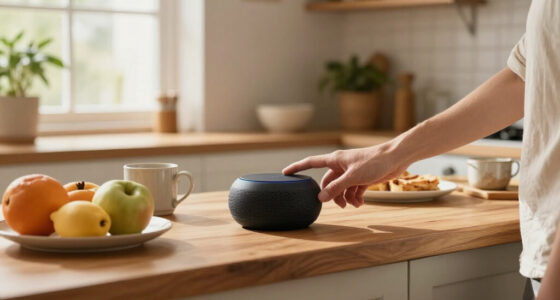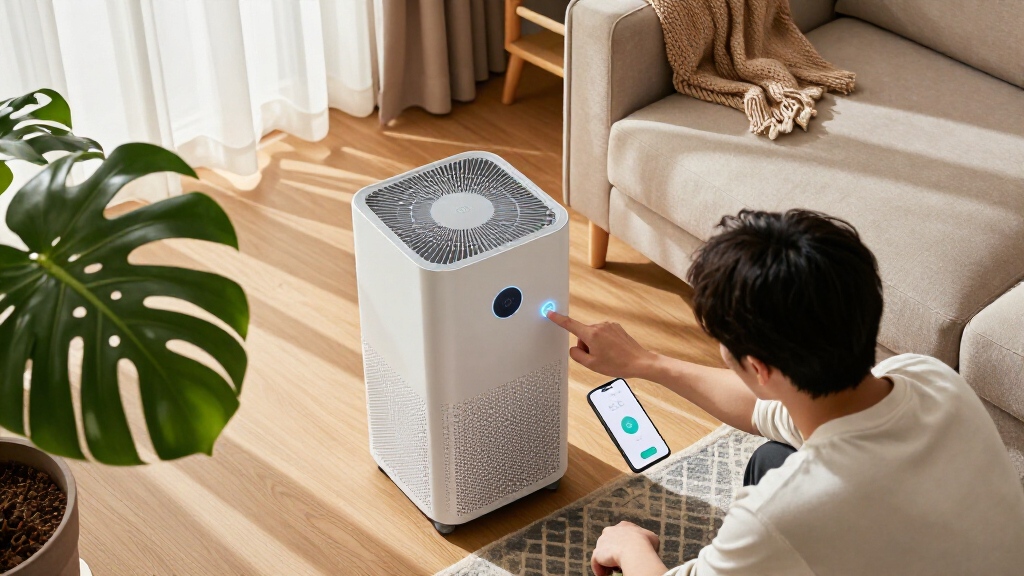

Smart air purifiers combine particle filtration with app controls, scheduling, and—in some models—air-quality monitoring. I rank the Levoit Core 400S-P as the best overall for its large-room focus and connected controls, while the Levoit Vital 200S-P stands out for versatile home use and the Blueair Blue Pure 511i Max for compact-room buyers. The main tradeoffs are room coverage versus size, quiet operation versus cleaning speed, and useful automation versus extra app features you may not use. Filter replacement costs and the accuracy and behavior of auto modes also matter after setup. Read on for the full breakdown of all 11 picks and guidance on choosing one for your space.

Get home appliances delivered free with Prime
- Fast, free delivery on millions of items
- Prime Video, Amazon Music and more included
- Member-only deals all year
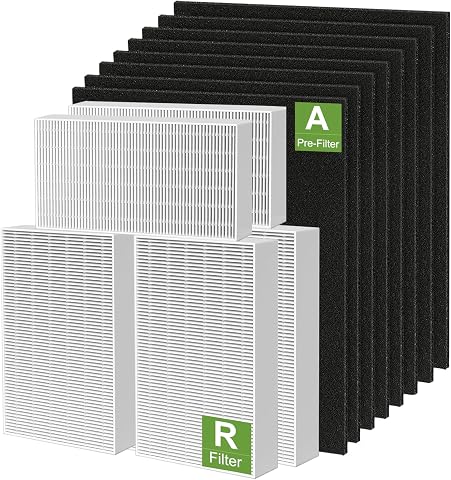
Complete the kit


Key Takeaways
- Large-room coverage separates the Levoit Core 400S-P and GoveeLife large-room model from bedroom-focused options. Match coverage claims to the room you actually use, rather than choosing by the largest advertised number alone.
- The lineup splits between full-featured smart controls and simpler app-connected operation. Models with air-quality sensing and auto modes can adjust airflow without constant input, while basic app control may be enough for schedules and remote operation.
- Compact models are better suited to bedrooms and smaller rooms than whole-home expectations. The GoveeLife Mini, Levoit Core 200S-P, and Blueair 511i Max trade broad coverage for a smaller footprint.
- Quiet-mode claims matter most when the purifier runs near a bed or desk. Compare sleep operation alongside room capacity; a quiet setting is less useful if it cannot clean the room adequately.
- Filter upkeep is part of the ownership decision, not an afterthought. Check replacement availability, maintenance reminders, and the cost and interval of compatible filters before committing to any connected model.
| GoveeLife Smart Mini Air Purifier for Bedroom |  | Best for Scheduled Bedroom Use | Coverage: 376 sq ft, purified once per hour | Noise: As low as 24 dB in sleep mode | Air intake: Dual-channel 360° | VIEW LATEST PRICE | See Our Full Breakdown |
| Blueair Blue Pure 511i Max Smart Air Purifier |  | Best for Sensor-Led Bedroom Air Cleaning | Coverage: Up to 1,138 sq ft in one hour | Cleaning speed: 237 sq ft in about 12.5 minutes | Filtration: HEPASilent dual filtration | VIEW LATEST PRICE | See Our Full Breakdown |
| GoveeLife Smart Mini Air Purifier with App and Alexa Control |  | Best for Compact Smart-Home Routines | Room coverage: 376 sq ft once per hour | Air intake: Dual-channel 360° | Sleep-mode noise: As low as 24 dB | VIEW LATEST PRICE | See Our Full Breakdown |
| Levoit Core 200S-P Smart Air Purifier |  | Best for Small-Room Filtration | Recommended room size: 140 sq ft | Air refresh rate: 4.8 times per hour | Particle filtration: 99.97% of dust, pollen, and dander measuring 0.1–0.3 microns | VIEW LATEST PRICE | See Our Full Breakdown |
| Levoit Core 400S-P Smart Air Purifier for Large Rooms up to 1733 ft² |  | Best for Large-Room Coverage | Coverage area: Up to 1,733 sq ft | Smoke CADR: 231 CFM | Dust CADR: 240 CFM | VIEW LATEST PRICE | See Our Full Breakdown |
| DREO Smart Air Purifier with AHAM Verified Performance, Wi‑Fi & Voice Control, PM2.5 Monitor, Auto/Turbo/Sleep Modes, HEPA Filter – Black (DR‑HAP008S) |  | Best for Verified Small-Room Performance | CADR: 115 CFM | Optimal coverage: Up to 178 sq ft | Air changes: 4.8 ACH | VIEW LATEST PRICE | See Our Full Breakdown |
| GoveeLife Air Purifier for Bedroom, 24 dB Sleep Mode |  | Best for Quiet Bedrooms | CADR: Up to 150 CFM | Room coverage: 232 sq ft at five air changes per hour | Extended coverage claim: 581 sq ft every 30 minutes | VIEW LATEST PRICE | See Our Full Breakdown |
| Shark BreatheClear Smart Air Purifier HP162, Dove |  | Best for Low Filter-Maintenance | Model: HP162 | Room coverage: Up to 750 sq ft; claim based on one air change per hour at maximum fan speed | Air scans: 3,600 times per hour | VIEW LATEST PRICE | See Our Full Breakdown |
| GoveeLife Smart Air Purifier for Home Large Rooms, Covers up to 1046 ft² |  | Best for Flexible Smart-Home Control | CADR: 135 CFM | Single-pass coverage: Up to 1,046 sq ft | Double-pass coverage: Up to 523 sq ft | VIEW LATEST PRICE | See Our Full Breakdown |
| LEVOIT Vital 200S-P Smart Air Purifier for Large Rooms |  | Best for Large-Room Verified Filtration | Room coverage: Up to 1,875 sq ft | Smoke CADR: 250 CFM | Dust CADR: 254 CFM | VIEW LATEST PRICE | See Our Full Breakdown |
| SereneLife HEPA Air Purifier with WiFi and App Control, White |  | Best for Simple App-Controlled Purification | Brand: SereneLife | Model: SLARP1076WT | Filter type: HEPA | VIEW LATEST PRICE | See Our Full Breakdown |
More Details on Our Top Picks
GoveeLife Smart Mini Air Purifier for Bedroom
For a bedroom where app routines matter as much as basic filtration, I’d shortlist this GoveeLife mini. It supports app, Alexa, and IFTTT control, with custom schedules and sleep mode as quiet as 24 dB. Its 376 sq ft rating is based on one air change per hour, so it is better suited to a moderate room with steady, scheduled operation than to rapid cleanup. Compared with the Blueair Blue Pure 511i Max, it adds an aroma pad and broad smart-home integrations, while Blueair offers automatic air-quality sensing and quieter stated operation. The tradeoff here is that automatic fan adjustment requires a separate GoveeLife monitor, and the purifier only connects to 2.4 GHz Wi-Fi. I’d choose it for hands-off routines, not sensor-led response out of the box.
Pros:- App, Alexa, and IFTTT support with custom schedules
- Sleep mode operates as quietly as 24 dB
- 360° intake is rated for a 376 sq ft room at one air change per hour
- Built-in aroma pad includes three pads
Cons:- Does not support 5 GHz Wi-Fi
- Automatic mode requires a separately sold GoveeLife Air Quality Monitor
- The stated coverage rate is one air change per hour, a modest pace for active pollution events
Best for: Bedroom users who want Alexa or IFTTT routines, scheduled operation, and an optional essential-oil aroma pad.
Not ideal for: Buyers with a 5 GHz-only Wi-Fi network or anyone who wants automatic air-quality response without purchasing a separate monitor.
- Coverage:376 sq ft, purified once per hour
- Noise:As low as 24 dB in sleep mode
- Air intake:Dual-channel 360°
- Connectivity:App, Alexa, and IFTTT; 5 GHz Wi-Fi not supported
- Controls:Power, modes, timer, fan speed, filter reminders, and custom schedules
- Aromatherapy:Built-in fragrance pad; add 4–5 drops of essential oil
- Automatic mode:Requires GoveeLife Air Quality Monitor H5106, sold separately
- Certifications:Energy Star, ETL, FCC, and CA65
Our verdict“Choose this GoveeLife if bedroom schedules and smart-home control matter more than built-in automatic sensing.”
Blueair Blue Pure 511i Max Smart Air Purifier
I’d put the Blueair Blue Pure 511i Max ahead of the two GoveeLife minis for buyers who want the purifier to react to measured air quality without adding a separate monitor. Its sensors and app support everyday monitoring, while HEPASilent dual filtration is rated to capture 99.97% of airborne particles down to 0.1 microns. The stated minimum noise level of 19 dB also makes it the quietest option here on paper. Its coverage figures need context: although the listing gives up to 1,138 sq ft in an hour, its faster cleaning figure is 237 sq ft in about 12.5 minutes, pointing to a more natural fit in smaller spaces. Unlike the Levoit Core 400S-P, it is not the large-room choice; its compact form and sensing suit bedrooms better. Replacement filters remain an ongoing requirement.
Pros:- HEPASilent filtration is rated to capture 99.97% of particles down to 0.1 microns
- Stated minimum noise level of 19 dB suits quiet rooms
- Built-in air-quality sensors and app controls support monitoring
- Compact design with 360° air intake
Cons:- Its faster cleaning figure is for 237 sq ft, so the broad one-hour coverage claim should not be read as rapid cleaning of a large room
- Requires replacement filters
- Less suited to large spaces than the Levoit Core 400S-P
Best for: Bedroom and small-room buyers who want quiet operation, app monitoring, and automatic air-quality sensing in one compact unit.
Not ideal for: People seeking a purifier for consistently fast cleaning across a large room, or buyers who want to avoid proprietary replacement-filter needs.
- Coverage:Up to 1,138 sq ft in one hour
- Cleaning speed:237 sq ft in about 12.5 minutes
- Filtration:HEPASilent dual filtration
- Particle capture:99.97% of airborne particles down to 0.1 microns
- Noise:As low as 19 dB
- Controls:Air-quality sensors and Blueair mobile app
- Design:Compact with 360° air intake
Our verdict“Pick the Blueair for a small room where quiet, sensor-led operation matters more than large-room throughput.”
GoveeLife Smart Mini Air Purifier with App and Alexa Control
This GoveeLife mini is a fit for buyers who want a compact purifier to follow simple schedules rather than adjust itself to changing air conditions. Its app, Alexa, and IFTTT controls support routines, and sleep mode reaches 24 dB. The aroma pad is another useful distinction from the Levoit Core 200S-P, which instead emphasizes a three-stage filter and a defined 140 sq ft room size refreshed 4.8 times per hour. GoveeLife lists coverage of 376 sq ft once per hour, so its reach is broader on paper but the stated cleaning pace is slower. Automatic fan adjustment depends on a separately sold air-quality monitor, and its Wi-Fi works only on 2.4 GHz. I’d select it for scheduled, low-noise use; buyers who want faster, frequent room refreshes should compare the Levoit’s smaller-room rating.
Pros:- App, Alexa, and IFTTT control with up to three preset switch times
- Sleep mode operates as quietly as 24 dB
- 360° intake and stated 376 sq ft coverage at one air change per hour
- Aroma pad and three included pads allow optional essential-oil use
Cons:- Automatic fan adjustment requires a separately sold air-quality monitor
- Does not support 5 GHz Wi-Fi
- One air change per hour is slower than the Levoit Core 200S-P’s stated 4.8 changes per hour in its recommended room
Best for: Smart-home users who want a small purifier for a bedroom or modest living space, with voice routines and optional aromatherapy.
Not ideal for: Buyers who need built-in air-quality sensing, 5 GHz Wi-Fi support, or faster air turnover in a smaller room.
- Room coverage:376 sq ft once per hour
- Air intake:Dual-channel 360°
- Sleep-mode noise:As low as 24 dB
- Controls:App, Alexa, and IFTTT
- Wi-Fi:2.4 GHz; 5 GHz not supported
- Scheduling:Up to three preset switch times
- Aromatherapy:Built-in aroma pad; add 4–5 drops of essential oil
- Certifications:Energy Star, ETL, FCC, and CA65
Our verdict“Choose this model for scheduled smart-home use and aromatherapy, but favor the Levoit Core 200S-P if faster room turnover is your priority.”
Levoit Core 200S-P Smart Air Purifier
For a small bedroom or office where frequent air turnover matters more than broad coverage, I’d favor the Levoit Core 200S-P over the GoveeLife minis. It is rated for 140 sq ft and refreshes that space 4.8 times per hour, giving buyers a clearer small-room performance target than a larger area rating based on one change per hour. Its nylon pre-filter, main filter, and activated carbon layer pair with stated capture of 99.97% of specified dust, pollen, and dander particles measuring 0.1–0.3 microns. App and voice controls add convenience, while in-app filter-life monitoring helps with upkeep. The compromise is scale: its recommended room size is far below the Levoit Core 400S-P, which is intended for large rooms. Genuine Levoit replacement filters are also recommended for performance and lifespan.
Pros:- Rated to refresh a 140 sq ft room 4.8 times per hour
- Three filter stages include a nylon pre-filter and activated carbon filter
- Captures 99.97% of specified fine dust, pollen, and dander particles
- App and voice controls include filter-life monitoring
Cons:- Recommended room size is limited to 140 sq ft
- Best performance and filter lifespan call for genuine Levoit replacement filters
- Its 27 dB minimum is higher than the Blueair Blue Pure 511i Max’s stated 19 dB
Best for: People furnishing a small bedroom, nursery, or home office who want frequent air refreshes and app-based filter tracking.
Not ideal for: Owners of open-plan rooms or larger living spaces, since its recommended area is 140 sq ft.
- Recommended room size:140 sq ft
- Air refresh rate:4.8 times per hour
- Particle filtration:99.97% of dust, pollen, and dander measuring 0.1–0.3 microns
- Noise:As low as 27 dB
- Air intake:360°
- Filter stages:Nylon pre-filter, main filter, and activated carbon filter
- Controls:Smart app and voice control
- Filter monitoring:In-app filter-life monitoring
Our verdict“Choose the Core 200S-P for a small room that needs frequent air refreshes and convenient filter tracking.”
Levoit Core 400S-P Smart Air Purifier for Large Rooms up to 1733 ft²
When one purifier needs to serve a broad living area, the Levoit Core 400S-P is the clear scale choice in this group. Its stated coverage reaches 1,733 sq ft in an hour, and listed smoke, dust, and pollen CADR figures give buyers more performance detail than the compact GoveeLife models provide. A laser dust sensor, LCD display, and VeSync app help make changing air conditions visible; Alexa and Google Assistant add voice control. It is also rated as low as 24 dB in its lowest mode. Compared with the Levoit Core 200S-P, this model suits larger spaces rather than a focused small bedroom, but it takes up more room and may be excessive for a compact space. Its filtration uses genuine Levoit replacement filters, limiting third-party choices.
Pros:- Rated for spaces up to 1,733 sq ft in one hour
- Smoke, dust, and pollen CADR figures are provided
- AirSight Plus laser sensor and LCD display show real-time air-quality information
- VeSync app, Alexa, and Google Assistant support connected control
Cons:- Larger-room capacity may be unnecessary for small bedrooms compared with the Core 200S-P
- Supports only authentic Levoit replacement filters
- The listed 24 dB figure applies to the lowest mode, not every operating speed
Best for: Households with a large living room or open-plan area that want app-based air monitoring, voice control, and published CADR figures.
Not ideal for: People purifying a small bedroom who want a compact unit, or buyers who need broad choice in replacement filters.
- Coverage area:Up to 1,733 sq ft
- Smoke CADR:231 CFM
- Dust CADR:240 CFM
- Pollen CADR:259 CFM
- Noise:24 dB in lowest mode
- Filter efficiency:99.97% at 0.1–0.3 µm
- Connectivity:Wi-Fi, VeSync app, Alexa, and Google Assistant
- Air-quality monitoring:AirSight Plus laser dust sensor with LCD display
Our verdict“Pick the Core 400S-P for a large shared space where monitoring and stated cleaning capacity matter more than compact size or filter flexibility.”
DREO Smart Air Purifier with AHAM Verified Performance, Wi‑Fi & Voice Control, PM2.5 Monitor, Auto/Turbo/Sleep Modes, HEPA Filter – Black (DR‑HAP008S)
The DREO pairs AHAM-verified performance with app and voice controls, making it a strong fit when I want measurable air-quality feedback in a bedroom or office. Its 115 CFM CADR and 4.8 air changes per hour are specified for rooms up to 178 square feet, a more grounded everyday target than the much larger single-air-change coverage claims on the GoveeLife Large Rooms model. The PM2.5 monitor feeds Auto mode, while Sleep mode and HyperSilent operation suit overnight use; the aroma pad is an extra, not a filtration benefit. The main compromise is scale: the DREO is not the pick for a large open-plan area, and its included filtration does not remove the need to buy replacement filters over time. Choose it for verified, sensor-led control in a compact room, not maximum coverage.
Pros:- AHAM-verified 115 CFM CADR gives a clear performance basis for its compact-room recommendation.
- PM2.5 monitoring and Auto mode let the purifier respond to changing air conditions.
- Wi-Fi, mobile app, Alexa, and Google Assistant provide several control options.
- Sleep mode, HyperSilent operation, and an aroma pad add bedroom-friendly flexibility.
Cons:- Optimal coverage is limited to 178 square feet, so larger rooms may need more than one unit.
- Essential oils for the aroma pad are not included.
- The aroma feature adds fragrance but does not expand the purifier’s filtration capacity.
Best for: Bedroom and home-office owners who want AHAM-verified, app-controlled purification with live PM2.5 feedback in a room up to 178 square feet.
Not ideal for: People purifying large living areas or open-plan spaces; its stated optimal coverage is limited to 178 square feet.
- CADR:115 CFM
- Optimal coverage:Up to 178 sq ft
- Air changes:4.8 ACH
- Filter:3-in-1 pre-filter, HEPA, and activated carbon
- Particle removal:99.97% at 0.3 µm
- Connectivity:Wi-Fi, mobile app, Alexa, and Google Assistant
- Modes:Auto, Turbo, Sleep, and Normal
- Energy use:Approximately 125 kWh/year; ENERGY STAR certified
Our verdict“Pick the DREO for sensor-guided, AHAM-verified purification in a small room, but choose a larger-capacity model for open spaces.”
GoveeLife Air Purifier for Bedroom, 24 dB Sleep Mode
The GoveeLife Bedroom purifier is the sleep-focused option here: its 24 dB Sleep mode is the clearest reason to choose it over the DREO, which also offers quiet operation but emphasizes PM2.5 readouts and verified small-room performance. GoveeLife lists a CADR of up to 150 CFM and five air changes per hour in a 232-square-foot room, giving it a larger stated frequent-cleaning area than the DREO. App and voice control, Auto mode, and a detachable washable pre-filter make routine operation less hands-on. The tradeoff is network compatibility: it only supports 2.4 GHz Wi-Fi, which can complicate setup on networks configured for 5 GHz alone. Its listed features also do not include the DREO’s specific PM2.5 sensor range, so buyers who want detailed particulate readings should compare those controls before choosing.
Pros:- Sleep mode operates at a stated 24 dB for quieter nighttime use.
- Up to 150 CFM CADR and five air changes per hour in a 232-square-foot room.
- App, Alexa, and Google Assistant control pair with Auto and Turbo modes.
- Detachable washable pre-filter helps catch debris before it reaches the main filter.
Cons:- Wi-Fi supports 2.4 GHz only, not 5 GHz networks.
- Its listed controls do not specify a PM2.5 sensor range like the DREO’s.
- The product data does not give an optimal coverage figure using the same air-change basis as every competing model.
Best for: Light sleepers who want app or voice control and frequent air cleaning in a bedroom up to 232 square feet.
Not ideal for: Households using only 5 GHz Wi-Fi or shoppers who want a specified PM2.5 reading range.
- CADR:Up to 150 CFM
- Room coverage:232 sq ft at five air changes per hour
- Extended coverage claim:581 sq ft every 30 minutes
- Sleep-mode noise:24 dB
- Filter efficiency:99.97% for fine particles
- Connectivity:App, Alexa, and Google Assistant
- Wi-Fi:2.4 GHz; 5 GHz not supported
- Features:Auto and Turbo modes, color-changing air-quality indicator, detachable washable pre-filter
Our verdict“Choose this GoveeLife model for quiet, connected bedroom use if your Wi-Fi supports 2.4 GHz.”
Shark BreatheClear Smart Air Purifier HP162, Dove
The Shark BreatheClear HP162 stands apart from the GoveeLife Large Rooms purifier by making long filter life and washable debris protection its main appeal, rather than smart-home integration or a stated CADR. Shark says its filter can last up to six years, while the washable Debris Defense filter handles larger debris; that may reduce routine replacement chores, though the lifespan is an upper limit and depends on use. Its sensors scan the air 3,600 times per hour and adjust performance automatically, with an LCD showing live air-quality readings. The 750-square-foot coverage claim is based on one air change per hour at maximum fan speed, so it is not directly comparable to models rated for more frequent cleaning. The supplied details also do not list app, Wi-Fi, or voice control, making this less compelling for buyers who define “smart” by remote home integration.
Pros:- Filter is designed to last up to six years, subject to usage conditions.
- Washable Debris Defense filter catches debris before it reaches the main filter.
- Sensors scan the air 3,600 times per hour and automatically adjust operation.
- LCD provides real-time air-quality readings.
Cons:- The 750-square-foot coverage claim is based on only one air change per hour at maximum fan speed.
- The up-to-six-year filter life depends on usage and is not a guaranteed interval.
- Provided product details do not specify app, Wi-Fi, or voice control.
Best for: People who prioritize a readable air-quality display and fewer filter-replacement chores in a room where one air change per hour is sufficient.
Not ideal for: Smart-home users who require app, Wi-Fi, or voice control, or buyers seeking a clearly stated CADR for frequent room cleaning.
- Model:HP162
- Room coverage:Up to 750 sq ft; claim based on one air change per hour at maximum fan speed
- Air scans:3,600 times per hour
- Particle capture:99.98%
- Filtration:Multi-layer filter with activated carbon
- Filter life:Designed to last up to six years
- Display:High-resolution LCD with real-time air-quality readings
- Modes:Auto, manual fan speeds, and scheduled Sleep mode
Our verdict“Pick the Shark if washable pre-filtration and less frequent filter replacement matter more than app-based smart-home control.”
GoveeLife Smart Air Purifier for Home Large Rooms, Covers up to 1046 ft²
This GoveeLife model gives smart-home users a broader integration mix than the bedroom-focused GoveeLife purifier: it supports Alexa and IFTTT alongside app control, and its Auto mode adjusts fan speed based on air quality. Its 135 CFM CADR is the more useful point of comparison than the headline 1,046-square-foot single-pass coverage. The listed double-pass figure is 523 square feet, so buyers planning frequent cleaning should use that smaller figure as a more relevant guide than the one-hour claim. Sleep mode runs at 24 dB, but Turbo can be noisy, and the purifier does not provide precise PM2.5 values; unlike the DREO, it needs a separate monitor for that detail. It is a flexible connected option, but 2.4 GHz-only Wi-Fi and the lack of precise particulate readings narrow its appeal.
Pros:- App, Alexa, and IFTTT support offer flexible smart-home control.
- Auto mode adjusts operation in response to air quality.
- 24 dB Sleep mode suits quieter nighttime use.
- Three-stage filtration captures 99.97% of particles in the stated 0.1–0.3 micron range and includes activated carbon for odors.
Cons:- Wi-Fi supports 2.4 GHz only, not 5 GHz.
- The 1,046-square-foot figure is a single-pass claim; the stated double-pass area is 523 square feet.
- Precise PM2.5 values require a separate monitor, unlike the DREO’s built-in PM2.5 monitoring.
- Turbo mode can be noisy.
Best for: Smart-home households wanting Alexa or IFTTT automation and quiet overnight operation in a medium-to-large room.
Not ideal for: People with 5 GHz-only Wi-Fi, buyers who need precise PM2.5 readings, or anyone expecting quiet Turbo operation.
- CADR:135 CFM
- Single-pass coverage:Up to 1,046 sq ft
- Double-pass coverage:Up to 523 sq ft
- Filtration efficiency:99.97% for particles 0.1–0.3 microns
- Filter:Three-stage filter with activated carbon
- Connectivity:App, Alexa, and IFTTT
- Wi-Fi:2.4 GHz only
- Sleep-mode noise:24 dB
Our verdict“Choose this GoveeLife for Alexa and IFTTT routines, but base room planning on its 135 CFM CADR and 523-square-foot double-pass figure.”
LEVOIT Vital 200S-P Smart Air Purifier for Large Rooms
The LEVOIT Vital 200S-P is the strongest fit in this group for buyers who need AHAM-verified performance at large-room scale. Its listed smoke, dust, and pollen CADR figures give more category-specific guidance than the Shark BreatheClear HP162’s 750-square-foot coverage claim, which is based on one air change per hour. Levoit also lists traditional and U-shaped air inlets and replacement filters aimed at toxins, smoke, and pet allergens, giving households a way to match filtration to their main concern. The tradeoff is that the supplied product data does not state noise levels or filter replacement intervals, details I would want before choosing a bedroom placement or planning upkeep. It also does not list the same sensor and voice-control specifics as the DREO, so its strongest case is verified capacity and filter choice rather than the fullest documented smart feature set.
Pros:- AHAM-verified design with stated CADR figures for smoke, dust, and pollen.
- Designed for rooms up to 1,875 square feet.
- Targets dust, pollen, smoke, pet hair, dander, and odors.
- Replacement filter options address toxins, smoke, and pet allergens.
Cons:- Product details do not specify noise levels.
- Product details do not specify filter replacement intervals.
- The supplied specifications do not detail app, voice-control, or sensor functions.
Best for: Owners of large rooms who want AHAM-verified capacity, strong stated CADR figures, and filter options for pets, smoke, or toxins.
Not ideal for: Buyers who need published noise levels or filter-change intervals before purchase, or shoppers prioritizing detailed smart-control specifications.
- Room coverage:Up to 1,875 sq ft
- Smoke CADR:250 CFM
- Dust CADR:254 CFM
- Pollen CADR:289 CFM
- Inlets:Traditional inlet and U-shaped inlet
- Certification:AHAM VERIFIDE
- Filtration targets:Dust, pollen, smoke, pet hair, dander, and odors
- Replacement filter options:Options for toxins, smoke, and pet allergens
Our verdict“Choose the LEVOIT Vital 200S-P for large-room, AHAM-verified filtration and targeted filter options, provided the missing noise and replacement details are acceptable.”
SereneLife HEPA Air Purifier with WiFi and App Control, White
The SereneLife SLARP1076WT pairs HEPA filtration with WiFi and app controls, giving buyers a straightforward way to adjust settings remotely. Its stated ability to capture particles down to 0.3 micron and address dust, pet hair, smoke, and odors makes it a flexible everyday option. The listed 20 dB sleep mode is a useful bedroom-focused feature, while the claimed coverage of up to 1,076 sq. ft. sounds broad for its compact 12.2 x 6.3 x 15.75-inch body.
That coverage claim needs caution: product information also lists 1,800 sq. ft. and a conflicting floor-area figure, so I would not choose it based on a large-room promise alone. The Levoit Core 400S-P and GoveeLife large-room model are clearer alternatives for buyers prioritizing large spaces. SereneLife makes more sense for shoppers who value app access and a small footprint, provided they verify room suitability before buying.
Pros:- WiFi and mobile app control allow remote adjustments
- HEPA filtration is specified for particles down to 0.3 micron
- Sleep mode is listed at 20 dB for quieter bedroom operation
- Compact dimensions suit spaces where a larger unit may be awkward
Cons:- Room coverage information conflicts between 1,076 and 1,800 sq. ft.
- A listed floor-area figure conflicts with the stated room coverage
- CADR of 200 m³/h may be a limiting factor for buyers seeking rapid cleaning in larger rooms
Best for: Buyers seeking a compact, app-controlled purifier for a bedroom or smaller living area who can confirm the appropriate room coverage.
Not ideal for: People choosing a purifier for a large open-plan room based on precise coverage claims, since the listed area figures conflict.
- Brand:SereneLife
- Model:SLARP1076WT
- Filter type:HEPA
- Particle retention size:0.3 micron
- CADR:200 m³/h
- Listed room coverage:Up to 1,076 sq. ft.; product information also lists 1,800 sq. ft.
- Noise level:20 dB
- Controls:Buttons and mobile app
- Dimensions:12.2 x 6.3 x 15.75 in (D x W x H)
Our verdict“Choose the SereneLife if you want app control and a compact form for a room of verified size, but favor a clearer large-room option if coverage is your priority.”

How We Picked
I ranked these models around the decisions smart-purifier buyers face: whether a purifier can serve the intended room, how useful its connected features are, and how readily it fits into daily routines. I gave more weight to clear room-fit information, practical sensing and automation, and usable controls than to a long list of app features. Sleep settings, filter maintenance, and the likely burden of ongoing upkeep also shaped the comparison, since a purifier only helps when owners are willing to keep it running and maintain its filter.
The order reflects each model’s fit across those factors, not a claim that one purifier is best for every home. Larger-room models rank higher for versatility, while compact and bedroom picks serve narrower needs well. I also accounted for tradeoffs: a wide coverage claim does not automatically make a unit the best choice for a small bedroom, and voice control does not replace choosing an appropriate purifier capacity. Where product names or listed features suggest a specialized role—such as quiet bedroom operation or app-based control—I treated that as a buyer-fit signal, not proof of independent performance testing.
Factors to Consider When Choosing Smart Air Purifiers
Before choosing among these 11 smart air purifiers, I would start with the room and routine—not the app. A connected purifier can make scheduling and monitoring easier, but those features cannot compensate for a poor capacity match, awkward placement, or filters that are hard to replace. These factors help separate useful smart functions from features that add little to everyday ownership.
Match advertised coverage to the room and cleaning speed
Room-coverage figures can describe very different operating assumptions, so check whether the stated area corresponds to a fast air-cleaning rate or a slower one. A purifier sized just for the room’s maximum area may need to run harder and louder to keep up with cooking, pets, or open doors. For a bedroom, a model with some capacity headroom can often run at a gentler setting. For a large open-plan space, look at the actual area the purifier needs to serve rather than adding together closed rooms it cannot effectively reach. Avoid buying based only on a headline square-foot figure; room layout, ceiling height, and airflow obstructions change what that number means.
Decide whether smart features solve a real routine problem
App control is useful when you want to change settings remotely, build a schedule, or check status without walking over to the unit. Air-quality sensors and automatic modes go further by adjusting operation in response to detected particles, but their readings are not a full measurement of indoor health or every pollutant. If you already run a purifier on one stable setting, elaborate automation may add little. Check whether core controls remain available on the unit itself in case Wi-Fi drops or you prefer not to use an app. Voice control is a convenience, not a substitute for room sizing, filter care, or a sensible placement.
Balance quiet operation against the airflow you need
Sleep modes are designed to reduce disturbance, but a lower fan setting usually moves less air. That tradeoff matters if the purifier is expected to handle a bedroom with pets, frequent dust, or an open doorway. Compare noise claims at the settings you are likely to use, rather than assuming a quiet mode performs like a high-speed mode. Display lights, alerts, and changes in fan speed can also affect sleep even when a decibel figure sounds low. If nighttime quiet is your priority, choose a model with room capacity to spare so you have more flexibility to run it gently.
Estimate the full filter-maintenance burden
Filter replacement is a recurring requirement, so check the exact compatible filter, how often the maker recommends replacing it, and whether it is readily available. A filter reminder can prevent missed maintenance, but it may be based on elapsed time rather than a direct reading of filter condition. Homes with smoke, pets, or heavy dust may need more frequent attention than a typical schedule suggests. Washable pre-filters can catch larger debris on some designs, but they do not remove the need to replace the main filter when required. A smart purifier that is easy to maintain is more likely to stay in regular use than one whose upkeep feels confusing or inconvenient.
Choose placement before choosing a compact or large unit
Purifier performance depends on open airflow around the intake and outlet, so measure the space where the unit will sit before selecting a size. A compact purifier may fit neatly on a bedroom floor or beside a desk, but placing it behind furniture can restrict circulation. Larger models need enough clearance and may be harder to move between rooms. If you plan to use one purifier in several spaces, consider its weight, controls, and whether moving it disrupts schedules or sensor behavior. For a fixed location, prioritize room fit and airflow; portability matters more when the unit will serve different rooms on different days.
Look beyond the word HEPA when comparing filtration needs
Filter labels tell only part of the story: the complete purifier’s airflow, fit, and operating speed affect how much air passes through the filter. If odors are a concern, check whether the design includes an activated-carbon component and whether the maker explains its scope; particle filtration alone does not remove every gas or smell. No purifier can replace source control, ventilation, or cleaning habits. Buyers focused on seasonal particles may value steady operation and an easy-to-maintain filter more than extra connectivity. For a specific concern such as smoke or odors, verify that the model’s stated filtration and room capacity match that need before relying on a broad marketing label.
Frequently Asked Questions
Should I choose the Levoit Core 400S-P or the Vital 200S-P for a large room?
Start with the exact room size, layout, and the maker’s coverage assumptions for each model rather than treating both as interchangeable large-room options. The Core 400S-P is the roundup’s best overall pick for buyers who want a large-room-focused purifier with smart controls, while the Vital 200S-P is a strong alternative for versatile home use. Compare the placement footprint and filter availability as well as coverage, since a more capable unit is not useful if it cannot fit where air circulates freely. If the room is open to adjoining spaces, expect performance to differ from a single enclosed room. Choose the model whose documented capacity and physical design better suit the space you will actually clean.
Is app control worth prioritizing if I already use a purifier every day?
App control is most useful when you will use remote changes, scheduling, status checks, or supported voice commands. If you already leave a purifier on a steady setting and rarely change it, those features may not justify choosing a more complex model. Auto mode can be more meaningful when it responds to a built-in particle sensor, though sensor readings represent the purifier’s local environment rather than every room in a home. I would check that the controls needed for daily operation are also accessible on the device. In this lineup, app-connected models vary in how much their smart functions add beyond basic remote operation.
Can a compact smart air purifier clean a whole apartment?
A compact purifier is generally best matched to the room where it sits, not an entire apartment with closed doors and separate airflow. Open layouts may let some cleaned air circulate farther, but distance, walls, and room arrangement limit that effect. The GoveeLife Mini, Levoit Core 200S-P, and Blueair 511i Max are more naturally suited to smaller spaces than to broad whole-home coverage. For several rooms, you may need to move a unit or use more than one purifier, depending on the layout and cleaning goal. Use the manufacturer’s room guidance as a starting point and avoid assuming a single unit will serve every enclosed space.
Which smart features matter most for a bedroom purifier?
For a bedroom, quiet operation at a useful airflow level matters more than a long feature list. A sleep mode can reduce disturbance, but its lower speed may clean more slowly, so room capacity headroom helps. Scheduling and a display that can be dimmed or turned off can also make the unit easier to live with overnight. Air-quality automation may reduce manual adjustments, but it is not a substitute for choosing the right size or checking filter condition. Compare the purifier’s behavior in its nighttime mode, not just the presence of a sleep-mode label.
What should I check before buying a smart purifier for pets or odors?
For pet-related particles, choose a unit sized for the room and plan for regular filter maintenance, since fur and dander can increase the upkeep burden. Odors call for a separate check: look for a stated carbon component and confirm what the manufacturer says it is intended to address. Particle filters alone should not be assumed to remove gases or persistent smells. Placement near the source can help, but the purifier still needs clear airflow and enough capacity for the room. If odor control is the main goal, compare filtration details directly rather than relying on a general claim that a model is suitable for home use.
Conclusion
For the strongest all-around fit in this lineup, I recommend the Levoit Core 400S-P, especially for buyers seeking a smart purifier aimed at larger rooms. The best value-style choice for everyday needs is the Levoit Core 200S-P when the target is a smaller room and broad coverage is not necessary. For a more capable large-room alternative, the Levoit Vital 200S-P is my premium-leaning pick; compare its room fit and ongoing filter needs before choosing it over the Core 400S-P. Beginners who want straightforward bedroom-scale coverage can start with the Blueair Blue Pure 511i Max, while buyers who prize a compact footprint can compare it with the GoveeLife Mini options. For specific needs, choose a GoveeLife or DREO model only after confirming its listed controls and room capacity suit your routine; prioritize quiet operation for bedrooms and documented coverage for larger spaces.