In a small living room, a TV is usually the better choice because it’s easy to set up, doesn’t require much space, and performs well in brighter lighting. Most TVs are compact and offer sharp, bright images perfect for cozy spaces. Projectors can create impressive, large screens but need extra room and darker environments, which may not suit limited space. To find out which option fits your needs best, keep exploring the details ahead.
Key Takeaways
- TVs are more space-efficient and easier to install in small rooms, making them a practical choice.
- Projectors require more space for proper placement and may clutter limited living areas.
- Brightness and lighting conditions favor TVs, especially in well-lit small rooms.
- TVs offer consistent picture quality with minimal setup, ideal for quick, everyday use.
- Projectors provide a larger screen experience but need darker rooms and careful calibration, which can be challenging in small spaces.
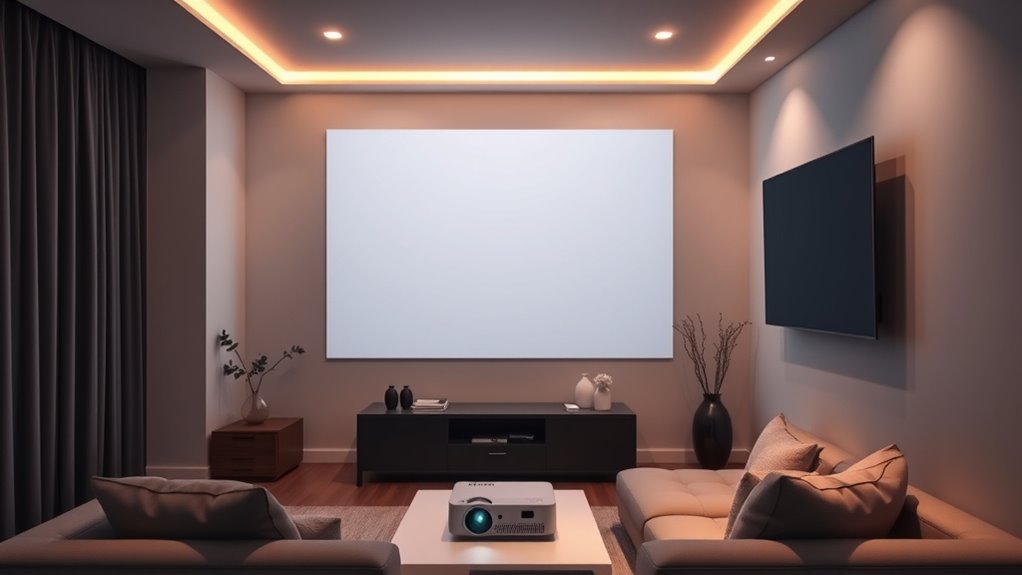
When choosing between a projector and a TV for your home entertainment setup, understanding their differences can help you make the best decision. In a small living room, one of the key factors to consider is the screen size each option can provide. Projectors are known for their ability to create massive images, often exceeding 100 inches diagonally, which can make your space feel like a mini theater. Conversely, TVs usually max out at smaller sizes, typically between 55 and 75 inches, but they provide a more consistent viewing experience without the need for darkened rooms.
Another important aspect is setup complexity. Installing a TV is straightforward—you simply place it on a stand or mount it on the wall, connect your devices, and you’re ready to go. Projectors, however, can require more effort. You’ll need to find a suitable blank wall or invest in a projection screen, position the projector at the right distance, and adjust focus and keystone settings for a clear image. This process can be time-consuming, especially if you’re unfamiliar with projection setups or have limited space to work with.
Setting up a TV is simple; projectors require careful positioning and calibration.
In a small living room, space constraints influence which option fits best. While a large projector screen can deliver an immersive experience, it also demands enough distance from the projection surface to achieve ideal image size and quality. If your room is tight, you might find it difficult to position the projector far enough back without cluttering the space. On the other hand, a TV’s compact size and wall-mount options make it easier to save space, fitting neatly into a small area without sacrificing viewing comfort.
Picture quality also plays a role. Modern TVs with 4K resolution and high dynamic range (HDR) standards often provide sharper, brighter images with better contrast, even in well-lit rooms. Projectors, especially lower-end models, may struggle with brightness in bright environments, and their images can look washed out during daytime. However, high-end projectors with advanced technology can produce stunning visuals, but they come at a higher cost and may require a darkened room for the best experience.
Additionally, brightness levels are crucial for viewing in various lighting conditions, impacting how well a projector performs in a small, potentially well-lit room. Ultimately, your choice depends on your priorities. If you want a huge screen with a simple setup, and you can control the room lighting, a projector might be the way to go. But if you prefer a quick, easy installation with excellent picture quality in a small space, a TV is likely your best option. Take into account how much space you have, your budget, and your desired viewing experience to make the right choice for your small living room.
Frequently Asked Questions
How Does Ambient Light Affect Projector Image Quality?
Ambient light can considerably reduce your projector’s image quality. When there’s plenty of ambient light, your projector’s brightness needs to be high enough to counteract it; otherwise, the picture may appear washed out or dim. To improve viewing, you should lower ambient light levels or choose a projector with higher brightness (measured in lumens). This way, you’ll enjoy clearer, more vibrant images even in brighter environments.
What Are the Maintenance Requirements for Projectors?
You need to regularly clean the projection placement area to prevent dust buildup, which can affect image quality. Keep an eye on the lamp lifespan and replace it when necessary, as a dimming lamp reduces brightness. Additionally, check filters and vents for dust to maintain proper cooling. These simple maintenance steps guarantee your projector stays in good shape and delivers a clear, bright image for years.
Can Projectors Be Used Outdoors Effectively?
Yes, you can use projectors outdoors effectively, but you’ll need a proper outdoor setup. Make sure your projector has weather resistance or use a weatherproof enclosure to protect it from moisture and dust. Set up in a shaded area to prevent glare and improve image quality. Keep in mind, ambient light can affect viewing, so choose a darker spot and use a high-brightness projector for the best outdoor experience.
Are Smart TV Features Available on Projectors?
You’ll find that many modern projectors do offer smart features and connectivity options, just like TVs. While they might not have built-in apps, you can connect streaming devices or use Wi-Fi to access your favorite content. Imagine enjoying Netflix or YouTube on a big screen, with the flexibility of smart features. So, yes, projectors can deliver smart functionalities, bridging the gap between traditional TVs and immersive projection experiences.
How Does Sound Quality Compare Between Projectors and TVS?
You’ll find that TVs generally offer better sound quality with clearer sound clarity and integrated speakers, making dialogue and music more enjoyable without extra gear. Projectors often require separate external speakers for decent audio, which can be an extra hassle. If sound quality matters most, a TV with built-in speakers provides a more straightforward, immersive experience, whereas projectors excel with visual display but need additional audio solutions.
Conclusion
So, whether you choose a projector or a TV for your tiny living room, remember: size isn’t everything—it’s all about the drama. Want that cinematic experience without sacrificing your precious floor space? Go for the projector and watch your walls transform into a giant screen. Or stick with a TV, because nothing beats the familiarity of a box that doesn’t require a degree in architecture to set up. Either way, happy viewing—small room, big dreams!