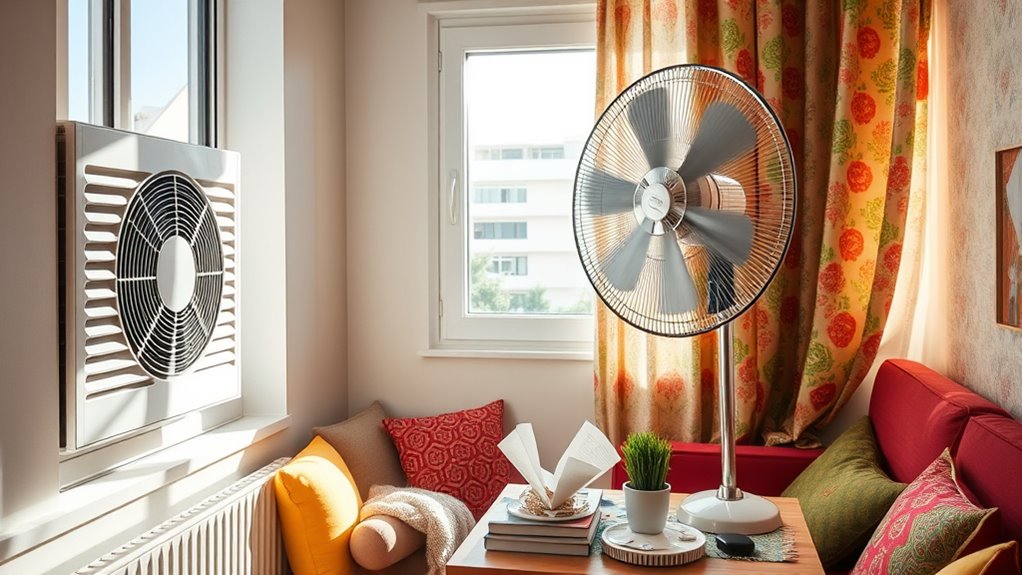

To cool your small apartment effectively, you can opt for portable or window AC units for quick relief, but they tend to use more energy. Fans are a budget-friendly alternative, especially when combined with natural ventilation or DIY tricks like ice in front of a fan. Simple measures like closing curtains or sealing gaps help too. If you want to find out which method balances comfort and savings best, there’s more to explore.
Key Takeaways
- Air conditioners provide rapid, powerful cooling but consume more energy and cost more upfront; high SEER models improve efficiency.
- Fans are budget-friendly, use less energy, and work well with natural ventilation, but don’t lower indoor temperatures directly.
- DIY tricks like ice in front of fans and closing blinds reduce heat gain cheaply and can boost overall cooling effectiveness.
- Combining fans, DIY methods, and natural ventilation offers a cost-effective approach, balancing comfort and energy savings.
- For quick cooling, ACs are best; for ongoing comfort and lower costs, fans and DIY tricks are practical alternatives.
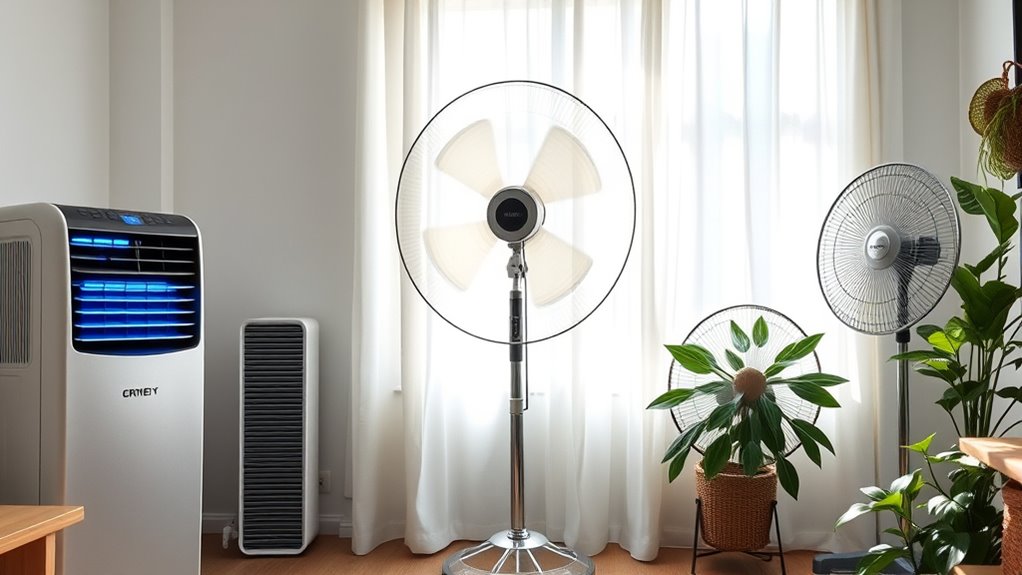
Cooling a small apartment can be challenging, especially during hot summer months. When it’s scorching outside, staying comfortable indoors requires choosing the right cooling method. You’ll want to contemplate energy efficiency and cost comparison to find the best solution that fits your budget and keeps your space cool.
Air conditioning units, particularly small window or portable ACs, tend to be the most effective at lowering indoor temperatures quickly. They provide consistent, powerful cooling, but they often consume more energy than alternative options. This means higher electricity bills, especially if you run them continuously during heatwaves. When comparing costs, it’s essential to look at the upfront price of the AC unit and its energy efficiency rating. A model with a high SEER (seasonal energy efficiency ratio) can save you money over time by using less power for the same cooling output. If you’re on a tight budget and want quick relief, an AC might be worth the expense, but keep in mind that ongoing energy costs can add up.
Small window or portable ACs cool quickly but may increase energy bills; choose high SEER models for efficiency.
Fans are a popular, budget-friendly alternative that can still keep you comfortable if used correctly. Ceiling fans, oscillating fans, and tower fans use considerably less electricity than air conditioners. While they don’t lower the temperature, they create a breeze that helps your body feel cooler through evaporation and convection. If you’re trying to save money and reduce energy use, fans are an excellent choice. To maximize their effectiveness, position fans near windows or open doors to facilitate cross-ventilation, especially during cooler evenings or early mornings. Combining fans with natural ventilation can dramatically reduce your reliance on AC and cut down your energy expenses.
DIY tricks can also make a noticeable difference. For example, placing a shallow pan filled with ice or a cold cloth in front of a fan can produce a cooling breeze. Closing blinds or curtains during the hottest parts of the day prevents heat from entering through your windows. Using reflective window films or blackout curtains can further help keep your apartment cool without additional energy costs. Small changes like switching to LED bulbs, sealing gaps around windows and doors, and reducing heat-generating activities will help maintain a cooler environment more efficiently and economically. Additionally, some specialized cooling devices designed for small spaces can provide efficient cooling without high energy consumption.
Ultimately, striking a balance between energy efficiency and cost comparison is key. If you need rapid cooling, an AC might be necessary despite higher energy use. For ongoing comfort at a lower cost, fans and DIY tricks work well, especially when combined with good ventilation and heat management strategies. By understanding how each option works and their impact on your utility bills, you can make smarter choices that keep your small apartment comfortably cool without breaking the bank.

Amazon Basics 5000-BTU Window Air Conditioner with Quiet Operation, Up to 150 Sqf, Cool and Fan Functions, Washable Filter, Adjustable Window Kit, Intuitive Mechanical Controls, for Small Room, White
EFFICIENT COOLING: 5000 BTU cooling capacity ideal for rooms up to 150 sq. ft. – perfect for bedrooms,…
As an affiliate, we earn on qualifying purchases.
As an affiliate, we earn on qualifying purchases.
Frequently Asked Questions
Which Cooling Method Is Most Energy-Efficient for Small Apartments?
Fans are the most energy-efficient choice for small apartments because they consume less energy compared to air conditioners. They provide good airflow without substantially increasing your energy bills. While ACs cool more effectively, they have higher energy consumption and costs. DIY tricks like closing blinds or using natural ventilation can also cut costs. For the best balance of comfort and cost comparison, opt for fans and energy-saving habits.
How Can I Prevent Indoor Heat From Entering During Summer?
To prevent indoor heat from entering during summer, start by installing window insulation to block out heat. Add reflective shades or blinds to keep sunlight from warming your space. Keep windows closed during peak heat hours and consider using a fan to circulate air efficiently. These simple steps help maintain a cooler indoor environment, reducing the need for additional cooling and saving energy.
Are There Safe DIY Cooling Solutions for Renters?
Yes, there are safe DIY cooling solutions for renters. You can create a homemade evaporative cooler using a shallow pan, a fan, and a damp cloth, which is both effective and safe when used properly. Always consider safety, avoid electrical hazards, and guarantee proper ventilation. Keep DIY projects simple, and don’t forget to monitor the setup regularly to prevent any issues, ensuring your cooling efforts stay safe and effective.
How Often Should I Clean or Maintain Fans and AC Units?
You should clean your fan blades and air conditioner filters at least once a month to keep the air fresh and efficient. Ironically, neglecting fan maintenance and air conditioner cleaning leads to worse airflow and higher energy bills. Regularly dust off fan blades and replace or clean filters, ensuring your cooling devices work ideally. This simple routine prevents buildup and keeps your small apartment comfortably cool all season long.
Can Strategic Furniture Placement Help Reduce Indoor Temperatures?
Yes, strategic furniture placement can help reduce indoor temperatures. You should position large, heat-absorbing furniture away from windows and use window coverings to block sunlight. Additionally, outdoor shading like awnings or curtains can prevent heat from entering. By keeping heat sources out of direct sunlight and creating shaded zones, you’ll make your apartment cooler naturally, saving energy and enhancing comfort without relying solely on fans or AC.

EUHOMY 8000 Btu Portable Air Conditioners, 3 in 1 Portable AC with Cool, Dry, Fan Modes, Quiet Air Conditioners with 24H Timer & Sleep Modes, with Remote, for Bedroom, Apartments up to 350 Sq.Ft
𝐅𝐚𝐬𝐭, 𝐏𝐨𝐰𝐞𝐫𝐟𝐮𝐥 𝐂𝐨𝐨𝐥𝐢𝐧𝐠 𝐟𝐨𝐫 𝐌𝐞𝐝𝐢𝐮𝐦-𝐒𝐢𝐳𝐞𝐝 𝐑𝐨𝐨𝐦𝐬: With 8,000 BTU cooling power and strong 350 CFM airflow, this EUHOMY…
As an affiliate, we earn on qualifying purchases.
As an affiliate, we earn on qualifying purchases.
Conclusion
Choosing the right cooling method for your small apartment is like finding the perfect key to release comfort on hot days. Whether you opt for a sleek AC, breezy fans, or clever DIY tricks, each has its own charm. Remember, combining these strategies can create a cool oasis amidst the heat. With some effort and smart choices, you’ll turn your tiny space into a invigorating sanctuary, making summer feel more like a gentle breeze than a scorching storm.

LEVOIT Tower Fan for Bedroom, 90° Oscillating Standing Fan with 28dB Quiet for Sleep, 25ft/s Velocity, 12H Timer, 5 Speeds 4 Modes, Remoter, Bladeless Room Fan for Home, Office, Indoor, 36 inch, White
𝙎𝙖𝙮 𝙂𝙤𝙤𝙙𝙗𝙮𝙚 𝙩𝙤 𝙏𝙧𝙖𝙙𝙞𝙩𝙞𝙤𝙣𝙖𝙡 𝙁𝙖𝙣𝙨: Our innovative airflow design combines a curved air inlet and unique multi-blade design,…
As an affiliate, we earn on qualifying purchases.
As an affiliate, we earn on qualifying purchases.

KESPEN Window Film One Way Daytime Privacy Heat Control Anti UV Non-Adhesive Reflective House Window Tint for Home and Office, Black-Silver, 35.4 Inch X 8.2 Feet
ONLY DAYTIME PRIVACY PROTECTION: This one way window film provides superb privacy during daytime, the mirror reflection of…
As an affiliate, we earn on qualifying purchases.
As an affiliate, we earn on qualifying purchases.