
TL;DR

Get home appliances delivered free with Prime
- Fast, free delivery on millions of items
- Prime Video, Amazon Music and more included
- Member-only deals all year
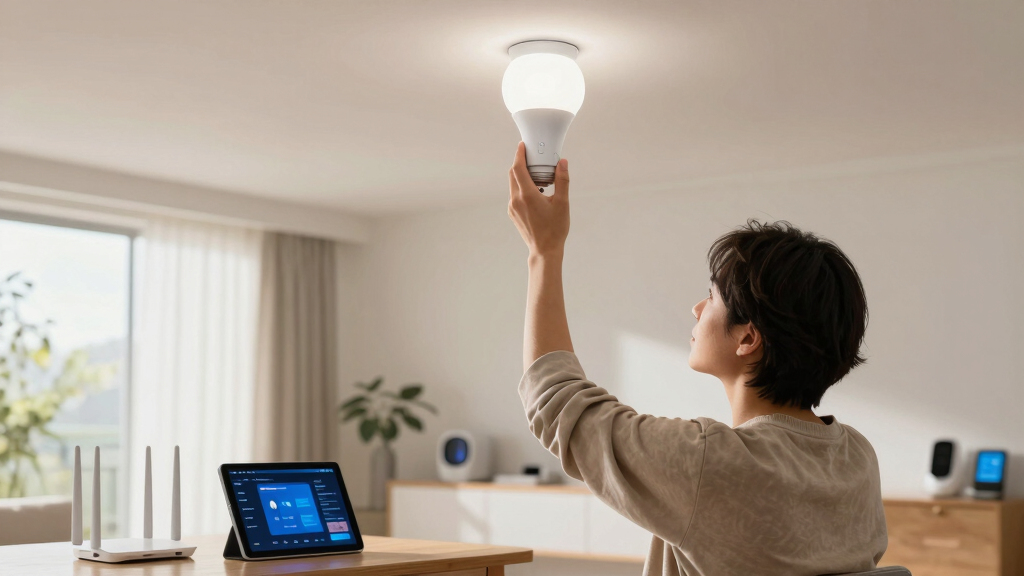
A user has modified a commercial ESP32-based smart bulb to serve as a local web server hosting banned books. This development highlights potential privacy and censorship issues in IoT devices.
A user has hacked a commercially available ESP32 smart bulb to function as a local web server hosting banned books, raising questions about the potential misuse of IoT devices for censorship circumvention and privacy risks.
The hack involves extracting the ESP32C3 chip from a WiFi-enabled smart bulb, which is then repurposed to host a web interface for a digital library. The device broadcasts a public network with a captive portal, allowing users to browse and access e-books, including those pulled from US school libraries deemed ‘banned.’
Due to hardware limitations, the setup only supports around 4MB of storage, restricting the number of books available but still enabling access to a small library of digital texts. The web interface also includes a control panel for administrators, and the bulb retains its original smart lighting functions.
This modification was demonstrated by an individual known as “RickOOOOOO,” who emphasized that the content served does not include harmful material, but rather books that are controversial or restricted in certain regions or institutions.
Implications for Privacy and Censorship in IoT Devices
This development underscores how everyday IoT devices, like smart bulbs, can be repurposed for activities that challenge censorship and privacy norms. It raises concerns about the security vulnerabilities of connected devices and their potential use for hosting or distributing restricted content without oversight. The hack demonstrates both the technical feasibility of such modifications and the broader risks associated with unregulated IoT hardware.
Products Worth Considering

Levoit Eleva 300X HEPA Air Purifier for Home and Bedroom
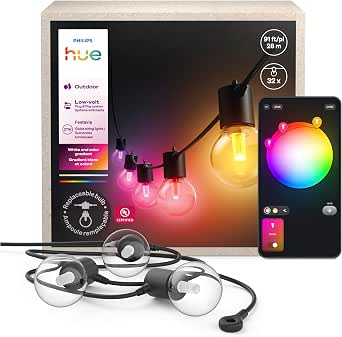
Philips Hue Festavia Globe Outdoor String Lights, 32 Bulbs, 91 ft

Hisense 85 U6 Pro Series Mini-LED ULED 4K UHD HDR Gaming AI Smart Fire TV (85U6SF Pro)
As an affiliate, we earn on qualifying purchases.
Growing Use of IoT Devices for Unintended Purposes
Smart home devices, especially those based on the ESP32 platform, have become increasingly popular due to their affordability and versatility. However, their open-source nature and network connectivity also make them targets for hacking and repurposing. Previous incidents have shown IoT devices being used for malicious activities, but this is among the first known cases of a smart bulb serving as a digital library for banned literature.
The hack was carried out by a hobbyist who modified the device to demonstrate how IoT hardware can be used for activism or privacy-preserving purposes, albeit with potential legal and safety implications.
“This hack illustrates how easily connected devices can be turned into tools for circumventing censorship or privacy violations.”
— an anonymous researcher
Legal and Safety Concerns Still Unclear
It is not yet clear whether the hack complies with local laws regarding digital content or device modification. The safety implications of repurposing smart bulbs in this way, especially concerning electrical safety or network security, remain to be assessed. Additionally, the extent to which such modifications could be scaled or exploited in broader contexts is still unknown.
Potential Responses from Manufacturers and Regulators
Manufacturers of IoT devices may review security protocols and implement safeguards to prevent unauthorized modifications. Regulators could consider new policies addressing the use of connected devices for hosting or distributing restricted content. Meanwhile, the hacker community may explore further modifications or develop tools to facilitate similar projects, raising ongoing debates about privacy, censorship, and device security.
Key Questions
Does this hack pose a security threat to other devices?
While the hack demonstrates a specific modification, it highlights vulnerabilities in IoT devices that could be exploited for malicious purposes. Proper security practices and firmware updates are essential to mitigate such risks.
Could this be used to distribute harmful or illegal content?
The demonstration involved non-harmful, banned books, but the technology could theoretically be exploited to host or distribute illegal content. Legal and safety considerations are still being evaluated.
Will manufacturers take action to prevent this kind of modification?
Manufacturers may enhance security features, restrict access to hardware components, or implement firmware protections to prevent unauthorized modifications, though specific responses are not yet confirmed.
Is this hack reversible or fixable?
Yes, the modification is technically reversible by restoring the device to its original firmware or replacing hardware components. However, the hack serves as a proof of concept rather than a widespread vulnerability.
What are the legal implications of hacking a smart bulb like this?
The legality depends on local laws regarding device modification and content hosting. Engaging in such activities without authorization could have legal consequences.
Source: Hackaday