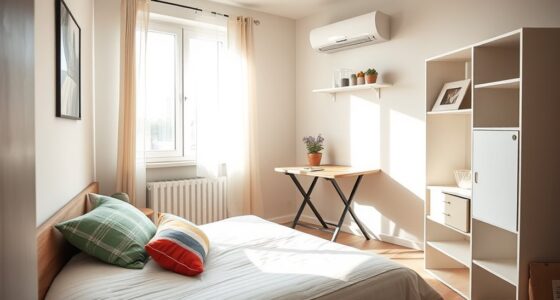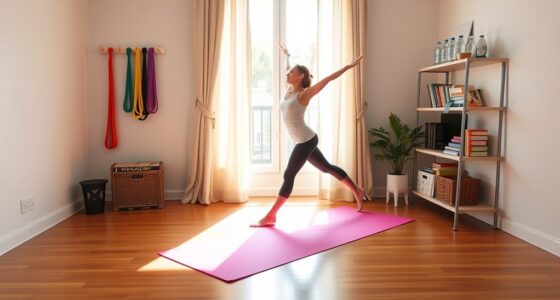
You choose tiny apartments because they embody urban minimalism and help you focus on what matters most. They lower your rent and utility costs, making city living more affordable. Plus, their flexible, smaller space suits your dynamic lifestyle and values of sustainability. With clever design, you maximize every square foot and enjoy less clutter and stress. If you keep exploring, you’ll discover even more reasons why tiny living fits your modern, connected life.
Key Takeaways
- Millennials and Gen Z prioritize affordability and lower living costs in expensive urban areas.
- They embrace minimalism to reduce clutter and stress, valuing quality over quantity.
- Tiny apartments offer flexibility and mobility, fitting their dynamic lifestyles and career changes.
- Sustainable living and smaller environmental footprints align with their eco-conscious values.
- Compact spaces support a simplified, intentional lifestyle focused on experiences rather than possessions.
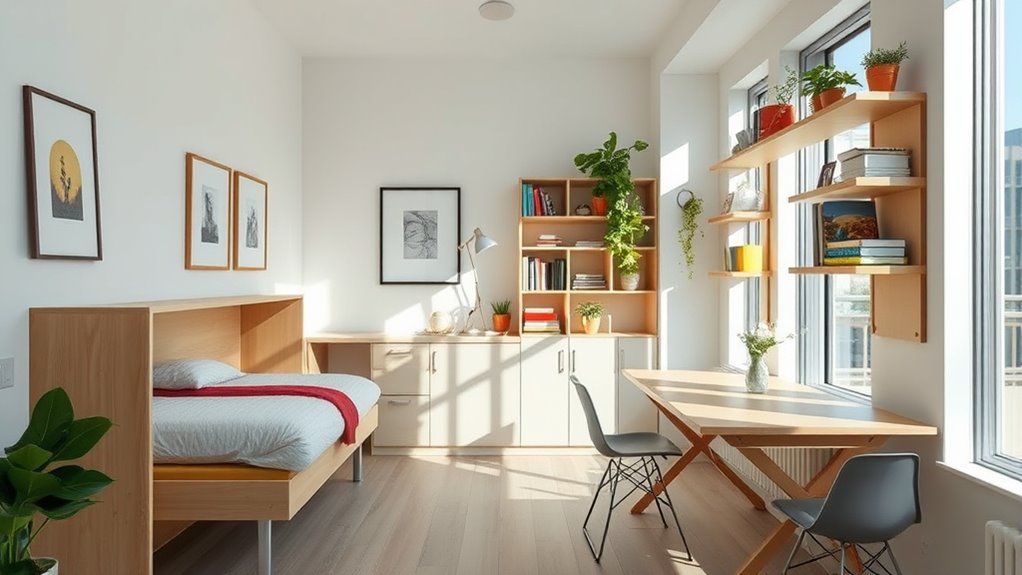
As Millennials and Gen Zers seek affordable living options, many are turning to tiny apartments as a practical solution. These compact spaces embody urban minimalism, allowing you to focus on what truly matters without the clutter or excess. The appeal lies not just in their size but in the lifestyle they promote—one that emphasizes simplicity, efficiency, and intentional living. With rising housing costs in many cities, tiny apartments offer a way to live centrally without draining your bank account, making cost-effective living more accessible.
Urban minimalism becomes more than just a design trend when you choose a tiny apartment. It’s about decluttering your life, prioritizing quality over quantity, and embracing a more sustainable way of living. You realize that you don’t need a sprawling space to feel comfortable—instead, you learn to maximize every square foot. Clever storage solutions and multi-functional furniture become your best friends, helping you create a space that’s both functional and stylish without sacrificing your budget. This minimalistic approach also encourages you to reduce unnecessary possessions, leading to less clutter and stress, and fostering a more mindful way of living.
Cost-effective living is a major driver behind this shift. Rent in tiny apartments is generally lower, which means you can save more of your income or allocate funds toward experiences, travel, or future investments. Utility costs tend to be smaller, and maintenance is easier, freeing up your time and money. Many cities offer amenities within or near these small spaces, like shared coworking areas or communal lounges, which cut down on additional expenses. This affordability doesn’t mean sacrificing quality; instead, it pushes you to live intentionally, choosing what truly adds value to your life.
You also benefit from the flexibility tiny apartments provide. Because they’re easier to rent or buy, you can move more freely within urban settings, adapting to changing circumstances or job opportunities. This mobility aligns with the desire for a dynamic, experience-focused lifestyle that many Millennials and Gen Zers crave. Additionally, living in a small space reduces your environmental footprint, aligning with values centered on sustainability and responsible consumption. Moreover, optimizing your space often involves sizing and load-planning tools, which can help you make the most of your limited square footage while maintaining safety and comfort.

Merax Sideboard Buffet Cabinet with Foldable Dining Table, Multifunctional Cupboard with Storage Shelf and Hooks, for Small Places,Studio, Apartment
✔ Space-Saving Expandable Table: Extend the wheeled table from 0 to 50.4”L using removable leaves. When not in…
As an affiliate, we earn on qualifying purchases.
As an affiliate, we earn on qualifying purchases.
Frequently Asked Questions
How Do Tiny Apartments Impact Mental Health and Well-Being?
Living in tiny apartments can boost your mental health benefits by creating a cozy, clutter-free environment that reduces stress. You’ll find it easier to stay organized and focus on what matters, which helps improve your overall well-being. The smaller space encourages intentional living and minimizes distractions, making stress reduction more attainable. Overall, tiny apartments support a simpler lifestyle that promotes mental clarity and emotional balance.
What Are the Best Design Tips for Maximizing Small Spaces?
Imagine your space as a canvas—smart furniture placement and thoughtful color schemes create the perfect masterpiece. To maximize your tiny apartment, choose multi-functional furniture that saves space. Opt for light, neutral colors to make rooms feel larger and more open. Use vertical storage to free up floor space, and add mirrors to reflect light. These tips boost your comfort and make your small space feel expansive and inviting.
Are Tiny Apartments Suitable for Families or Only Singles?
Tiny apartments can be suitable for families if you prioritize family adaptability and long-term affordability. With clever space-saving solutions and flexible layouts, you can create a functional environment for kids and adults alike. While they’re ideal for singles or couples, families willing to embrace smart organization and shared spaces can make tiny apartments work, offering a budget-friendly option that promotes minimalism and reduces living costs over time.
How Do Residents Handle Storage and Organization Challenges?
Think of your tiny apartment as a puzzle waiting to be solved. You handle storage and organization challenges by using clever storage solutions like multi-functional furniture and vertical shelves. Organizational hacks, such as under-bed containers and wall-mounted hooks, help maximize space. You stay tidy by regularly decluttering and labeling everything. These strategies turn small spaces into efficient, cozy homes, proving that smart organization makes tiny living both practical and enjoyable.
What Are the Legal Considerations When Renting or Owning a Tiny Apartment?
When renting or owning a tiny apartment, you need to think about zoning regulations and lease agreements. Zoning laws determine if your property can be used as a residence, while lease agreements outline your rights and responsibilities. Make sure to review local zoning rules to avoid legal issues, and read your lease carefully to understand restrictions on modifications, subletting, or pet policies. Staying informed helps you prevent legal complications down the road.
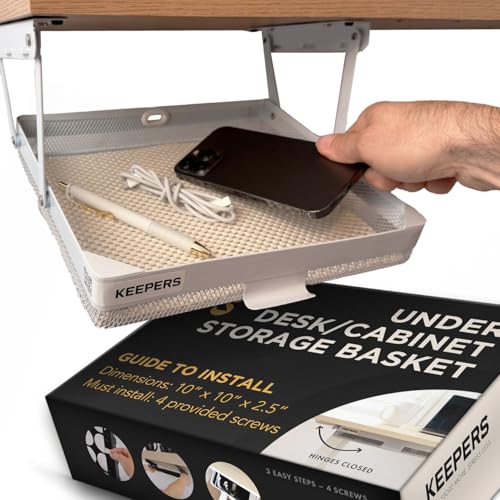
Keepers – Organizer for Home, Kitchen, Bathroom, RV, Small Spaces – Storage Organizers – Compact Metal Basket – Under Cabinet Holder – Easy Install – Holds Strong – Fits in 11x10x2in – White
– MULTIPURPOSE UNDER DESK STORAGE SHELF: This innovative organizer doubles as an under desk storage shelf and under…
As an affiliate, we earn on qualifying purchases.
As an affiliate, we earn on qualifying purchases.
Conclusion
So, it’s clear that tiny apartments aren’t just a trend—they’re a smart choice for many Millennials and Gen Z. With affordability, minimalism, and flexibility fueling the shift, it’s easy to see why these young people are embracing smaller spaces. The theory that they value experiences over possessions rings true here, as tiny living lets you focus on what truly matters. Ultimately, it’s a lifestyle choice rooted in practicality and a desire for freedom.

AMKUFO 6 Pack-Closet-Organizers-and-Storage, Magic-Hangers-Space-Saving-for-Clothes, Closer-Organizer-for-Closet-Organization, Space-Saver-Hanger-Organizer-for-Multipurpose, Dorm-Room-Essentials
Magic Hangers: Size: 16×3.6 inches. 6Pcs per set. Each magic hanger can hang 5 clothes and one set…
As an affiliate, we earn on qualifying purchases.
As an affiliate, we earn on qualifying purchases.

Qsun 3 Pieces Outdoor Patio Furniture Set Rocking Bistro Set Outdoor Rattan Conversation with Coffee Table for Garden Balcony Backyard Poolside (Grey Cushion)
Modern and Ergonomic Design: The design of our patio furniture set is simple, stylish and Ergonomic. It is…
As an affiliate, we earn on qualifying purchases.
As an affiliate, we earn on qualifying purchases.