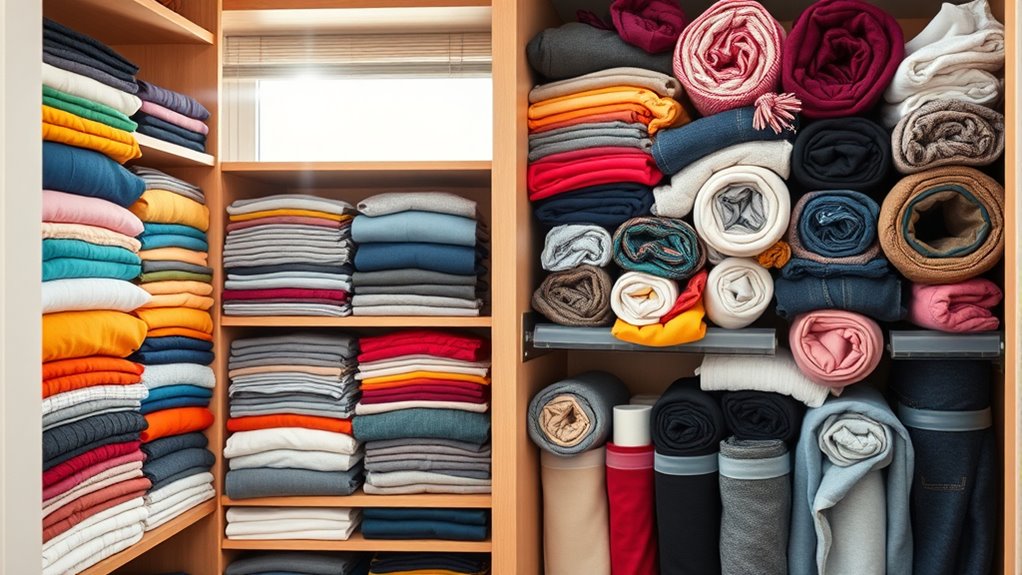
To save space, use rolling for lightweight, wrinkle-prone clothes like t-shirts and activewear, as it minimizes creases and fits more in limited areas. Fold heavier or delicate items such as jeans, sweaters, or structured pieces to maintain their shape and prevent damage. Combining both methods based on fabric type helps maximize space and keeps your wardrobe organized. Keep going to discover tips on choosing the best storage techniques for your clothes.
Key Takeaways
- Use rolling for lightweight, casual garments to minimize wrinkles and maximize space efficiency.
- Fold heavier or delicate items to maintain shape and prevent damage during storage.
- Combine folding and rolling based on fabric type for optimal organization and space-saving.
- Rolling reduces creases in soft fabrics, making unpacking quicker and clothes neater.
- Proper technique in folding and rolling extends clothing lifespan and keeps items in top condition.
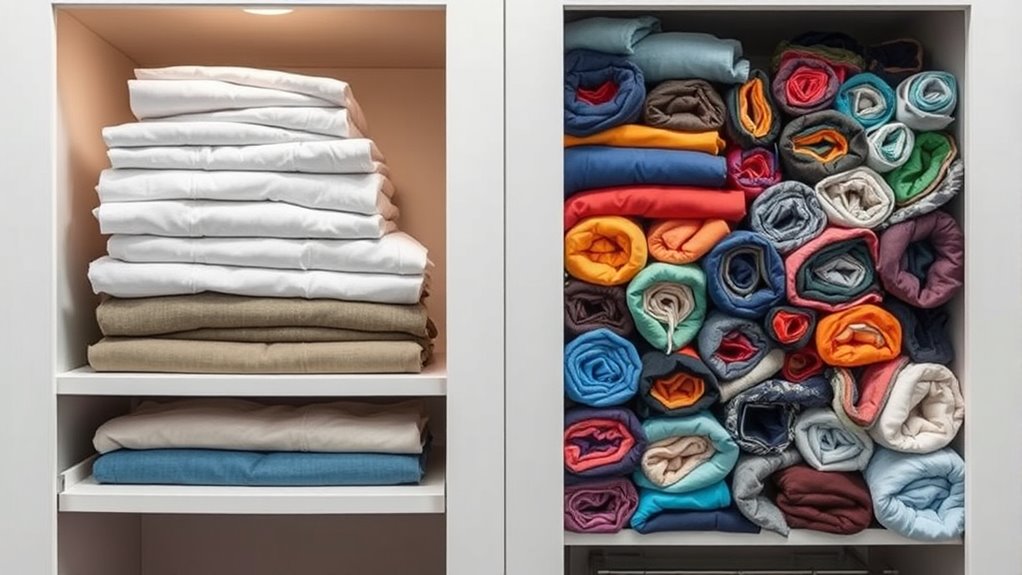
Have you ever wondered whether folding or rolling your clothes is better for saving space and keeping items in good shape? It’s a common dilemma, especially when you’re trying to maximize packing efficiency. The choice often depends on the clothing materials you’re dealing with. For example, thicker fabrics like denim or heavy sweaters tend to fare better when folded because rolling may cause unnecessary creasing or stretching. On the other hand, lightweight fabrics such as t-shirts, pajamas, or activewear are perfect for rolling, as they fit snugly together and minimize wrinkles. Understanding how different clothing materials respond to folding or rolling can help you organize your suitcase or closet more effectively.
Folding suits heavy fabrics; rolling works best for lightweight, wrinkle-prone clothing.
When it comes to packing efficiency, rolling generally offers a distinct advantage. Rolling clothes allows you to fit more items into a limited space because it reduces the gaps left by unfolded garments. You can nest smaller items inside larger ones, creating a more compact and orderly bundle. This method also makes it easier to see all your clothes at a glance, saving time during packing or unpacking. Plus, rolling tends to produce fewer deep creases, especially in lightweight fabrics, which means your clothes stay neater and require less ironing. If you’re packing for a trip where space is tight, rolling can be your best bet to maximize every inch of your luggage.
Additionally, consistent storytelling can help you develop a personal system for organizing your clothes, making the process more efficient and satisfying. Folding, however, remains the preferred method for certain clothing materials and situations. Sturdy fabrics like jeans, chinos, or dress shirts benefit from folding because it keeps their shape intact and avoids unnecessary stretching. Folding also works well if you’re storing clothes in drawers or on shelves, where neatness and ease of access matter. Additionally, some delicate or structured pieces—like blouses with embellishments or tailored jackets—are better folded to maintain their form and prevent damage. When you fold clothes carefully and use proper techniques, you can keep your wardrobe looking crisp and organized over time.
In the end, the best approach often combines both methods depending on your clothing materials and storage needs. Use rolling for lightweight, casual items to save space and keep them wrinkle-free, and fold heavier or more delicate pieces to preserve their shape and integrity. By understanding the characteristics of different clothing materials and how they respond to each technique, you can optimize your packing efficiency and keep your wardrobe in top shape, whether you’re traveling or tidying up your closet.
Frequently Asked Questions
Which Method Preserves Clothing Quality Longer?
Rolling your clothes generally preserves fabric longevity better, as it reduces wrinkles and stress on fibers, keeping them in better shape over time. Plus, it’s more space-efficient, allowing you to fit more clothes in less room. Folding can sometimes cause creases and wear, especially with delicate fabrics. So, if you want your clothes to stay in top condition longer and maximize space, rolling is your best bet.
Are Certain Fabrics Better Suited for Folding or Rolling?
You might think all fabrics are suitable for folding or rolling, but that’s not true. Soft, flexible fabrics like jersey or linen are better rolled because their fabric flexibility prevents creases and damage. Thicker materials, like denim or wool, hold shape better when folded to avoid stretching or deforming. By choosing the right method based on material thickness and flexibility, you’ll keep your clothes in top shape longer.
How Does Folding or Rolling Affect Clothing Wrinkles?
When you fold clothes, you’re more likely to cause fabric creases, leading to wrinkle formation, especially if you press down hard. Rolling reduces fabric creases, keeping clothes smoother and minimizing wrinkles. However, some fabrics, like linen, may still develop wrinkles regardless. To keep your clothes looking fresh, gently fold or roll, and avoid tight creasing. This way, you reduce fabric creases and prevent unnecessary wrinkle formation.
Is One Method More Suitable for Travel?
Rolling is more suitable for travel because it allows for compact packing and maximizes space efficiency in your suitcase. By rolling your clothes, you can fit more items and reduce wrinkles, making your luggage lighter and more organized. Folding can be useful for keeping clothes neat, but rolling is the best method when you want to conserve space and ensure everything fits comfortably during your trip.
Can Folding or Rolling Prevent Moth Damage Better?
Folding clothes can help prevent moth damage better than rolling, especially if you store them in airtight storage containers. Folding creates a flat, compact surface that minimizes wrinkles and allows you to pack clothes tightly, reducing moth access. Using sealed containers, whether for folded or rolled clothes, keeps moths out and protects your garments. To maximize moth prevention, clean clothes thoroughly before storing and regularly check your storage areas.
Conclusion
Now that you know the pros and cons of folding versus rolling, it’s clear there’s no one-size-fits-all answer. You might prefer rolling for quick packing or folding for neat drawers. So, which method will you choose to maximize your space? Remember, the best way is the one that fits your lifestyle and keeps your clothes organized. After all, isn’t finding the perfect storage solution all about making your life easier and more efficient?