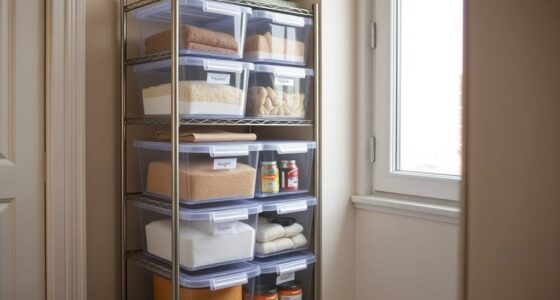
Tension rods are your secret weapon for maximizing small spaces. You can hang utensils, spray bottles, or towels by installing them inside cabinets, between walls, or under shelves. Use them as room dividers with fabric or to create additional closet storage for jewelry or cleaning supplies. They’re perfect for organizing kitchens, bathrooms, and bedrooms without drilling or tools. Keep exploring to discover even more clever ways to use tension rods in your home.
Key Takeaways
- Use tension rods to create vertical storage in narrow spaces by hanging utensils, cleaning supplies, or accessories.
- Install tension rods inside cabinets or between walls to hang spray bottles, baskets, or small items for easy access.
- Create DIY room dividers with fabric panels or curtains suspended from tension rods for flexible space separation.
- Hang fabric or mesh organizers from tension rods to store jewelry, toiletries, or craft supplies efficiently.
- Maximize closet or pantry space by adding tension rods to hang utensils, pot lids, or small containers vertically.
Ever wondered how to make the most of limited space? Tension rods are your secret weapon for transforming cramped areas into organized, functional zones. These simple, versatile tools can do much more than just hold curtains. With a little creativity, you can craft DIY storage solutions and clever dividers that maximize every inch of your small space. The beauty of tension rods lies in their ease of installation—no tools or hardware required—and their adaptability to various areas in your home.
Start by using tension rods as DIY storage in your closets or kitchen. For example, place a tension rod underneath a shelf to create an additional hanging space for utensils, pot lids, or cleaning supplies. You can also install a tension rod between two walls or inside cabinets to hang spray bottles or small baskets, keeping clutter off your counters. In the bathroom, tension rods can hold multiple shower caddies or hang towels, freeing up precious shelf space. Because tension rods are adjustable, you can customize the length to fit perfectly, making them ideal for small, awkward gaps.
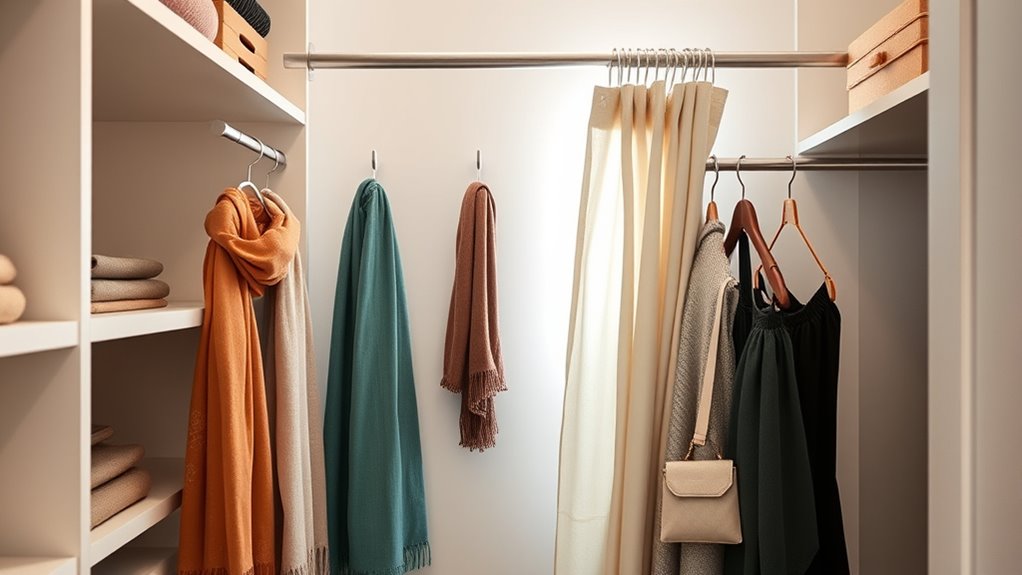
Maximize closet space by adding tension rods for hanging utensils, lids, and cleaning supplies.
Creative dividers are another fantastic application. If you’re trying to carve out separate zones within one room, tension rods act as inexpensive, flexible partitions. For example, use a tension rod to section off a small workspace or dressing area within a larger room. Simply hang lightweight curtains or fabric panels from the rod to create a visual barrier that’s easy to remove or change when needed. This approach works equally well for organizing a linen closet or closet within a closet, where you can hang fabric or even lightweight wire baskets to separate different categories of items.
You can also get inventive with DIY storage by creating hanging pockets or organizers. Attach fabric or mesh pockets to tension rods and hang them over doors or inside cabinets. This method is perfect for storing small items like jewelry, craft supplies, or toiletries without taking up shelf space. Additionally, tension rods can serve as makeshift drying racks for clothes or herbs—just stretch them across open spaces and hang items from hooks or clothespins. Interestingly, projectors can also be set up in small spaces using tension rods to create adjustable mounts or screens, maximizing your entertainment options without cluttering the room.
Using tension rods for small-space organization boils down to their flexibility and ease of use. Whether you’re building DIY storage solutions or creating creative dividers, they’re an affordable, effective way to add functionality without sacrificing style. By thinking vertically and utilizing these simple tools creatively, you can turn even the tiniest areas into organized, efficient spaces tailored to your needs.
Frequently Asked Questions
Can Tension Rods Be Used on Uneven or Textured Surfaces?
Tension rods generally don’t work well on uneven or textured surfaces because they rely on a tight fit to stay in place. If you want to use them for wall mounting on textured surfaces, you might struggle with stability. For uneven walls, consider alternative options like adhesive hooks or brackets. Tension rods work best on smooth, flat surfaces where you can easily adjust the tension for a secure hold.
What Weight Can Tension Rods Safely Support?
Like a tightrope walker balancing on a wire, you need to know your tension rod’s limits. Most tension rods safely support between 10 to 20 pounds, but weight capacity varies. Always check the manufacturer’s guidelines and follow safety tips, like avoiding overloading and ensuring proper installation. By respecting these limits, you keep your space organized without risking falls or damage, turning tension rods into reliable helpers rather than hazards.
Are Tension Rods Suitable for Outdoor or Humid Environments?
Tension rods can work outdoors or in humid environments if you choose ones made from durable, rust-resistant materials like stainless steel or coated aluminum. These materials resist corrosion and maintain strength despite moisture exposure. Make certain you select high-quality tension rods specifically designed for outdoor use, and regularly check their condition to prevent rust or weakening over time. Properly chosen, tension rods are a versatile solution for outdoor organization needs.
How Do I Prevent Tension Rods From Slipping or Falling?
Imagine a tightrope walker balancing perfectly—this is how tension rod safety works. To prevent slipping or falling, guarantee proper installation by cleaning the surfaces and choosing the right size. Use rubber or non-slip pads at both ends for extra grip. Tighten the rod firmly but avoid over-torquing. Regularly check and adjust the tension to keep it secure, making your tension rod a steady, reliable support.
Can Tension Rods Be Extended or Shortened Easily After Installation?
You can easily adjust tension rods after installation by using simple adjustment techniques, like twisting or sliding them to the desired length. Most tension rods are designed for easy extension or shortening without needing rod replacements. Just twist the rod to loosen or tighten, then slide it to your preferred size. Once adjusted, secure it firmly, ensuring it stays in place and fits perfectly in your space.
Conclusion
With tension rods, your small space transforms into a flexible, organized haven. Picture them as invisible hands gently holding up curtains, separating zones, or creating extra shelves where you need them most. They turn tight corners into tidy storage spots, making every inch count. As you adjust and move them with ease, your space becomes a canvas for clever organization—simple, functional, and beautifully adaptable, all thanks to these unassuming, versatile tools.