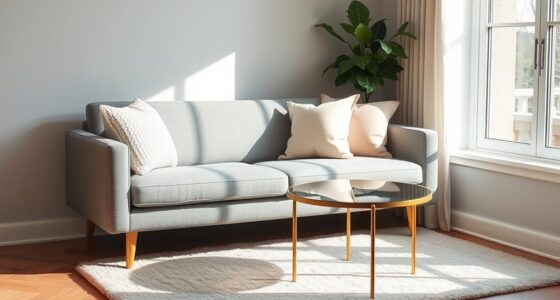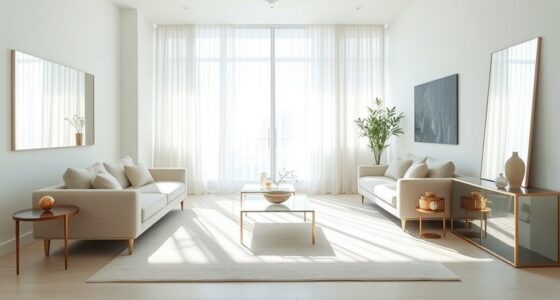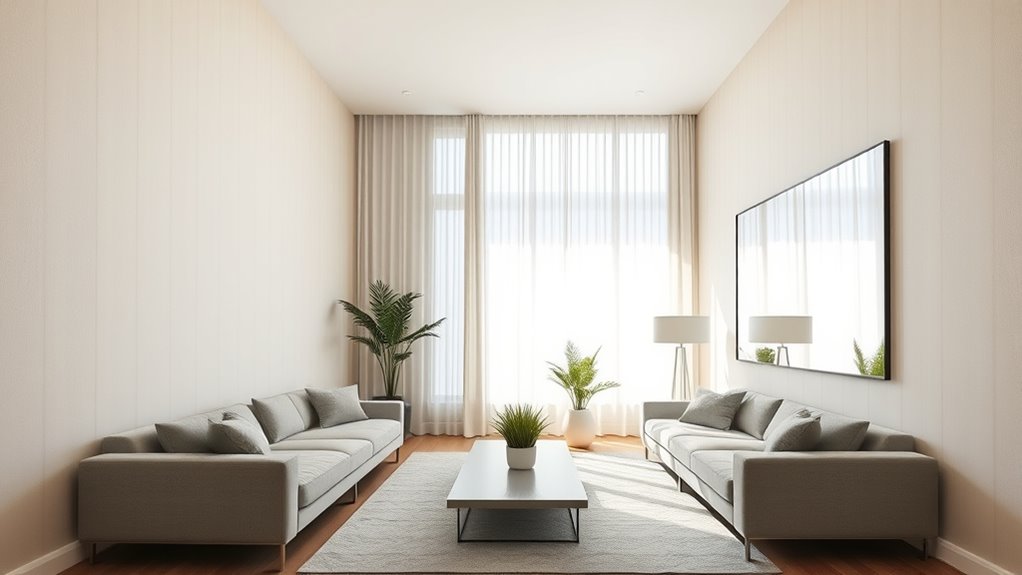

To make your narrow living room feel wider, focus on light, color, and furniture placement. Use light, neutral hues on walls to reflect more light and create an open feel. Keep furniture low-profile and positioned along the walls to maximize space. Incorporate multiple light sources and mirrors to bounce light around the room. Keep decor minimal and use cohesive colors to avoid visual clutter. Continue exploring tips that can transform your space into a more open, inviting area.
Key Takeaways
- Use light, neutral wall colors to reflect more light and create an airy, spacious feel.
- Arrange furniture along the walls and choose sleek, low-profile pieces to maximize open space.
- Incorporate multiple light sources and mirrors to enhance brightness and create the illusion of width.
- Keep decor minimal and cohesive, avoiding clutter that can make the room appear narrower.
- Utilize natural light with sheer curtains and strategic furniture placement to promote flow and openness.
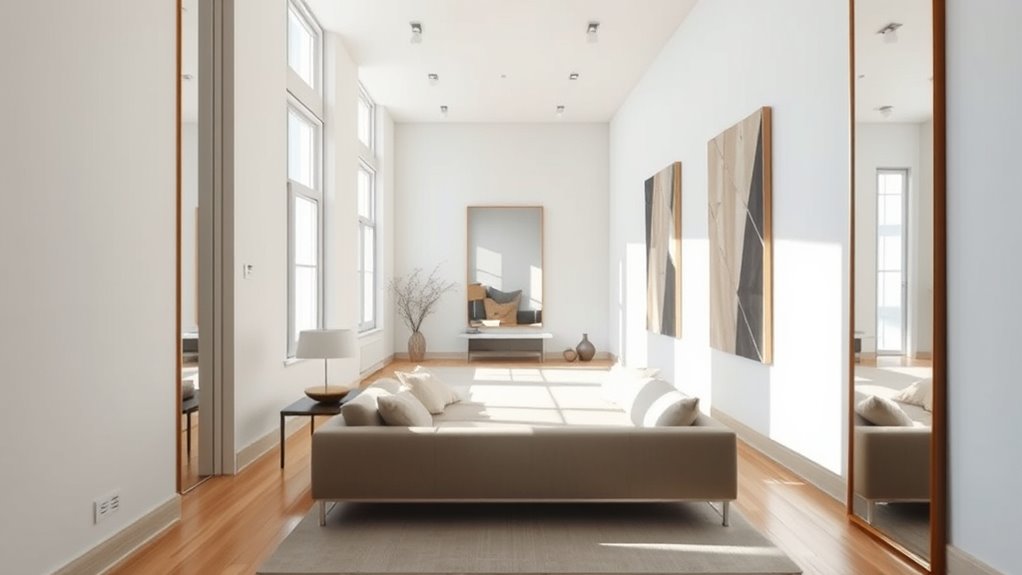
A narrow living room can feel cramped and confined, but with the right design tricks, you can make it appear more spacious. One of the most effective strategies involves choosing the right color schemes. Lighter hues, such as soft whites, pastels, or neutral tones, reflect more light and create an airy vibe that visually expands the space. Avoid dark, heavy colors on the walls, as they tend to absorb light and make the room feel smaller. Instead, consider painting the walls in shades that blend seamlessly with your furniture and decor to minimize visual breaks and create a unified, open look. Incorporating colors that mimic the natural environment, like pale blues or warm beiges, can also make the room feel more inviting and less confined.
Equally important is furniture placement. Proper arrangement helps maximize the available space and prevents the room from feeling cluttered. Start by selecting furniture that’s appropriately scaled; oversized pieces will dominate the space, making it seem even narrower. Opt for sleek, low-profile furniture that doesn’t block sightlines or create visual barriers. Position sofas and chairs along the walls whenever possible, leaving the center of the room open to create a sense of flow and openness. Avoid pushing all your furniture against the walls if it makes the space look disjointed; instead, create small, conversational zones that feel natural and balanced. Use multi-functional pieces, like ottomans with storage or narrow console tables, to save space while adding utility.
Lighting also plays a vital role in making a narrow room feel wider. Incorporate multiple light sources, such as wall sconces, table lamps, and floor lamps, to evenly distribute light throughout the space. Proper lighting can eliminate dark corners and shadows that make a room feel smaller. If possible, maximize natural light by using sheer curtains or blinds that can be easily opened to let in sunlight. Mirrors are another powerful tool—placing a large mirror on one wall reflects light and creates the illusion of depth, doubling the visual space. Additionally, choosing appropriate lighting fixtures can enhance the overall brightness without overwhelming the room.
Frequently Asked Questions
What Are the Best Color Schemes for Narrow Living Rooms?
You should choose light, neutral colors like soft beige, pale gray, or pastel shades to make your narrow living room feel more spacious. Incorporate color contrast with darker accents on trim or furniture to add depth. An accent wall with a subtle pattern or a slightly darker hue can create visual interest without overwhelming the space. Keep the palette simple and cohesive for an open, airy feel.
How Can Furniture Placement Maximize Space in Small Rooms?
You should place furniture against the walls to maximize space, opting for wall-mounted options like shelves or TV units to free up floor area. Use vertical storage to keep clutter off the floor, making the room appear larger. Arrange seating to create clear pathways, and avoid bulky pieces. These strategies help open up your small room, making it feel more spacious and inviting.
Are There Specific Lighting Tips to Create an Illusion of Space?
You can create an illusion of space by using clever lighting techniques like ambient illumination, which softens shadows and brightens the room evenly. Opt for light-colored bulbs and fixtures that disperse light throughout the space, making it feel more open. Strategically placing lamps near walls or across from windows enhances the sense of depth. These subtle touches will brighten your narrow living room and give it a more expansive feel.
What Mirror Styles Work Best to Expand a Narrow Living Area?
You should opt for large, full-length mirrors with sleek frames or wall-to-wall styles to visually expand your space. Position them opposite windows or light sources to reflect natural light and make the room feel brighter. Complement the mirrors with decorative wall art that enhances the sense of depth, and add statement lighting to brighten dark corners, creating an open, airy feel in your narrow living area.
How Can Multi-Functional Furniture Improve a Small Living Room?
Imagine transforming your small living room into a versatile space with multi-functional furniture. You can incorporate space-saving storage options that hide clutter and maximize your area. Flexible seating like ottomans or fold-away chairs adds comfort without sacrificing space. These pieces adapt to your needs, making your room feel larger and more open. With smart furniture choices, you get both practicality and style, creating a cozy yet spacious living environment.
Conclusion
With a few clever tricks, your narrow living room can feel like a gust of fresh air. Think of it as opening a window to let in more light and space. Use light colors, strategic furniture placement, and mirrors to create the illusion of width. Remember, small changes can make a big difference—turning a tight squeeze into a cozy, open space. Soon, you’ll love your room more than ever, feeling like it’s a whole new world.