
To manage shared closet space in a small bedroom, set clear boundaries by designating personal areas using labels or containers. Communicate openly with your partner about organization preferences and be flexible to adapt as needed. Maximize space with vertical storage like wall-mounted shelves and hooks for seasonal or accessory items. Keeping the closet tidy and respecting each other’s space fosters harmony and reduces conflicts. By applying these strategies, you’ll discover even more tips to make the most of your shared closet.

Get home appliances delivered free — and shop member deals
- Fast, free delivery on millions of items
- Access to Prime Big Deal Days deals on October 6–7
- Prime Video, Amazon Music and more included
Key Takeaways
- Designate personal zones within the closet using labels or containers to respect boundaries.
- Use vertical storage like wall-mounted shelves and hooks to maximize limited space efficiently.
- Communicate openly about organization preferences and adjust setups as needed.
- Incorporate solutions like curtains or double hanging rods for visual separation and privacy.
- Regularly reassess and reorganize to maintain tidiness and accommodate changing needs.
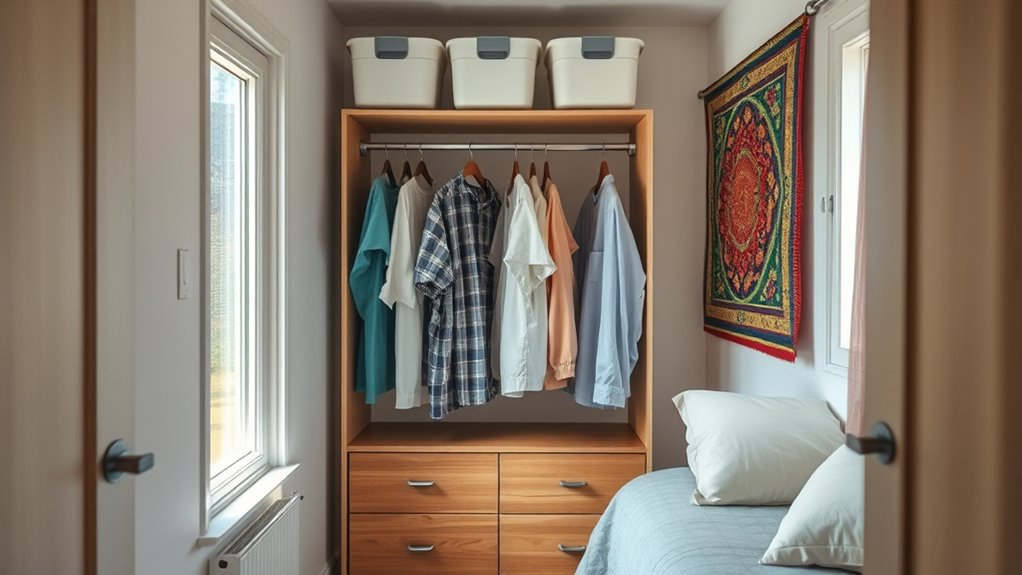
Have you ever found yourself frustrated by the chaos in your closet after moving in with your partner? It’s a common experience, especially when space is limited. Managing shared closet space in a small bedroom requires intentional organization and clear boundaries. The first step is to organize your wardrobe effectively. You’ll want to create designated areas for each of you, whether that’s separate shelves, hanging sections, or drawers. Use storage solutions like bins, dividers, or hanging organizers to keep things tidy and prevent clutter from spilling over. When you assign specific zones for your clothes, it becomes easier to find what you need and avoid accidental cluttering. Plus, it helps both of you respect each other’s belongings, making shared space more harmonious.
Organize your shared closet with designated zones and smart storage to keep things tidy and respectful.
But organizing isn’t just about placement; it’s also about setting privacy boundaries. Even in a shared closet, you should have some personal space where you feel comfortable. You might designate part of the closet as “your side” and the other as “their side,” clearly marking those boundaries with labels or using different storage containers. Respecting these boundaries is essential for maintaining a sense of privacy and trust. If you’re sharing a single closet rod, consider installing a double hanging system or adding a curtain to create a visual separation. This way, each person can access their clothes without feeling like they’re intruding on the other’s space.
Communication is key in establishing these boundaries. Talk openly about what each of you needs and how you prefer to organize your clothing. Maybe one of you likes to keep accessories in a small drawer, while the other prefers hanging everything. Being flexible and open to adjustments will make the process smoother. Regularly reassess your setup to see what’s working and what isn’t. Keeping your wardrobe organized and respecting privacy boundaries helps prevent conflicts and keeps your shared space feeling welcoming for both of you.
Additionally, understanding smart design principles can help maximize storage in small bedrooms. In a small bedroom, every inch counts, so don’t forget to optimize vertical space as well. Use wall-mounted hooks or shelves for out-of-season clothes or accessories to free up room in your closet. By combining smart organization with clear boundaries, you’ll create a shared closet space that works for both of you, even in tight quarters. It might take some trial and error, but with patience and communication, sharing closet space can become a seamless part of your daily routine.
As an affiliate, we earn on qualifying purchases.
Frequently Asked Questions
How Can We Prevent Closet Disagreements?
To prevent closet disagreements, you should openly share accessories and discuss clothing priorities. Set clear boundaries on what each of you keeps in the closet, and regularly review your space together. Keep communication honest and respectful, and consider using storage solutions that maximize space. By respecting each other’s preferences and sharing accessories thoughtfully, you’ll create a more harmonious environment and avoid conflicts over closet space.
What Are Space-Saving Closet Organization Ideas?
You can maximize closet space by using vacuum storage bags for out-of-season clothes, saving room for essentials. Incorporate hanging organizers to keep items neat and easily accessible, especially for shoes and accessories. Install a double-hang rod to double your hanging space or add shelves for folded items. These space-saving closet organization ideas help you keep everything tidy and prevent clutter, making shared storage more manageable in a small bedroom.
How to Divide Closet Responsibilities Fairly?
Did you know 60% of couples struggle with closet responsibilities? To divide duties fairly, set clear rules for clothing rotation and seasonal swapping. Agree on who handles each task, like organizing or laundry, and rotate responsibilities regularly to keep things balanced. Communicate openly about your needs, and consider creating designated sections for each person. This way, both of you share the workload and maintain harmony in your small space.
Can Portable Storage Improve Shared Closet Space?
Yes, portable containers and storage units can substantially improve shared closet space. You can use these portable containers to organize seasonal items or less-used clothes, freeing up closet space. Storage units placed nearby provide extra room for shoes, accessories, or bulky items. They’re easy to move, helping you and your partner keep your belongings tidy without sacrificing valuable closet space, making sharing a small bedroom much more manageable.
How Do We Handle Different Clothing Styles?
To handle different clothing styles, you should focus on clothing coordination that respects both preferences. Communicate openly about your style compromises and find common ground. Divide the closet into sections for each person’s unique clothing, and consider using organizers to keep items separate. This way, you maintain your individual styles while sharing space efficiently, making it easier to navigate your wardrobe without conflicts.
As an affiliate, we earn on qualifying purchases.
Conclusion
Sharing closet space in a small bedroom can feel tricky, but with a little organization, it’s totally doable. Remember, it’s not about perfection but compromise. If you think you’ll never find enough room, try rotating seasonal clothes or using vertical storage. Embrace the challenge together, and you’ll find that your shared closet can actually bring you closer. After all, teamwork makes the dream work—even in tiny spaces!
As an affiliate, we earn on qualifying purchases.
As an affiliate, we earn on qualifying purchases.
Halloween Picks
halloween
As an affiliate, we earn on qualifying purchases.