
To make a long, narrow living room feel spacious, choose light, neutral colors and add subtle accents to reflect light. Use slim, low-profile furniture along the walls to keep the center open and avoid crowding. Incorporate large mirrors to create depth and brighten the space. Position lighting strategically to eliminate shadows and enhance openness. Focus on visual balance and clear pathways. Keep accessories minimal, and you’ll discover more tips to transform your space effectively.
Key Takeaways
- Use light, neutral colors and subtle accents to create an open, airy atmosphere that visually widens the space.
- Position slim-profile furniture along walls and avoid bulky pieces to maintain a sense of flow and openness.
- Incorporate mirrors and layered lighting to reflect light and eliminate shadows, making the room appear larger.
- Define separate zones with furniture arrangements and narrow shelving without physical dividers to preserve spaciousness.
- Keep accessories minimal and choose proportionate decor to prevent visual clutter and enhance the room’s perception of space.

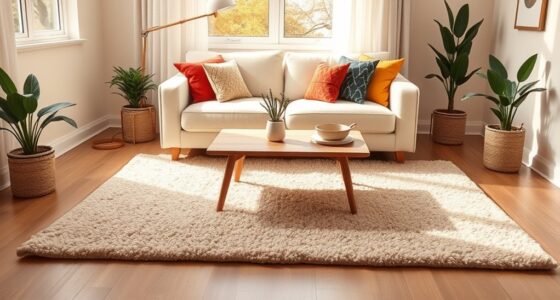
A narrow living room can feel challenging to decorate, but with the right approach, you can turn it into a stylish and functional space. The key lies in choosing the right color schemes and furniture placement that maximize the room’s length without making it feel cramped. Light, neutral colors like soft whites, beiges, or pastels can make the space seem more open and airy. If you want to add a splash of color, opt for subtle accents—think throw pillows or artwork—so the room remains visually expansive. Dark or bold hues tend to close in a narrow space, so it’s best to avoid overwhelming the walls with heavy tones. Instead, create a balanced color palette that reflects light and enhances the room’s perceived width. Incorporating visual balance through symmetry and proportion can further enhance the sense of openness.
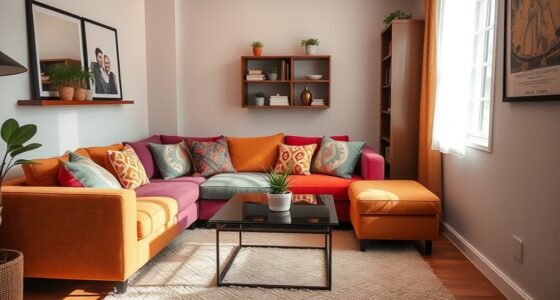
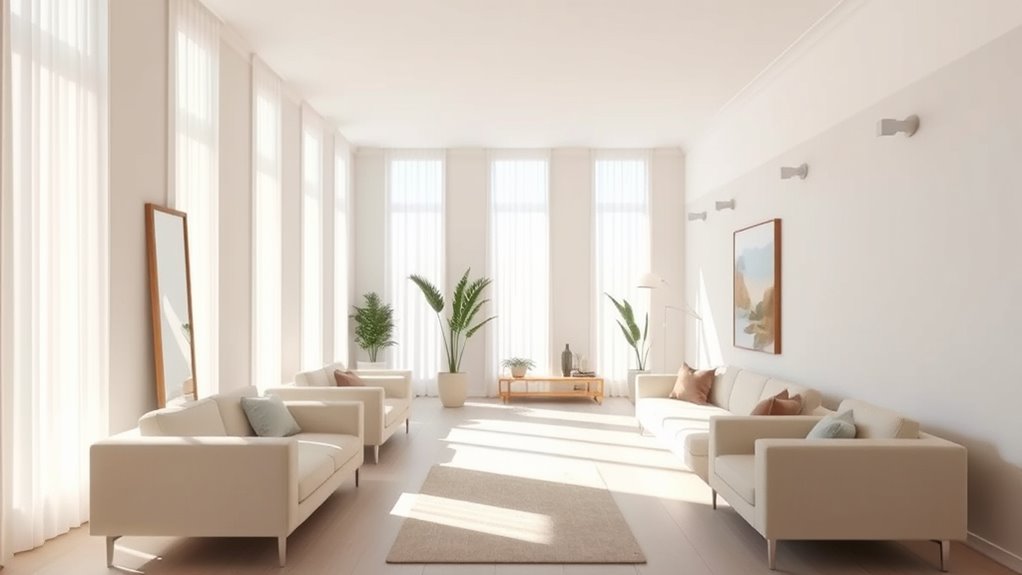
Light, neutral colors and subtle accents can make a narrow living room feel more open and inviting.
When it comes to furniture placement, your goal is to avoid clutter and maintain clear pathways. Start by selecting slim-profile furniture that doesn’t dominate the space. Low-profile sofas and chairs with slender legs help keep the room feeling open. Position your furniture along the walls to free up the center of the room, which creates an illusion of more space. A sectional sofa placed against one wall can define the seating area without breaking up the room’s flow. If you want to add a coffee table, choose a narrow or oval shape, and keep it proportionate to the seating. Avoid bulky furniture or oversized pieces that can make the room feel crowded.
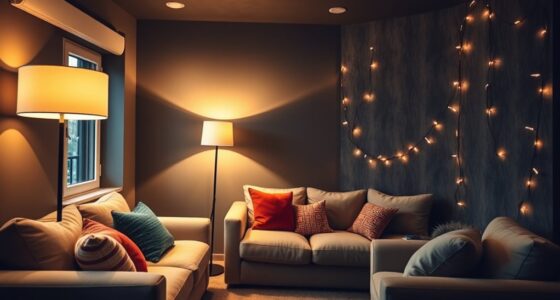
Lighting plays a vital role, too. Use a combination of overhead lighting, floor lamps, and table lamps to brighten every corner. Proper lighting eliminates shadows and makes the room appear larger. Mirrors are another valuable tool; positioning a large mirror on one wall reflects light and gives the illusion of depth, visually expanding the space. Keep accessories and decorative items minimal, focusing on a few statement pieces that enhance the room without cluttering it.
Finally, consider defining zones within the room using furniture arrangements rather than adding physical dividers. For example, position a slim console behind the sofa to create a visual separation from the entry area, or place a narrow bookshelf along one wall as a subtle partition. By carefully planning your color schemes and furniture placement, you’ll craft a narrow living room that feels open, inviting, and stylish. The right choices guarantee you make the most of your space without sacrificing comfort or aesthetic appeal.
Frequently Asked Questions
How Can I Maximize Natural Light in a Narrow Space?
You can maximize natural light in your narrow space by choosing lightweight, sheer curtains that don’t block outdoor views and installing large windows or glass doors. Keep lighting fixtures minimal and unobtrusive to enhance daylight. Position furniture away from windows to avoid blocking light and reflect it around the room with mirrors. This strategy boosts brightness, making your room feel open and airy without feeling cramped.
What Colors Make a Small Room Feel More Open?
Bright, breezy hues boost your room’s openness. Soft whites, gentle beiges, and cool blues create a calming, spacious vibe. Color psychology shows these shades promote relaxation and expand space visually. Use paint techniques like matte finishes or light-reflecting satin to enhance this effect. Light colors bounce light around, making your narrow room feel more airy and inviting. Embrace these tips to transform your space into a stunning, open sanctuary.
How Should Furniture Be Arranged for Better Flow?
Arrange your furniture with sectional placement that promotes a natural traffic pattern, avoiding cluttered pathways. Position the sofa along the longest wall, leaving enough space for easy movement around it. Keep furniture pieces modest in size and space them out evenly to create openness. Use rugs and lighting to define zones without blocking flow. This setup helps maximize space and guarantees smooth, unobstructed traffic flow throughout your narrow living room.
Are There Specific Window Treatments Suitable for Narrow Rooms?
For narrow rooms, vertical blinds work great because they don’t clutter the space and can make windows appear larger. Sheer curtains are also ideal—they add softness without overwhelming the room, letting in natural light and creating an airy feel. You can combine both for versatility; keep the sheer curtains behind the vertical blinds for privacy when needed. These choices help maintain an open, spacious vibe while adding style.
What Storage Solutions Work Best Without Cluttering the Space?
Did you know that clutter can make a small space feel 20% more cramped? To keep your narrow living room organized, opt for hidden storage options like built-in shelves or under-seat compartments. Multi-functional furniture, such as ottomans with storage or sofa beds, helps maximize space without sacrificing style. These solutions keep your room tidy and open, making it feel more spacious and inviting without overwhelming the narrow layout.
Conclusion
By choosing the right colors, furniture, and layout, you can transform your narrow living room into a spacious, inviting space. Remember, about 60% of homeowners find that clever design tricks make small rooms feel much larger. So, don’t be afraid to experiment with vertical storage or light hues. With these tips, you’ll create a stylish, comfortable living area that feels open and welcoming—no cramped feeling necessary.