TL;DR

Get home appliances delivered free with Prime
- Fast, free delivery on millions of items
- Prime Video, Amazon Music and more included
- Member-only deals all year
Apartment Therapy published a dye-transfer removal method after writer Jennifer Billock described turning her husband’s white shirts pink in a mixed laundry load. Cleaning expert Scott Schrader recommends rinsing with cold water, soaking with an oxygen-based color-safe bleach or dye remover, then washing according to the garment’s care label; the article says not to use a dryer until the stain is gone.
Apartment Therapy has published a method for removing dye transfer from clothing, after writer Jennifer Billock described how a maroon sweatshirt turned her husband’s white shirts pink in a shared wash. Cleaning expert Scott Schrader of CottageCare recommends rinsing the affected fabric in cold water, soaking it with an appropriate product, and washing it again without using a dryer until the stain is gone.
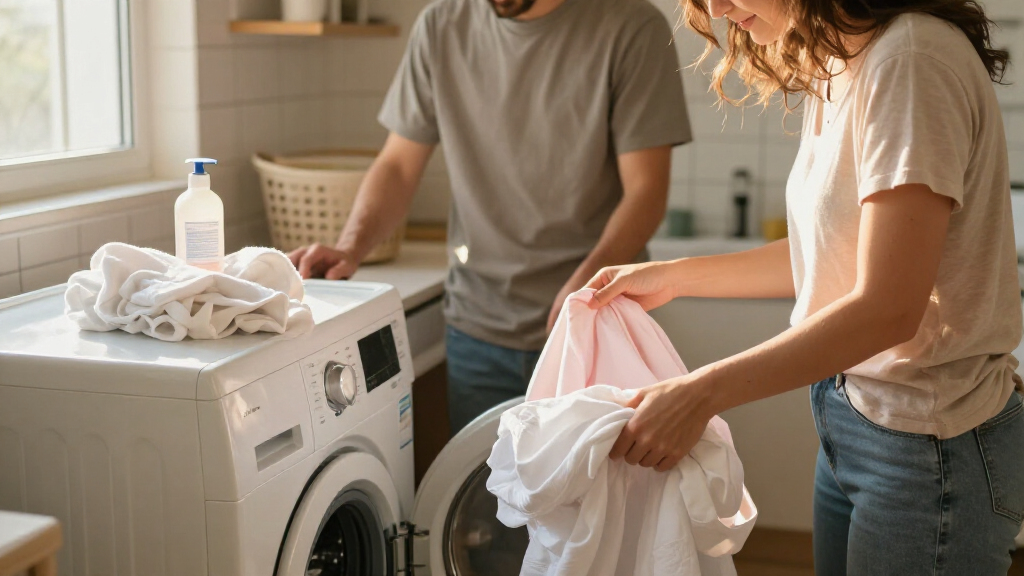
Billock said the color transfer happened during the couple’s first laundry load after moving in together. She washed a maroon sweatshirt with her husband’s new white patterned button-down shirts, believing cold water would prevent the color from running. The shirts emerged with a pinkish-maroon tint. Her account is a personal example; it does not establish how the method will work on every fabric or stain.
Schrader’s instructions begin with an immediate cold-water rinse to remove loose dye. He advises soaking the garment in a solution made with either oxygen-based color-safe bleach—one cup per gallon of water—or a dye remover, mixed according to the amounts in the article. The water should be as hot as the garment’s care label permits. The article recommends soaking for six to eight hours, or overnight for heavier staining.
After soaking, wash the affected item by itself with heavy-duty detergent, using the hottest temperature allowed by its care label. If the color remains, the article says to repeat the soak and wash. Schrader also warns against scrubbing, which he says can push dye further into the fabric, and against drying the clothing before the stain is removed because heat can set it. These are the expert’s recommendations as reported by Apartment Therapy, not a guarantee of results.
Why Heat and Fabric Labels Matter
The advice matters because the next steps can affect whether a stain remains. Apartment Therapy’s account emphasizes avoiding the dryer while dye is still visible and selecting water temperature based on the clothing label. For readers dealing with a fresh transfer, the method offers a sequence to try before heat-drying the garment, which the article says can set the stain.
The approach also puts limits on a common assumption: cold water may not prevent dye from transferring, as Billock’s experience illustrates. The article does not establish that all color bleeding can be reversed. Fabric type, dye, how long the stain has been present, and whether the item has already been dried may all affect the outcome; the source does not provide test results covering those variables.
Products Worth Considering

Ring Battery Doorbell Plus (2nd Gen) with Chime Plus, Nickel Silver and White

Ring Wired Doorbell Plus (2nd Gen) and Chime (3rd Gen), Nickel Silver and White

Blueair Blue Pure 511i Max Smart Air Purifier
As an affiliate, we earn on qualifying purchases.
The Mixed-Load Laundry Mishap
The report combines Billock’s first-person account with practical guidance from Schrader, identified as a cleaning expert at CottageCare. In the incident she described, a maroon sweatshirt and white shirts went into the same load. Billock said her attempts to remove the color did not work before she sought Schrader’s advice.
Apartment Therapy lists oxygen-based color-safe bleach and a dedicated dye remover as alternative products for the soak, alongside heavy-duty detergent for the later wash. It also suggests using color-catcher sheets for people who choose to wash colors and whites together. That suggestion is preventative advice in the article; it is not presented as a substitute for treating clothing that has already picked up dye.
““All of his pristine white shirts were now a fun pastel-ish shade of pinky maroon.””
— Jennifer Billock, Apartment Therapy writer
Results Depend on the Garment
The source does not report whether Schrader’s method removed the dye from Billock’s shirts, nor does it give a measured success rate. It is also unclear how the method performs on different fibers, finishes, or dyes, or on stains that have already been through a hot wash or dryer. Apartment Therapy advises following each item’s care label, but readers may need to check product directions and garment-specific care instructions before soaking.
Repeat Treatment Before Drying
According to the published instructions, readers should inspect the clothing after washing and, if dye remains, repeat the soak and wash rather than putting the item in the dryer. The article provides no further update on Billock’s shirts or on whether she tried the expert’s recommended products. For future mixed loads, it suggests color-catcher sheets, while noting the central precaution for an active stain: keep the garment out of the dryer until the color is gone.
Key Questions
What should I do first if dye transfers onto clothing?
Rinse the stained fabric in cold water to remove loose dye, then follow a treatment suited to the garment’s care label, according to the method reported by Apartment Therapy.
How long should the garment soak?
The article recommends six to eight hours, or overnight for heavier stains. Use water no hotter than the garment’s care label allows.
Can I put the clothing in the dryer after washing?
Not if the stain is still visible. Schrader’s advice, as reported by Apartment Therapy, is to avoid drying until the dye is gone, since heat can set the stain.
What if the dye stain remains after the first treatment?
The article says to repeat the soaking and washing process, keeping the item out of the dryer while the stain remains.
Does cold water stop colors from bleeding?
Billock believed cold water would prevent transfer, but her mixed load still stained the white shirts. Her experience shows that cold water is not a guarantee against dye transfer.
Source: apartmenttherapy.com