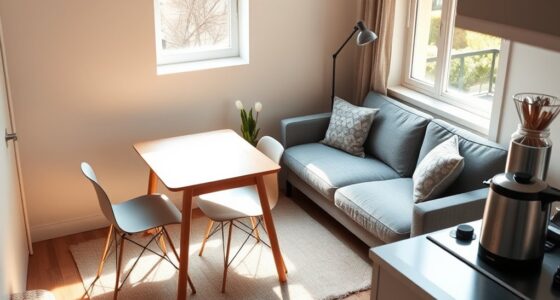
When adopting a pet in a small space, consider their size, activity level, and grooming needs to guarantee they fit comfortably. Create designated zones for eating, sleeping, and playing to keep your home organized. Use vertical space with shelves and clever storage solutions to maximize room. Establish routines and consistent training to help your pet feel secure and reduce messes. Keep their environment cozy and manageable, and you’ll foster a happy coexistence—if you keep exploring, you’ll find more helpful tips.
Key Takeaways
- Choose a small, low-maintenance pet suited for limited living spaces.
- Implement consistent routines and designated zones to promote good behavior.
- Maximize space with vertical storage and multi-functional furniture.
- Incorporate regular play and training to manage energy and prevent destructive behavior.
- Ensure the environment is safe, clean, and fosters pet well-being within your home.

Thinking about bringing a pet into your small space? It’s an exciting decision, but it also requires careful planning to guarantee both you and your new furry friend thrive. In a compact environment, pet training becomes essential—not just to teach your pet good behavior, but also to help optimize your limited space. Proper training minimizes messes and disruptions, making your home more livable and enjoyable. Start with consistent routines, clear commands, and patience. This approach helps your pet understand boundaries and reduces destructive tendencies. For small spaces, crate training or designated areas can be game changers. These spots become safe zones for your pet and help you maintain order. Creating calm environments is also key to supporting your pet’s well-being in a small space.
Space optimization is also vital. In tight quarters, every inch counts, so think vertically as well as horizontally. Use wall-mounted shelves, tall storage units, and furniture with built-in compartments to free up floor space. Collapsible bowls, foldable beds, and multi-purpose furniture can help you keep the area uncluttered. When selecting a pet, consider their size, activity level, and grooming needs to match your space. Small, low-maintenance animals like cats or small dogs often adapt better to confined environments than larger or high-energy pets. Keep in mind that your pet’s needs should align with what your space can comfortably support.
Creating designated zones within your home can also improve space optimization. Set aside specific areas for eating, sleeping, and play. This not only helps your pet feel secure but also encourages good habits. For example, having a dedicated sleep corner keeps the rest of your home organized and prevents your pet from wandering into inappropriate spaces. Regularly cleaning and decluttering your home contributes to a healthier environment for everyone. Incorporate storage solutions that hide away toys, leashes, and other pet accessories to prevent clutter buildup.
Finally, think about how your pet’s presence influences your daily routines. Adjust your schedule to include regular playtime and walks, which help burn off energy and reduce behavioral issues. Incorporate training sessions into your day to reinforce good habits and guarantee your pet learns to adapt to your living space. Remember, adopting a pet in a small space isn’t just about fitting them into your home—it’s about creating a harmonious environment where both of you can comfortably coexist. With intentional pet training and space optimization, you’ll find that your small home can become a cozy, functional haven for you and your new companion.
Frequently Asked Questions
How Do I Ensure My Pet Gets Enough Exercise in a Small Space?
To guarantee your pet gets enough exercise in a small space, you should use interactive toys to keep them mentally and physically active. Incorporate vertical space, like shelves or climbing trees, to expand their environment and encourage movement. Play regularly with your pet, rotating toys to keep them engaged. Short, frequent play sessions help prevent boredom and promote healthy activity, making the most of your small space.
What Are the Best Pet Breeds for Limited Living Areas?
Did you know that small dog breeds make up nearly 40% of pets in urban homes? For limited living areas, space-efficient pets like French Bulldogs, Dachshunds, or Pugs are ideal, offering great companionship without requiring much room. These breeds are known for their adaptability and lower activity needs, making them perfect choices for small spaces. Focus on pet breed suitability to guarantee your new furry friend thrives comfortably in your home.
How Can I Prevent My Pet From Feeling Lonely?
To prevent your pet from feeling lonely, prioritize pet companionship and social interaction. Spend quality time with your pet daily, engaging in play and cuddling. Consider adopting a second pet if feasible, as they can provide mutual companionship. Use interactive toys and provide a cozy space for your pet to relax. Regular visits to the park or pet-friendly outings also boost social interaction, helping your pet feel loved and connected.
What Safety Hazards Should I Watch for in Small Homes?
Think of your small home as a delicate garden needing vigilant care. You should pet-proof tips like securing cords, removing small objects, and blocking access to toxic plants to prevent hazards. Regularly check for hazard prevention—cover electrical outlets, secure cabinets, and keep sharp items out of reach. This way, you protect your pet from accidental injuries, creating a safe space where they can explore freely without risking harm.
How Do I Manage Pet Noise Levels in Close Quarters?
To manage pet noise levels in close quarters, focus on noise control and soundproofing. Use rugs, curtains, and wall hangings to absorb sound, reducing noise transmission. Establish a calm routine for your pet to minimize barking or vocalizing. Consider training techniques to curb excessive noise, and if needed, use white noise machines to mask sounds. These steps help create a peaceful environment without disturbing your neighbors or fellow household members.
Conclusion
Adopting a pet in a small space can be rewarding, but it requires careful planning. Did you know that 65% of small apartment pet owners report their pets thrive with proper enrichment and space management? By creating a cozy, stimulating environment and understanding your pet’s needs, you can enjoy a happy, healthy relationship. Remember, the right choices today guarantee a loving companionship that fits perfectly into your small space.