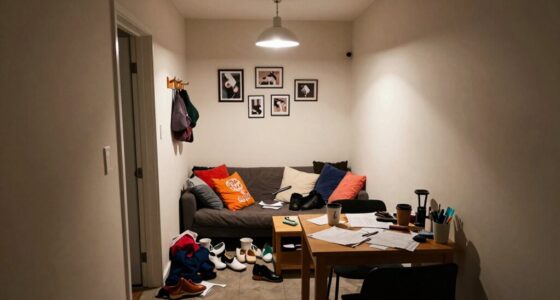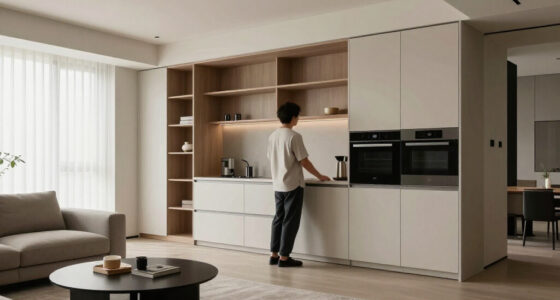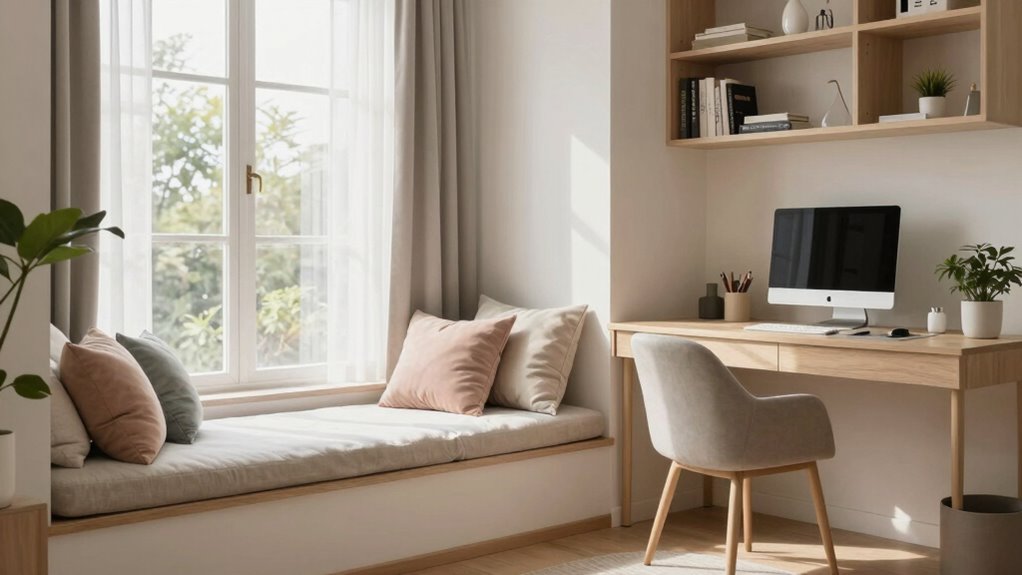

To reduce stress in multi-use rooms, start by creating clear zones for work, relaxation, and chores using furniture and organization. This helps your brain switch gears easily and minimizes clutter and confusion. Manage noise by sealing gaps, adding curtains, or using sound-absorbing elements like rugs or acoustic panels. Keeping these areas distinct and quiet promotes calm and focus. If you want to learn more tips on transforming your space for better well-being, keep exploring these strategies.

Get home appliances delivered free with Prime
- Fast, free delivery on millions of items
- Prime Video, Amazon Music and more included
- Member-only deals all year
Key Takeaways
- Create designated zones for work, relaxation, and chores to minimize mental clutter and promote focused activity.
- Use furniture and layout to clearly define boundaries between different room functions.
- Implement soundproofing techniques like sealing gaps and adding acoustic panels to reduce noise distractions.
- Incorporate calming sounds or white noise to mask external and internal noise, enhancing tranquility.
- Maintain organized storage for each zone to foster a sense of control and reduce overall stress.
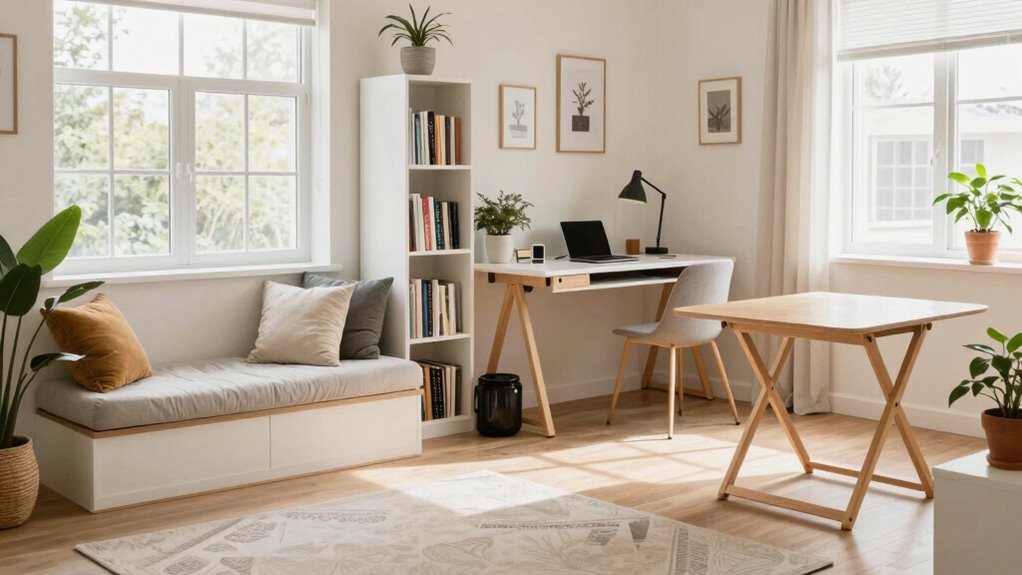
Balancing multiple functions in a single room can quickly become overwhelming, especially when clutter and noise blur the boundaries between work, relaxation, and daily chores. To regain a sense of control, start by creating designated zones within your space. Clear boundaries help your brain switch between different activities more easily. For example, carve out a specific corner as your work area, with a desk, ergonomic chair, and minimal distractions. Dedicate another space for relaxation, like a cozy reading nook or a comfy sofa, free from work-related items. By establishing these zones, you signal to yourself that certain parts of the room are meant for specific purposes, which can reduce mental clutter and stress.
Create designated zones to reduce clutter, noise, and stress, helping your space and mind stay organized and calm.
Incorporating soundproofing into your room is another effective way to manage stress. Noise pollution can interfere with your focus and relaxation, making it harder to unwind after a busy day. Simple measures like sealing gaps around windows and doors, adding thick curtains, or installing acoustic panels can markedly dampen external sounds. For added privacy and noise control, consider using rugs or carpets to absorb sound within the room. If possible, invest in white noise machines or calming background sounds, which can mask distracting noises and create a more peaceful environment. Soundproofing not only minimizes disturbances from outside but also helps contain the noise generated inside your space, maintaining a calmer atmosphere. Incorporating soundproofing techniques can significantly enhance your room’s tranquility and your overall well-being. Additionally, exploring acoustic treatments can further improve sound absorption and reduce echo, making your space even more calming. Creating a dedicated zone within your room for specific activities can also boost your mental clarity and reduce stress.
soundproof acoustic panels for rooms
As an affiliate, we earn on qualifying purchases.
As an affiliate, we earn on qualifying purchases.
Frequently Asked Questions
How Can I Organize Multi-Use Rooms Effectively?
You can organize multi-use rooms effectively by implementing room zoning to designate specific areas for each activity, which helps create clear boundaries. Establish personal zones within the space to give everyone a sense of privacy and control. Use furniture, rugs, or color schemes to differentiate zones visually. Keep clutter minimal in each zone, and regularly reassess the layout to guarantee it continues to meet your needs, reducing stress and enhancing functionality.
What Are Quick Stress-Relief Techniques for Busy Spaces?
When your busy space feels overwhelming, try quick stress-relief techniques like mindful breathing and quick meditation. Take a few deep breaths, focusing on your inhale and exhale to center yourself. Even a minute or two of quiet meditation can calm your mind amid chaos. These simple practices help you regain focus, reduce stress, and create a moment of calm, no matter how hectic your multi-use rooms become.
How Do I Set Boundaries in Shared Rooms?
You set boundaries in shared rooms by establishing privacy zones and communicating your personal boundaries clearly. Use furniture, curtains, or screens to create designated areas for work or relaxation, signaling that those spaces are off-limits for others. Talk openly with housemates or family members about your needs, and remind them respectfully when boundaries are crossed. Consistent, clear boundaries help reduce stress and create a more harmonious shared environment.
What Decor Tips Help Create a Calming Environment?
To create a calming environment, choose soothing color palettes like soft blues, greens, or neutrals that promote relaxation. Incorporate natural elements such as plants, wooden accents, or stone decor to bring a sense of tranquility and connection to nature. Keep clutter minimal and add cozy textures like plush rugs or cushions. These decor tips help you foster a peaceful space, even when your rooms serve multiple purposes.
How Can I Incorporate Storage to Reduce Clutter?
They say, “A place for everything, and everything in its place,” and that’s key to clutter management. You can incorporate smart storage solutions like multi-functional furniture, hidden compartments, and labeled bins to keep clutter out of sight. Use vertical space with wall-mounted shelves, and prioritize organizing by room zones. These strategies help you maintain a tidy, stress-free environment, even when spaces serve multiple purposes.
white noise machine for relaxation
As an affiliate, we earn on qualifying purchases.
As an affiliate, we earn on qualifying purchases.
Conclusion
Remember, a cluttered space often equals a cluttered mind. When every room serves multiple purposes, it’s easy to feel overwhelmed. Keep things organized, set boundaries, and create designated zones for work and relaxation. Regularly declutter and establish routines to maintain peace. As the saying goes, “A place for everything, and everything in its place.” By doing so, you’ll reduce stress and turn your home into a sanctuary, even with multi-use rooms.
room zoning furniture for multi-use spaces
As an affiliate, we earn on qualifying purchases.
As an affiliate, we earn on qualifying purchases.
noise reducing curtains for bedrooms
As an affiliate, we earn on qualifying purchases.
As an affiliate, we earn on qualifying purchases.
Halloween Picks
halloween
As an affiliate, we earn on qualifying purchases.