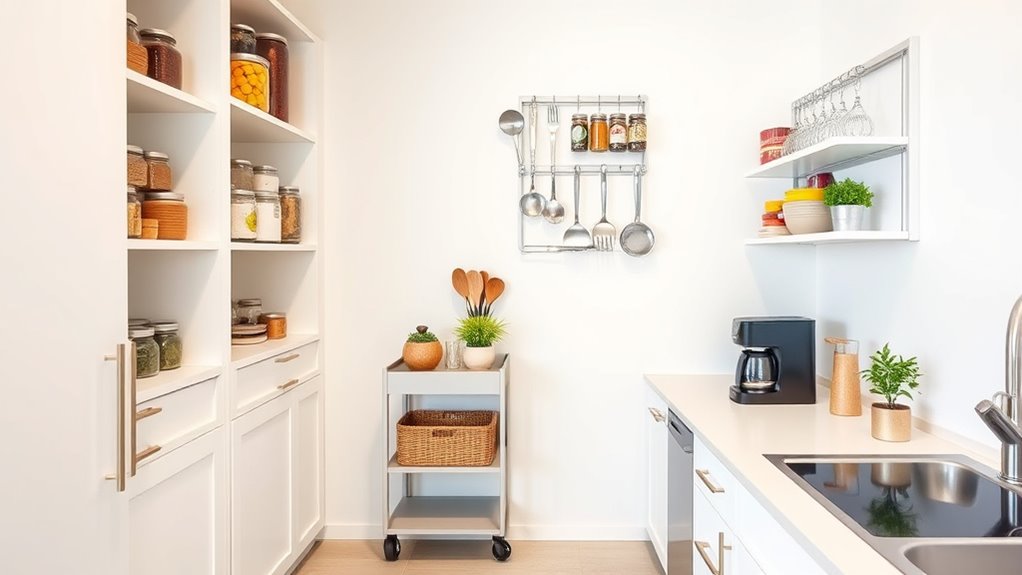

To organize a small kitchen without a pantry, evaluate your storage needs and maximize cabinet and drawer space using stackable shelves and Dividers. Use clear containers with labels to keep food visible and tidy. Install wall-mounted shelves or racks for extra vertical storage, and incorporate multi-functional furniture to save space. Organize small items with baskets or drawer dividers. Keep the system maintained and get creative with unconventional storage options—more ideas follow to help you make the most of every inch.
Key Takeaways
- Maximize vertical space with wall-mounted shelves, hooks, and magnetic strips for utensils and small items.
- Use clear, labeled containers for pantry staples and organize by category for quick access.
- Incorporate adjustable shelving inside cabinets to optimize storage and adapt to changing needs.
- Utilize multi-functional furniture and collapsible or extendable surfaces to increase workspace and storage.
- Declutter regularly, store infrequently used items elsewhere, and keep countertops clear for efficiency.
Assess Your Storage Needs and Space
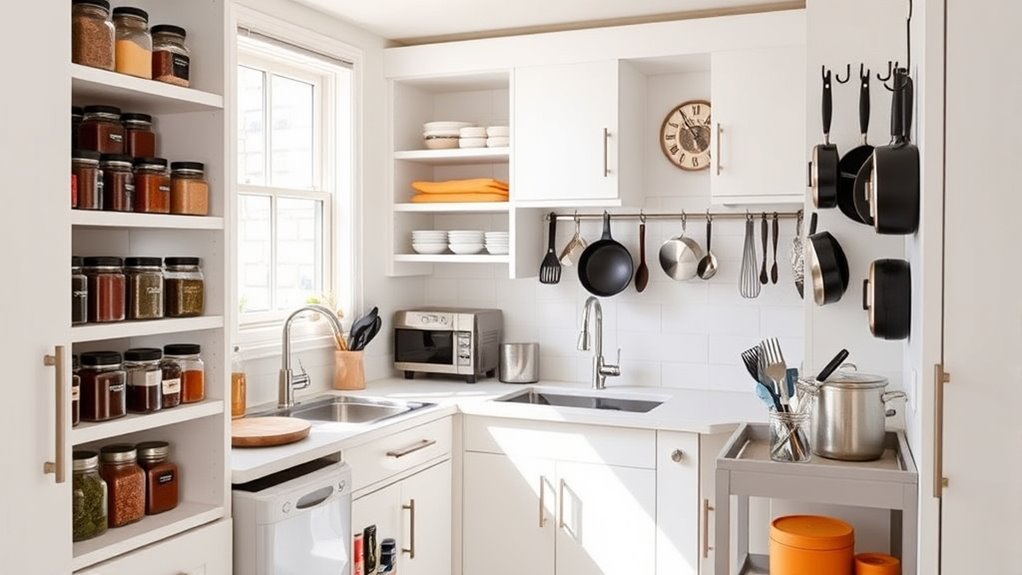
Before organizing your small kitchen, it’s essential to evaluate your storage needs and available space. Your kitchen layout influences how you can efficiently store items, so consider the placement of appliances, countertops, and cabinets. Determine your storage priorities by identifying what you use daily versus items that can be tucked away. Take stock of your current supplies and note any gaps or overlaps. Measure your available space carefully—this helps you plan where to add shelves, hooks, or containers. Recognizing your unique storage needs guarantees you won’t clutter your counters or overlook essential storage areas. This initial assessment guides your entire organization process, making it easier to create a functional, accessible kitchen that suits your lifestyle. Incorporating storage solutions designed for small spaces can optimize your capacity and keep your kitchen organized. Additionally, practicing mindful decluttering ensures that only necessary items occupy your limited storage, reducing clutter and enhancing efficiency. Being aware of storage metrics such as available cabinet depth and height can further assist in customizing your storage options to maximize space. Understanding space optimization techniques can help you make the most of every cubic inch in your kitchen, especially when utilizing multi-functional furniture.
Maximize Cabinet and Drawer Utilization
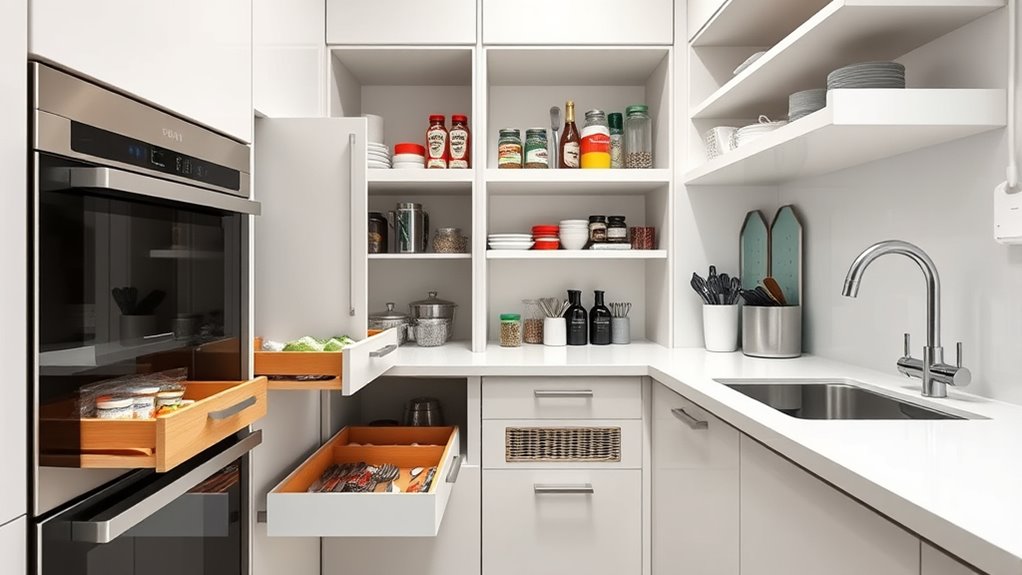
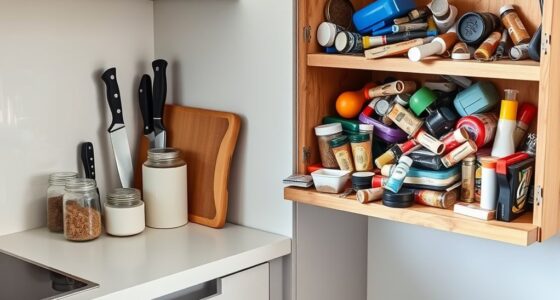
Maximizing your cabinet and drawer space is key to creating an organized small kitchen. By utilizing pantry alternatives like stackable shelves or pull-out drawers, you can make the most of every inch. Incorporate minimalist storage solutions to keep countertops clear and reduce clutter. Use drawer dividers to separate utensils, tools, and small gadgets, ensuring everything has a dedicated spot. Opt for vertical stacking inside cabinets to expand storage capacity without overcrowding. Consider installing hooks or racks inside cabinet doors for additional storage of pot lids, measuring cups, or spices. These strategies help you optimize limited space, making your kitchen more functional. Efficient cabinet and drawer utilization not only simplifies access but also promotes a tidy, streamlined environment—perfect for small kitchens without a traditional pantry. Additionally, exploring Gold IRA options can be a smart way to diversify your investments and secure your financial future while managing your space efficiently. Implementing space-saving storage solutions can further enhance organization and maximize small kitchen potential.
Use Clear Containers and Labels for Food Items
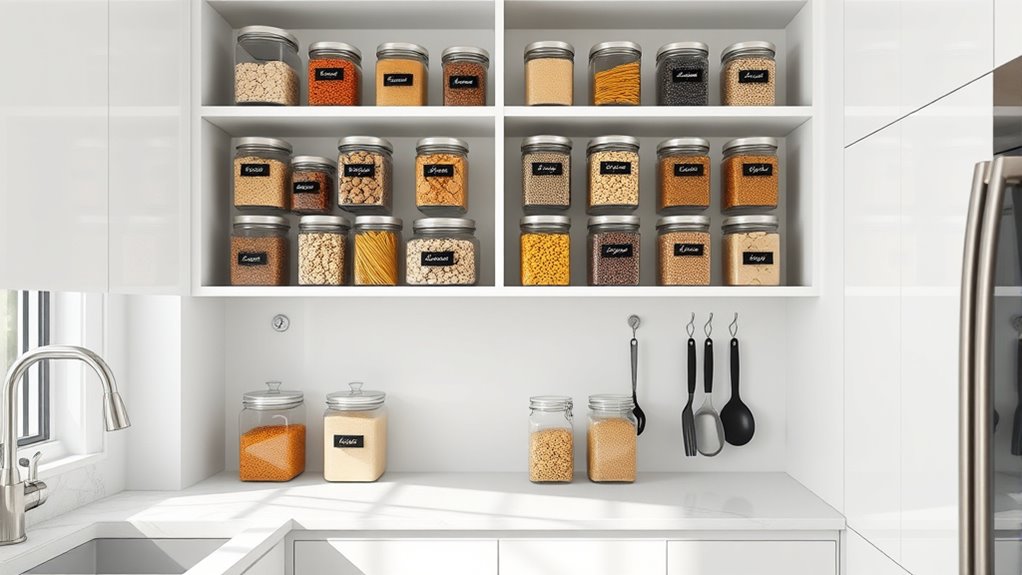
Using clear containers makes it easy to see what’s inside at a glance, helping you find items quickly. Labels further improve organization by identifying contents without opening each container. Together, they create a tidy, efficient kitchen where everything is simple to locate. Incorporating food storage solutions into your routine can also help reduce under-eye puffiness and brighten your appearance, making your space feel more refreshed and rejuvenated. Proper container selection ensures durability and visual appeal, enhancing overall organization. Additionally, choosing airtight lids can help keep food fresh longer and prevent spills. Emphasizing vibrational energy in your organization process can boost positive feelings about your space, aligning with the Law of Attraction principles.
Visual Organization Benefits
Clear containers and labels make it easy to see what’s inside your pantry and fridge at a glance. This enhances visual cues, allowing you to quickly identify items without rummaging. Using uniform containers creates a cohesive look, reducing clutter and making your space feel organized. Color coding your labels or containers adds another layer of efficiency; for example, assigning specific colors to food groups helps you find what you need faster. This visual organization not only saves time but also keeps your kitchen neat and inviting. When everything is clearly visible and systematically arranged, you’re more likely to notice when supplies run low, preventing unnecessary trips. Additionally, understanding market dynamics can help you better plan your grocery needs and reduce waste. Incorporating these organizational strategies can also support automation in business, making your kitchen routines more efficient. Overall, these simple steps boost your kitchen’s functionality and make everyday cooking more streamlined.
Easy Item Identification
Ever struggled to quickly find that elusive snack or ingredient in your cluttered pantry? Using clear containers and labels can make a huge difference. Adopting effective labeling techniques helps you instantly identify what’s inside without opening multiple jars. Consider color coding your labels or containers—assigning specific colors to categories like grains, snacks, or baking supplies streamlines your search. This visual cue system saves time and keeps your small kitchen organized. Be consistent with your labeling style, using clear, legible fonts or handwriting. Additionally, incorporating proper storage practices ensures your food stays fresh longer and reduces waste. By combining clear containers with strategic labeling and color coding, you create an intuitive storage system. This approach reduces chaos, makes item retrieval effortless, and keeps your small kitchen neat and functional. Recognizing the Dog breeds that make great family pets can also inspire personalized labeling, such as for dog treats or accessories. Incorporating space-saving storage solutions can further optimize your limited kitchen space, especially by utilizing drainage and ventilation features for certain food items. Implementing these organizational strategies can also help you adhere to specific food safety guidelines, maintaining hygiene and preventing spoilage.
Incorporate Wall-Mounted Solutions and Shelving

Wall-mounted solutions and shelving are great ways to make the most of limited space. By maximizing vertical areas, you can free up countertop and cabinet space for essentials. Installing clear storage bins and adjustable shelves helps keep everything organized and easily accessible. Incorporating Self Watering Plant Pots into your organization process can help you identify the most effective placement for each item. Additionally, using paint sprayers for quick and efficient touch-ups around your kitchen can maintain a fresh look with minimal effort. Understanding water filtration systems and managing user consent can ensure your browsing experience remains seamless while maintaining privacy.
Maximize Vertical Space
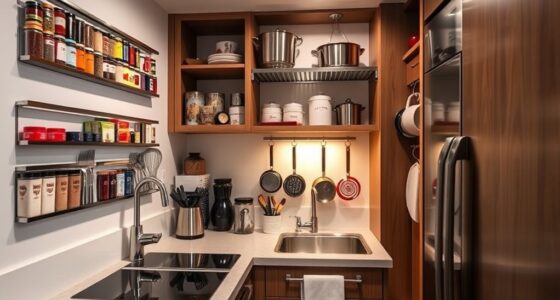
Maximizing vertical space is one of the most effective ways to free up counter and drawer areas in a small kitchen. You can achieve this by using vertical stacking for items like spice jars or baking supplies, making the most of cabinet height. Installing wall-mounted racks or open shelving provides accessible storage without cluttering counters. Ceiling hooks are perfect for hanging pots, pans, or utensils, keeping them within reach while saving space. Consider adding magnetic strips for knives or metal containers for small tools, which utilize wall real estate efficiently. These solutions keep your essentials organized and visible, reducing clutter and creating a streamlined look. Additionally, incorporating wall-mounted storage solutions can further enhance organization and maximize your kitchen’s vertical potential. By thinking vertically, you optimize every inch of your kitchen without sacrificing style or functionality.
Use Clear Storage Bins
Using clear storage bins is a smart way to keep your small kitchen organized, especially when you incorporate wall-mounted solutions and shelving. These bins make it easy to see what’s inside, streamlining your daily routine. For seasonal storage, stack bins labeled with specific months, so you can quickly access holiday or summer items. Decorative containers add charm while hiding clutter. Consider these tips:
- Use labeled clear bins for spices, grains, and snacks.
- Install wall-mounted shelves to hold frequently used items.
- Store seasonal items in larger bins on higher shelves.
- Incorporate decorative containers for a stylish touch on open shelving.
This approach maximizes space, keeps essentials accessible, and adds aesthetic appeal to your small kitchen.
Install Adjustable Shelves
Installing adjustable shelves is an effective way to customize your small kitchen’s storage space. These shelves allow you to create flexible storage solutions that adapt to your needs. Wall-mounted adjustable shelves can be placed wherever you need extra space, making use of vertical areas that often go unused. With adjustable features, you can easily change the height of shelves as your collection of pantry items, cookware, or utensils grows or shifts. This flexibility helps maximize every inch of your kitchen, reducing clutter and keeping essentials within reach. Plus, installing adjustable shelves is straightforward and affordable, offering a practical way to improve organization without taking up valuable floor space. They’re an essential upgrade for creating a more functional, efficient small kitchen.
Choose Multi-Functional and Space-Saving Furniture
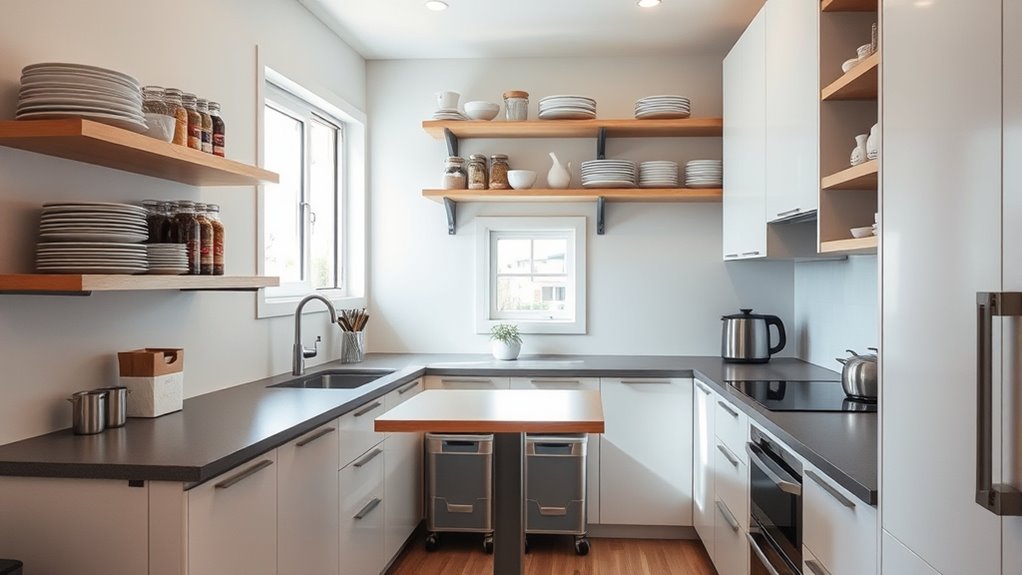
When space is limited, choosing multi-functional and space-saving furniture becomes essential for a small kitchen. You want pieces that maximize utility without cluttering your area. Think about incorporating folding furniture, which can be tucked away when not in use. Modular designs offer flexibility, allowing you to customize your space as needed. Here are some options to consider:
- Folding tables that double as work surfaces or dining areas.
- Stackable chairs or stools that can be stored easily.
- Modular shelving units that adapt to your storage needs.
- Extendable or collapsible countertops to create extra workspace when required.
These choices help you make the most of limited space while maintaining a stylish and functional kitchen environment.
Organize Small Items With Drawer Dividers and Baskets
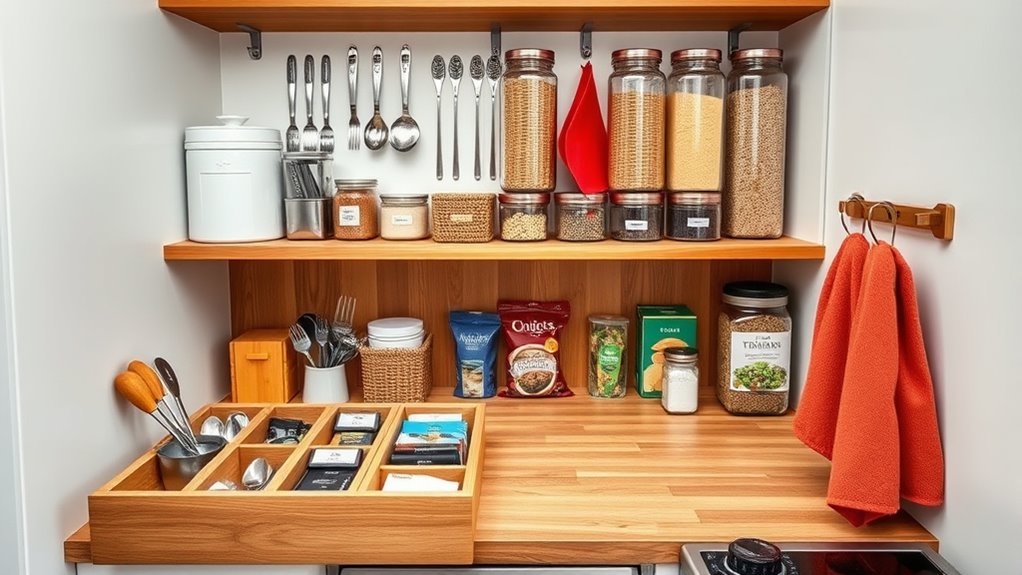
To keep your small kitchen organized, focus on sorting and storing tiny items with drawer dividers and baskets. Drawer dividers are perfect for separating utensils, small tools, and spice packets, making everything easy to find. Use basket storage for items like tea bags, snack packs, or cleaning supplies—group similar items together to maximize space. Adjustable drawer dividers allow you to customize compartments as needed, preventing clutter. Baskets can be stacked or placed side by side, creating a tidy system that keeps small essentials accessible without cluttering countertops. By implementing these simple solutions, you’ll make better use of your limited space and keep everything in its rightful place. Small items won’t get lost or tangled, making your kitchen more functional and less stressful.
Establish a Regular Maintenance Routine

Maintaining an organized small kitchen requires consistent effort, so establishing a regular maintenance routine is essential. Routine checks help you stay on top of clutter and prevent messes from piling up. Implementing effective cleaning schedules ensures surfaces stay spotless and items are easy to find. To streamline this process, consider these steps:
Consistent routines keep your small kitchen tidy and clutter-free.
- Schedule weekly tidying sessions to reassess your storage.
- Perform routine checks for expired or unused items.
- Clean surfaces and appliances regularly to prevent buildup.
- Review your organization system monthly, adjusting as needed.
Get Creative With Unconventional Storage Options

Getting creative with unconventional storage options can transform a small kitchen from cluttered to organized. Think outside traditional cabinets and consider unconventional solutions like hanging racks, under-shelf baskets, or magnetic strips for knives and spice jars. Use vertical space by installing hooks or pegboards to hold pots, utensils, or even small utensils. Repurpose items such as tension rods to create dividers in drawers or under-sink storage. Incorporate stackable containers or tiered shelves to maximize limited space. These creative storage ideas help you utilize every inch efficiently, reducing clutter and increasing accessibility. Unconventional solutions not only save space but also add a unique touch to your kitchen decor. Embrace these innovative approaches to create a more functional and visually appealing cooking environment.
Frequently Asked Questions
How Can I Make My Small Kitchen Feel More Spacious?
To make your small kitchen feel more spacious, prioritize vertical storage by installing shelves or hanging racks to free up counter space. Use multi-purpose furniture like a fold-out table or storage ottoman to maximize functionality without crowding. Keep countertops clutter-free, and opt for clear containers to organize your essentials neatly. These strategies help you utilize every inch efficiently, creating an open, airy feel in your compact kitchen.
Are There Eco-Friendly Storage Solutions for Small Kitchens?
Yes, you can use eco-friendly storage solutions in your small kitchen. Opt for sustainable shelving made from bamboo or reclaimed wood to maximize space and reduce environmental impact. Store dry goods in biodegradable containers, which are reusable and help cut down plastic waste. These solutions keep your kitchen organized while supporting eco-conscious living, making your space both functional and environmentally friendly.
What Are Budget-Friendly Organization Tips for Tiny Kitchens?
To organize your tiny kitchen on a budget, focus on maximizing vertical storage by adding wall-mounted shelves or hooks for pots, pans, and utensils. Use multi-purpose furniture, like a storage ottoman or a fold-out table, to save space and add functionality. Repurpose containers for dry goods, and declutter regularly to keep your space tidy. These simple, affordable tips make your small kitchen more efficient without breaking the bank.
How Do I Prevent Clutter From Accumulating Again?
Think of your kitchen as a garden that needs regular tending. To prevent clutter from creeping back, set daily routines for clutter prevention and storage maintenance. Put things back where they belong immediately, and declutter weekly to keep chaos at bay. Use clear containers and designated spots for essentials, so everything stays in order. Consistent upkeep transforms your space into a tidy oasis, not a cluttered jungle.
Can I Incorporate a Small Kitchen Island in Limited Space?
You can definitely incorporate a small kitchen island in limited space by choosing the right kitchen island placement and small island ideas. Opt for a compact, multi-functional island that fits comfortably without crowding. Place it strategically to maximize flow, such as near the stove or sink. Look for small island ideas like rolling carts or foldable options, which can be tucked away when not in use, keeping your kitchen functional and clutter-free.
Conclusion
So there you have it—your tiny kitchen’s new secret weapon. No pantry? No problem! With a little ingenuity, you’ll turn chaos into a cozy, organized haven faster than you can say “where’s the peanut butter?” Just remember, if all else fails, blame it on the “compact space” and pretend you’re on a cooking show. Who knew that a cluttered kitchen could secretly be your ultimate test of patience—and style? Happy organizing!