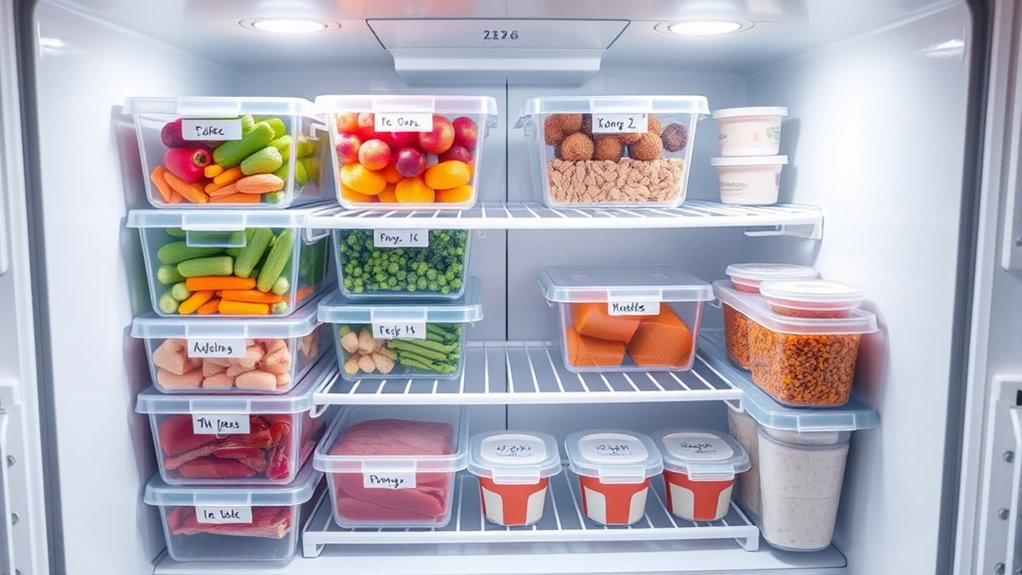
To make the most of your small freezer or icebox, organize with stackable, clear, and airtight containers for easy visibility and access. Use separate zones for vegetables, meats, and prepared meals, and store frequently used items at the front. Freeze flat items in bags to save space and label everything with dates. Regularly review and discard expired items to prevent clutter. Keep discovering more tips to optimize your freezer efficiently.
Key Takeaways
- Use stackable, airtight, freezer-safe containers to maximize vertical space and keep items organized.
- Dedicate specific zones for different food types, like vegetables or meats, to streamline access.
- Label containers with contents and freezing dates for quick identification and rotation.
- Incorporate vertical storage solutions like risers and stacking bins to optimize limited space.
- Regularly review and discard expired or unused items to prevent clutter and maintain efficiency.
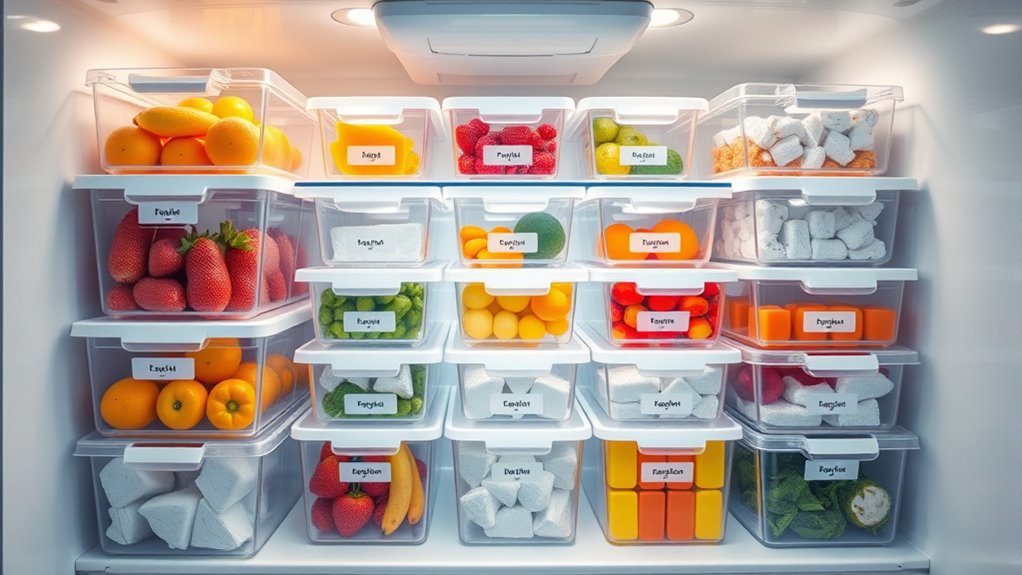
Ever wonder how to maximize your freezer space and keep everything easily accessible? If you’re working with a small freezer or icebox, smart organization becomes essential. One of the best ways to do this is through effective meal prep and using the right storage containers. When you prepare meals in advance, you not only save time but also prevent food from cluttering your freezer. Portioning out meals into individual containers makes it easy to grab what you need without rummaging through piles of frozen items. Invest in high-quality, stackable storage containers that are freezer-safe and airtight. These containers help keep your food fresh longer, prevent spills, and make stacking straightforward, which is vital in limited space. Clear containers are ideal because they allow you to see what’s inside at a glance, saving you time and reducing food waste.
Maximize small freezer space with stackable, airtight containers and organized meal prep for easy access and freshness.
To make the most of your small freezer, consider organizing your storage containers by category. Dedicate a specific area for frozen vegetables, another for meats, and a separate section for prepared meals. This way, you can quickly locate what you need without disturbing the entire freezer. Label each container with the contents and date it was frozen. Not only does this help you keep track of freshness, but it also ensures you use older items first, preventing unnecessary waste. When stacking containers, place the heaviest items on the bottom to prevent crushing delicate items or creating unstable piles. Use shallow containers for flat items like frozen pancakes or chicken breasts; these take up less vertical space and defrost more evenly. Incorporating effective organization techniques can further optimize your limited space.
Another tip is to utilize vertical space by adding small shelf risers or stacking bins inside your freezer. These can double your storage capacity without taking up more room. Keep frequently used items near the front for easy access, and store seasonal or less-used foods toward the back. Regularly review what’s in your freezer, and discard anything expired or no longer needed. This habit frees up space for new meal prep batches and keeps your freezer organized.
Finally, consider consolidating similar items into larger containers or bags, especially for bulk meats or vegetables. Use freezer-specific bags for items you want to store flat; these freeze faster and take up less space. When combined with organized storage containers and a consistent system, your small freezer can become a well-oiled machine, making meal prep easier, faster, and less stressful. With a little effort upfront, you’ll find that keeping everything arranged and accessible is absolutely achievable, even in limited space.
Top picks for "freezer organization small"
Open Amazon search results for this keyword.
As an affiliate, we earn on qualifying purchases.
Frequently Asked Questions
How Often Should I Defrost My Small Freezer?
You should defrost your small freezer when frost buildup reaches about a quarter-inch thick. Follow a regular defrost schedule, typically every 3 to 6 months, to maintain efficient freezer performance. Regular freezer maintenance helps prevent excessive ice buildup, which can reduce storage space and increase energy consumption. Keep an eye on frost levels and defrost promptly to ensure your freezer runs smoothly and stays organized.
What Are the Best Containers for Freezing Small Items?
Did you know that using the right containers can extend your food’s freshness by up to 50%? For small items, airtight containers are your best bet—they prevent freezer burn and keep flavors intact. Collapsible bins are also great, saving space while organizing efficiently. Choose containers made of sturdy, freezer-safe material, and always label everything. This way, you maximize space and keep your small items fresh longer.
How Can I Prevent Freezer Burn in Iceboxes?
To prevent freezer burn in your icebox, make certain you use airtight packaging for all items. Wrap foods tightly in plastic wrap or foil before placing them in sealed containers, which helps with moisture control. Avoid leaving food exposed or loosely packed, as air causes dehydration and ice crystal formation. Regularly check your freezer’s temperature and keep it at 0°F to maintain ideal moisture levels and prevent freezer burn.
Are There Eco-Friendly Organization Options for Small Freezers?
Think of eco-friendly options as a invigorating gust for your freezer. You can use recycled storage bins and biodegradable containers to organize your small freezer or icebox. These eco-friendly choices help reduce waste and keep your food safe. By switching to sustainable materials, you’re not just tidying up—you’re also giving the planet a helping hand while keeping your frozen goods neat and accessible.
How Do I Troubleshoot Temperature Fluctuations in Tiny Freezers?
To troubleshoot temperature fluctuations in your tiny freezer, start by checking the temperature sensors for accuracy; faulty sensors can cause inconsistent cooling. Next, listen for compressor issues, like unusual noises or failure to run, which can disrupt temperature stability. Make certain vents are clear and door seals are tight. If problems persist, consider inspecting the compressor or calling a technician, as these components play a crucial role in maintaining consistent temperatures.
Conclusion
Keeping your small freezer or icebox organized can save you time and reduce food waste. Did you know that over 30% of freezer food is forgotten and eventually thrown away? By using clear containers, labeling everything, and stacking items efficiently, you’ll make the most of your limited space. Stay consistent with your organization habits, and you’ll find it easier to locate what you need quickly—saving you money and reducing unnecessary trips to the store.