TL;DR

Get home appliances delivered free with Prime
- Fast, free delivery on millions of items
- Prime Video, Amazon Music and more included
- Member-only deals all year
A report by Ideal Home says retrofitting insulation can help keep homes warm and reduce heat loss, but it is not a guaranteed route to lower bills. Experts quoted in the report warn that older homes need careful assessment to avoid trapping moisture, while disruption and costs vary by insulation type.
Retrofitting insulation may help keep a home warmer and reduce the need for heating, but the benefits and risks depend on the property and the system chosen, according to a report by Ideal Home. Experts quoted in the report caution that insulating older homes without first understanding their wall construction and ventilation can contribute to damp and moisture problems.
The report presents insulation as a way to limit heat escaping through roofs, walls and gaps, but it does not promise a set reduction in energy bills. Actual savings will depend on the home, the work carried out and how the household uses heating. No bill estimates, project costs or measured results are given in the source material.
Becky Lane, CEO of home-retrofit company Furbnow, says older buildings—particularly those built before the 1930s—may have been designed to let moisture pass through their walls. She warns that making a home more airtight without enough ventilation can trap moisture. Martyn Fowler, founder of Elite Renewables, also advises checking how a property was built before choosing insulation, noting that solid-wall and cavity-wall homes behave differently.
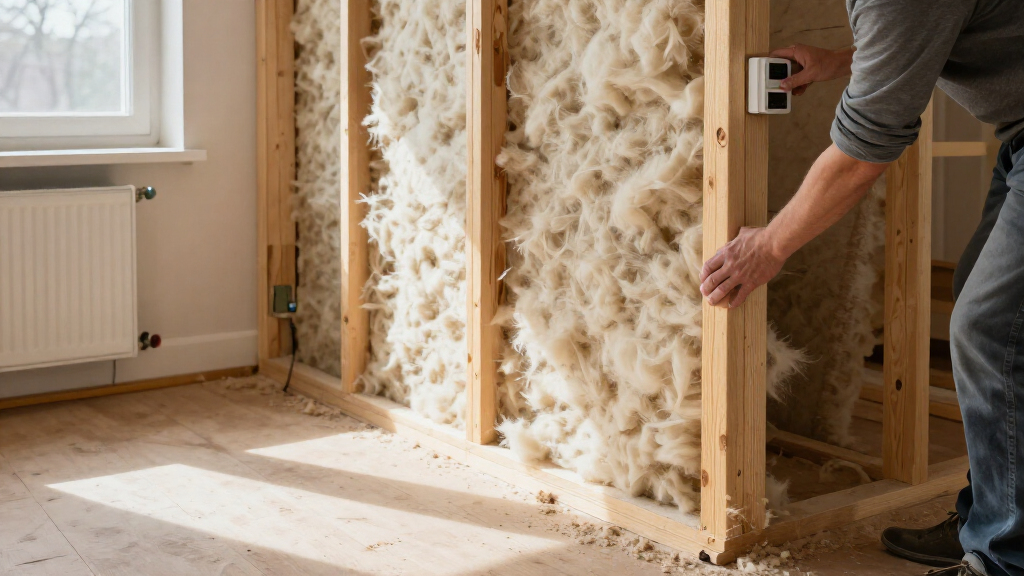
Installation demands vary. The report describes loft insulation as relatively straightforward and says suitable cavity-wall insulation can often be completed in two to four hours, with the home occupied during the work. Internal wall insulation can require moving radiators, sockets, skirting boards and sometimes kitchens, followed by wall finishing and redecorating. External wall insulation usually involves outside work and may require scaffolding and changes around fittings.
How Insulation Could Change Home Heating
For households trying to manage heating costs, insulation can address heat loss rather than relying only on running the heating for longer. That may improve comfort and reduce heating demand, but the report offers no quantified bill savings; readers should not treat lower bills as guaranteed.
The choice of work also affects cost, disruption and building performance. A relatively simple loft project is different from insulating solid walls, where the wrong materials or poor installation may create moisture problems. Getting the building assessed before work begins matters both for the expected energy benefit and for avoiding damage that could require further repairs.
Products Worth Considering

Shark AI Ultra Robot Vacuum with Matrix Clean Navigation, Self-Empty Base, HEPA Filtration, Pet Hair Friendly, Wi‑Fi, Dark Grey

LG 77-Inch OLED evo C6 4K Smart TV

Google Nest Learning Thermostat (4th Gen) with Nest Temperature Sensor (2nd Gen), Silver
As an affiliate, we earn on qualifying purchases.
Why Older Walls Need Different Treatment
The report focuses on homeowners considering insulation retrofits, especially in older properties that may have little insulation. It sets out a basic distinction between cavity walls, which have a gap that may be filled if the property is suitable, and solid walls, where insulation is added to the interior or exterior face.
Fowler says cavity-wall suitability should be checked, including the wall’s condition, exposure to driving rain and whether the cavity is clear. For solid walls, the choice between internal and external insulation changes the nature of the work: internal systems affect rooms, while external systems alter the building’s outside and may require scaffolding. The supplied report material begins to discuss floor insulation but does not provide its full assessment.
“With an old house you really need to understand what you’re dealing with before you start.”
— Becky Lane, CEO of Furbnow
Savings and Suitability Still Vary
The likely reduction in heating bills is not specified, and the source provides no typical savings range, payback period or comparison of installation costs. It is therefore not possible to say from this report alone how quickly a particular household might recoup the cost of work.
Whether a home can take a given measure also depends on its construction and condition. The source does not give a property-specific assessment or a complete account of floor insulation. It advises checking wall condition, moisture management and ventilation, but does not set out a universal specification that applies to every building.
Assess the Home Before Work
Homeowners considering a retrofit should first establish what type of walls and floors they have, and whether the structure is suitable for the proposed insulation. The report’s experts recommend understanding moisture behaviour and ventilation before making a home more airtight. For cavity walls, the condition of the wall, exposure to rain and state of the cavity should be checked.
After that assessment, households can compare the likely disruption of different options and plan work around rooms, belongings and budgets. The report says internal insulation can be phased room by room, while cavity-wall work may be completed in a few hours if the property is suitable. It does not identify a new policy, deadline or follow-up study; any expected bill savings remain dependent on the individual home and project.
Key Questions
Can retrofitted insulation lower heating bills?
It may reduce heat loss and heating demand, but the source gives no specific bill-saving estimate. Results depend on the home, the work and household heating use.
Is insulation suitable for every older house?
No single system suits every property. The experts quoted by Ideal Home say owners should identify the wall construction and consider moisture management and ventilation before work begins.
Which insulation work is least disruptive?
The report describes loft insulation as relatively straightforward. Suitable cavity-wall insulation is also presented as a short job, typically taking two to four hours, with residents able to remain at home.
How disruptive is internal wall insulation?
It can involve moving radiators, sockets and skirting boards, and sometimes kitchens. The walls then need finishing and redecorating; the report says work can be phased room by room.
What should be checked before filling cavity walls?
Fowler says to check the wall’s condition, its exposure to driving rain and whether the cavity is clear. The property must be suitable for the proposed system.
Source: idealhome.co.uk