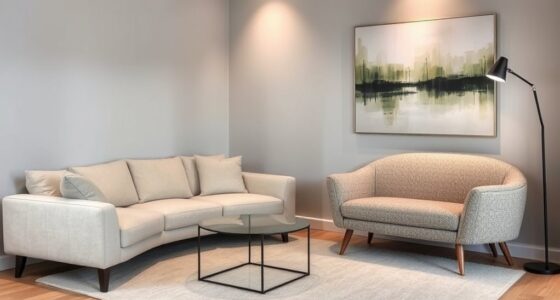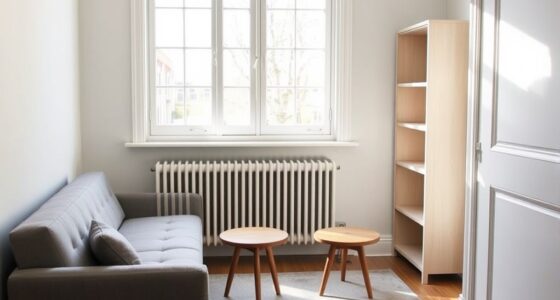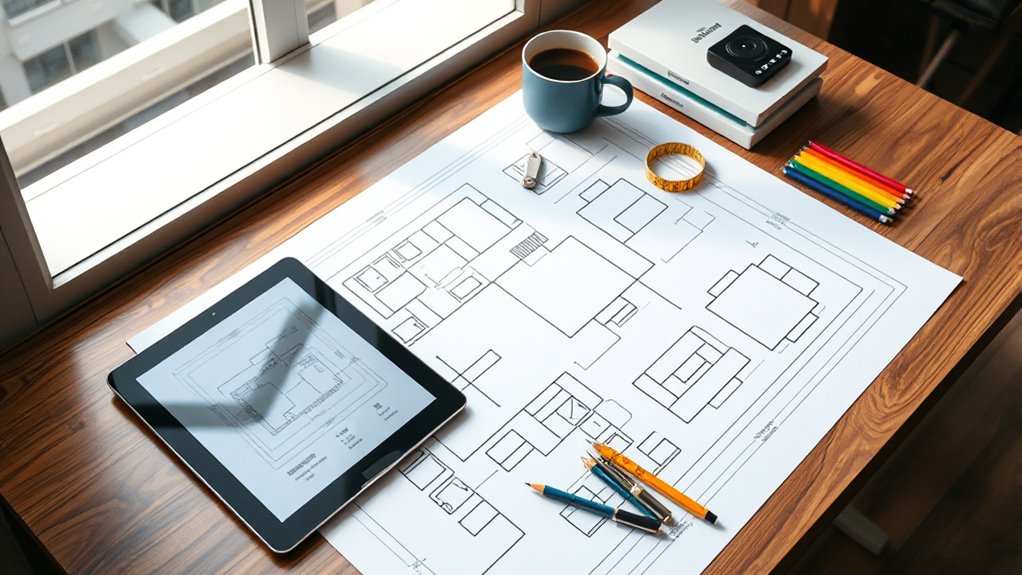

When designing a small space layout, start by accurately measuring your room, including windows and doors. Use digital tools or sketches to experiment with furniture placement, focusing on vertical storage and multi-functional pieces to maximize space. Choose furniture that suits the room’s scale, keeping pathways clear and maintaining an open feel. Flexibility is key—be ready to rearrange and personalize your layout as you go. Keep exploring for more tips to create a practical, inviting space.
Key Takeaways
- Use digital floor plan tools to experiment with furniture placement and visualize layouts easily.
- Measure room dimensions accurately, including windows, doors, and built-ins, before planning furniture arrangement.
- Prioritize vertical storage solutions like shelves and wall-mounted units to maximize space efficiency.
- Choose appropriately scaled, multi-functional furniture that suits the size of your small space.
- Be flexible and willing to rearrange furniture during the planning process to achieve a functional layout.
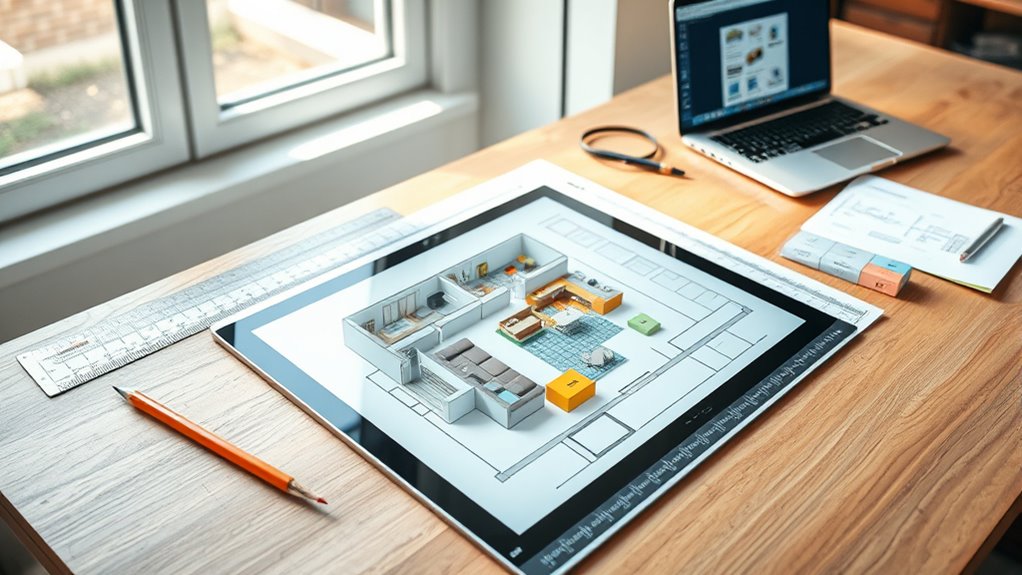
Have you ever wondered how to create a floor plan that perfectly suits your lifestyle? When designing a layout, your goal should be to make the most of your space while ensuring it feels comfortable and functional. The key lies in thoughtful furniture arrangement and space optimization. These elements work together to transform a small area into a practical and inviting environment. To begin, you need to understand how each piece of furniture impacts your space. Instead of randomly placing items, plan your furniture arrangement carefully. Visualize how you’ll move through the room daily, and avoid cluttering pathways. Compact or multi-purpose furniture can save significant space, giving you more room to breathe.
Effective space optimization starts with measuring your area accurately. Use a tape measure to get precise dimensions of your room, including windows, doors, and fixed features like radiators or built-ins. Once you have the measurements, sketch a rough floor plan or use digital tools to experiment with different layouts. These tools allow you to move furniture around easily without physically shifting heavy pieces. When arranging furniture, think vertically as well as horizontally. Tall shelves or wall-mounted storage can free up valuable floor space. Keep essential pieces accessible and avoid overfilling the room, which can make it feel cramped and overwhelming. Proper measurement is crucial for creating an effective layout and avoiding costly mistakes.
Start by measuring your space accurately and experimenting with layouts using digital tools or sketches.
Another tip for space optimization is to choose furniture that fits the scale of your room. Oversized couches or bulky tables can dominate a small space, while sleek, streamlined designs help maintain a sense of openness. Floating furniture, like a sofa away from the walls or a bed with space underneath, can also create a more airy feel. Don’t forget to consider multi-functional furniture, such as beds with built-in storage or fold-away desks, which maximize utility without sacrificing space. When planning your layout, keep lighting in mind as well. Well-placed mirrors can reflect light and make your room appear larger, enhancing the overall sense of openness.
Lastly, stay flexible during the design process. Sometimes, what works on paper may need adjustment once you start moving furniture around. Be open to rearranging and experimenting until you find a layout that feels right. Remember, the best floor plans are those that blend practicality with your personal style, making daily living easier and more enjoyable. By paying close attention to furniture arrangement and space optimization, you’ll craft a small space that’s both functional and welcoming.
Frequently Asked Questions
How Do I Optimize Storage in a Small Space?
You can optimize storage in your small space by using smart storage solutions and space-saving furniture. Incorporate multi-functional pieces like beds with drawers or fold-out desks to maximize every inch. Use vertical space with tall shelves and hooks, and choose furniture that offers hidden compartments. Keep clutter at bay by regularly decluttering, and invest in compact, efficient storage options that make your space feel larger and more organized.
What Are the Best Colors to Make a Small Room Look Larger?
You should choose light, neutral colors like whites, creams, or pastels, as they reflect light and make a space feel more open. Incorporate color psychology by selecting calming shades that reduce visual clutter. Enhance this effect with strategic lighting techniques, like using mirrors and layered lighting, to brighten the room further. These tips help create an airy, spacious feel and maximize your small room’s potential.
How Can I Incorporate Multi-Functional Furniture Effectively?
You can maximize your space by choosing convertible furniture that seamlessly transforms to serve multiple purposes. Think about modular designs that let you reconfigure pieces as needed—like a sofa bed or fold-away desks. This clever approach keeps your small space functional and clutter-free. Keep it versatile and simple, so each piece adapts to your changing needs, transforming your room into a multi-purpose haven with ease.
What Are Common Layout Mistakes to Avoid in Small Spaces?
You should avoid poor furniture placement that blocks traffic flow, making your space feel cramped. Don’t place large pieces in narrow pathways or near doorways, which can hinder movement. Keep furniture proportionate to your room size and arrange it to create clear pathways. Also, resist cluttering corners, as it disrupts flow and makes the space feel smaller. Smart furniture placement enhances circulation and maximizes your small space’s potential.
How Do I Plan for Future Expansion or Changes?
Did you know that 60% of homeowners regret not planning for future needs? To future-proof your small space, incorporate adaptable design considerations like modular furniture and flexible layouts. Use future proofing strategies such as built-in storage and multi-purpose areas to make your space versatile. Think ahead about potential changes, and design with simplicity in mind, so you can easily modify or expand as your needs evolve over time.
Conclusion
Remember, a well-designed floor plan is the foundation of a comfortable home. Use the right tools, plan carefully, and don’t be afraid to get creative. Keep in mind that “measure twice, cut once”—taking your time guarantees a successful layout. With patience and attention to detail, you’ll create a space that fits your needs perfectly. Happy planning! Your dream small space is just a thoughtful layout away.