To make the most of your small room, position furniture so it doesn’t block windows or radiators, allowing natural light and heat flow. Place large pieces away from radiators, and consider slim furniture options or narrow consoles in front of covers to save space. Keep pathways clear for easy movement and face seating toward focal points. If you want practical tips on optimizing your layout and maintaining comfort, explore more ideas below.

Get home appliances delivered free with Prime
- Fast, free delivery on millions of items
- Prime Video, Amazon Music and more included
- Member-only deals all year
Key Takeaways
- Position large furniture away from windows and radiators to prevent blocking natural light and heat flow.
- Use slim, space-saving furniture to maximize available room and keep pathways clear.
- Arrange seating facing focal points like the TV or fireplace, avoiding direct placement in front of radiators.
- Incorporate radiator covers that are low-profile and ventilated to add storage without hindering heat circulation.
- Enhance room brightness with layered lighting and minimal window coverings to create an open, inviting atmosphere.
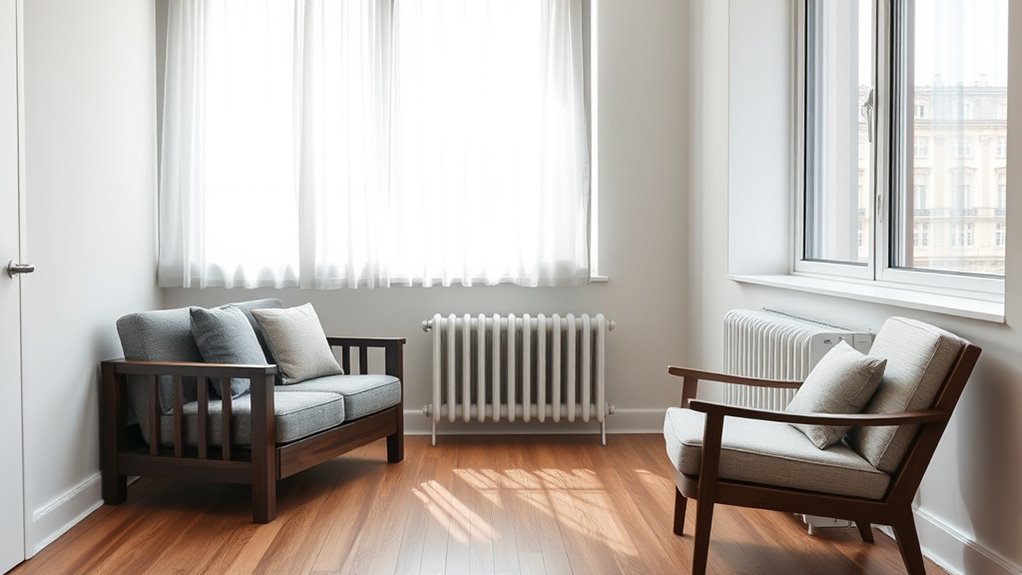
Arranging furniture around windows and radiators can be challenging, but with thoughtful planning, you can create a functional and stylish space. When working with small rooms, every inch counts, so you need to consider how your choices impact flow and comfort. One effective way to maximize your space is by carefully selecting window treatments. Instead of bulky curtains or heavy drapes that can clutter the room, opt for sleek blinds, shades, or minimalistic curtains. These not only free up space but also allow you to control light and privacy effectively. If you prefer curtains, choose lightweight fabrics that can be easily pulled back, keeping the area open and airy.
Radiator covers are another smart solution. They serve multiple purposes: hiding unsightly radiators, providing extra shelf space, and creating a more polished look. When choosing radiator covers, ensure they are ventilated to prevent overheating and allow heat to circulate properly. Low-profile covers are ideal for small rooms because they don’t protrude into the space unnecessarily. You can also use these covers as surfaces for decorative accents or small plants, adding personality without sacrificing space. Positioning furniture around radiator covers requires strategic planning; avoid placing large pieces directly in front of them, as this can block heat flow and reduce efficiency.
Radiator covers hide unsightly radiators, add shelf space, and enhance room aesthetics while ensuring proper heat circulation.
Your furniture placement should prioritize functionality and ease of access. For example, avoid blocking windows with oversized sofas or armchairs. Instead, position seating arrangements so that they face the room’s focal point, such as a TV or fireplace. Keep pathways clear to enhance movement and make the room feel more open. When arranging around a radiator, consider placing a narrow console or a slim bookcase in front of a radiator cover if space allows. This adds storage without compromising heat circulation. Alternatively, situate larger furniture pieces away from the radiator area to prevent obstruction and ensure even heating.
Lighting also plays a vital role. Incorporate layered lighting—overhead fixtures, table lamps, and wall sconces—to compensate for limited natural light caused by window treatments. This approach brightens the room and creates a cozy atmosphere. Remember, the goal is to maintain an open, inviting feel, so choose furniture and accessories that are proportionate to the room’s size. Additionally, smart space utilization techniques can further optimize small spaces by making them feel larger and more functional. With careful consideration of window treatments, radiator covers, and furniture placement, you can transform a small room into a comfortable, stylish retreat that makes the most of every inch.
Frequently Asked Questions
How Can I Maximize Natural Light Without Blocking Windows?
To maximize natural light without blocking windows, keep curtain placement high and wide, allowing maximum light to enter. Use light, sheer window treatments that let in sunlight while maintaining privacy. Avoid placing bulky furniture directly in front of windows, and opt for low-profile pieces that don’t obstruct the view. By choosing the right window treatments and thoughtful placement, you can brighten your space without sacrificing comfort or style.
What Furniture Materials Are Best for Small, Warm Rooms?
Opt for lightweight, versatile furniture materials like linen, cotton, or bamboo, perfect for small, warm rooms. These fabrics promote breathability and keep the space feeling fresh. Pair them with soft, soothing wall paint colors such as warm neutrals or gentle pastels to enhance coziness. To create a cohesive vibe, choose curtain fabrics that complement your color scheme, adding a touch of tranquility and charm without overwhelming your intimate space.
How Do I Prevent Heat Loss Near Radiators?
To prevent heat loss near radiators, you should use insulation techniques like adding reflective radiator panels that bounce heat back into the room. Installing radiator covers can also help by trapping heat and preventing it from escaping through walls. Make sure furniture isn’t blocking the radiator, and seal any gaps around windows and doors. These steps will improve heat retention and keep your small room warmer and more energy-efficient.
Can I Place a Bed Near a Window Safely?
Yes, you can safely place a bed near a window if you guarantee proper window safety measures. Position your bed to avoid blocking vents or radiators and keep it a few inches away from the window to prevent drafts and heat loss. Use childproof locks if needed and secure window cords. Regularly check for drafts and keep the area well-insulated, maintaining safety while maximizing space.
What Are Space-Saving Furniture Ideas for Small Rooms?
You can maximize space in small rooms by choosing multi-functional furniture like beds with built-in drawers or fold-out desks. Wall-mounted storage is a game-changer, freeing up floor space and keeping clutter out of the way. Opt for vertical shelves or hanging organizers to make the most of your walls. These ideas help you create a functional, open feel while making the most of limited space.
Conclusion
When you carefully arrange your furniture around windows and radiators, you might find that a cozy reading nook or a perfect spot for your desk naturally emerges. Sometimes, the best layout just happens by chance, like finding a forgotten book or a favorite mug tucked away. With a little patience, you’ll discover that your small room becomes both functional and inviting, proving that thoughtful placement can turn everyday spaces into your favorite corners of the home.
Halloween Picks
halloween
As an affiliate, we earn on qualifying purchases.