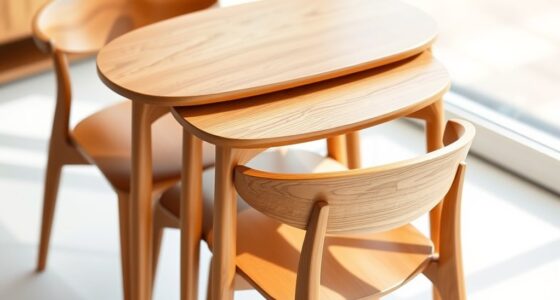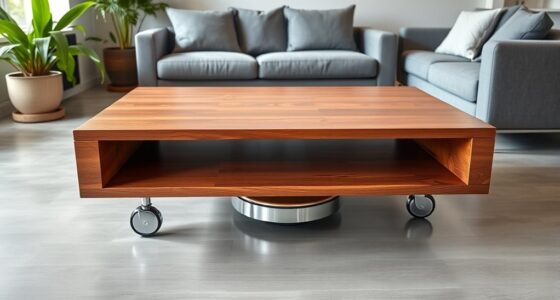

To avoid a crowded look in your small room, focus on balanced furniture placement and proportion. Choose sleek, multi-functional pieces that fit well without overwhelming the space. Keep pathways clear and place larger furniture against walls to promote openness. Use light colors and maximize natural light to reflect space, while minimizing clutter with minimal accessories. When furniture is thoughtfully arranged and scaled, your room will feel balanced and inviting—discover more tips to create harmony in your small space.

Get home appliances delivered free with Prime
- Fast, free delivery on millions of items
- Prime Video, Amazon Music and more included
- Member-only deals all year
Key Takeaways
- Choose proportionate furniture that fits the room size to prevent overcrowding.
- Arrange larger pieces against walls to maximize open space and improve flow.
- Incorporate multi-functional furniture to reduce the number of pieces needed.
- Distribute furniture evenly to create visual balance and prevent cluttered corners.
- Keep accessories minimal and use contrasting textures to add interest without crowding.
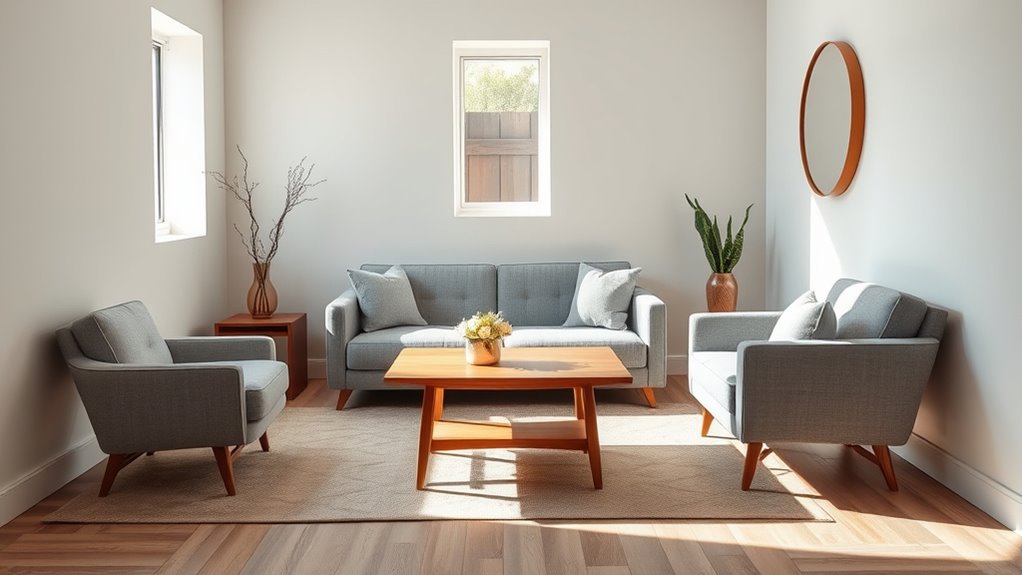
In small rooms, balancing furniture is essential to create a functional and visually appealing space. When you focus on effective space planning, you make the most of every square inch without cluttering the area. The goal is to arrange your furniture in a way that promotes easy movement and maintains a sense of openness. Visual harmony plays a vital role here; you want your pieces to complement each other rather than compete for attention, which can make a room feel crowded and chaotic.
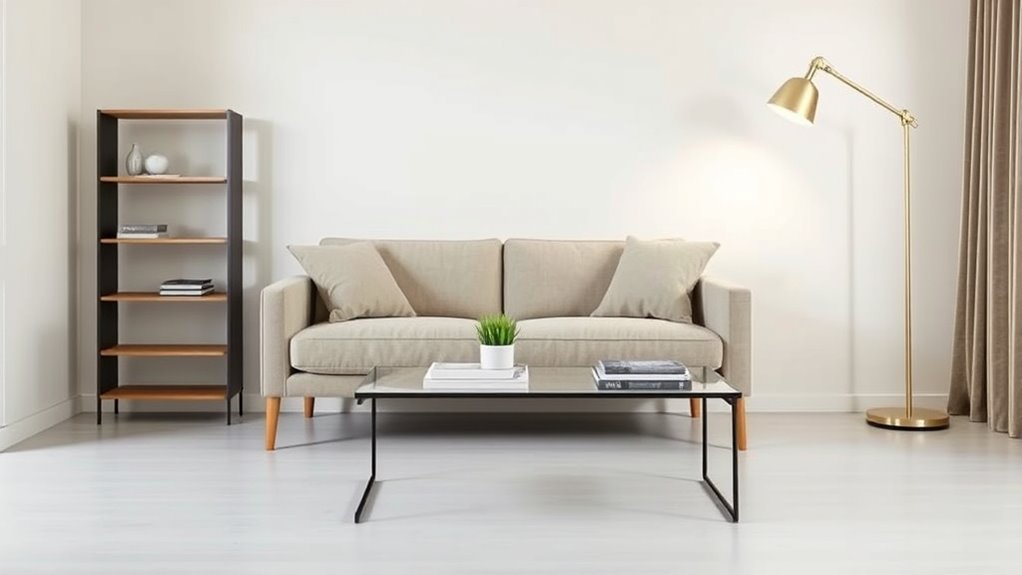
Start by selecting furniture that fits proportionally to the space. Oversized pieces can quickly overwhelm a small room, so choose streamlined, multi-functional furniture whenever possible. For instance, a sofa with exposed legs can make the room feel more open, whereas bulky armchairs tend to close off the space. When planning your layout, consider the flow of movement. Keep pathways clear and avoid blocking windows or doorways, which can make the room feel cramped. Use your space planning skills to position larger furniture against walls, leaving the center open to create a sense of airiness. This approach enhances visual harmony, making the room appear larger and more cohesive.
Choose proportionate furniture, keep pathways clear, and maximize wall placement for an open, harmonious small space.
Another effective strategy involves balancing the visual weight of furniture throughout the room. If you place a heavy-looking piece on one side, counterbalance it with lighter or smaller items on the opposite side. For example, a sizeable sofa can be paired with a slim coffee table and a few narrow side tables rather than multiple bulky pieces. This prevents the eye from being pulled in one direction and helps distribute visual interest evenly. Additionally, keep accessories and décor minimal. Too many decorative items can add to the cluttered look, detracting from the room’s harmony. Instead, select a few statement pieces that coordinate well with your furniture to add personality without overwhelming the space.
Lighting also influences the perception of space. Use a combination of natural light, wall-mounted fixtures, and table lamps to brighten the room. Well-lit spaces feel larger and more inviting. Be mindful of placement; lighting should enhance the room’s flow and highlight the furniture arrangement, further reinforcing visual harmony. Finally, don’t forget about the importance of color. Light, neutral tones tend to reflect light, making a small room feel more expansive. Incorporate contrasting textures and subtle patterns to add depth without cluttering the visual field. Recognizing the importance of visual harmony helps you create a balanced and welcoming environment in small rooms.
Products Worth Considering
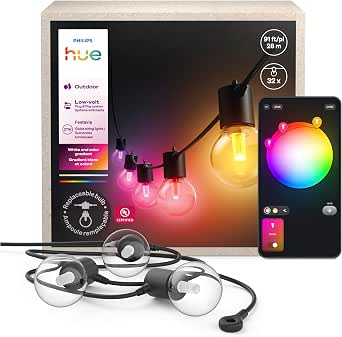
Philips Hue Festavia Globe Outdoor String Lights, 32 Bulbs, 91 ft

Samsung 48-Inch S90H OLED 4K Smart TV (2026)

Roborock Robot Vacuum and Mop with LiDAR Navigation and 10,000 Pa Suction
As an affiliate, we earn on qualifying purchases.
Frequently Asked Questions
How Can I Create the Illusion of Space With Furniture?
To create the illusion of space with furniture, focus on scale and proportion, choosing pieces that fit your room without overwhelming it. Use furniture placement strategically, leaving open pathways and avoiding clutter. Opt for multi-functional or slim-profile furniture to maximize space. Keep larger items against walls and use mirrors or light colors to reflect light, making the room feel more open and airy.
What Colors Help Make a Small Room Appear Larger?
Imagine walking into a room painted in soft, airy hues like whites, light grays, or pastels. These color schemes enhance visual perception, making your small space feel open and breezy. Light colors reflect more natural light, creating the illusion of greater size. Stick to these shades to brighten your room and avoid overwhelming the space, giving it a more expansive and inviting feel.
Are Multi-Functional Furniture Pieces Effective for Small Rooms?
Yes, multi-functional furniture pieces are highly effective for small rooms. They provide space-saving solutions by combining functions in one piece, reducing clutter. Proper furniture placement enhances their efficiency, helping you maximize your room’s layout. For example, a sofa bed or storage ottoman offers seating and storage without taking up extra space. These versatile pieces make your room feel more open and organized, perfect for small areas.
How Can I Incorporate Storage Without Cluttering the Space?
Did you know that 80% of small space dwellers find clever storage essential? To incorporate storage without clutter, use wall-mounted storage options like shelves or hooks for decorative accents and everyday items. These maximize vertical space, keeping the floor clear and the room open. Add stylish baskets or boxes on shelves to hide essentials, ensuring your space remains functional yet uncluttered.
What Lighting Options Enhance a Small Room’s Openness?
You can enhance your small room’s openness by using ambient lighting, such as wall sconces or ceiling fixtures, to create a soft, even glow. Incorporate reflective surfaces like mirrors or glossy finishes to bounce light around the space, making it feel larger. Avoid heavy curtains and opt for light, airy window treatments. Combining ambient lighting with reflective elements makes your room appear brighter, more spacious, and inviting.
Conclusion
Remember, balancing furniture in a small room is like tending a bonsai tree—you want just enough to create harmony without overwhelming. I once moved a bulky armchair into a tiny living space, only to realize it made everything feel cramped. When you carefully arrange your pieces, you’re sculpting a cozy, inviting oasis. Keep the balance just right, and your room will feel open, welcoming, and beautifully styled—like a well-tended garden in full bloom.