
TL;DR

Get home appliances delivered free with Prime
- Fast, free delivery on millions of items
- Prime Video, Amazon Music and more included
- Member-only deals all year
A DIY project featured by Hunker shows how creator ThriftyandChicDecor turns hollow-handled silverware into magnetic bud vases. The process involves cutting and sanding a handle, then attaching magnets; the report says the sealed handles can hold water unless they are cracked.
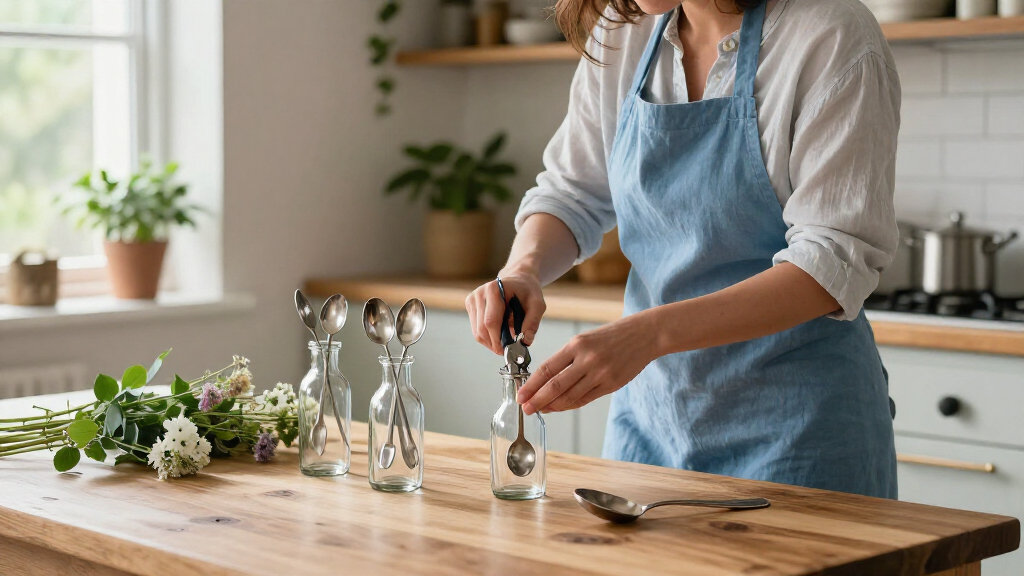
A DIY creator featured by Hunker is repurposing hollow-handled silverware as small, magnetic bud vases, offering a way to turn secondhand knives into decorative holders for flowers or small plants. The project uses a rotary tool to cut and smooth a handle, then adds magnets to the back so the finished piece can attach to a metal surface.
The project is credited to ThriftyandChicDecor, whose creator also shares additional instructions on the YouTube channel ThriftyandChic, according to Hunker. The reported supply list includes thrifted silverware with hollow handles, a Dremel with a metal cutting disk and sanding attachment, super glue, small magnets, and optional ribbon and flowers. The creator uses knives, though the report says other silverware may work if its handle is hollow.
Hunker describes the basic steps as cutting off the top of the handle and sanding the cut edge until it is smooth. The creator cuts roughly 3 centimeters below the top of the handle, according to the report. Two small magnets are then glued to the back. Ribbon or jute can be added for decoration before placing in dried or live flowers.
The report says the handle is sealed and can hold water unless it has cracks. That claim depends on the condition of each piece: the source does not describe a separate test for leaks or provide instructions for repairing damaged handles. Hunker also suggests adaptations, including adding dried botanicals with decoupage, using antiquing wax or enamel paint, or using the finished holder for small plant cuttings, air plants, a pen or herb scissors.
A Second Use for Thrifted Silverware
The project gives worn or mismatched silverware a possible role beyond the utensil drawer or scrap pile. Its small scale and magnetic backing make the finished vases suitable for metal surfaces where a conventional vase may not fit, such as a refrigerator or magnetic board. For readers interested in low-cost home projects, the idea also relies on items that can often be found secondhand rather than on a matching new set.
The result is a decorative object, but the source also describes practical uses: a small holder for plant cuttings, air plants, writing tools or kitchen scissors. Those uses are suggestions from the report, not tested product claims. The project’s appeal rests on adapting each piece’s shape and pattern, with the creator displaying different silverware designs together rather than requiring a coordinated set.
Products Worth Considering

Philips Hue White and Color Ambiance A19 Smart Bulb Starter Kit, 2-Pack

Dreame L40 Ultra Gen 2 Robot Vacuum and Mop

Dyson R3 Nurovi Spot+Scrub UV Robot Vacuum
As an affiliate, we earn on qualifying purchases.
How the Handle Becomes a Vase
The defining requirement is a hollow handle. Hunker says the creator recommends tapping a piece or knocking it against another object to hear whether the handle sounds hollow or solid. The report does not provide a broader guide to identifying silverware construction, so the sound check is presented as the creator’s practical suggestion rather than a definitive test.
Once cut open, the handle forms the narrow container for a small stem. Sanding the edge is part of the described process, and magnets are attached to the reverse so the piece can be displayed vertically on a metal surface. Hunker notes that the creator shows examples in different patterns on YouTube. Its article also offers optional surface treatments, but the central method is the same: select a hollow handle, cut it, smooth it and attach magnets.
“The creator cuts about 3 centimeters below the top of the handle.”
— Hunker, describing the creator’s project
Fit, Sealing and Safe Use
The source does not specify the materials or construction of every piece that might be found secondhand, nor does it establish that all hollow handles will hold water. Hunker says water is suitable when the handle is sealed and has no cracks, but it provides no leak-testing method. Readers should check each piece for damage and avoid relying on it to hold water if its condition is uncertain.
The project also requires cutting and sanding metal with a rotary tool. Hunker calls it generally simple but says users need to know how to use a Dremel; the article does not include detailed tool-safety instructions. The source gives no cost estimate, time estimate, or confirmation that magnets will adhere equally well to every handle. It is also unclear how the creator’s examples perform over extended use.
Before Starting the Upcycle
Anyone following the project would first need to find silverware with a hollow handle and inspect it for cracks or other damage. The reported next steps are cutting the handle, sanding its edge, attaching magnets and adding optional decoration. Because the process involves powered cutting and sanding equipment, readers should use appropriate protective equipment and follow the tool manufacturer’s safety directions.
Hunker points readers to the creator’s ThriftyandChic YouTube channel for more detail and examples of mixed patterns. The source does not announce a follow-up test, product release or further update, so the next developments are the creator’s existing demonstrations and any individual results from people who try the project.
Key Questions
What silverware works for the bud vases?
The project calls for silverware with hollow handles. The creator uses knives, while Hunker says other pieces may work if their handles have the same hollow construction.
How are the silverware handles turned into vases?
The reported method is to cut off the top of a hollow handle, sand the cut edge smooth, then glue two small magnets to the back. Flowers or small plants can then be placed in the handle.
Can the holders contain water?
Hunker says the handles can hold water when they are sealed and have no cracks. The report does not provide a leak test, so damaged or uncertain pieces should not be assumed to be watertight.
Where can readers see more of the project?
Hunker directs readers to the creator’s ThriftyandChic YouTube channel, where the report says additional project details and examples of different silverware patterns are shown.
Source: hunker.com