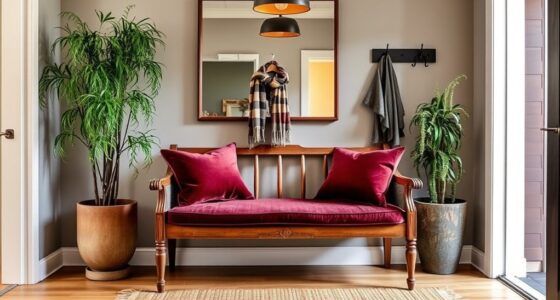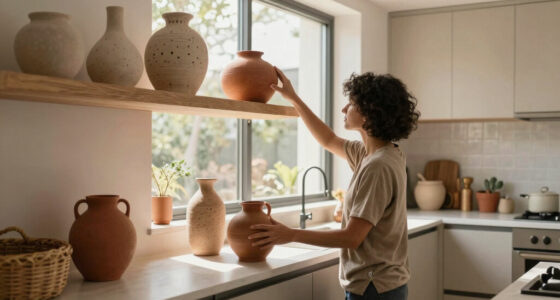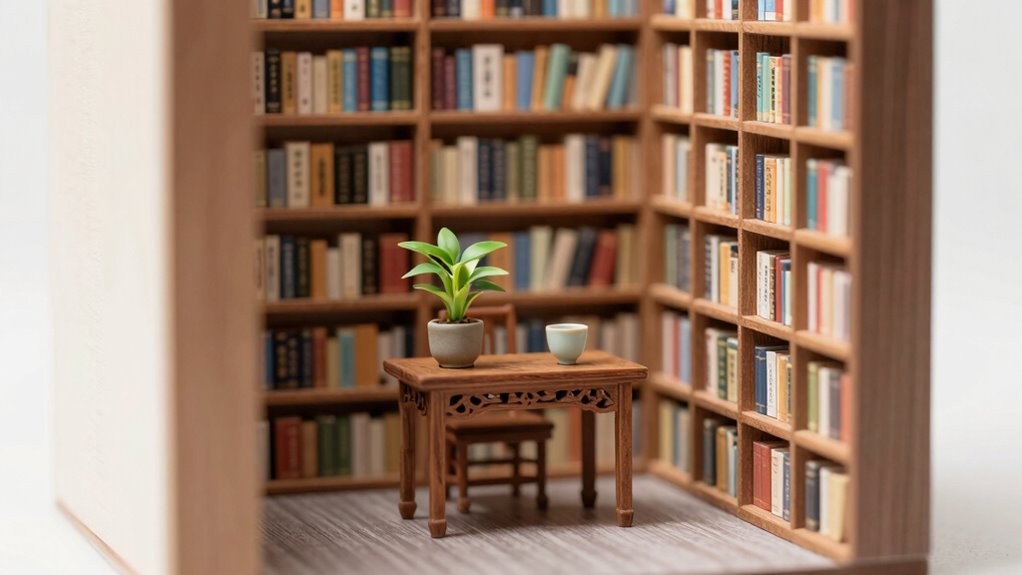

In a tiny room, choosing appropriately scaled furniture is more important than color because it directly impacts how spacious and balanced the space feels. Small furniture helps prevent the room from feeling cramped or cluttered, making it easier to move around and stay visually calm. Proper proportions keep the space feeling open and harmonious, whereas color can only temporarily hide a cramped feeling. To learn how to optimize your small space, keep exploring these key ideas.

Get home appliances delivered free with Prime
- Fast, free delivery on millions of items
- Prime Video, Amazon Music and more included
- Member-only deals all year
Key Takeaways
- Proper scale ensures furniture fits comfortably, preventing clutter and enhancing room openness despite limited space.
- Well-scaled furniture maintains visual balance, making small rooms feel harmonious rather than cramped or chaotic.
- Correct proportions emphasize room features and create a natural flow, which scale impacts more than color in spatial perception.
- Appropriate furniture size avoids overwhelming or underwhelming the space, directly influencing comfort and usability.
- Scale affects how spacious and inviting a tiny room appears, often more significantly than color choices do.

When designing tiny rooms, it’s easy to focus on choosing the perfect paint color, but size and proportion often play a more vital role in making the space feel comfortable and balanced. This is where furniture proportions and spatial balance come into play. The way your furniture fits within a small area can transform a cramped space into a cozy retreat or leave it feeling cluttered and overwhelming. Even the most beautiful paint color won’t compensate for furniture that’s either too large or too small for the room. Proper furniture proportions ensure every piece feels intentional, not intrusive, helping to create harmony and allow movement without obstruction.
Thoughtfully scaled furniture creates harmony, making tiny spaces feel cozy, balanced, and inviting.
In tiny rooms, your goal should be to achieve a sense of equilibrium. When furniture is too bulky, it dominates the space, making the room feel tighter and less inviting. Conversely, furniture that’s too small can look out of place, creating visual dissonance that distracts from the overall design. Striking the right balance involves selecting pieces that are scaled to fit the room’s dimensions. For example, a loveseat instead of a bulky sofa, or a narrow coffee table that doesn’t overpower the seating area, can make a significant difference. The key is to choose furniture that complements the room’s size, enhancing rather than overwhelming the available space. Employing proportional furniture helps maintain visual harmony and prevents the room from feeling either overcrowded or empty. Additionally, understanding the importance of visual weight can help in creating a balanced and harmonious environment.
Spatial balance isn’t just about furniture size; it’s about how all elements work together to distribute visual weight evenly across the room. You want to avoid cluttering one corner or leaving large empty patches that make the room feel disjointed. Arranging your furniture thoughtfully, with enough space for movement, creates a flow that feels natural and comfortable. Use proportional furniture to emphasize the room’s best features and downplay areas that could feel congested. You can also incorporate multi-functional pieces that serve multiple purposes without taking up excessive space, maintaining a sense of openness. Recognizing how each item contributes to the overall harmony allows you to design with intention and purpose. Moreover, paying attention to scale and proportion ensures each element enhances the overall aesthetic without overwhelming the space. An awareness of air circulation and ventilation can also improve the room’s comfort by preventing the space from feeling stuffy or cramped, especially in small kitchens or rooms.
Ultimately, understanding and applying the principles of furniture proportions and spatial balance in small rooms allow you to craft a space that feels both cozy and functional. You don’t need to rely solely on color to make the room feel larger; instead, you focus on how each piece fits within the space. When furniture is well-scaled and thoughtfully arranged, your tiny room can feel expansive, balanced, and welcoming—proof that scale truly matters more than just the paint on the walls.
As an affiliate, we earn on qualifying purchases.
Frequently Asked Questions
How Can I Make a Small Room Feel Larger Without Changing Furniture?
To make a small room feel larger without changing furniture, focus on creating space illusions through your decor. Use large, simple artwork or mirrors to reflect light and expand the space visually. Maintain visual balance by keeping clutter minimal and choosing furniture scaled appropriately, avoiding oversized pieces. Light colors and strategic placement enhance openness, but prioritizing the right scale and balance has the biggest impact on making your tiny room feel more spacious.
Does Lighting Affect the Perception of Scale in Tiny Rooms?
Lighting acts like a magician’s wand, transforming your tiny room’s perception. When you adjust light intensity, it can make the space feel more expansive or cozy. Shadow play, created by well-placed lighting, adds depth, tricking the eye into perceiving more space. Bright, even lighting reduces shadows and expands the room’s feel, while strategic shadows can highlight scale details, making your small space seem larger than it truly is.
Are There Specific Design Tricks to Enhance Scale in Small Spaces?
Yes, you can enhance scale in small spaces by using proportion contrast and establishing a clear visual hierarchy. Choose furniture with varied sizes to create visual interest and make the room feel larger. Use taller items or elongated designs to draw the eye upward, emphasizing height. Keep a balanced proportion between furniture and the room’s size, and arrange elements to guide your eye smoothly, making the space feel more spacious.
How Does Furniture Arrangement Impact Perceived Room Size?
Your furniture placement considerably impacts perceived room size by influencing spatial perception. By arranging furniture to maximize open space and avoid clutter, you create a sense of roominess. Keeping larger pieces against walls and leaving pathways clear can make the space feel larger. Strategic placement of mirrors and choosing appropriately scaled furniture also enhances spatial perception, making your tiny room seem more open and inviting.
Can Wall Color Influence the Feeling of Space in Tiny Rooms?
Your wall color can definitely influence how spacious a tiny room feels. Light shades, according to color psychology, reflect more light and create a sense of openness. Using visual illusions, such as painting walls in a monochromatic palette or adding vertical stripes, enhances this effect. You’re not just painting walls; you’re tricking the eye into seeing a larger space. Don’t underestimate the power of color to turn small rooms into airy retreats.
As an affiliate, we earn on qualifying purchases.
Conclusion
Remember, size does matter—even in tiny rooms. When you choose furniture and decor that fit the space, you create a balanced, inviting atmosphere. Don’t let bold colors distract you; instead, focus on scale to make your room feel larger and more comfortable. As the saying goes, “Big things come in small packages.” By prioritizing proportion, you’ll turn your cramped space into a cozy, stylish haven you’ll love spending time in.
As an affiliate, we earn on qualifying purchases.
multi-functional furniture for small rooms
As an affiliate, we earn on qualifying purchases.
As an affiliate, we earn on qualifying purchases.
NFL season / tailgating Picks
team gear
As an affiliate, we earn on qualifying purchases.