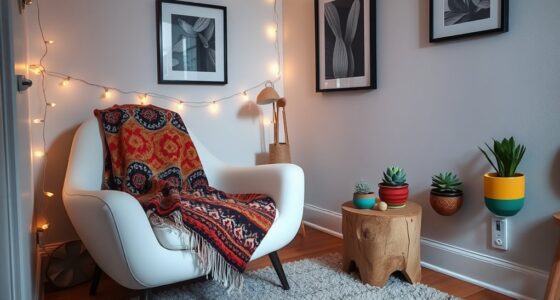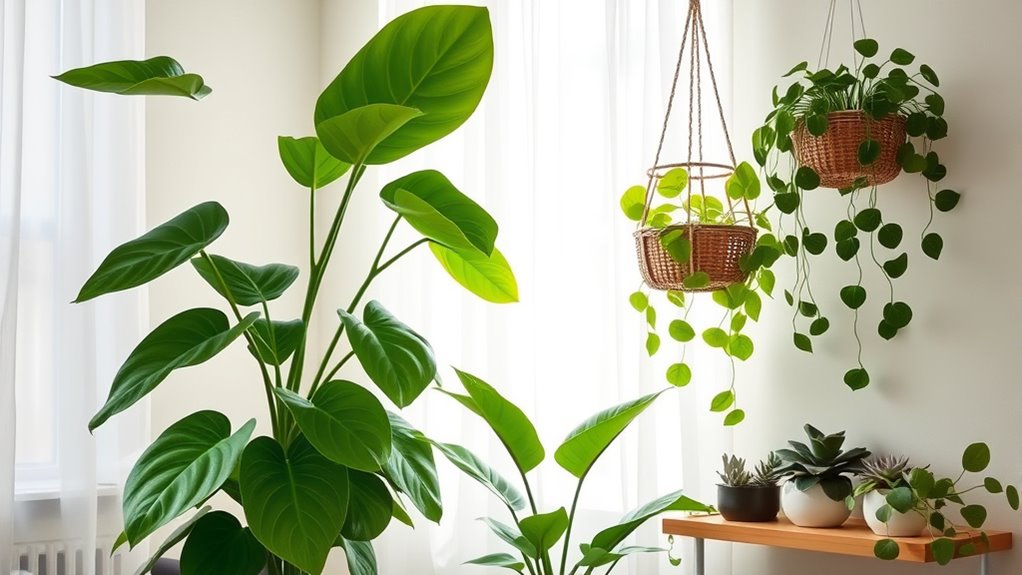

If you want indoor plants that fit perfectly in small apartments, try low-maintenance options like snake plants, pothos, and ZZ plants. These plants thrive in limited space, require minimal care, and help improve air quality. You can also add compact succulents, cacti, and colorful foliage plants like fittonia or Chinese evergreen for extra style. Keep an eye on placement tips to maximize space and enjoy a lush, vibrant home environment—more details await to help you get started.
Key Takeaways
- Choose compact, low-maintenance plants like succulents, cacti, and small ferns to maximize space and ease care.
- Utilize vertical space with wall planters, hanging plants, and multi-tiered stands to optimize limited square footage.
- Select plants with similar light and watering needs to simplify care and ensure healthy growth in small environments.
- Incorporate decorative containers that match your decor theme to enhance aesthetic appeal without clutter.
- Prioritize air-purifying varieties such as Peace Lilies and Snake Plants to improve indoor air quality in compact living spaces.
Snake Plant: A Low-Maintenance Corner Star

If you’re looking for a plant that thrives with minimal care, the snake plant is an excellent choice. Its watering schedule is simple—water only when the soil feels dry, roughly every 2-6 weeks. Overwatering can lead to root rot, so it’s better to err on the side of dryness. As for soil preferences, snake plants do well in well-draining soil with a sandy or loamy texture. You don’t need to invest in fancy potting mixes; a standard cactus or succulent soil works perfectly. Keep in mind that snake plants tolerate low light but flourish in indirect sunlight. With its hardy nature and low-maintenance needs, this plant is ideal for busy or beginner gardeners looking to add greenery to small apartments. Additionally, snake plants are known for their air-purifying qualities, which can help improve indoor air quality in small living spaces. They also benefit from occasional fertilization, especially during the growing season, to maintain healthy growth. Incorporating indoor plants like the snake plant can also boost your mood and reduce stress in compact living areas.
Pothos: A Trailing Vine for Tiny Spaces
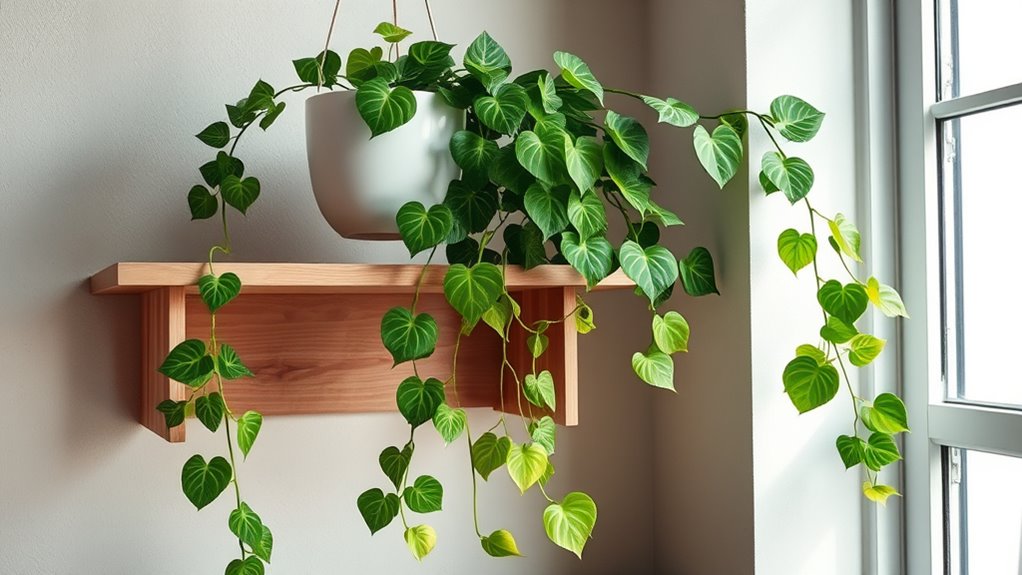
Pothos is an ideal plant for small apartments because its trailing vines can easily cascade from shelves or hang baskets, maximizing limited space. This vining plant offers excellent space-saving greenery, making it perfect for tight spots. Its hardy nature means you don’t need a green thumb to keep it thriving. You can train it to grow along shelves or drape from hanging containers, creating a lush, green effect without taking up much room. Here’s a quick guide:
| Light Needs | Watering Frequency | Care Tips |
|---|---|---|
| Indirect bright light | Every 1-2 weeks | Prune to control length |
| Low light | Allow soil to dry out | Propagate easily with cuttings |
| No direct sun | Less frequent watering | Avoid overwatering |
Additionally, Pothos is known for its easy maintenance and ability to improve indoor air quality, making it a space-efficient choice for small living spaces. Its adaptability to varying light conditions further enhances its suitability for apartments with limited natural light.
ZZ Plant: Elegant and Resilient
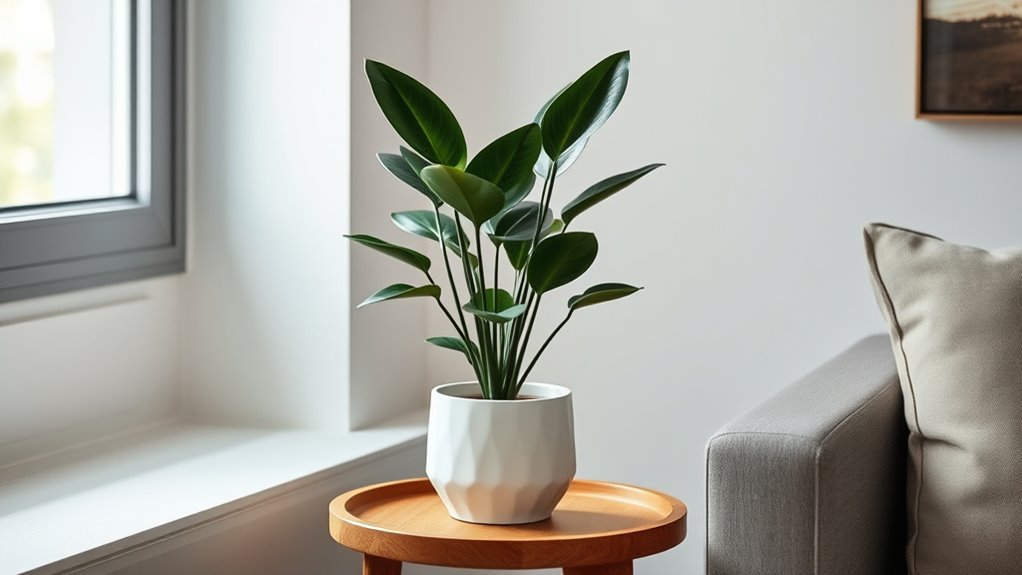
The ZZ Plant thrives in low-light conditions, making it perfect for small apartments with limited sun. It requires minimal upkeep, so you won’t need to spend much time caring for it. Plus, its glossy green leaves add a stylish touch to any space. Its color accuracy ensures the plant’s vibrant appearance remains true to life under various lighting conditions. Additionally, its ability to improve air quality can contribute to a healthier indoor environment. Practicing mindfulness about recurring number patterns can help you recognize signs of good plant health and growth, enhancing your overall plant care experience. Recognizing trust issues in relationships can also remind you to be attentive to your environment and the plants you nurture, fostering a more harmonious living space. Knowing about the resources and tools available for plant care can help you maintain its health and beauty over time.
Low Light Tolerance
Because it thrives in low light conditions, the ZZ plant is an excellent choice for small apartments with limited natural sunlight. Its adaptability means you don’t need intense sunlight or frequent repositioning. You can maintain a simple watering schedule—water sparingly when the top inch of soil feels dry. Its resilience also makes pest management straightforward; it’s less prone to pests like spider mites or mealybugs. To visualize care, consider this table:
| Aspect | Tips |
|---|---|
| Light Needs | Tolerates low to moderate light |
| Watering Schedule | Water only when soil is dry |
| Pest Management | Regularly inspect, treat promptly |
This plant’s low-maintenance nature makes it perfect for busy or low-light environments. Additionally, its ability to withstand neglect makes it an ideal choice for those new to indoor gardening, especially in compact living spaces. Its resistance to pests and minimal care requirements align well with the needs of urban dwellers seeking easy-to-maintain greenery.
Easy Maintenance Needs
Fortunately, the ZZ plant requires very little effort to keep looking its best. Its low-maintenance nature makes it perfect for busy lifestyles. To keep it thriving, focus on these simple care steps:
- Water sparingly, roughly once every 2-3 weeks, adjusting for your home’s humidity.
- Avoid overwatering to prevent root rot.
- Check periodically for pests like mealybugs or spider mites—pest control is rarely needed but important.
- Keep it in well-draining soil and avoid direct sunlight to prevent stress.
- Incorporating consistent messaging in your plant care routine can help you stay on track and ensure your ZZ plant remains healthy and vibrant. Additionally, understanding plant physiology can improve your ability to detect early signs of stress or disease, making maintenance even easier.
- Proper drainage is essential to prevent water accumulation around the roots, which can lead to rot. Being aware of adaptability can help you select the best location for your plant based on your living environment.
- Recognizing the importance of light conditions can help you optimize growth and health for your ZZ plant, especially in limited space.
This plant’s resilience means you won’t need frequent attention or complicated routines, making it ideal for small apartments. Its easy watering schedule combined with minimal pest control keeps your plant healthy without hassle.
Stylish Green Foliage
Ever noticed how the ZZ plant instantly elevates a room with its striking, lush green leaves? Its stylish foliage adds a touch of elegance without overwhelming your space. You can showcase its natural beauty by choosing decorative containers that complement your interior style—think sleek ceramic pots or minimalist planters. Proper plant positioning is key; place it where it can catch indirect light but isn’t in the way. The ZZ plant’s resilient nature means it thrives even with occasional neglect, making it perfect for small apartments. Its bold, vibrant leaves draw attention and add a fresh, lively vibe to any room. Additionally, the ZZ plant’s popularity has soared partly because of the global entertainment industry’s influence on interior design trends. Choosing low-maintenance plants like the ZZ plant aligns with the needs of busy urban dwellers. By selecting attractive containers and thoughtful placement, you turn this plant into a stunning focal point that enhances your living space effortlessly.
Peace Lily: Beautiful Blooms in Low Light
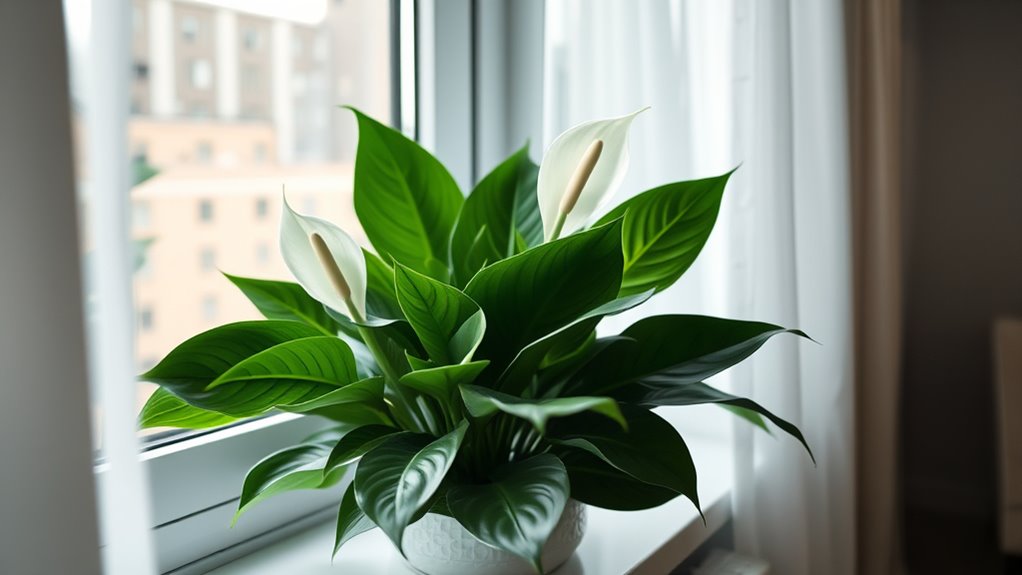
The Peace Lily is a perfect choice for low-light spaces and requires minimal maintenance, making it ideal for busy lifestyles. Besides its beauty, it actively improves your indoor air quality by filtering toxins. You’ll also enjoy its elegant blooms that typically appear several times a year with proper care.
Subheading 1: Easy Care Requirements
Since peace lilies thrive in low light conditions, they’re an ideal choice for small apartments with limited sunlight. You’ll find their plant color remains vibrant with minimal effort, making them a low-maintenance option. To keep your peace lily healthy, focus on these easy care tips:
- Water when the top inch of soil feels dry—avoid overwatering.
- Place in decorative containers that drain well to prevent root rot.
- Keep in low to moderate indirect light, especially in shaded areas.
- Fertilize monthly with a balanced, water-soluble fertilizer to promote healthy blooms.
- Incorporating sound healing techniques such as gentle vibrations can enhance your plant’s growth and overall well-being.
- Understanding plant care requirements like humidity levels can help prevent common issues such as leaf browning.
- Regularly monitoring your plant’s environment can prevent common problems and ensure it remains healthy.
- Be mindful of regulatory considerations related to indoor plant safety and potential allergens, especially in small living spaces.
These simple steps ensure your peace lily remains lush and beautiful, adding a touch of nature without fuss. Its low-maintenance nature makes it perfect for busy or novice plant owners.
Subheading 2: Air Purifying Benefits
Peace lilies not only brighten up your space with their attractive blooms but also improve your indoor air quality. They actively filter common household toxins like formaldehyde, benzene, and trichloroethylene, which can affect your health benefits over time. By removing airborne pollutants, peace lilies help create a cleaner, healthier environment in your small apartment. Their natural ability to purify the air means you’ll breathe easier and reduce potential respiratory issues. Plus, their presence can boost your overall well-being by reducing indoor air pollution. Incorporating a peace lily into your living space provides a simple yet effective way to enhance air quality, making your apartment not only more beautiful but also safer and more comfortable for everyday living.
Subheading 3: Blooming Timeframe
A peace lily typically blooms within six to eight weeks after you bring it into your apartment, provided it receives the right care. Once it starts flowering, you’ll notice its beautiful white blooms lasting for about 1 to 3 months, depending on conditions. During its flowering cycles, you can expect:
- Consistent watering to support bloom health
- Bright, indirect light to encourage flowering
- Proper humidity to extend bloom duration
- Fertilizing every 6-8 weeks during flowering periods
The bloom duration varies with care, but with ideal conditions, you’ll enjoy its elegant flowers for several weeks. Patience and attention to its flowering cycles are key to witnessing the peace lily’s full, stunning display.
Succulents and Cacti: Perfect for Minimal Space
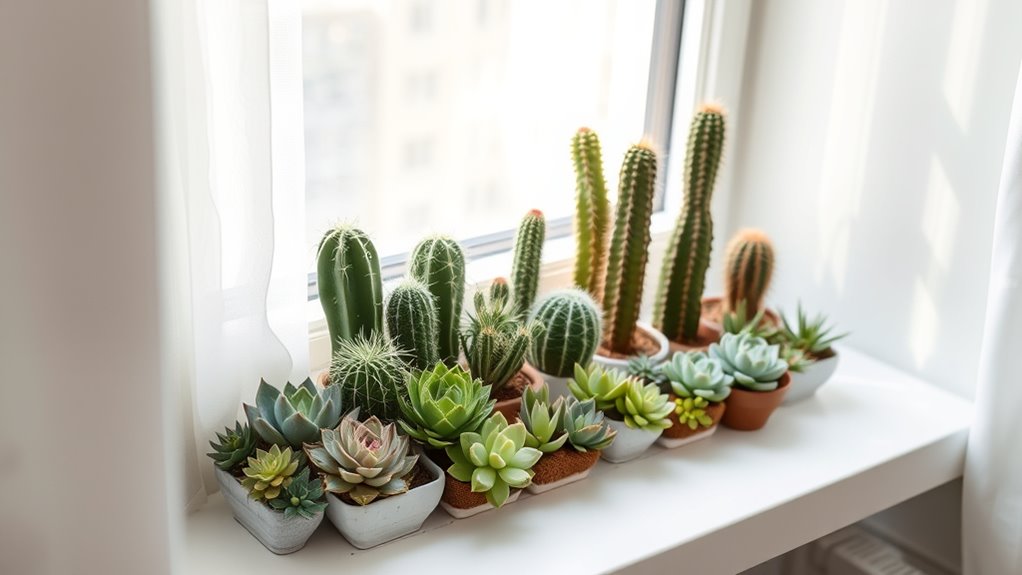
Are you short on space but still want to enjoy the greenery of indoor plants? Succulents and cacti are your best options. They thrive in small containers and require minimal maintenance. When choosing plant pots, opt for well-draining options to prevent overwatering. Their watering schedules are infrequent—usually once every couple of weeks—making them ideal for busy or forgetful plant lovers. Here’s a quick guide:
| Plant Type | Ideal Pot Selection | Watering Frequency | Light Needs |
|---|---|---|---|
| Succulents | Porous, small pots | Every 2-3 weeks | Bright, direct sun |
| Cacti | Ceramic or clay | Every 2-3 weeks | Bright, direct sun |
| Both | Drainage holes | Less frequent | Bright light |
| Tips | Avoid overwatering | Adjust in winter | Place near windows |
Spider Plant: Easy to Propagate and Care For
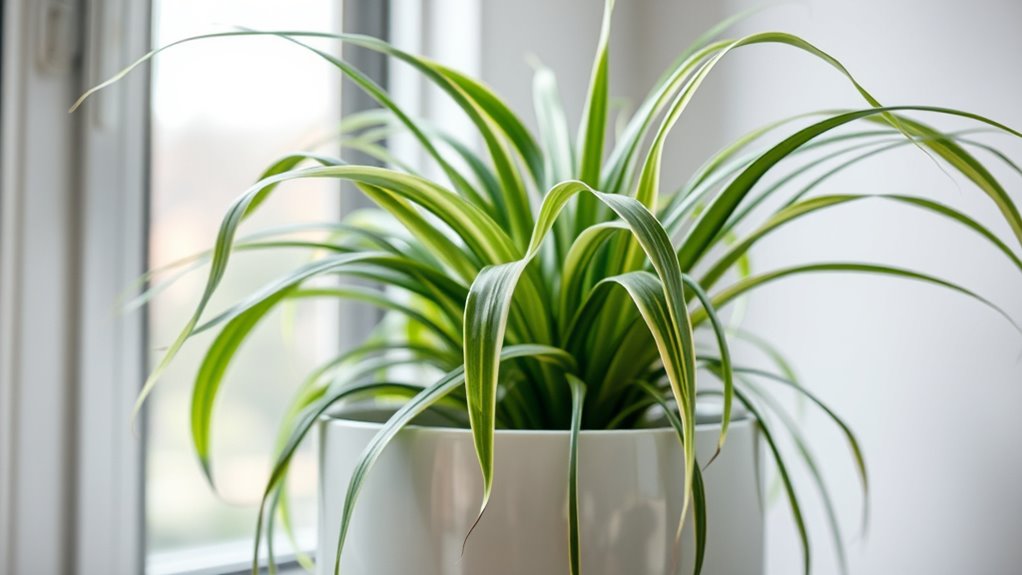
Spider Plants are among the easiest indoor plants to care for and propagate, making them perfect for beginners. Their resilience and adaptability mean you can enjoy lush greenery with minimal effort. To propagate, you can use simple techniques such as:
- Dividing offsets during repotting
- Rooting plantlets in water or soil
- Snipping and planting spider plant runners
- Encouraging new growth with proper care tips
Keep the plant in bright, indirect light, and water when the top inch of soil feels dry. Avoid overwatering, which can lead to root rot. Regularly fertilize during growing seasons and prune dead leaves to promote healthy growth. With these propagation techniques and care tips, your spider plant will thrive and multiply effortlessly.
Fittonia: Colorful Foliage for Small Nooks
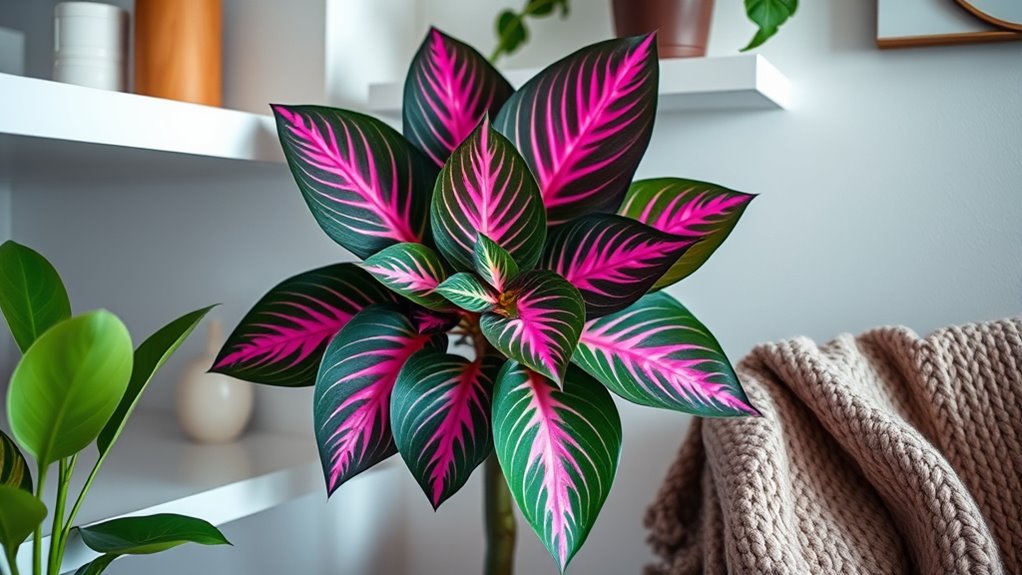
If you’re looking to add vibrant color to small nooks, Fittonia makes an excellent choice. Its colorful foliage features striking veins in shades of pink, red, or white that instantly brighten confined spaces. This plant thrives in low to moderate light, making it perfect for cozy corners or shelves. Fittonia’s compact size allows you to place it just about anywhere without overwhelming your space. It requires regular watering to keep the soil moist but not soggy, and its lush leaves create a lively, textured look. Because of its vibrant foliage, Fittonia draws attention without taking up much room. Incorporate it into your small apartment to add a splash of color and a touch of natural elegance to tiny, often overlooked nooks.
Chinese Evergreen: Vibrant Leaves for Low Light Areas
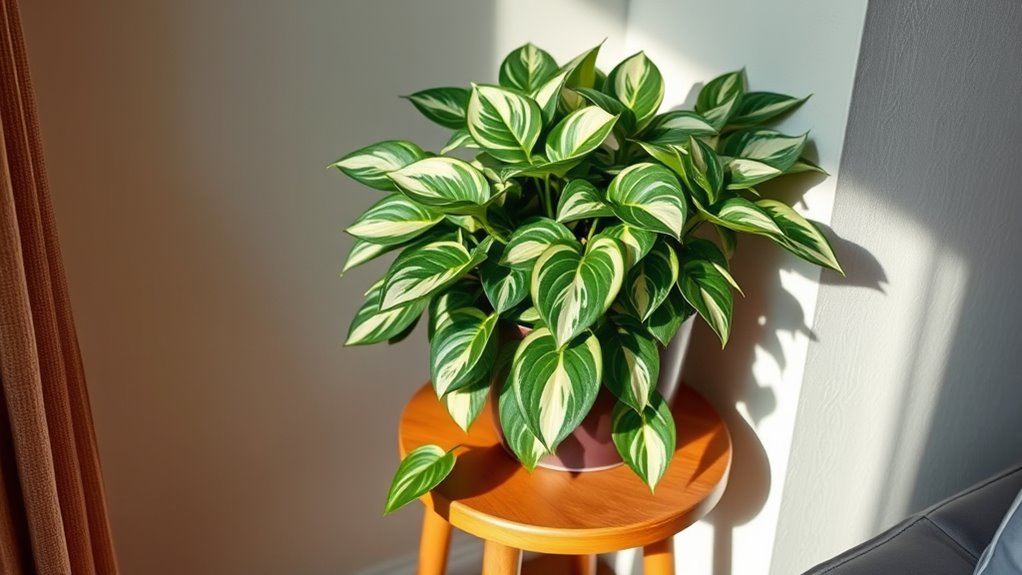
For adding lush, vibrant greenery to the darker corners of your small apartment, Chinese Evergreen stands out as an ideal choice. This plant thrives in low light gardening, making it perfect for shaded spots. To keep it healthy, focus on simple indoor plant care:
- Water only when the top inch of soil feels dry
- Keep away from direct sunlight to prevent leaf scorch
- Maintain moderate humidity for excellent growth
- Use well-draining soil to avoid root rot
Its striking, variegated leaves add color without requiring bright light. Chinese Evergreen is forgiving of occasional neglect, making it suitable for beginners. Incorporate this resilient plant into your space to enjoy vibrant foliage with minimal fuss, enhancing your small apartment’s ambiance effortlessly.
Herbs for Indoor Gardening: Fresh Flavors in Small Spaces
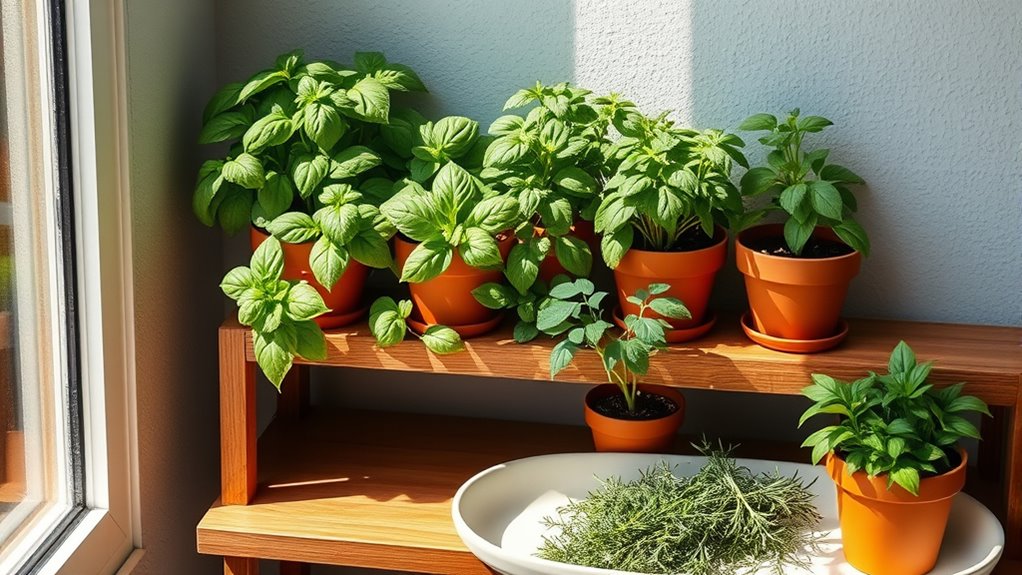
Growing herbs indoors is an excellent way to bring fresh flavors into your small apartment while saving space. You can create a mini herb garden on your windowsill or countertop, making it easy to harvest fresh ingredients anytime. To optimize indoor herb maintenance, consider pairing your herbs with suitable herb companion plants that support each other’s growth. For example, basil benefits from nearby chives, which can help repel pests. Regular watering, good drainage, and adequate sunlight are key to healthy herbs. Use small pots to maximize space, and rotate your plants to ensure even light exposure. Keep an eye on your herbs’ health, and prune regularly to encourage bushier growth. With a little effort, you’ll enjoy fresh herbs and vibrant flavors right in your tiny living space.
Frequently Asked Questions
How Often Should I Water Indoor Plants in Small Apartments?
You should water your indoor plants about once a week, but it depends on the plant type and environment. Follow a consistent watering schedule to maintain proper plant hydration, checking the soil moisture first. During warmer months, you might need to water more often, while cooler periods require less. Always guarantee excess water drains well, preventing root rot and keeping your plants healthy. Adjust your watering routine as needed for ideal plant hydration.
Do Indoor Plants Improve Air Quality Significantly?
Indoor plants can substantially improve air quality by enhancing air purification and aiding in pollutant removal. As you bring plants into your small apartment, they actively filter toxins and increase humidity, making your space healthier. While they won’t eliminate all pollutants, their natural ability to purify air creates a fresher, more breathable environment. So, adding a few indoor plants can make a noticeable difference in your home’s air quality and overall atmosphere.
What Are the Best Plants for Low Humidity Environments?
In a flash, you’ll want humidity tolerant plants like snake plants and pothos for low humidity environments. These low light greenery thrive without much moisture, making them perfect for small apartments with dry air. They’re easy to care for and add a lush touch to your space. Just remember, choosing the right plants helps keep your indoor climate comfortable while bringing vibrant life into your home.
How Can I Prevent Pests on My Indoor Plants?
To prevent pests on your indoor plants, you should regularly inspect them for signs of common indoor pests like aphids or spider mites. Use pest prevention tips like washing leaves with water, isolating new plants, and avoiding overwatering. Keep your plants healthy through proper lighting and airflow, which discourages pests. If you spot pests early, treat with natural solutions like neem oil or insecticidal soap to keep your indoor garden pest-free.
Can I Keep Indoor Plants in Bathrooms With Limited Natural Light?
You can keep indoor plants in bathrooms with limited natural light if you choose shade-tolerant varieties like pothos or snake plants. Focus on plant placement near artificial light sources, such as bathroom bulbs or LED grow lights, to meet their lighting requirements. Regularly rotate your plants and keep humidity levels high to promote healthy growth. With proper care, these plants thrive even in low-light bathroom environments.
Conclusion
Bringing these plants into your small apartment isn’t just about decoration—it’s about creating a sanctuary where growth and tranquility flourish. Each leaf and vine symbolizes resilience, vigor, and the promise of fresh beginnings. As you nurture your indoor garden, you’re cultivating more than just greenery—you’re fostering a space that reflects your spirit and dreams. Let your plants be a reminder that even in small spaces, life’s beauty and hope can thrive.