
TL;DR
House Beautiful published a report in which an 11-year-old evaluated room furnishings and explained what appealed to them. Their comments favored comfortable shapes, adaptable colors, useful storage and accents that do not overwhelm a room. The report offers one child’s perspective, not a survey of Gen Alpha.
House Beautiful has published a report in which an 11-year-old evaluates furnishings and decor for a child’s room, explaining preferences that include comfortable forms, practical storage and colors that can work with different styles. The piece offers an individual child’s reactions—not evidence of what all Gen Alpha children want.

Get home appliances delivered free with Prime
- Fast, free delivery on millions of items
- Prime Video, Amazon Music and more included
- Member-only deals all year
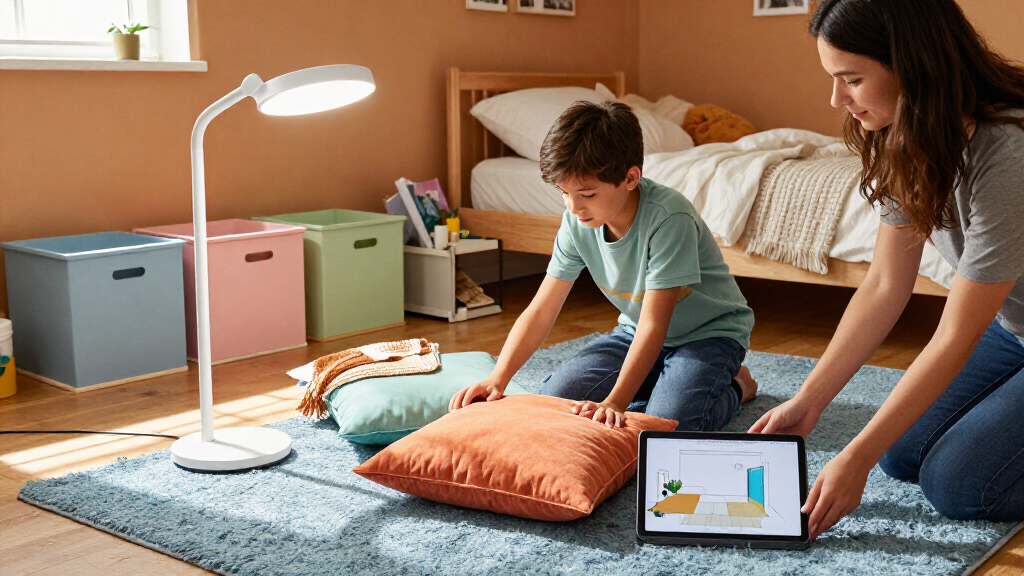
The report presents the child’s comments alongside product examples, with reactions focused on how items might look and function in a real room. For a rug, the child preferred a round, plump shape that looked comfortable without resembling a cartoon. They also liked the idea of a smaller rug placed beside a bed or under a chair, saying it could add interest without making the whole room follow one pattern.
Storage and everyday use came up repeatedly. The child preferred a nightstand with more surface area for personal belongings and said a shoe-storage unit could also hold towels or school supplies. They described another item as appealing because it combined decoration with storage, rather than leaving a pen holder looking out of place. A bookshelf that felt like a regular, smaller shelf was distinguished from a larger display-style unit.
Other reactions concerned color, placement and flexibility. The child said a cream-colored item could be styled in different ways, liked a pink jewelry organizer with dot details, and responded positively to a wall-mounted light that could change color. They were less certain about some products: one floral item seemed better suited to a desk chair than a bed, while a lighting feature was confusing at first before its wall placement made sense.
Design Choices Seen From a Child’s Room
The report is useful as a first-person account of how one child judges design: not just by appearance, but by whether an object has a place, serves more than one purpose and leaves room for personal choices. The comments suggest practical questions for families planning a child’s room: Will the furniture hold what the child uses? Can an accent be moved or paired with other patterns? Does a piece feel comfortable rather than overly themed?
Those observations may help parents, designers and retailers think about function alongside style, especially when children are involved in decisions about their own spaces. But the article does not establish broader consumer preferences. A single child’s opinions can illustrate how a young person thinks about a room; they cannot stand in for a generation with varied tastes, budgets, homes and needs.
Products Worth Considering

Samsung 55-Inch S90H OLED 4K UHD Smart TV Bundle with Full-Motion Mount and Surge Protector

Dyson Airwrap i.d. Multi-Styler with Bluetooth Connectivity

Philips Hue Festavia Permanent Outdoor String Lights, 80 Lights, 150 ft
As an affiliate, we earn on qualifying purchases.
A Product-by-Product Room Review
The source is a House Beautiful first-person report titled “I Asked an 11-Year-Old How to Design a Room Gen Alpha Won’t Hate.” It shares the child’s spoken reactions to a series of room products rather than reporting survey results or a design study. The supplied material includes comments on rugs, bedside furniture, lighting, storage and shelving.
The title frames the exercise around Gen Alpha, but the evidence in the excerpt is narrower: one 11-year-old’s assessments. The report does not provide details about how the child was selected, whether other children took part, or whether the products were tested in an actual bedroom. That distinction matters when interpreting the recommendations as broader design guidance.
““The shape should be round and plump. It doesn’t look too much like a marshmallow. I want it to look comfy, but not like a cartoon.””
— The 11-year-old, discussing a rug
One Child, Not a Generation
The supplied report does not say whether the child’s views reflect a wider group, and it gives no survey size, research method or comparison across ages. It is also unclear from the excerpt whether the child saw the products in person, how the products were presented, or whether cost and room dimensions were considered. The comments should be read as one child’s preferences, not a measured account of Gen Alpha tastes or a set of universal design rules.
How Families Can Use the Feedback
No follow-up study, product test or broader survey is identified in the source material. For now, the report’s practical takeaway is to ask children what they like and how they would use a room item, then weigh those answers alongside space, storage needs, budget and safety. Whether House Beautiful will publish further reporting based on more children’s views is not stated.
Key Questions
What is the report about?
House Beautiful published a first-person report asking an 11-year-old to assess room furnishings and decor and explain their reactions.
What kinds of design choices did the child like?
The child favored comfortable-looking shapes, smaller rugs, a roomy nightstand, flexible storage and colors that could work with different room styles.
Does the report show what all Gen Alpha children want?
No. The supplied material records one child’s opinions and does not describe a survey or a larger group of participants.
What practical lesson can parents take from the article?
Ask children how they would use a furniture or decor item, as well as whether they like its appearance. The child’s comments repeatedly connected design with comfort, placement and everyday storage.
Source: rss