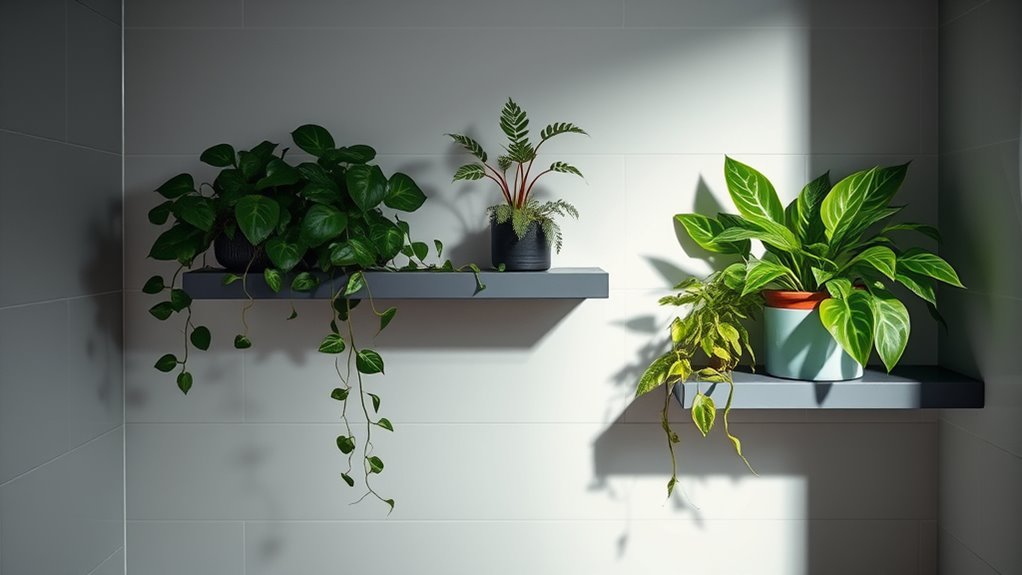

If you have a small bathroom with low-light, opt for hardy plants like snake plants, pothos, or peace lilies that thrive in shady, humid spots. These greenery options are low-maintenance and help purify the air while adding a calming touch. Position them near windows or use grow lights to boost their growth. Want to discover more tips? Keep exploring to find the perfect plants that suit your space.

Get home appliances delivered free with Prime
- Fast, free delivery on millions of items
- Prime Video, Amazon Music and more included
- Member-only deals all year
Key Takeaways
- Opt for low-light tolerant plants like pothos, philodendrons, and snake plants that thrive in shaded bathroom areas.
- Choose moisture-loving plants such as Boston fern or maidenhair fern to handle high humidity environments.
- Use hanging planters or corner spots to maximize space in small bathrooms while providing adequate light and humidity.
- Incorporate grow lights if natural light is limited to ensure healthy plant growth.
- Ensure proper drainage and avoid overwatering to maintain healthy roots in humid, low-light conditions.

Adding plants to your small bathroom can transform the space, making it feel more inviting and lively. When choosing plants, focus on moisture-loving plants and air purifying greenery, especially since bathrooms tend to be humid and enclosed. These types of plants thrive in the consistent moisture and can help improve air quality, creating a fresher environment with less mustiness or chemical odors.
Moisture-loving plants are perfect for bathrooms because they absorb excess humidity and don’t require frequent watering. Ferns, such as the Boston fern or maidenhair fern, are excellent choices. They flourish in the damp conditions and add a lush, soft texture to your space. Likewise, pothos and philodendrons are resilient and can handle lower light levels while thriving in humid environments. These plants are also easy to care for, making them ideal for busy or novice gardeners.
Moisture-loving plants like ferns, pothos, and philodendrons thrive in humid bathrooms with minimal watering needs.
Air purifying greenery is another essential category for small bathrooms. Plants like snake plants and peace lilies are known for their ability to filter out toxins and improve air quality. Snake plants are particularly low-maintenance and can survive in low-light conditions, making them a perfect fit for bathrooms with limited natural light. Peace lilies, on the other hand, not only purify the air but also add a touch of elegance with their glossy leaves and white flowers, blooming even in shaded corners.
Positioning these plants properly enhances their benefits. Place moisture-loving plants on shelves or in corners where they can catch the humidity. For air purifying greenery, consider hanging planters or placing them on countertops or windowsills. Even small arrangements can make a big difference by softening harsh lines and adding a touch of nature.
Keep in mind that, despite their love for humidity, these plants still need proper care. Ensure good drainage to prevent root rot, and avoid overwatering—letting the soil dry slightly between waterings is best. Regularly dust the leaves to maximize their air purifying benefits and keep them healthy. If your bathroom lacks windows, consider using grow lights to supplement natural light, especially for plants that need a bit more brightness.
Incorporating moisture-loving plants and air purifying greenery into your small bathroom isn’t just about aesthetics. It’s about creating a healthier, more vibrant space. With the right choices and placement, these plants can thrive in low-light, humid conditions, giving your bathroom a (fresh, natural feel) that’s both calming and invigorating. Additionally, selecting plants with low-maintenance needs will ensure they remain thriving with minimal effort.
As an affiliate, we earn on qualifying purchases.
Frequently Asked Questions
Can Bathroom Plants Improve Indoor Air Quality?
Yes, bathroom plants can improve indoor air quality through air purification and humidity benefits. They naturally filter toxins and pollutants, making the air cleaner. Plus, they increase humidity, which can reduce respiratory issues and keep your skin healthy. By adding plants, you’re not just decorating—you’re creating a healthier environment. Just choose moisture-loving, low-light plants suitable for small spaces, and enjoy fresher, cleaner air every day.
How Often Should I Water Low-Light Bathroom Plants?
Imagine your bathroom plant basking in quiet, dim corners, craving just the right moisture. You should water low-light bathroom plants about once a week, allowing the soil to dry slightly between sessions. Keep an eye on moisture levels—if the soil feels damp, hold off. This gentle rhythm helps your plant thrive, ensuring it gets enough hydration without drowning in excess water.
Are There Any Toxic Plants I Should Avoid in Bathrooms?
You should avoid bathroom plants with known plant toxicity because they can be harmful if pets or children accidentally ingest them. For bathroom plant safety, steer clear of plants like dieffenbachia, philodendron, and pothos, which are toxic. Instead, choose non-toxic options such as spider plants, Boston ferns, or prayer plants. Always verify plant toxicity before bringing a new plant into your bathroom to keep everyone safe.
What Are the Best Plants for High Humidity Environments?
You should choose humidity loving plants like ferns, peace lilies, or pothos, as they thrive in high moisture foliage environments. These plants flourish in humid conditions and help improve air quality. Make sure to keep the soil moist and provide indirect light. By selecting high humidity plants, you’ll create a lush, vibrant space that benefits from consistent moisture, making your bathroom feel like a natural oasis.
Do Bathroom Plants Require Special Soil or Fertilizers?
Imagine you’re a Victorian gardener—your bathroom plants don’t need fancy soil or frequent fertilizer. Generally, they thrive in well-draining, lightweight soil that retains moisture but doesn’t stay soggy. You can use standard potting mix, but adding some peat or perlite helps. Fertilizer needs are minimal; a diluted houseplant feed once a month during active growth keeps them happy. Keep it simple, and your plants will flourish in their cozy space.
moisture loving indoor plants for bathroom
As an affiliate, we earn on qualifying purchases.
As an affiliate, we earn on qualifying purchases.
Conclusion
Now that you know which bathroom plants thrive in small, low-light spaces, you’re all set to create a lush oasis. Just remember, choosing the right plants is like planting seeds of serenity in your everyday routine. With a little care, your bathroom can become a green retreat where beauty and tranquility grow side by side. So go ahead, turn your space into a gust of fresh air—you’ll be surprised how quickly it’ll flourish.
air purifying plants for small bathroom
As an affiliate, we earn on qualifying purchases.
As an affiliate, we earn on qualifying purchases.
hanging planters for bathroom plants
As an affiliate, we earn on qualifying purchases.
As an affiliate, we earn on qualifying purchases.
Columbus Day / Indigenous Peoples' Day Picks
long weekend sales
As an affiliate, we earn on qualifying purchases.