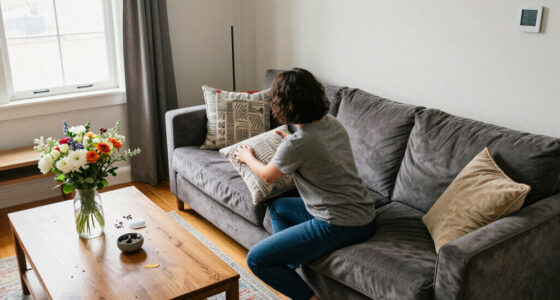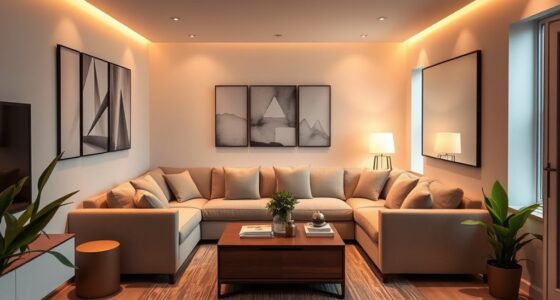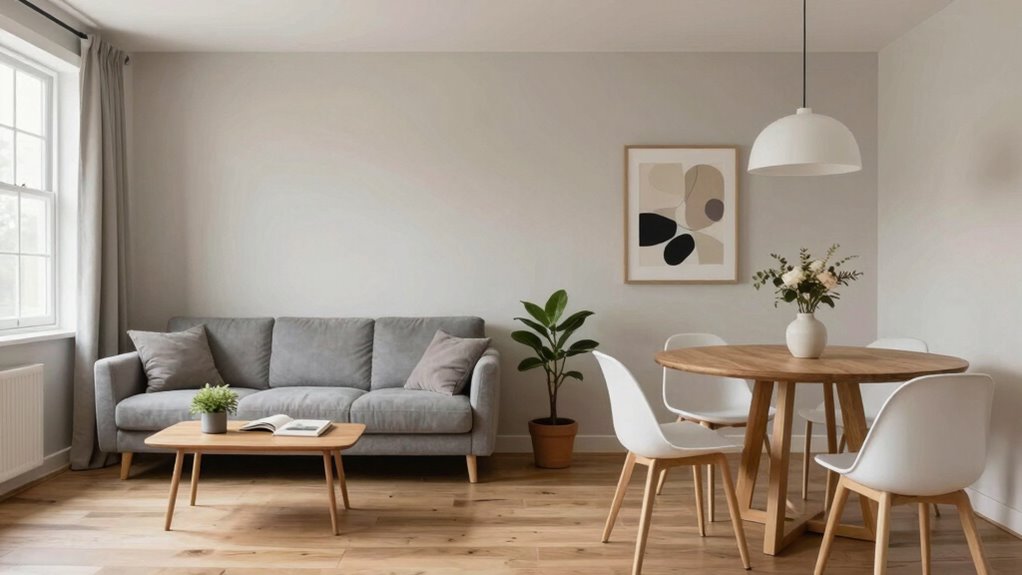
To blend a dining area into your small living room, choose a cohesive color palette with neutral tones and accents that carry across both spaces. Arrange furniture to create clear zones without barriers, using sofas or multi-functional pieces to define areas while maintaining openness. Use layered lighting, like pendant lights and floor lamps, to enhance cohesion. Keep decor minimal and consistent in style and materials to create seamless flow—continue exploring ways to make your space feel inviting and unified.

Get home appliances delivered free with Prime
- Fast, free delivery on millions of items
- Prime Video, Amazon Music and more included
- Member-only deals all year
Key Takeaways
- Use a cohesive color palette with neutral tones and accent colors to visually unify both spaces.
- Arrange furniture to create clear boundaries without walls, maintaining an open flow.
- Incorporate lighting that highlights focal points and defines each zone subtly.
- Match decor and accessories across areas to enhance cohesion and visual continuity.
- Choose multi-functional furniture and strategic layout to maximize space and connection.
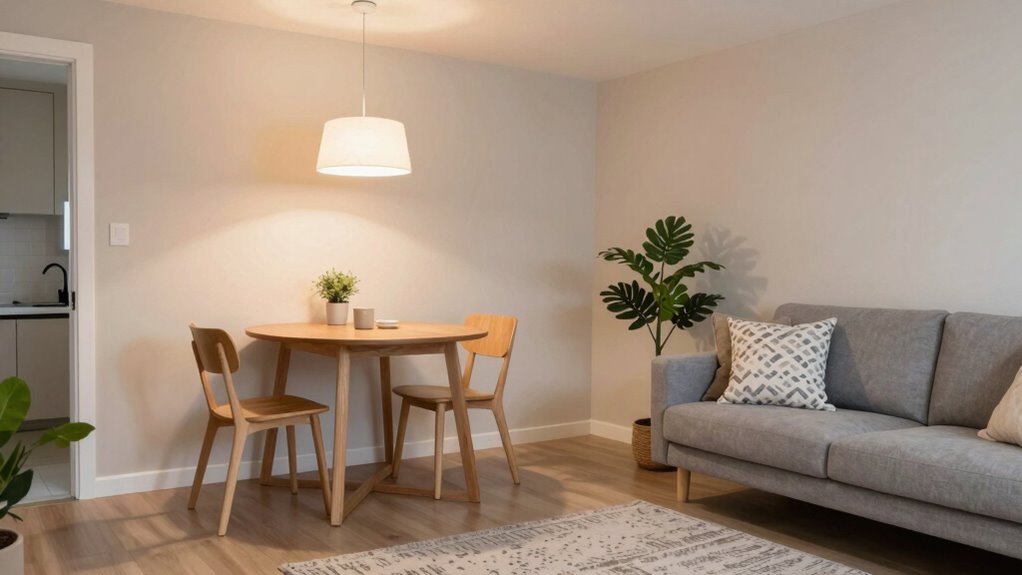
Creating a seamless shift between your dining area and small living room can make a compact space feel more open and inviting. To achieve this, start by carefully selecting your color schemes. Opt for a cohesive palette that flows throughout both areas. Light, neutral tones like soft beiges, warm grays, or pastel shades can help reflect natural light and create a sense of continuity. If you want to add a splash of color, choose accents such as cushions, artwork, or rugs that pick up on a single hue and carry it across both spaces. This unified color approach visually links the zones, making the connection smooth and natural.
A cohesive color palette unites your dining and living areas, creating a seamless, inviting flow in small spaces.
Next, consider your furniture placement. Position pieces in a way that creates clear boundaries without walls or barriers. For example, a sofa can serve as a subtle divider, facing the living area while leaving enough space behind it for the dining table. Keep the layout open by avoiding bulky furniture that blocks pathways. Use multi-functional furniture, like a coffee table with storage or a dining table that can double as a workspace, to maximize space without clutter. When arranging your furniture, think about sight lines—placing key pieces so that you can see from one area to the other without obstruction. This openness enhances the sense of flow and makes the room feel larger. Additionally, incorporating visual continuity through decor choices can further reinforce this seamless transition. A well-balanced spatial arrangement also contributes to a more harmonious and spacious feel.
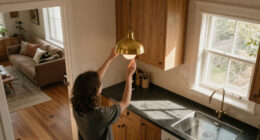
You should also pay attention to the placement of lighting. Use a combination of overhead fixtures, table lamps, and accent lighting to define each zone while maintaining visual connectivity. For instance, hanging pendant lights over the dining table can distinguish that space, while floor lamps or wall sconces in the living area provide a cozy ambiance. Consistent lighting styles reinforce the link between the two spaces. Additionally, incorporating color psychology through your decor choices can subtly influence how spacious and inviting your combined area feels. Thoughtful lighting placement can also highlight focal points, further unifying the overall look.
Furthermore, consider how accessories and decor can unify the look. Matching or complementary rugs, artwork, or decorative objects help tie the spaces together. Keep clutter minimal and ensure that each area feels distinct yet harmonious. Using similar materials or textures across furniture pieces and decor enhances the sense of cohesion. By paying attention to these details, you can create a unified environment that feels both functional and aesthetically pleasing.
Ultimately, creating a seamless transition between your dining and living spaces relies on thoughtful color schemes, strategic furniture placement, and cohesive decor choices. When these elements work together, your small room becomes a versatile, inviting environment that feels larger and more interconnected than it really is.
As an affiliate, we earn on qualifying purchases.
Frequently Asked Questions
What Furniture Styles Work Best for Blending These Spaces?
You should opt for furniture styles that promote flow and functionality, like multi-functional pieces and open shelving. Choose sleek, minimalist designs to keep the space feeling open. Incorporate open shelving to add storage without visual clutter, and select multi-functional furniture such as a dining table with storage or a sofa bed, which helps define zones without sacrificing space. These styles make blending your dining and living areas seamless and inviting.
How Can Lighting Define Different Areas Without Walls?
Ever wonder how to make your space feel separated without walls? You can use lighting to define different areas effectively. Incorporate ambient lighting to set a cozy mood in the living room, while task illumination highlights the dining area. By layering these lighting types, you create visual boundaries that guide the eye and make each zone feel distinct yet part of the whole. Isn’t that a smart way to organize your space?
Are There Color Schemes That Unify Both Spaces Effectively?
Yes, choosing a cohesive color scheme with color continuity helps unify both spaces. Opt for neutral base colors like soft grays or beiges, then add accent hues such as blues or greens to create harmony. Incorporate these accent hues in accessories, rugs, or artwork across both areas. This approach visually connects the dining and living spaces, making the overall layout feel more integrated and spacious.
How Do I Maximize Storage in a Combined Area?
Did you know that smart storage solutions can save up to 30% of space? To maximize storage, incorporate multi-functional furniture like ottomans with hidden compartments or sofa beds. Use decorative wall accents, such as floating shelves or wall-mounted cabinets, to keep essentials organized without clutter. Combining these strategies helps you optimize every inch, creating a cohesive, functional space that feels open and inviting while offering ample storage options.
What Are Some Space-Saving Furniture Ideas?
To save space, opt for multifunctional furniture like a sofa bed or an extendable dining table, which serve dual purposes. Incorporate modular seating that you can rearrange easily, making the area versatile for different activities. Choose pieces with built-in storage, such as ottomans or coffee tables. These space-saving furniture ideas help you maximize your small living room while maintaining functionality and style.
neutral color palette throw pillows
As an affiliate, we earn on qualifying purchases.
As an affiliate, we earn on qualifying purchases.
Conclusion
Blending your dining area into a small living room is like weaving a beautiful tapestry—each element seamlessly connecting to create a cozy, unified space. By choosing versatile furniture, using consistent colors, and clever zoning, you transform limitations into opportunities. Remember, a well-blended room isn’t just visually appealing; it’s a reflection of your style and personality. With these tips, your small space will feel as open and inviting as a warm hug, no matter how tiny it is.
As an affiliate, we earn on qualifying purchases.
As an affiliate, we earn on qualifying purchases.
Fall yard work Picks
leaf blowers
As an affiliate, we earn on qualifying purchases.