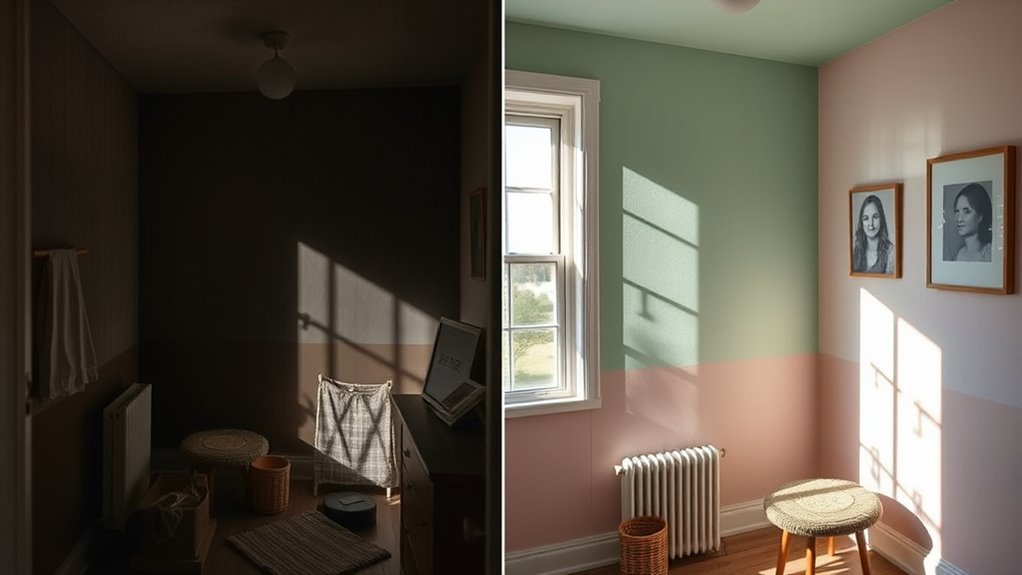
Using light colors in your tiny room instantly makes it feel larger and more open. Before, dark shades may have made the space seem cramped, but switching to soft hues like pale blues, beiges, or whites reflects more light and adds depth. Reflective surfaces and layered lighting amplify this effect, creating an airy, inviting atmosphere. If you continue exploring, you’ll discover even more ways to transform your small space into a bright, expansive oasis.
Key Takeaways
- Light colors reflect more light, making tiny rooms appear larger and more open.
- Before: Dark walls can make a space feel cramped; after: Light hues create an airy, spacious atmosphere.
- Incorporating reflective surfaces and layered lighting enhances brightness and visual expansion.
- Using soft, monochromatic palettes minimizes visual clutter, boosting perceived room size.
- The transformation with light colors fosters a calm, inviting environment that maximizes perceived space.
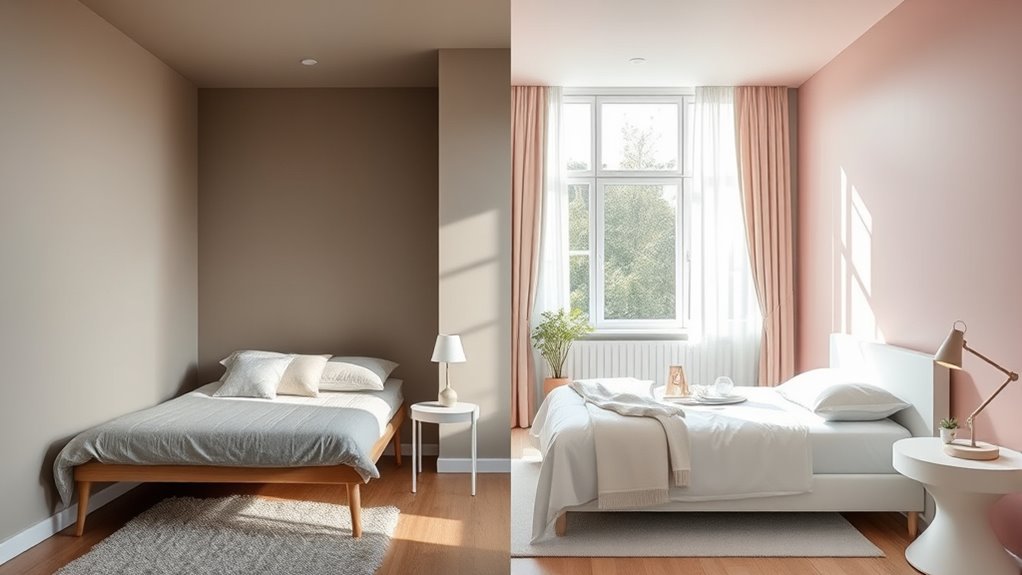
When you have a tiny room, choosing the right colors can make a significant difference in how spacious it feels. Light colors are your best allies because they reflect more light, creating an airy, open atmosphere that instantly makes the space appear larger. Understanding color psychology is vital here; soft hues like pale blues, gentle beiges, and crisp whites not only brighten the room but also evoke calmness and tranquility. These colors tend to recede visually, making walls seem further away and giving your small space a sense of depth. Additionally, knowing the impact of color psychology can help you select shades that promote relaxation and openness in your tiny room.
Incorporating interior design tips, you should aim for a monochromatic palette or subtle contrasts to avoid overwhelming the senses. For example, painting walls in a light, neutral tone with matching or slightly darker accents can add dimension without cluttering the visual field. When you keep the color scheme simple, your eyes are less distracted, and the room feels more expansive. Additionally, using light-colored furniture, curtains, and accessories helps maintain the cohesive, spacious look. Avoid heavy, dark furniture pieces that can anchor the space and make it feel cramped.
Another effective interior design tip is to maximize natural light. Light colors bounce sunlight around the room, enhancing the feeling of openness. If natural light is limited, incorporate layered lighting—such as wall sconces, table lamps, or LED strips—to mimic daylight and further lift the room’s brightness. When you combine light, reflective surfaces like mirrors or glossy finishes, you amplify this effect, making your tiny space feel surprisingly bigger.
light color wall paint for small rooms
As an affiliate, we earn on qualifying purchases.
As an affiliate, we earn on qualifying purchases.
Frequently Asked Questions
Can Dark Accents Work With Light-Colored Tiny Rooms?
Yes, dark accents can work beautifully with light-colored tiny rooms. They create striking contrast and add depth, making the space feel more dynamic. When you incorporate dark accents, focus on achieving color harmony by balancing the shades and ensuring they complement each other. This approach keeps the room feeling open and inviting while adding visual interest. Use dark accents strategically, like in furniture or accessories, to enhance your tiny space effectively.
How Does Natural Light Affect the Color Choice in Small Spaces?
Natural light markedly influences your color choices in small spaces. It enhances interior brightness and alters your perception of color, making rooms feel larger and more inviting. Bright, natural lighting conditions can intensify light colors, creating a fresh, airy vibe, while limited natural light might require darker shades to prevent the space from feeling too dim. Adjusting your colors based on natural light helps you achieve the perfect balance for a cozy, well-lit room.
What Are the Best Light Colors for Creating a Cozy Atmosphere?
To create a cozy atmosphere, opt for warm light colors like soft beige or gentle taupe. For example, imagine a small living room painted in warm, muted tones; it feels inviting and comforting. According to color psychology, these shades boost mood and make spaces feel more intimate. You’ll enhance the cozy vibe by pairing warm hues with soft lighting, making your tiny room feel like a welcoming retreat.
Do Light Colors Make a Room Appear Larger or Smaller?
Light colors make a room appear larger due to their impact on visual perception, creating an open and airy feel. According to color psychology, soft shades reflect more light, enhancing the sense of space and reducing cluttered vibes. When you choose light hues for walls or decor, you naturally trick your eyes into perceiving a bigger, more inviting room, perfect for small spaces needing a boost of brightness and openness.
How to Choose the Right Light Color for Different Tiny Room Functions?
Choosing the right light color for tiny room functions is like selecting the perfect outfit—each one sets a mood. For workspaces, go with calming blues or soft neutrals to boost focus, while vibrant yellows energize kitchens. Use matte or satin paint finishes for reduced glare, and consider color psychology to evoke the desired feelings. Active choices in paint color and finish can transform your space into a functional, inviting sanctuary.
reflective surface mirrors for small spaces
As an affiliate, we earn on qualifying purchases.
As an affiliate, we earn on qualifying purchases.
Conclusion
By choosing light colors, you truly unlock the potential of your tiny space. They don’t just brighten the room—they transform it, making it feel larger and more inviting. It’s easy to believe that bigger rooms need bold shades, but history shows us that light hues often create the most stunning, uplifting environments. So, trust in the power of light colors; your small room can become a beautiful, airy sanctuary with just a simple change.
layered lighting fixtures for tiny rooms
As an affiliate, we earn on qualifying purchases.
As an affiliate, we earn on qualifying purchases.
small room furniture in light colors
As an affiliate, we earn on qualifying purchases.
As an affiliate, we earn on qualifying purchases.